

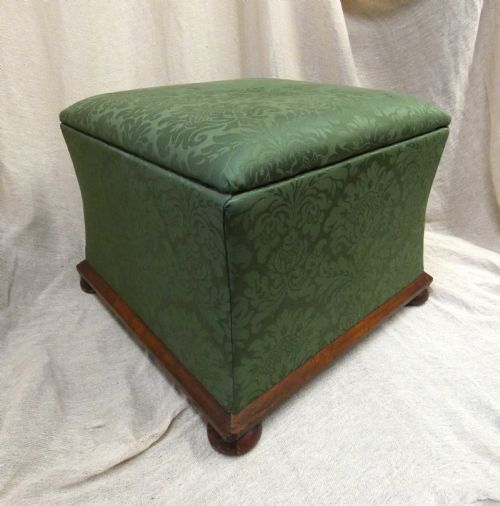


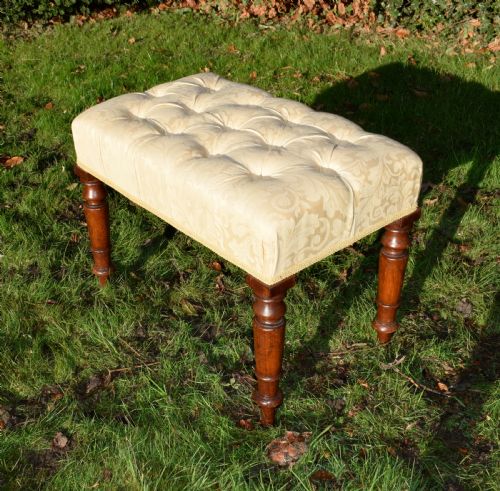

Damask Upholstered Stool
A damask upholstered stool brings period elegance to any room, combining traditional seating forms with patterned fabric.
Damask Upholstered Stool
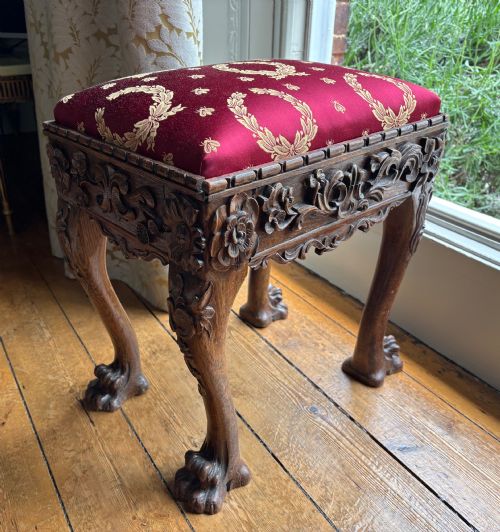
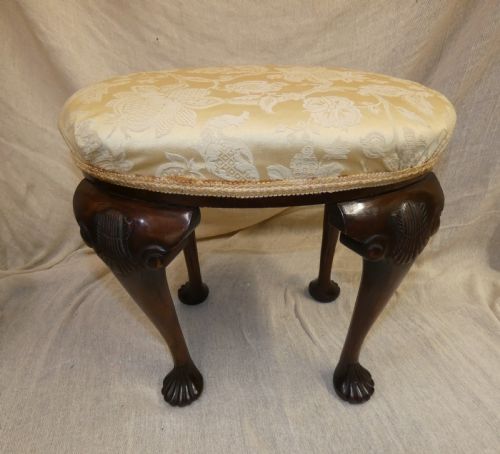
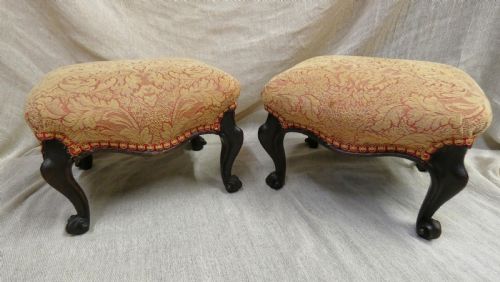
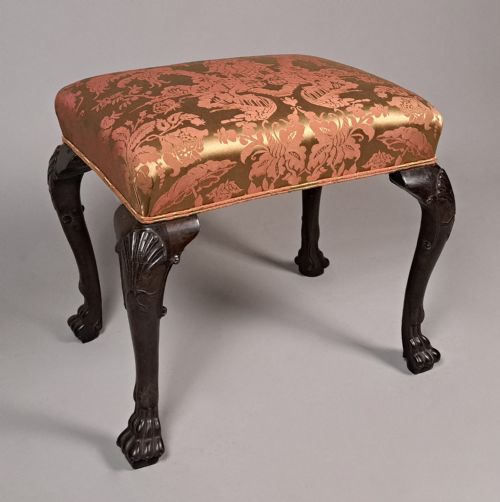
A damask upholstered stool appears in various historic forms, including dressing stools, footstools, window seats, and ottomans, drawn primarily from Victorian, Regency, and Georgian eras. These pieces range from simple mahogany frames to ornate carved giltwood structures reflecting French Neoclassical or Chippendale revival styles.
Buyers meet examples spanning the eighteenth to the early twentieth centuries, constructed in mahogany, walnut, rosewood, and oak. Many incorporate classic seating configurations such as X-frames, cabriole legs, or turned and tapered supports.
Materials and construction methods
Craftsmen built these frames using solid hardwoods like mahogany, walnut, teak, and rosewood, alongside giltwood and painted finishes. Joinery typically relies on traditional carved or turned wooden components.
Upholstery relies on fabric and damask textiles, sometimes featuring buttoned detailing or hand-stitched borders fixed securely to the wooden base.
Some nineteenth-century dressing stools hide compact proportions designed specifically to tuck neatly beneath low vanity tables.
Assessing quality in historical seating
Quality separates pieces through the crispness of hand-carving on the wooden frames and the structural integrity of the timber joints. Superior examples exhibit balanced proportions and well-executed stylistic revivals, such as accurate Chippendale or Louis XVI details.
The choice and execution of the damask upholstery affect the overall character, where finer textiles and tighter buttoning or fitting complement the craftsmanship of the underlying frame.
The Damask Upholstered Stool Glossary
- Damask
- A reversible figured fabric woven on a loom, featuring patterns formed by contrasting warps and wefts. It provides a textured and patterned surface traditionally used in formal upholstery.
- Cabriole leg
- A furniture leg that curves out and then in, resembling the shape of an animal's leg. This form appears frequently on eighteenth and nineteenth-century seating.
- X-frame
- A structural furniture base formed by intersecting curved or straight members creating an X shape. It offers stability and a distinct architectural profile.
- Window seat
- A long, narrow form of stool or bench designed to fit within a window recess. These pieces often feature upholstered seats and decorative wooden frames.
Damask Upholstered Stool: Frequently Asked Questions
Where should I place a stool?
These pieces fit well at the foot of a bed, beside a fireplace, or beneath a dressing table. Their compact size allows them to move easily between rooms as needed.
Longer versions like window seats function effectively in hallways or positioned below windows.
How do I identify the period?
Dating relies on examining the timber species, leg profiles, and carving styles characteristic of Georgian, Regency, or Victorian eras. Walnut and early mahogany often point to the eighteenth century, while rosewood and heavier buttoning typically indicate Victorian production.
Revival styles from later decades often adopt specific historic motifs from Chippendale or Louis XVI designs.
What is an X-frame stool?
An X-frame stool utilises intersecting diagonal legs that form an X shape when viewed from the side. This ancient structural form gained popularity in Neoclassical and Renaissance revival periods.
Examples often include upholstered seats supported directly by the crossing wooden framework.
Are these pieces suitable for daily use?
Solid hardwood frames and sturdy joinery make these stools robust enough for everyday seating or resting feet. Regular placement away from direct heat sources preserves the timber and fabric.
Careful handling of antique frames ensures the longevity of both the woodwork and the damask covering.