



Regency Style Stool
A regency style stool brings classical elegance and compact seating into a room, spanning forms from window seats to piano stools.
Regency Style Stool
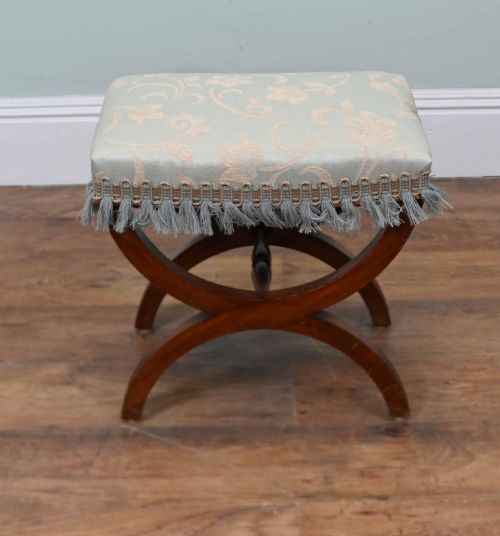
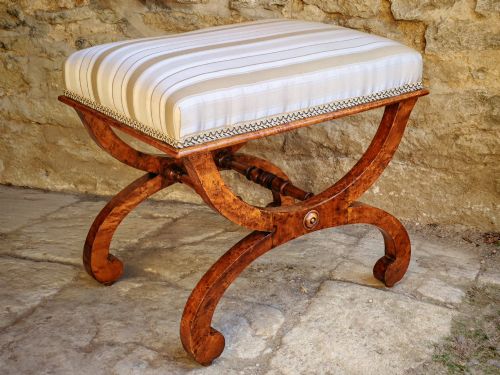
A regency style stool encompasses a variety of low seating forms, including window seats, footstools, benches, and revolving piano stools. These pieces draw primarily on 19th-century and Regency design influences, alongside Neoclassical and Revival styles.
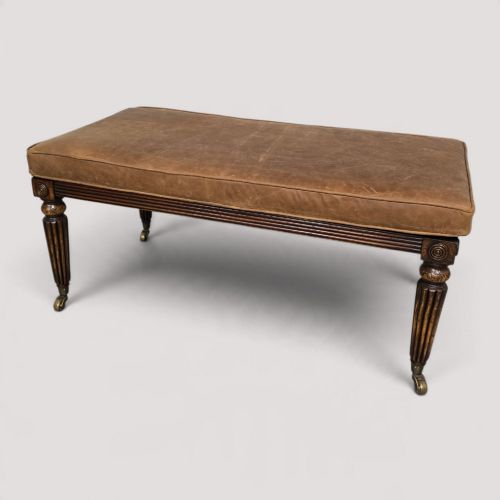
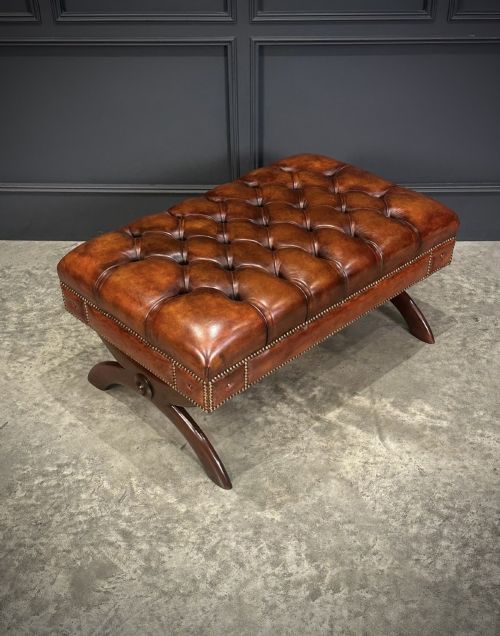
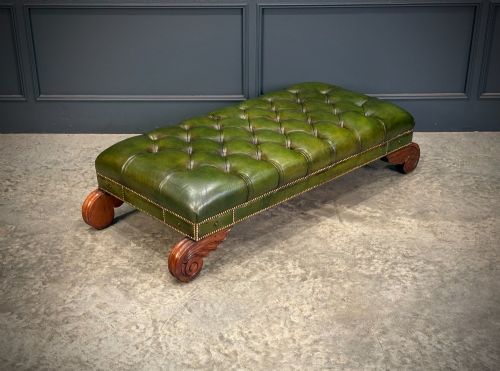
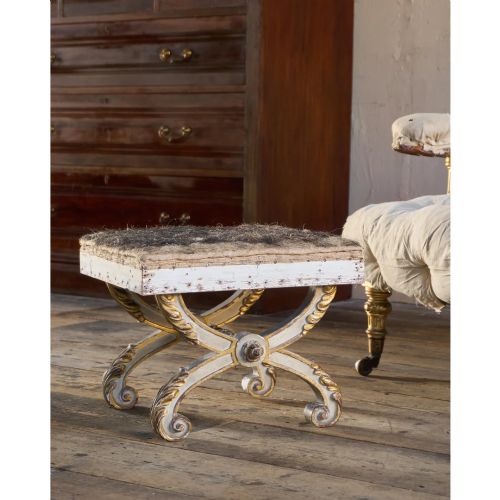
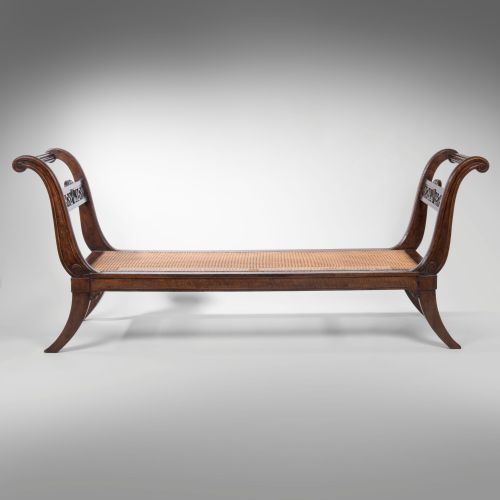
Buyers will encounter forms ranging from simple mahogany and caned examples to elaborate giltwood curule frames and leather-upholstered benches. Origins and periods span the 18th century through to the early 20th century, capturing both original Regency manufacture and later revival interpretations.
How they were made
Construction relies heavily on timbers such as mahogany, oak, satinwood, and burr maple, shaped into robust frames for seating and window benches. Giltwood, gesso, and brass accents provide decorative enrichment on classical and neoclassical forms.
Upholstery techniques utilise fabric, velvet, leather, and cane to finish the tops and seats. Metal mechanisms also appear in specialised pieces like adjustable screw-top piano stools.
Regency Style Stool Retail Price Guide 2026
Typical asking prices for regency style stool among the pieces listed under this phrase on Sellingantiques today, from the lower quarter to the upper quarter. They describe what is for sale here now, not the wider market.
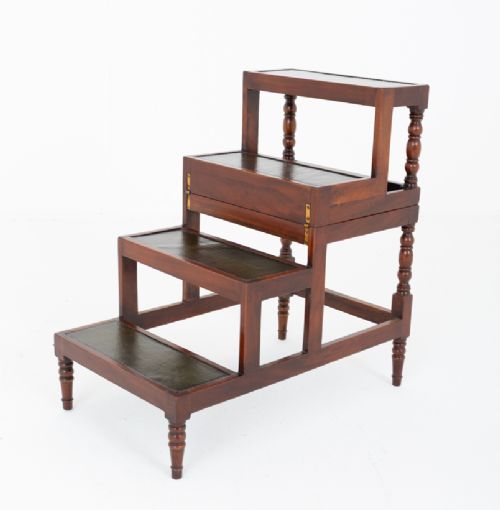
Some library steps cleverly fold away inside a piece of oak furniture, disguising stairs as an ordinary seat.
What varies in quality
The standard of a piece rests on the crispness of its timber carving and the sophistication of its structural frame, such as the balanced geometry of an X-frame curule design. Materials range from standard hardwoods to more decorative veneers like burr maple and satinwood.
Execution of detail, from fluted legs to giltwood finishes, determines the refinement of the piece. The integrity of the original upholstery methods and secondary materials also distinguishes finer examples.
Miles & Edwards·Gillows
The Regency Style Stool Glossary
- Curule
- An ancient Roman chair shape featuring intersecting X-shaped legs that form the base of stools and window seats. This ancient form gained immense popularity during the Regency and Neoclassical periods.
- Giltwood
- Timber coated with a thin layer of gold leaf or gilt paint to create a rich, reflective decorative surface. It frequently appears on Italian and English neoclassical seating.
- Caned
- Woven rattan or split cane utilised to create breathable, lightweight panels for seat tops. This technique appears on mahogany tables and stools.
- Window Seat
- An elongated stool or bench designed to fit beneath a window recess. These typically feature upholstered tops and decorative frames.
Regency Style Stool: Frequently Asked Questions
What is a regency style stool used for?
These versatile pieces serve as footstools, occasional seating, or elongated window benches placed beneath architectural openings. Some variations function specifically as revolving music or piano seating.
Their compact scale allows them to move easily between rooms while adding a classical decorative accent to an interior scheme.
How do I identify a period piece?
Examine the timber selection, construction methods, and stylistic vocabulary such as neoclassical motifs or curule frames. Pieces often date from the 19th century or draw on Regency and William IV design traditions.
Maker attributions or specific revival styles can also help narrow down the date and origin of the frame.
Are piano stools adjustable?
Certain examples feature revolving mechanisms or adjustable screw-top designs intended for keyboard players. These incorporate functional metal hardware within the wooden structure.
Other variations remain fixed in height, operating simply as low round or rectangular seats.
What materials are common?
Mahogany is widely seen across frames, alongside decorative woods like satinwood, burr maple, and oak. Upholstery materials include leather, velvet, fabric, and cane.
Decorative accents frequently involve giltwood, gesso, and brass detailing.