


Navy Wool Khorjin
These navy wool khorjin are traditional woven carriers made by nomadic weavers, sought after for their rich indigo fields and bold tribal patterns.
Navy Wool Khorjin
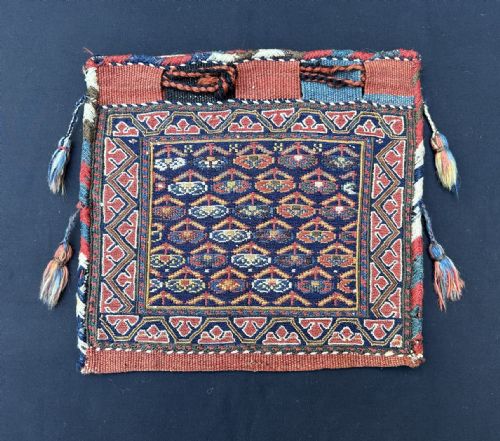
A navy wool khorjin represents a traditional Persian double saddlebag or its individual face, woven by tribal groups for practical transport on animals. When you search for navy wool khorjin, you encounter utilitarian textiles transformed into decorative items through intricate regional motifs.
The pieces listed on this page predominantly take the form of individual saddlebag faces, half-khorjin, or complete bags featuring dark blue or navy grounds. These items originate from various confederations and nomadic groups across Persia, dating from the late nineteenth century.
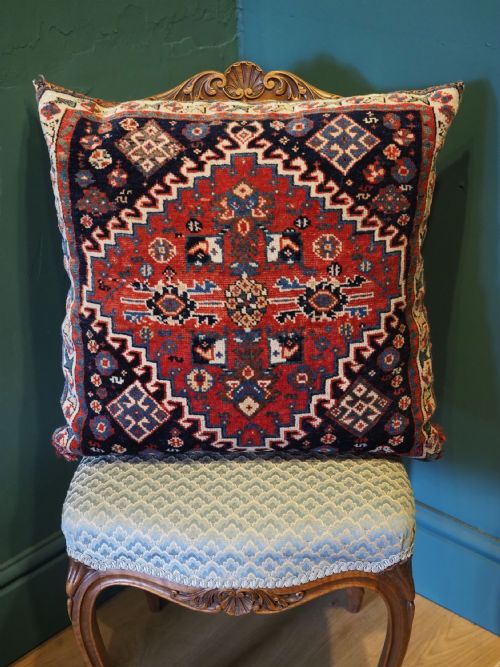
Makers utilised durable materials suited to nomadic life, resulting in robust panels that function well today as small floor rugs or cushion covers. The survival of these textiles demonstrates the practical resilience built into everyday tribal objects.
Assessing quality in tribal weavings
Quality rests upon the handle and density of the wool, where lustrous, tightly packed pile separates superior weaving from coarser utilitarian output. The precision of the geometric or figurative drawing within the field also indicates the weaver's skill.
Condition plays a central role, distinguishing examples that retain their original full face and complete edges from those with significant losses to the pile or foundation.
Listings span the decades from 1860 to 1900, incorporating wool, hand-spun wool, natural dyes, and cotton across Persian tribal forms.
The Navy Wool Khorjin Glossary
- Khorjin
- A traditional Persian double saddlebag used by nomads for carrying possessions during migration. These items were typically woven in pairs connected by a central web.
- Boteh
- A traditional almond-shaped or pine-cone motif frequently found in Persian tribal weaving. This pattern symbolises life and eternity in textile design.
- Saddle-bag face
- The decorative front panel of a khorjin, often preserved independently after the back web wore away from use. These faces are commonly mounted as small wall hangings or cushion covers.
- Plain weave
- A simple flat-woven structure without pile, utilised for the backs and structural elements of saddlebags. This technique creates a lightweight contrast to the dense pile sections.
Navy Wool Khorjin: Frequently Asked Questions
What is a khorjin?
A khorjin is a traditional double saddlebag produced by nomadic tribes in Persia for carrying belongings on pack animals.
These textiles combine utility with artistic expression, featuring durable flatweave backs and patterned pile faces.
How were these bags used?
Nomadic families draped these bags across horses, donkeys, or camels to transport household goods during seasonal migrations.
Once removed from working use, the individual panels survived as durable rugs and decorative domestic items.
How do I clean a wool khorjin?
Gentle surface brushing and occasional professional textile cleaning help maintain the integrity of the natural wool fibres.
Avoid immersion in water or harsh chemical treatments that might damage the historical dyes.
Are complete khorjin rare?
Complete examples featuring both original faces and the connecting web are less common than single bag faces.
Many pieces separated over time as the central joining panels wore out during active use.