



Navy Tribal Carpet
A navy tribal carpet brings rich indigo depth and nomadic geometry into a room, offering enduring floor coverings woven across nineteenth and early twentieth-century traditions.
Navy Tribal Carpet
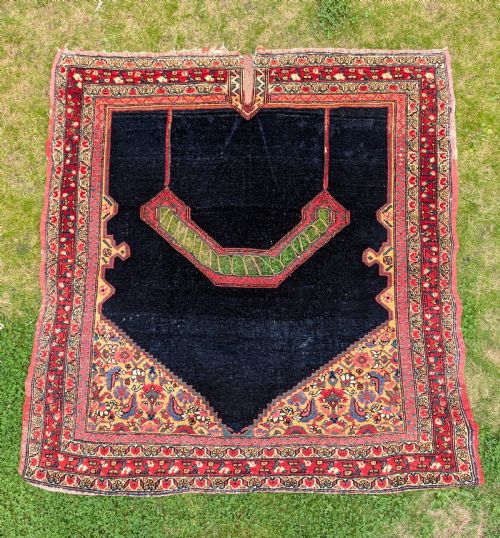
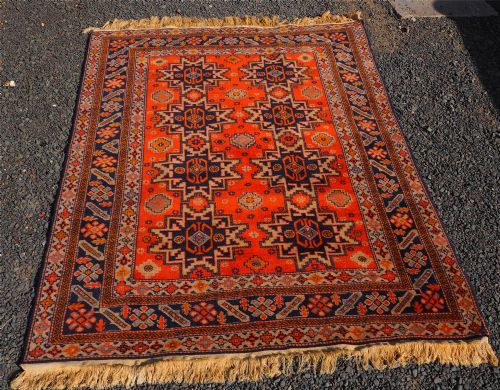
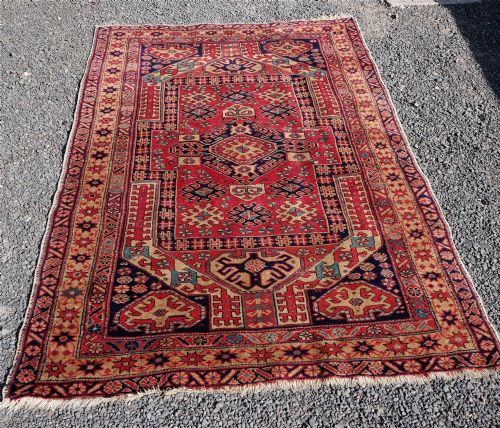
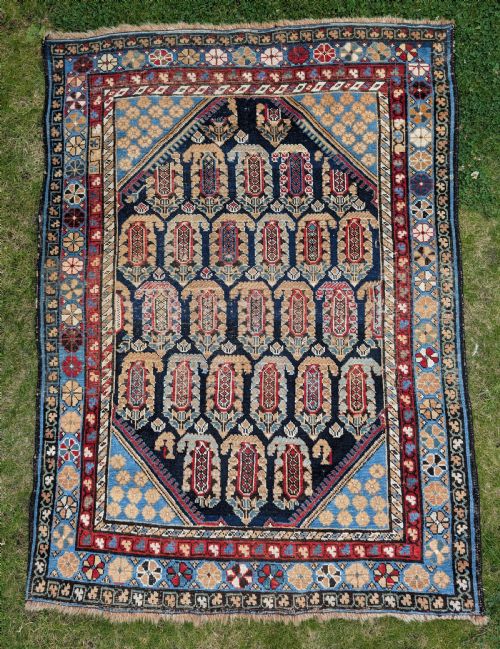
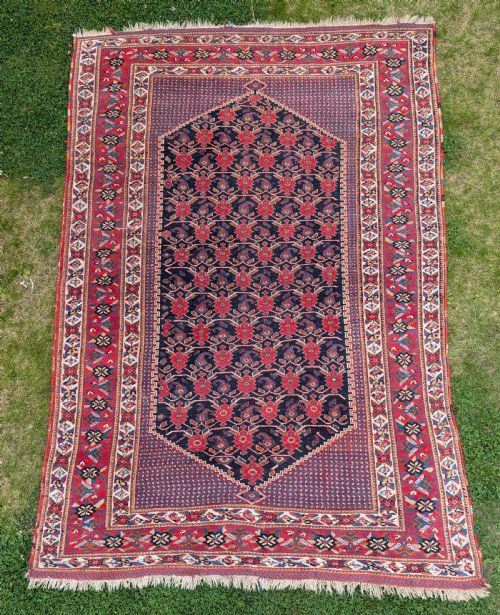
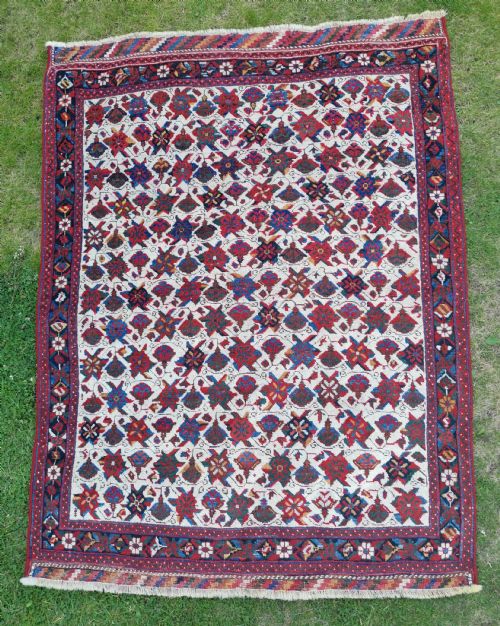
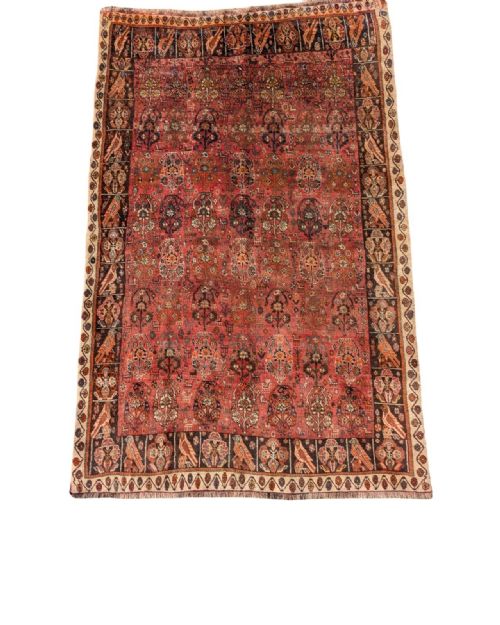
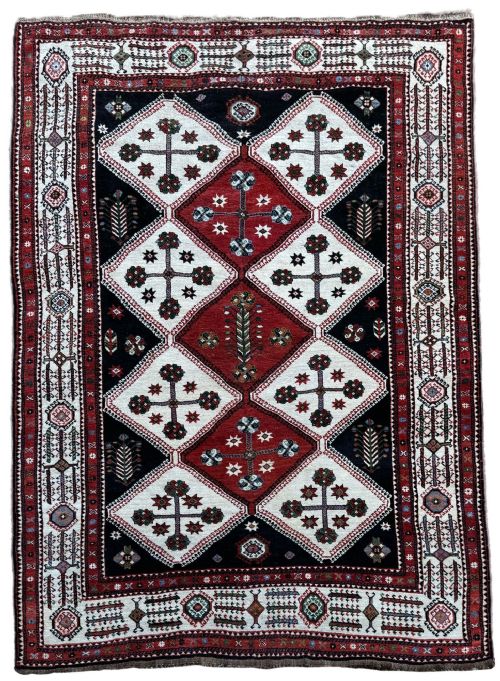
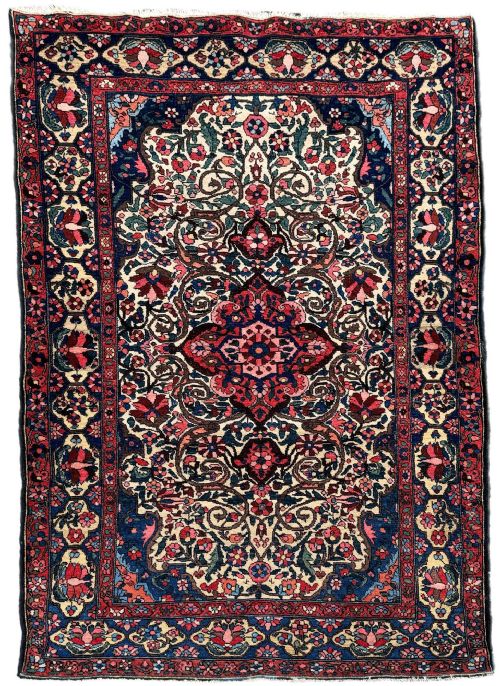
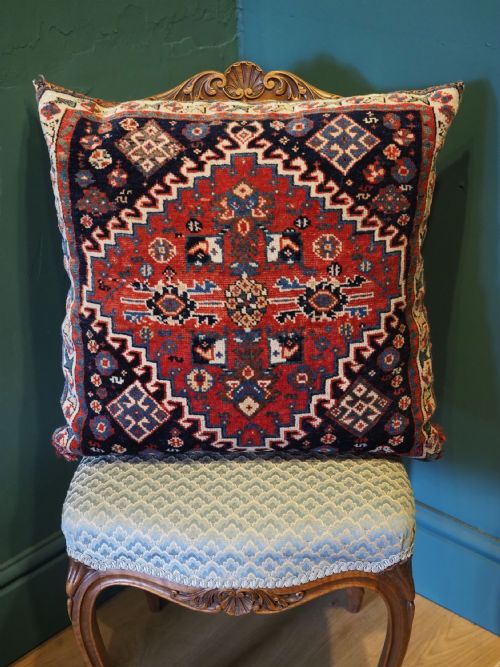
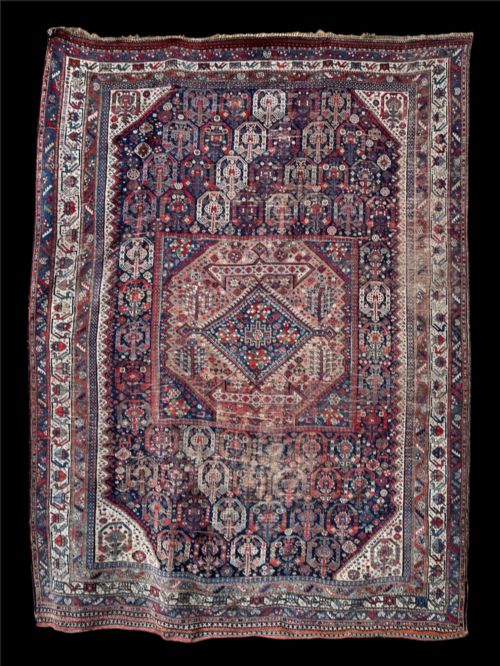
A navy tribal carpet gathers together hand-woven wool rugs, runners, saddle covers, and cushions originating from Persian, Caucasian, and Kurdish weaving traditions. The selection spans the nineteenth century through the early decades of the twentieth century, including pieces attributed to Afshar, Khamseh, Qashqai, Baluch, and Karabagh makers.
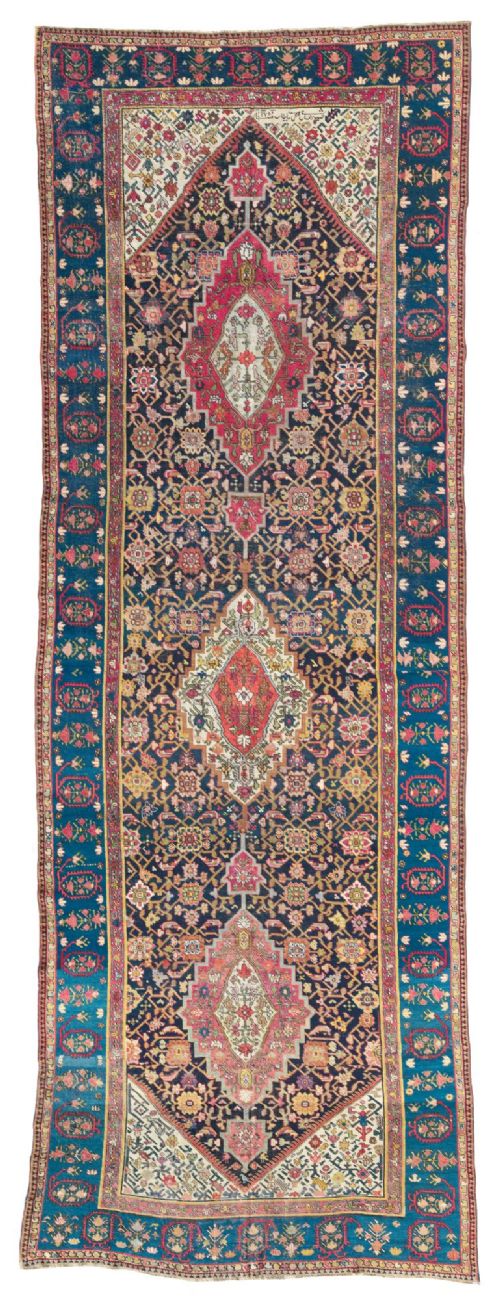
Most examples rely on deep blue grounds paired with geometric medallions, lattice patterns, or prayer mihrabs. Forms range from compact saddle bag cushions and small scatter rugs to room-sized carpets and long hallway runners.
Buyers encounter regional village and nomadic work rather than standardised court manufactures. Each piece reflects the specific tribal iconography and local weaving habits of its origin.
How they were made
Makers utilised wool, cotton, and hand-spun wool as the primary materials for pile and foundation yarns. Hand-knotting techniques predominated across village and tribal workshops, creating dense structural weaves designed for daily use.
Weavers employed natural dye traditions to achieve deep indigo navy tones alongside contrasting accent colours. Foundation structures combined wool or cotton warps and wefts to support the hand-knotted pile.
The listings on this site span the nineteenth century and the early decades of the twentieth century, featuring wool, cotton, and hand-spun wool materials.
What varies in quality
Quality rests upon the fineness of the knotting and the crispness of the geometric design. Tightly packed piles and well-balanced proportions separate finer village and nomadic pieces from coarser utility examples.
The choice and handling of hand-spun wool and dye saturation define the visual depth of the navy field. Greater precision in repeating motifs and balanced border geometries signal higher competency among regional weavers.
The Navy Tribal Carpet Glossary
- Kelleh
- A large, elongated format of carpet traditionally used alongside main carpets in Persian room layouts. These pieces offer narrower proportions than standard room carpets.
- Kilim
- A flat-woven textile produced without a knotted pile. These pieces rely on interlocking warp and weft threads to form geometric patterns.
- Medallion
- A central ornamental design motif placed in the field of a carpet. It forms the focal point of the symmetrical composition.
- Runner
- A long, narrow carpet format designed for hallways and corridors. They repeat geometric lattice or medallion designs along an extended axis.
Navy Tribal Carpet: Frequently Asked Questions
Where were these tribal carpets made?
These carpets originate from regions across Persia, the Caucasus, and Kurdish territories. Local nomadic confederations and village communities produced them using traditional regional designs.
Weavers in areas such as Shiraz, Karabagh, and Baluchistan developed distinct patterns and colour palettes that identify their geographic roots.
How do I clean a wool rug?
Wool rugs require gentle care, starting with regular light vacuuming without a beater bar. Professional cleaning suited for hand-knotted textiles preserves the natural lanolin in the wool.
Avoid harsh chemical treatments and excessive water immersion to protect the integrity of the natural dyes and hand-spun foundation yarns.
Are these rugs suitable for hallways?
Long runner formats and durable wool piles make many of these pieces well suited for high-traffic hallways. Their sturdy construction handles regular footfall while adding deep navy colour to narrow spaces.
Placing an appropriate underlay beneath the runner prevents slipping and reduces wear on the historical foundation.
How do I date an antique rug?
Dating relies on examining the materials, dye types, structural characteristics, and stylistic evolution of the weaving. Hand-spun wool and specific regional motifs often point toward nineteenth or early twentieth-century production.
Comparing the knot density and wear patterns with documented examples from known tribal groups helps narrow the period of origin.