



Naval Vessel Art
Naval vessel art captures the drama of historic fleets and sea battles through centuries of maritime painting and craft.
Naval Vessel Art
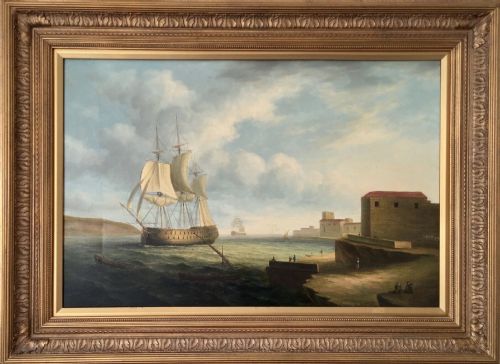
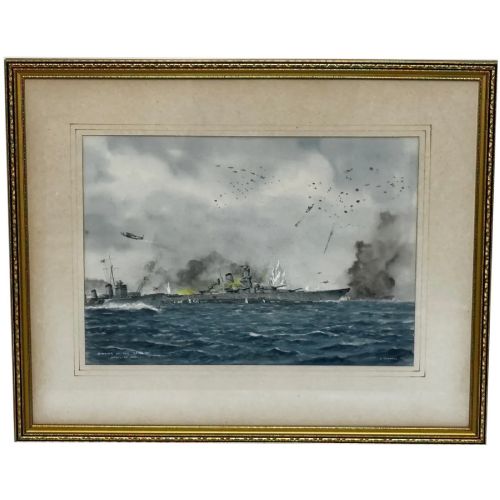
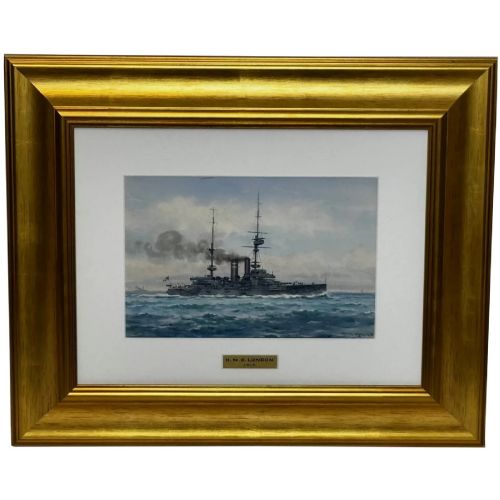
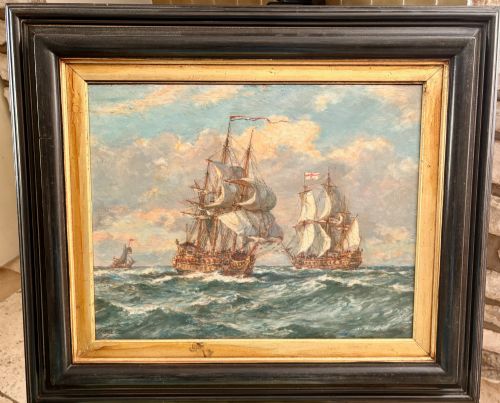
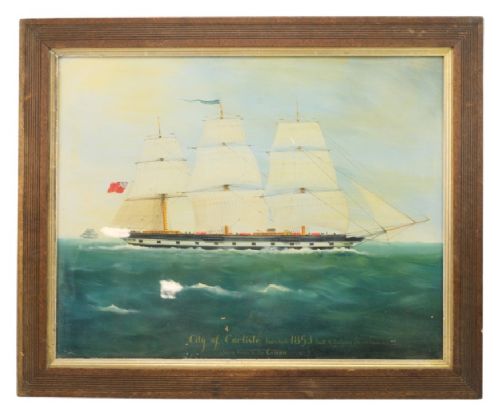
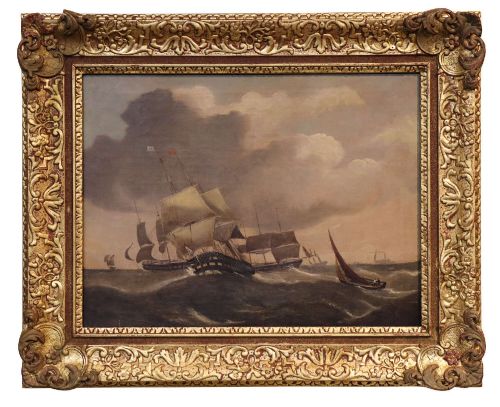
Naval vessel art encompasses maritime paintings, watercolours, and decorative objects depicting warships, frigates, and historic fleets across various centuries. Buyers searching for naval vessel art typically encounter Victorian and Edwardian watercolours, mid-century naval scenes, and detailed oil paintings on canvas or panel. The selection ranges from early depictions of specific engagements like Trafalgar to detailed portraits of named warships such as HMS London and HMS Victory.
The objects span multiple periods, including Georgian, Victorian, and mid-century modern eras, reflecting changing artistic styles from maritime realism to expressive gouache tributes. Works often highlight named vessels, naval officers, and significant maritime locations from Malta to Sydney Harbour. Collectors find both framed watercolours and traditional oil paintings depicting choppy waters, coastal shipping, and formidable ironclad battleships.
Materials and Technique
Artists rendering naval vessel art relied heavily on traditional oil paint on canvas or panel, alongside watercolour and gouache on paper. Canvas works utilised layered oil pigments to capture the movement of heavy seas and dramatic light on sails, while paper works employed delicate watercolour washes for precise rigging and coastal detail. Frame construction typically involved wood, occasionally incorporating gold leaf to accent period pieces.
Makers of decorative maritime objects incorporated mixed media, utilising glass and wood for detailed sailing ships contained within bottles. Photographic prints on card were mounted within original oak frames, preserving early visual records of sailors and vessels. Lithographs offered a reproducible medium for ship imagery during the nineteenth century.
A French sailor once immortalised his ironclad battleship in gouache as a sentimental tribute to his shipmates.
Quality and Execution
Quality in naval vessel art rests upon the artist's command of maritime architecture, rigging accuracy, and atmospheric perspective. Superior pieces demonstrate precise rendering of vessel proportions against dynamic, convincing sea conditions, whereas lesser works display stiff water and generalised hull structures. The handling of light on water and canvas separates accomplished marine painters from amateur recorders.
Provenance and documentation heavily influence the standing of a piece, particularly when works are signed by established marine artists or naval officers with direct maritime experience. The preservation of the original medium, whether oil paint or watercolour, alongside period framing contributes to the integrity of the object.
James Hardy·Eric Tufnell·Frank Watson Wood·Bernard Gribble·Charles William Adderton·Vincenzo D’Esposito·Marie-Edouard Adam·Ebeneezer Colls·Charles Dixon·WF Mitchell·Francis Holman
The Naval Vessel Art Glossary
- Gouache
- An opaque watercolour paint consisting of pigment, water, and a binding agent such as gum, producing a heavier, more matte surface than traditional watercolour.
- Panel
- A flat piece of wood or other rigid material used as a support for oil paintings prior to the widespread adoption of stretched canvas.
- Frigate
- A warship built for speed and manoeuvrability, historically serving as a scout or escort for heavier fleet vessels in naval warfare.
- Lithograph
- A print produced from a flat stone or metal plate treated to repel ink except where desired for the image, common in nineteenth-century illustration.
- Maritime
- Relating to the sea, navigation, shipping, and naval forces, encompassing the broader visual culture of oceans and vessels.
Naval Vessel Art: Frequently Asked Questions
How do I identify a nineteenth-century marine painting?
Nineteenth-century marine paintings often depict paddle steamers, barques, or majestic frigates with detailed rigging executed in oil on canvas or watercolour. Stylistic cues include dramatic depictions of heavy seas or coastal shipping scenes characteristic of the Victorian maritime tradition.
Examining the backing materials, framing style, and any artist signatures or inscriptions provides further confirmation of the period of creation.
Were these naval watercolours painted by sailors?
Some naval watercolours and gouache paintings were indeed created by serving naval officers and sailors who documented their own vessels and deployments. Figures such as Commander Eric Tufnell utilised their firsthand experience at sea to record specific ships and locations with technical precision.
Other works were produced by professional marine artists working from sketches, historical accounts, or direct observation in harbours.
How should I display framed maritime watercolours?
Framed maritime watercolours require protection from direct sunlight to prevent the fading of delicate pigments on paper. Placing them in rooms with stable humidity levels helps preserve both the paper medium and the original wood framing.
Ensuring proper glass separation prevents the watercolour paper from touching the glazing over time.