



Naval Battle Painting
Naval battle painting captures the drama of historic sea warfare, bringing centuries of maritime conflict onto canvas and paper for the collector.
Naval Battle Painting
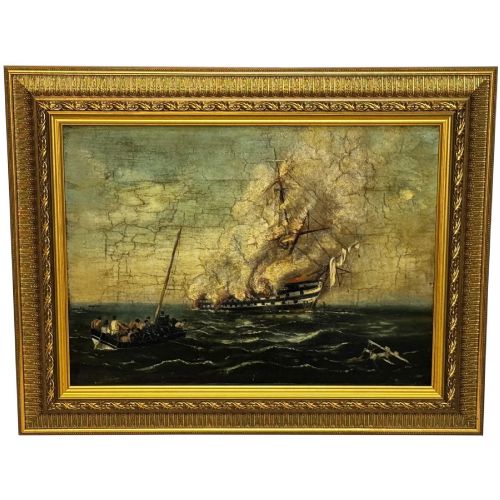
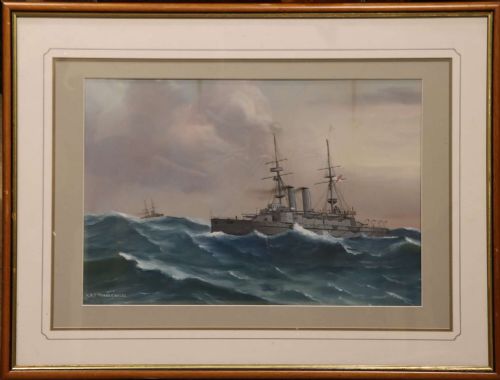
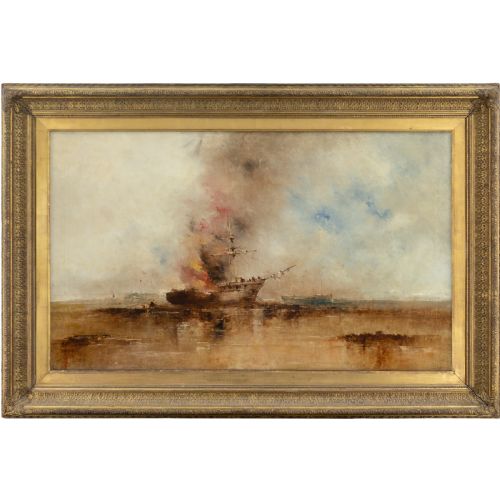
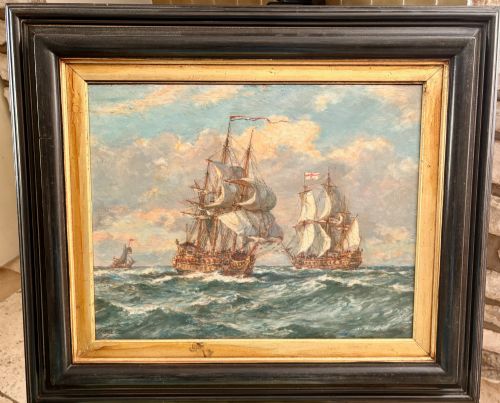
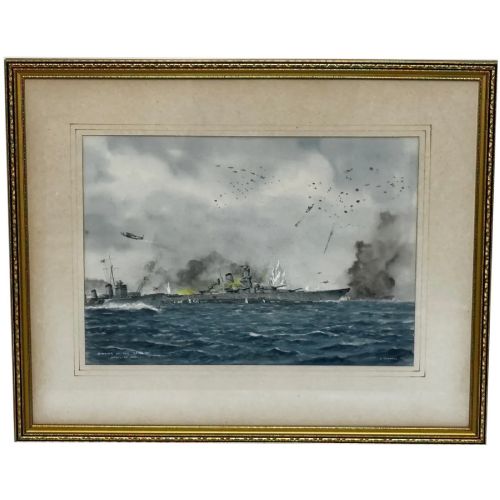
A naval battle painting depicts historic maritime engagements, warships in combat, and dramatic actions at sea across several centuries. These works range from large oil on canvas compositions showing full-scale fleet actions to intimate watercolours and gouache studies of specific vessels.
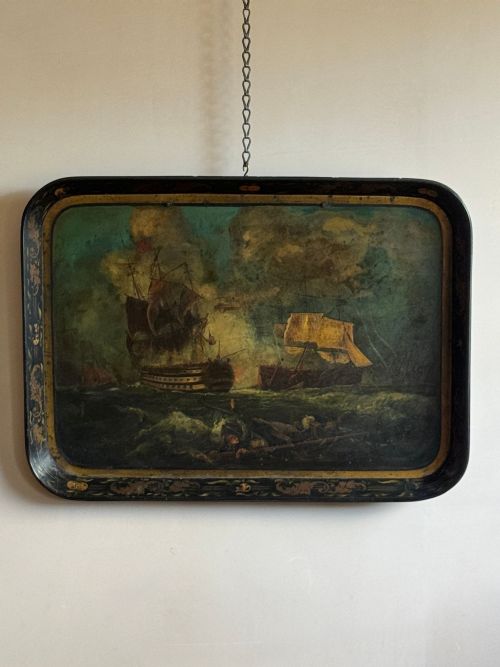
The pieces on this page span from the seventeenth century through to the mid-twentieth century, encompassing Georgian, Victorian, and Edwardian interpretations of sea warfare. Alongside traditional framed canvases, buyers encounter related decorative items such as reverse glass prints in maple frames and japanned papier-mâché trays.
Works attributed to followers of known marine artists sit alongside pieces by named painters like William McAlpine, Eric Tufnell, Bernard Gribble, and Dion Pears. Whether recording specific historic actions like Trafalgar or generic engagements involving galleons and warships, these paintings record the changing face of naval architecture and combat.
Materials and techniques
Artists relied primarily on oil paint applied to canvas, often building up layers to render the churned water, cannon smoke, and rigging of warships. Watercolours and gouache on paper offered a more immediate medium for detailed maritime studies and specific ship portraits.
Frames played a crucial role in presentation, utilising wood, gold leaf, and specialised mouldings such as maple to house the artwork or integrate it into decorative objects like mirrors.
Naval Battle Painting Retail Price Guide 2026
Typical asking prices for naval battle painting among the pieces listed under this phrase on Sellingantiques today, from the lower quarter to the upper quarter. They describe what is for sale here now, not the wider market.
Some naval battles are observed from the safety of a tea tray, proving that eighteenth-century conflict could double as dining room decor.
Assessing quality
Quality rests on the artist's command of maritime perspective, rigging accuracy, and the atmospheric rendering of smoke, sky, and rough water. Stronger works convey the genuine chaos and scale of a sea engagement rather than presenting stiff, static arrangements of vessels.
The depth of historical detail regarding the warships, uniforms, and flag signals distinguishes accomplished marine art from simpler decorative renderings. Preservation of the original canvas, paint surface, and period framing also influences the standing of an individual piece.
William McAlpine·Eric Tufnell·Bernard Gribble·Richard Brydges Beechey·Dion Pears·Abraham Storck
The Naval Battle Painting Glossary
- Gouache
- An opaque watercolour paint that dries to a matte finish, allowing artists to achieve sharp detail in maritime works. It was frequently utilised for crisp depictions of ship hulls and rigging.
- Japanned
- A European imitation of East Asian lacquerwork applied to surfaces such as papier-mâché trays. This technique created a dark, glossy finish often decorated with gilt motifs.
- Reverse glass print
- An image applied to the back of a glass panel and viewed from the front, a technique popular for decorative mirrors and commemorative naval scenes. It required meticulous brushwork in reverse.
- Follower
- An artist working in the distinct style of a well-known master, either during their lifetime or afterwards. Such works capture the established composition and technique of a recognised painter.
Naval Battle Painting: Frequently Asked Questions
What is a naval battle painting?
A naval battle painting is a work of art depicting historic armed conflict between warships at sea, ranging from the age of sail to twentieth-century engagements. These pieces document specific historic actions, fleet tactics, and the evolution of naval vessels.
Created in mediums including oil on canvas, watercolour, and gouache, they serve as both historical records and dramatic maritime art. Collectors acquire them for their visual intensity and their connection to naval history.
How do I date a naval battle painting?
Dating relies primarily on the style of the warships, the rigging, the uniforms of any figures visible, and the artistic conventions of the period. Sail configurations, the presence of cannons versus early steam power, and hull designs provide clear chronological markers.
Framing materials and canvas preparation also offer clues, alongside signatures or attribution notes left on the reverse of the work. Comparing the depiction of naval architecture to known historical vessels helps narrow the timeframe of the engagement shown.
Where should I hang a marine painting?
Marine paintings suit studies, libraries, and living spaces where traditional or period decor complements the maritime subject matter. Strong lighting enhances the dark tones of cannon smoke, churning seas, and shadowed ship hulls typical of these works.
Placement should avoid direct sunlight to protect oil paint and paper from fading over time. Pairing canvases with appropriate period frames ensures they anchor a wall visually without competing with surrounding furnishings.
Are all these paintings British?
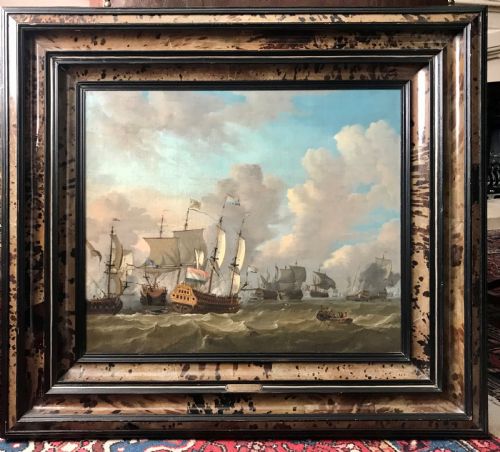
While many works focus on British naval engagements and feature artists from Britain, the selection includes continental perspectives such as Dutch ship depictions. Maritime art naturally crossed national boundaries as artists recorded international conflicts and shared stylistic approaches.
Different schools of marine painting emphasise varying aspects, from Dutch Golden Age realism to Victorian narrative drama. Examining the subject matter often reveals which nation's navy or historic fleet forms the focus of the composition.