


Royal Navy Artwork
Royal navy artwork captures the historic vessels, fleet reviews, and naval commanders of the British maritime tradition through oils and watercolours.
Royal Navy Artwork
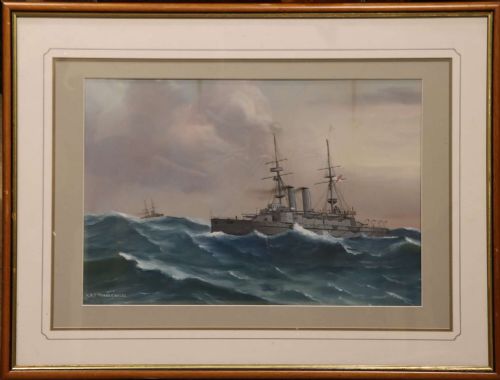
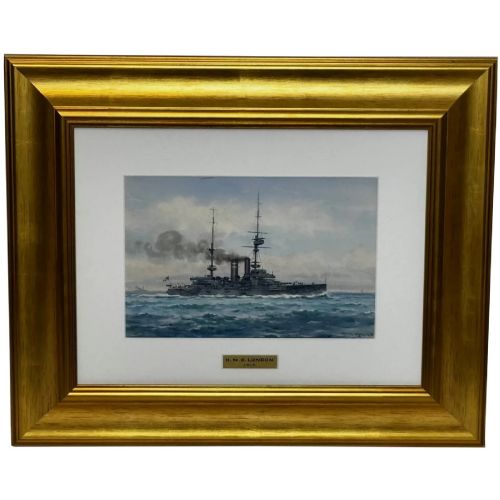
Royal navy artwork encompasses oil paintings and watercolours depicting specific historical vessels, fleet reviews, and prominent naval officers. These pieces document the service of named ships like HMS Prince of Wales and HMS Victory across different eras.
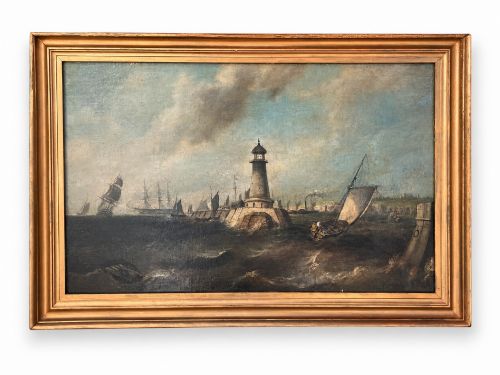
You will encounter pieces ranging from Georgian maritime scenes to mid-century watercolours and portraits of admirals in naval uniform. The selection includes works by listed marine artists and detailed depictions of cruisers, seaplane carriers, and man-of-war ships.
Many examples capture significant moments such as fleet reviews at Spithead or operational deployments in foreign harbours. The visual record spans centuries of naval history, preserving the vessels and personnel on paper and canvas.
Materials and technique
Artists record naval subjects using oil on canvas, gouache, and watercolour on paper, housed within traditional wood or giltwood frames. These mediums allow for precise detailing of naval architecture, rigging, and uniform insignia.
Works on paper utilise fine watercolour washes and gouache to capture marine atmospheric conditions and coastal light. Oil paintings employ layered pigments on canvas to depict the scale and motion of warships at sea.
Portraits of naval personnel capture figures ranging from reigning monarchs to high-ranking admirals and commanders.
Assessing quality and execution
Quality rests upon the artist's technical command of maritime architecture, rigging accuracy, and atmospheric perspective. Superior pieces demonstrate precise observation of naval vessels and convincing rendering of water and sky.
Provenance and documentation elevate a piece, particularly when works are attributed to known marine painters or executed by naval officers with firsthand service experience. The handling of uniform details and ship structures distinguishes accomplished works from simpler renderings.
Frank Watson Wood·Nicholas Condy·Eric Tufnell·Vincenzo D’Esposito·Samuel Owen·Charles Dixon·WF Mitchell·John Laviers Wheatley·William Dring·Maurice Codner·Richard Hall
The Royal Navy Artwork Glossary
- Gouache
- An opaque watercolour paint that produces bright, solid colour effects. It allows artists to add crisp highlights to maritime scenes.
- Man-of-war
- A powerful armed sailing warship used by the Royal Navy from the seventeenth through the nineteenth century. These vessels form the subject of early maritime paintings.
- Seaplane carrier
- A ship designed to carry, launch, and retrieve seaplanes for reconnaissance and fleet support. These specialised vessels appear in early twentieth-century naval depictions.
- Provenance
- The documented history of ownership of an artwork establishing its authenticity and origin. This record connects specific pieces to naval collections and exhibitions.
Royal Navy Artwork: Frequently Asked Questions
What subjects appear in royal navy artwork?
These pieces primarily depict named warships, fleet reviews, naval engagements, and portraits of admirals and royalty in uniform. Vessels range from eighteenth-century man-of-war ships to twentieth-century cruisers and seaplane carriers.
Artists often record specific historical vessels actively operating at sea or anchored in international harbours. Fleet reviews also feature prominently, capturing massed formations of naval power on designated dates.
How do I date these maritime paintings?
Dating relies on the ship types depicted, uniform styles, artist signatures, and frame construction. Naval architecture and vessel commissioning dates provide a reliable terminus post quem for identification.
Historical events recorded in the titles, such as specific fleet reviews or port visits, offer precise chronological anchors. Costume details in officer portraits further narrow down the decade of creation.
Who painted these naval scenes?
Works are created by professional marine painters, portrait artists, and occasionally serving naval officers who recorded their own experiences at sea. Some pieces originate from followers or circle members of established marine masters.
Figures like official war artists and accomplished naval commanders contribute firsthand perspective to the visual record. Their professional familiarity with ships ensures accurate representation of rigging, flags, and naval routine.
How should I frame and display them?
Watercolours require conservation framing behind glass to protect the paper and pigments from ultraviolet light and humidity damage. Oil paintings on canvas benefit from stable indoor environments away from direct heat sources.
Original giltwood frames should be preserved where possible, provided they offer stable structural support to the artwork. Proper hanging maintains the tension of canvases and prevents warping in paper supports.