



Natural History Display Dome
A natural history display dome brings Victorian and Edwardian scientific curiosity straight into a room, preserving exotic birds and specimens under mouth-blown glass.
Natural History Display Dome
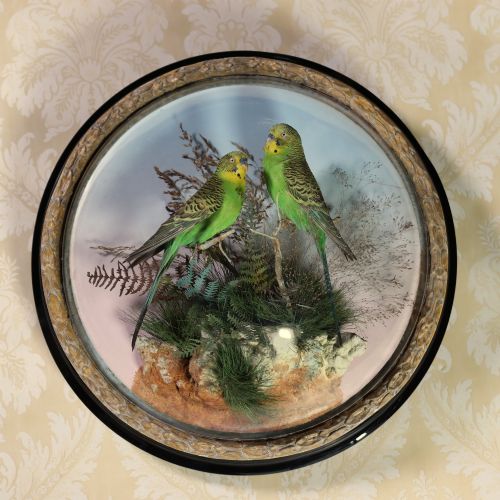
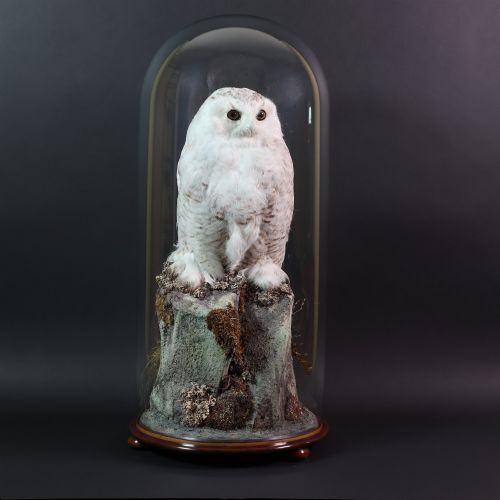
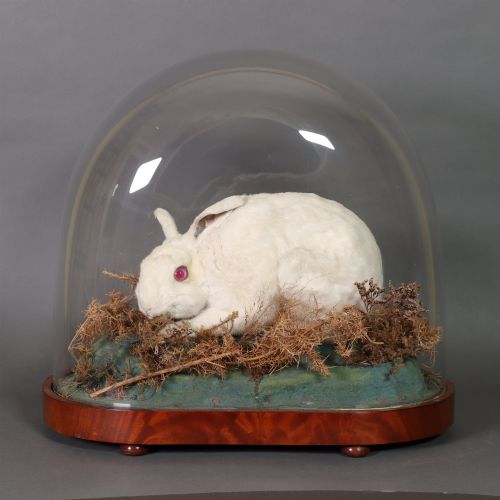
A natural history display dome houses preserved specimens beneath a clear glass cover, protecting fragile taxidermy from dust and handling while creating a striking focal point. These decorative objects date primarily from the Victorian and Edwardian periods, reflecting an era obsessed with natural science and exotic exploration.
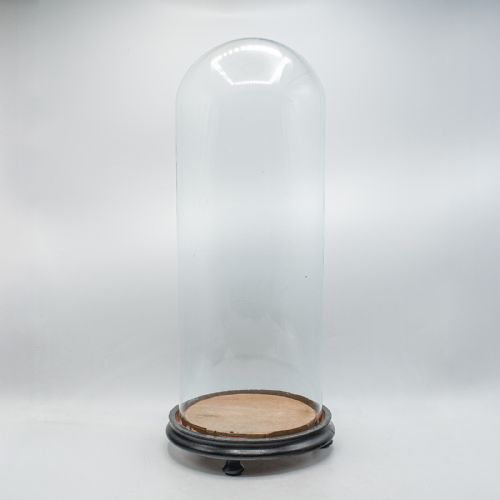
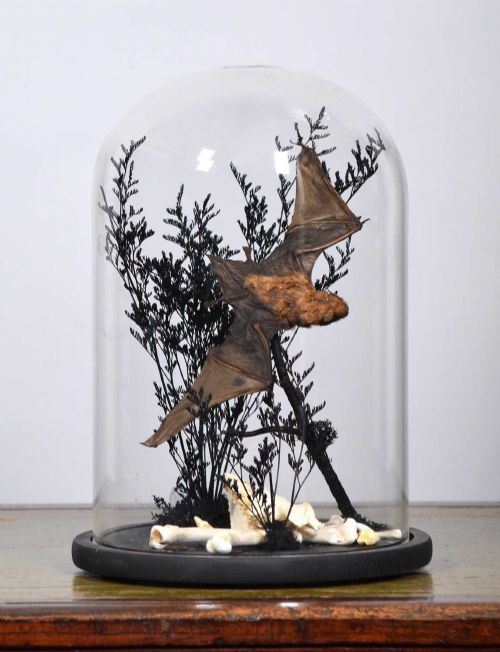
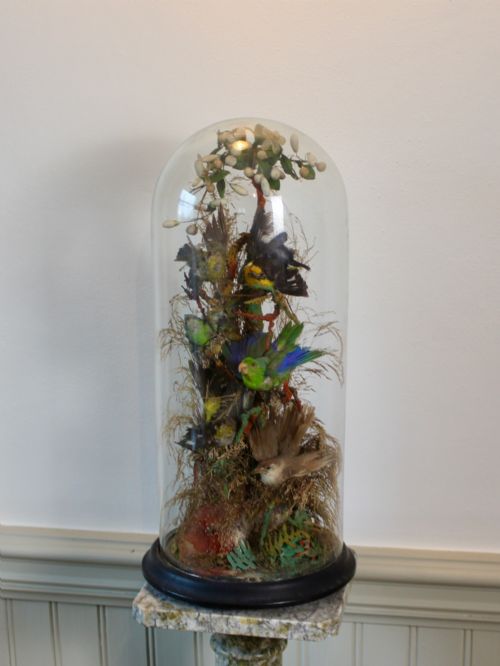
Most examples found here take the form of tall glass domes or flat-sided cloches resting upon timber bases. The contents range from solitary bats and animal skulls to complex taxidermy compositions featuring colourful birds, snow buntings, and birds of paradise arranged among natural vegetation.
Construction and Materials
Makers formed the protective covers from blown glass, shaping tall curves and flat-sided domes to encase delicate subjects securely. These transparent vessels rest upon wooden bases, frequently utilising ebonised timber to provide a dark, contrasting foundation that frames the specimen.
Inside the glass, taxidermists arranged diverse organic materials including feathers, fur, bone, and natural vegetation. Preserving these specimens required meticulous taxidermy techniques combined with botanical elements to recreate miniature natural habitats.
Natural History Display Dome Retail Price Guide 2026
Typical asking prices for natural history display dome among the pieces listed under this phrase on Sellingantiques today, from the lower quarter to the upper quarter. They describe what is for sale here now, not the wider market.
Snow buntings and pipistrelle bats occasionally share shelf space with exotic birds of paradise beneath the same glass.
Evaluating Quality
Quality rests heavily upon the complexity and condition of the taxidermy composition contained within the glass. Multi-bird arrangements by recognised practitioners command greater attention than simple single-specimen displays.
The clarity and age of the blown glass contribute significantly to the character of the piece, alongside the stability and finish of the wooden base.
James Gardner·Henry Ward London·A Pollard
The Natural History Display Dome Glossary
- Dome
- A rounded glass cover designed to protect and display delicate decorative objects. It sits upon a matching wooden base.
- Ebonised wood
- Timber treated with a dark finish to resemble ebony. This material creates a stark, formal contrast against colourful feathers and pale bone.
- Taxidermy
- The art of preparing, stuffing, and mounting animal skins for permanent display. Victorian practitioners arranged these specimens to mimic living creatures in natural poses.
- Cloche
- A bell-shaped glass cover used for display or protection. Flat-sided variations offer clearer viewing angles for internal compositions.
- Specimen
- An individual animal or plant collected for scientific study or exhibition. In these displays, they form the central artistic subject.
Natural History Display Dome: Frequently Asked Questions
What is a natural history display dome?
A natural history display dome is a decorative antique housing preserved taxidermy specimens beneath a glass cover.
These pieces typically feature nineteenth-century birds, bats, or osteological specimens arranged on wooden bases.
How do I date a display dome?
Dating relies on the style of the wooden base, the tint and thickness of the blown glass, and the taxidermy methods used.
Victorian and Edwardian examples often exhibit distinct ebonised woodwork and specific compositional choices characteristic of late nineteenth-century craftsmanship.
How were these domes used originally?
Victorian households displayed these domes in parlours and studies to showcase scientific curiosity and global exploration.
They served as both educational ornaments and status symbols reflecting an interest in natural history.