

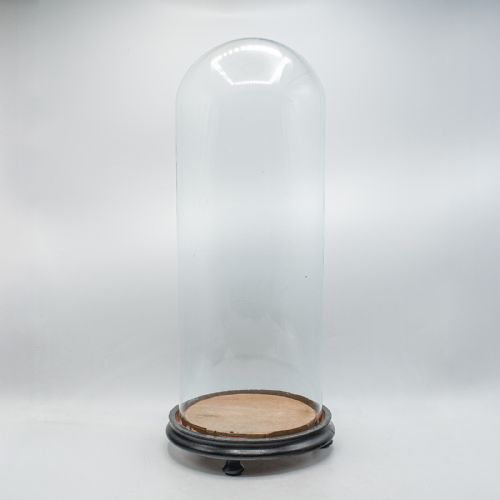


Black Wood Display Dome
A black wood display dome turns an ordinary natural specimen or curious object into a proper centrepiece, bringing Victorian presence to any room.
Black Wood Display Dome
When you search for a black wood display dome, you are looking at nineteenth-century and early twentieth-century glass covers designed to protect and exhibit delicate objects. These pieces range from tall taxidermy showcases and botanical specimens to architectural models and clock cases.
These enclosures take various forms, including oval collector domes, wide specimen cases, and striking pagoda shapes. Each piece combines a clear blown glass cover with a dark timber base, creating a formal frame that elevates the objects placed within.
Materials and construction methods
The foundation of these pieces relies upon timber, specifically ebonised wood or painted wood that achieves a deep, dark finish characteristic of the period. Gesso is frequently applied to shape decorative mouldings or smooth surfaces before finishing.
The protective covers consist of heavy blown glass, which sits securely within or atop the wooden bases. Many examples include internal fittings lined with fabric or felt to cushion the displayed items and enhance the visual presentation.
Black Wood Display Dome Retail Price Guide 2026
Typical asking prices for black wood display dome among the pieces listed under this phrase on Sellingantiques today, from the lower quarter to the upper quarter. They describe what is for sale here now, not the wider market.
The listings here draw upon nineteenth-century and early twentieth-century periods, featuring materials such as ebonised wood, felt, and heavy blown glass.
Judging quality and character
The distinction between standard examples and finer pieces often rests upon the clarity and weight of the glass dome itself. Hand-blown glass with subtle imperfections and substantial thickness elevates an enclosure far above later, more uniform replacements.
Base construction also dictates quality, with heavier timber frames, refined ebonised finishes, and intact interior fabric linings marking out superior examples. The proportion between the height of the glass and the weight of the wooden plinth determines the overall visual balance.
The Black Wood Display Dome Glossary
- Ebonised wood
- Timber treated with a dark stain or finish to imitate expensive ebony. This process was widely utilised during the Victorian period to provide a formal, uniform contrast against bright specimens.
- Cloche
- A bell-shaped glass cover used to protect plants, food, or delicate ornaments. In this context, it functions interchangeably with a display dome.
- Gesso
- A plaster-based material applied to wood surfaces to create a smooth base for painting or gilding. It allows for crisp decorative details along the plinth rims.
- Taxidermy showcase
- A specialised enclosure designed to house preserved animals, birds, or insects. These often feature internal mounting pins or platforms beneath the glass.
Black Wood Display Dome: Frequently Asked Questions
What were display domes originally used for?
These glass covers served primarily to protect delicate natural history specimens, taxidermy, and precision clock movements from dust and moisture in domestic interiors.
Collectors utilised them to exhibit botanical specimens, shells, and imported curiosities safely while keeping them visible for study and admiration.
How do I date a Victorian glass dome?
Dating relies heavily on the thickness and optical qualities of the glass, alongside the construction style of the wooden base. Earlier nineteenth-century examples often display subtle waviness and bubbles within the blown glass.
The specific timber mouldings, interior felt linings, and overall proportions also offer strong clues to whether a piece originates from the mid-Victorian era or the later Edwardian period.
Are the wooden bases usually original to the glass?
Most surviving antique domes retain their matched timber plinths, which were manufactured specifically to fit the exact diameter of the blown glass cover.
Inspectors look for consistent wear patterns between the lower rim of the glass and the channel in the wood where it rests to confirm their shared history.
How should I clean an antique glass dome?
Heavy glass requires careful handling and should be lifted using both hands away from the wooden base to prevent accidental chipping along the lower rim. Mild glass cleaner applied to a soft cloth suffices for the exterior without risking the vintage materials.
The ebonised wooden base benefits from gentle dusting with a dry cloth, avoiding harsh chemical polishes that might degrade the historic finish.