





Narrow Wool Floor Runner
A narrow wool floor runner brings warmth and distinct character to a hallway, drawing the eye along lengthy spaces with traditional patterns.
Narrow Wool Floor Runner
A narrow wool floor runner is typically chosen to fit corridors, hallways, and elongated rooms where standard carpets do not suit. These pieces span from the late nineteenth century through to the 1930s, offering extended proportions designed specifically for passage spaces.
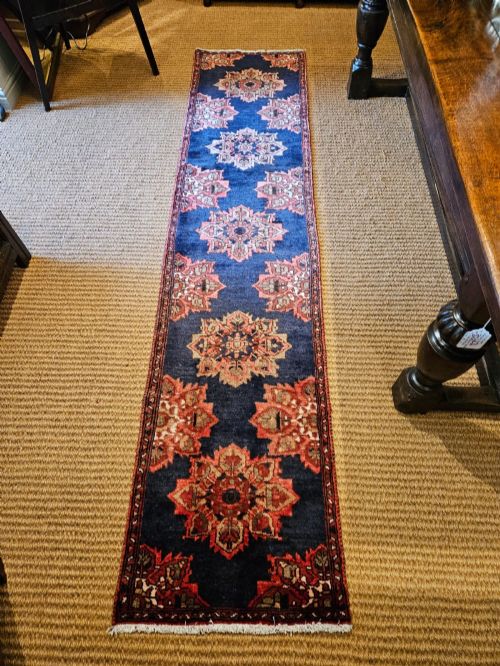
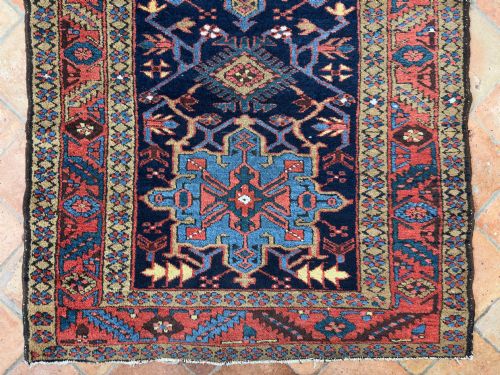
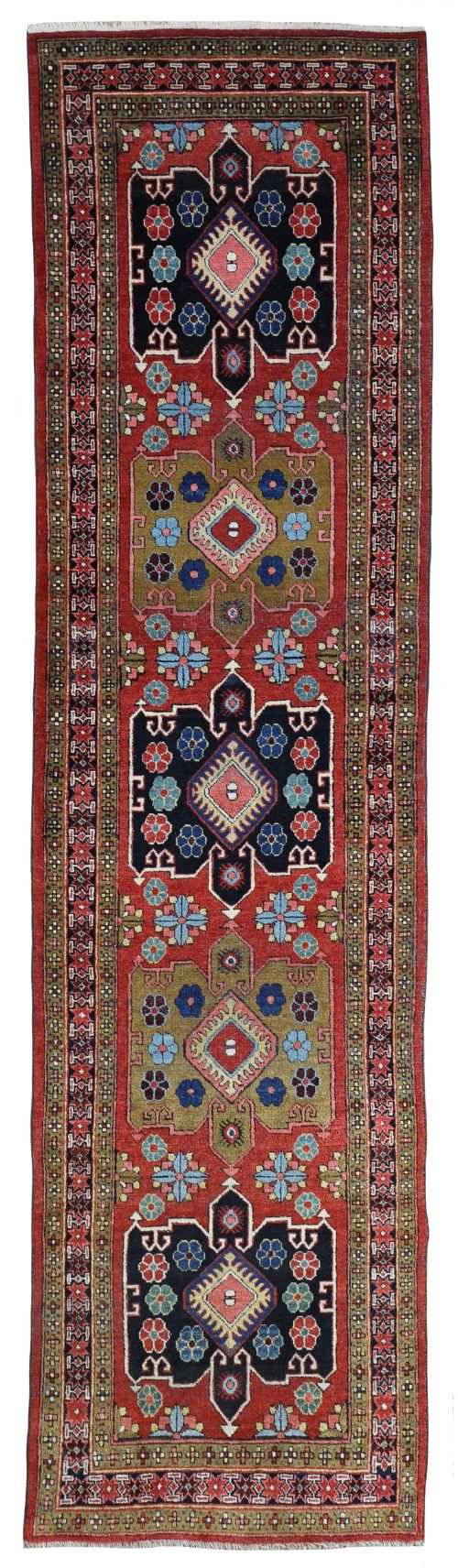
The selections available here showcase regional weaving traditions including Persian Heriz, Karaja, Bidjar, and Moroccan Berber styles. Buyers encounter both navy blue and red ground compositions alongside various tribal and geometric motifs.
Originating from workshops and nomadic groups across Persia, the Caucasus, and North Africa, these antique runners provide practical floor coverings with historical depth. Each rug delivers an elongated format suited to high-traffic domestic corridors.
What Varies in Quality
Knot density and structural tightness dictate the longevity and definition of the pattern across each runner. Tighter packing of the foundation threads results in a firmer handle and sharper geometric detail.
Narrow Wool Floor Runner Retail Price Guide 2026
Typical asking prices for narrow wool floor runner among the pieces listed under this phrase on Sellingantiques today, from the lower quarter to the upper quarter. They describe what is for sale here now, not the wider market.
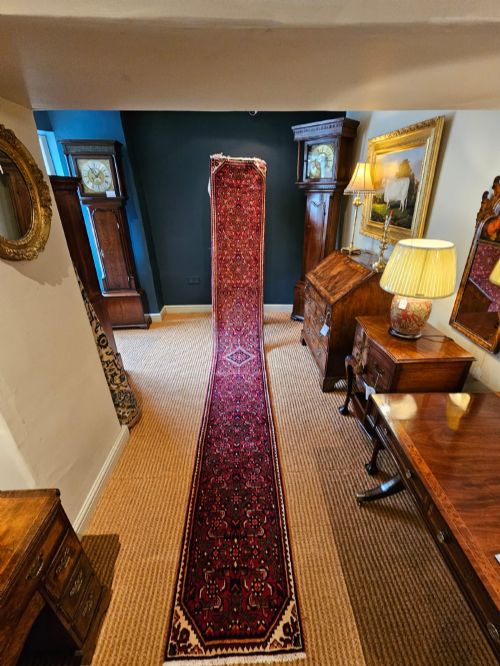
One exceptionally long runner stretches past ten metres, requiring a dedicated corridor just to appreciate its full span of knots.
The Narrow Wool Floor Runner Glossary
- Runner
- A long, narrow carpet designed principally for hallways, corridors, and stairs. These formats guide movement through a building while protecting wooden or tiled floors.
- Pile
- The upright yarn loops or cut ends that form the soft surface of a rug. In these pieces, wool pile provides both cushioning underfoot and protection for the foundational weave.
- Warp
- The vertical threads stretched tightly on a loom before knotting begins. Cotton or wool warp threads support the entire weight and structure of the runner.
- Weft
- The horizontal threads passed across the warp strands to lock the knots firmly in place. Proper tension in the weft ensures the structural stability of the rug along its length.
- Heriz
- A style of Persian carpet originating from the Northwest region, known for bold geometric medallions and robust construction. These runners frequently display strong architectural motifs.
Narrow Wool Floor Runner: Frequently Asked Questions
Where should I place a narrow wool floor runner?
These runners fit naturally into long hallways, narrow corridors, and entryways where their extended proportions protect high-traffic floorboards.
They also serve effectively in galley kitchens or alongside large beds to add warmth and texture to bare floor surfaces.
How do I care for an antique wool runner?
Regular gentle vacuuming without a rotating brush roll helps remove embedded dust and keeps the wool pile clean.
Professional specialist cleaning is recommended every few years to preserve the natural lanolin and prevent dye migration in older textiles.
What periods do these runners come from?
The available pieces date from the late nineteenth century through the early decades of the twentieth century, specifically spanning the 1870s to the 1930s.
This era encompasses traditional tribal weaving traditions alongside established regional Persian workshop productions.
How do I measure for a hallway runner?
Measure the clear length of your hallway while leaving a uniform border of exposed flooring around the perimeter of the rug.
Ensure that doors opening into the space possess enough clearance above the pile thickness to move freely without obstruction.