





Heriz Karaja Wool Runner
A heriz karaja wool runner is a sturdy North West Persian floor covering offering geometric tribal artistry for long hallways.
Heriz Karaja Wool Runner
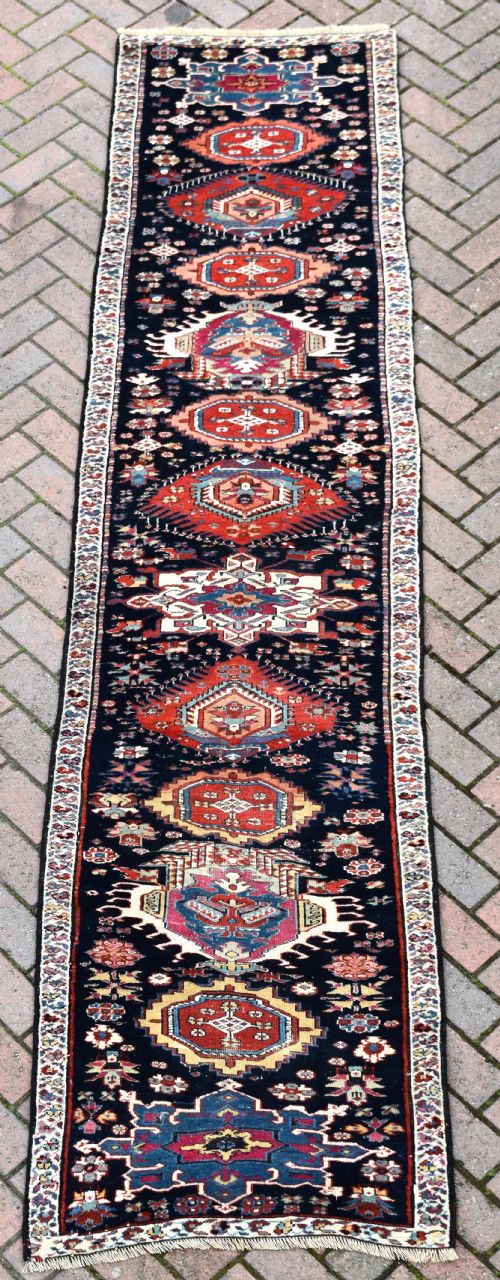
A heriz karaja wool runner provides a distinct narrow format suited for corridors and passageways within the home. These pieces emerge from North West Persia, showcasing the regional weaver artistry developed across the late nineteenth and early twentieth centuries.
The items appearing here span periods from 1880 to 1920, capturing traditional village weaving traditions. Buyers encounter rugs and narrow runner formats designed specifically for domestic circulation.
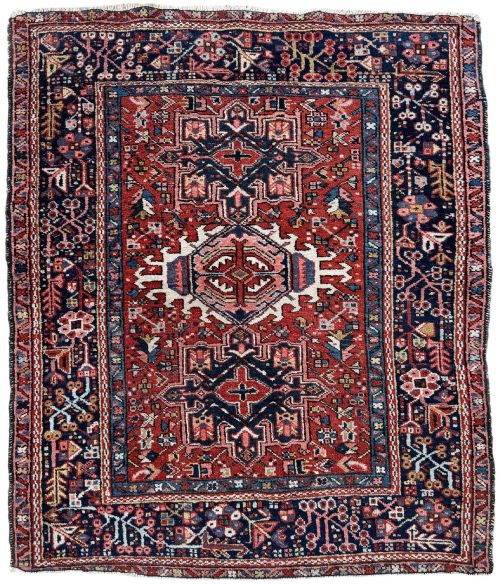
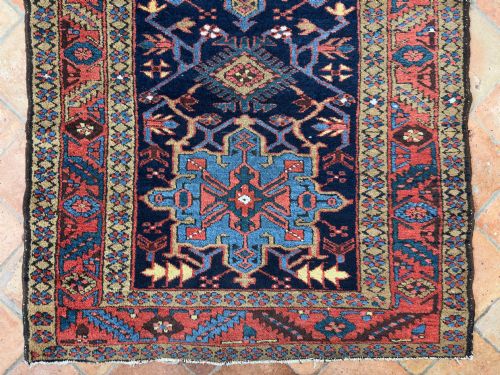
Persian tribal designs dominate the aesthetic, presenting structured geometric medallions and rectilinear motifs rather than flowing floral curves. Each piece reflects the utilitarian yet artistic output of North West Persian workshops.
How they were made
These textiles utilise a durable wool pile knotted firmly onto a cotton foundation. This material combination provides the structural resilience necessary for high-traffic hallway placement.
Weavers in the Heriz and Karaja regions employed hand-knotted techniques using durable natural fibres. The resulting pile withstands sustained pressure while retaining its detailed geometric patterns.
Heriz Karaja Wool Runner Retail Price Guide 2026
Typical asking prices for heriz karaja wool runner among the pieces listed under this phrase on Sellingantiques today, from the lower quarter to the upper quarter. They describe what is for sale here now, not the wider market.
Listings span five decades from 1880 to 1920, documenting North West Persian village weaving.
What varies in quality
The standard of a runner rests upon the precision of its geometric drawing and the saturation of its natural dyes. Finer examples maintain crisp lines within their medallion structures and balanced colour distribution across the field.
Proportion also defines the grade of these pieces, particularly in narrow formats where maintaining straight margins demands exceptional skill from the weaver. The handling of the wool pile dictates both tactile appeal and long-term durability.
The Heriz Karaja Wool Runner Glossary
- Karaja
- A style of village rug and runner originating from North West Persia, known for bold geometric patterns. These pieces typically display large central medallions flanked by tribal motifs.
- Heriz
- A region in North West Persia associated with resilient carpets and runners featuring strong rectilinear designs. The weaving tradition here prioritises structural durability alongside striking graphic impact.
- Runner
- A long, narrow carpet format designed primarily for hallways, corridors and staircases. This specific shape guides movement through architectural spaces.
- Pile
- The upright yarn loop that forms the usable surface of the textile. Hand-knotted wool pile provides both comfort underfoot and protection for the foundation beneath.
Heriz Karaja Wool Runner: Frequently Asked Questions
Where should I place a Heriz Karaja runner?
These narrow formats suit hallways, corridors and narrow landings where linear flooring art enhances the space. Their robust wool and cotton construction handles regular foot traffic effectively.
Ensure an appropriate underlay is used beneath the textile to prevent sliding on hard hallway floors and to cushion the foundation against wear.
How do I date an antique runner?
Dating relies on stylistic analysis, material assessment and structural characteristics observed in late nineteenth and early twentieth-century Persian weaving. Pieces from this era often display specific natural dye palettes and hand-spun wool textures.
Examining the knot density and edge finishes provides further clues to the period of production within the North West Persian tradition.
Are these runners durable for daily use?
The combination of a wool pile and cotton foundation creates a hardwearing textile designed originally for practical domestic application. Village weavers constructed these items to endure generations of household activity.
Routine care involving gentle vacuuming without rotary brushes helps maintain the integrity of the wool fibres over time.
What defines the Karaja style?
Karaja designs are characterised by bold geometric medallions, rectilinear formats and tribal motifs rooted in North West Persian village traditions. The aesthetic avoids curved floral elements in favour of striking angular forms.
This distinct visual language makes these runners easily identifiable among other Persian regional carpet types.