

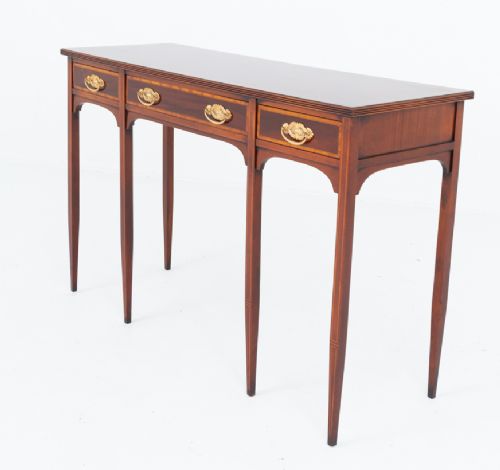
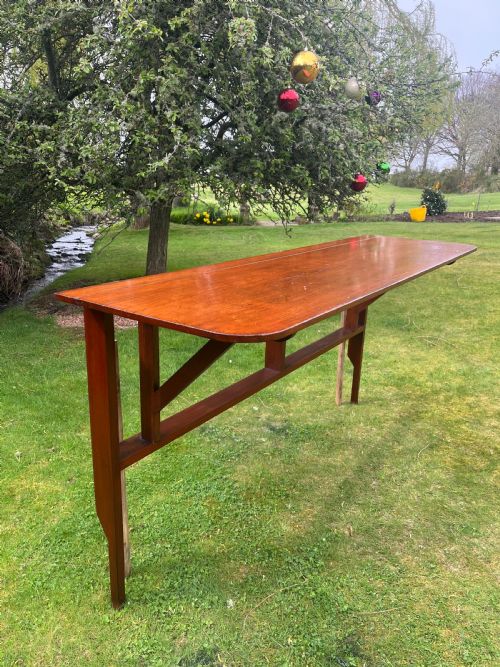


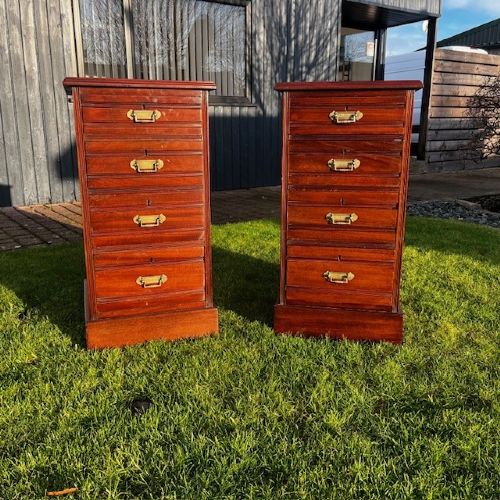


Narrow Mahogany Side Table
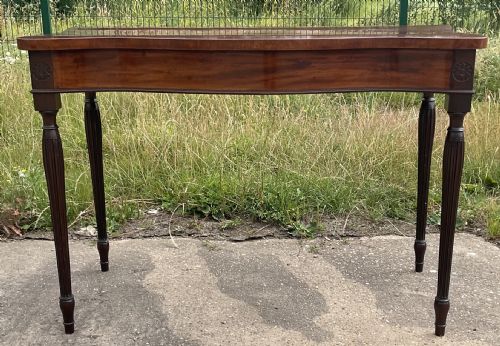
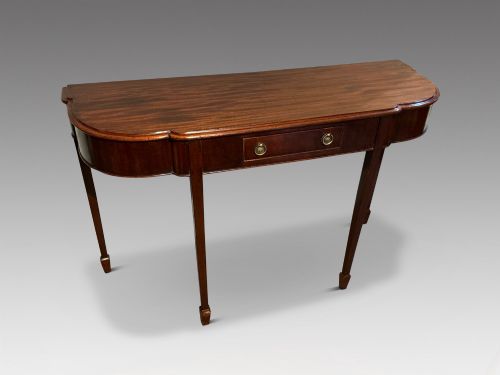
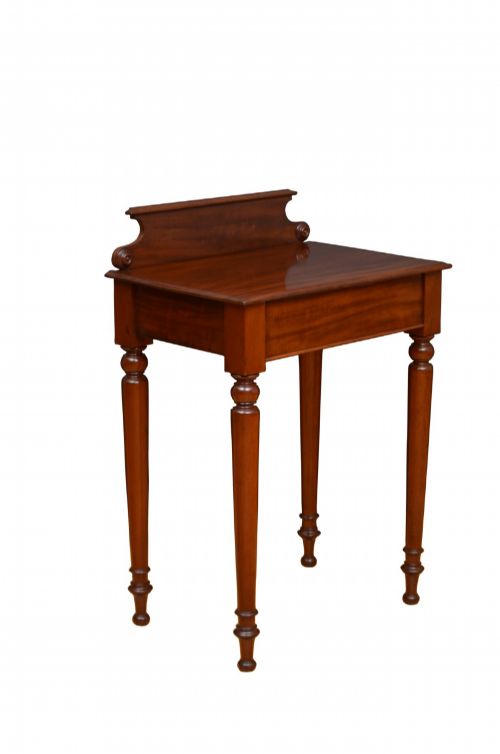
A narrow mahogany side table solves the problem of a tight hallway or compact room by offering surface space without crowding the floor.
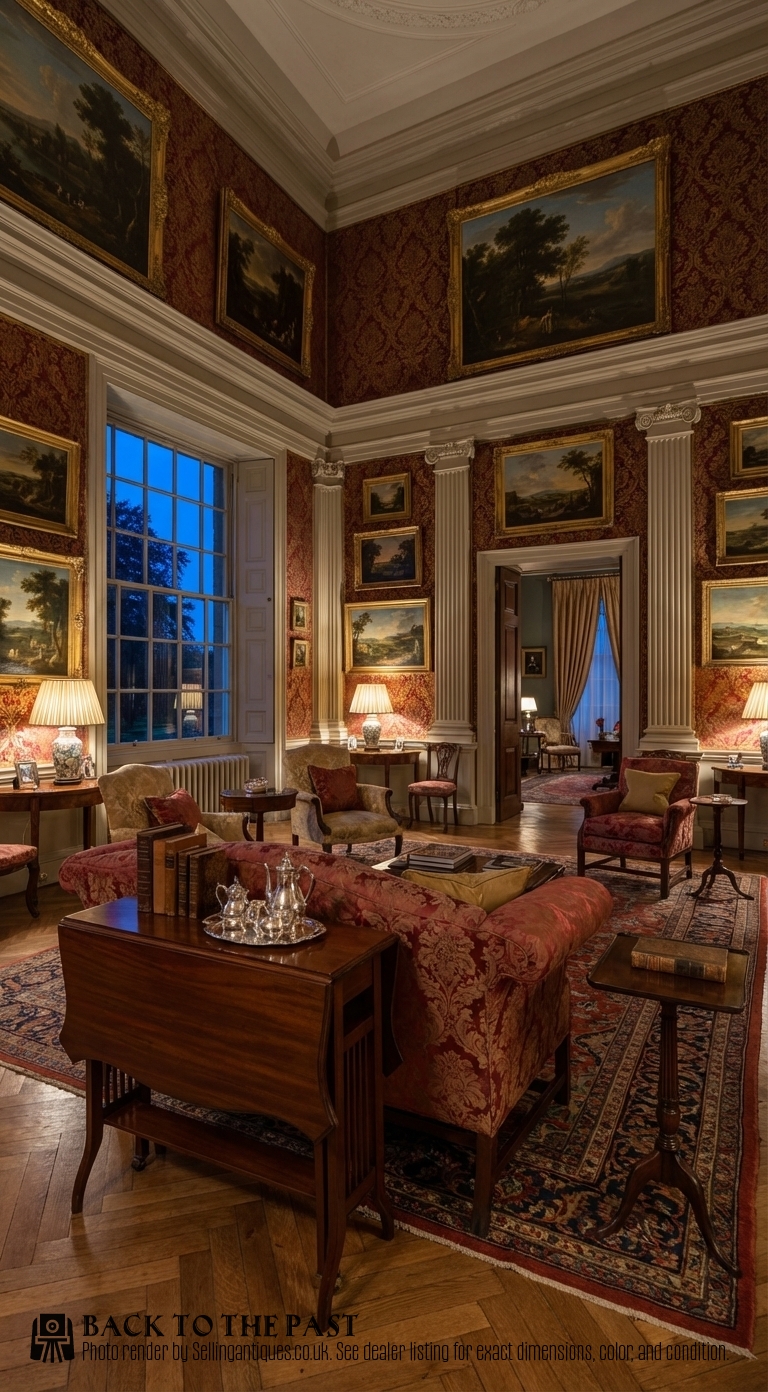
Narrow Mahogany Side Table
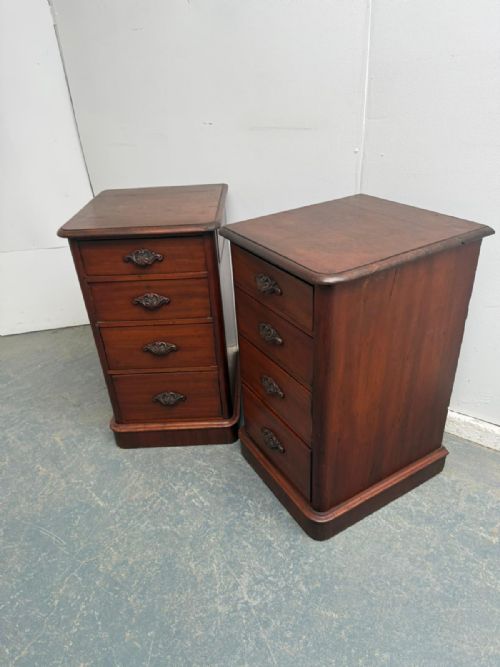
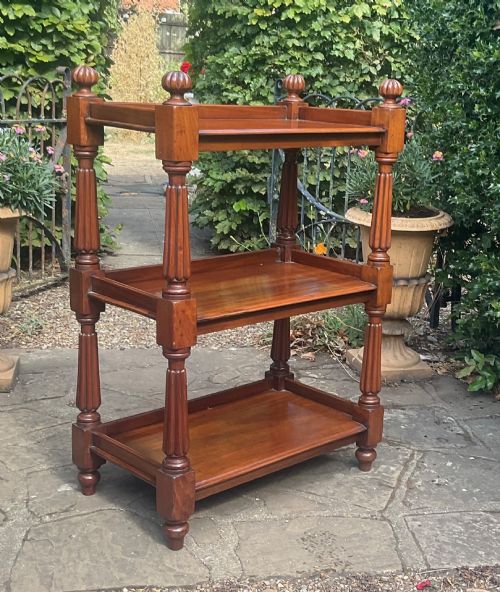
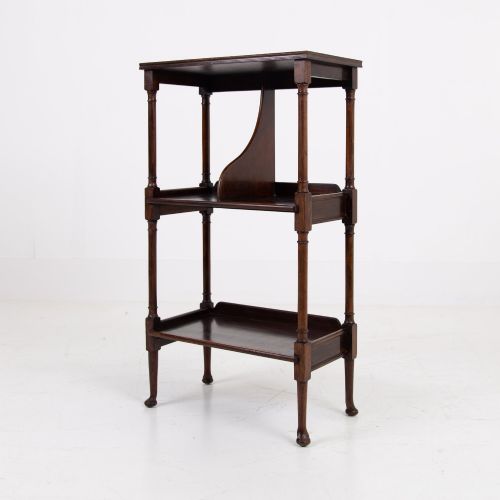
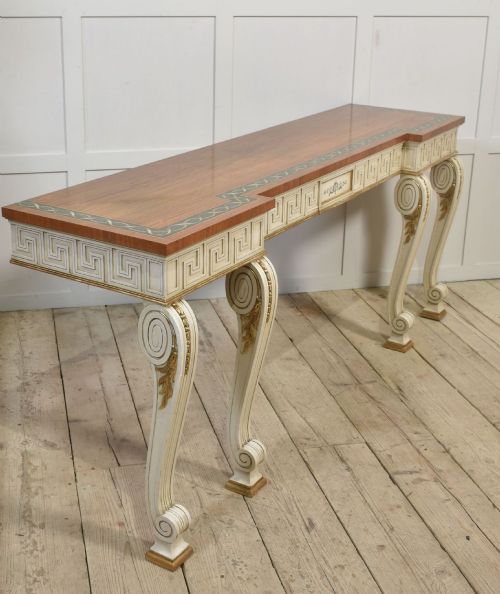
When you search for a narrow mahogany side table, you encounter pieces designed to fit shallow footprints in hallways, drawing rooms and bedrooms. These items span various forms from the nineteenth and early twentieth centuries, including console tables, bedside chests, servers and drop-leaf occasional tables.
The most common examples met on this page date from the Victorian and Edwardian periods, alongside Georgian style revivals. They function practically as surface space for lamps or post while maintaining a slim profile against a wall.
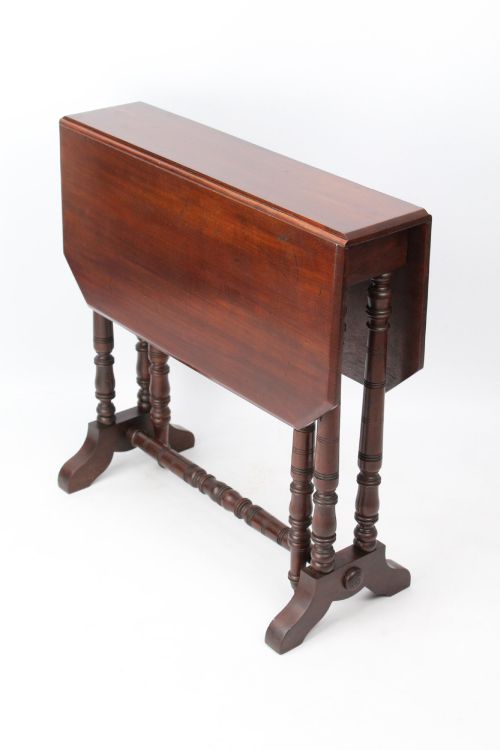
Makers adapted these proportions to suit compact domestic spaces, resulting in formats like the slender sutherland table or the shallow hall table. Their timber construction provides warmth and durability while keeping the overall appearance light.
How they were made
Cabinet makers built these tables primarily using mahogany, often selected for its rich grain and stability, sometimes accenting the design with satinwood inlay or brass hardware. Timber sections were joined with traditional cabinetry techniques to ensure structural strength across narrow frames.
Surfaces received finishes such as wax polish to protect the wood while highlighting its natural figure. Certain pieces incorporated additional materials like marble tops or metal fittings for specific decorative styles.
Listings feature mahogany, satinwood and marble across Victorian, Edwardian and Georgian style periods.
What varies in quality
The distinction between ordinary and superior pieces rests on the choice of timber and the precision of the cabinet work. Finely figured mahogany and crisp, balanced satinwood inlay elevate a piece above standard workshop production.
Construction details such as the neatness of drawer dovetails and the integrity of joints determine how well a table survives decades of daily use. Proportion and restraint in decorative carving also mark the better examples from any period.
Druce and Co
The Narrow Mahogany Side Table Glossary
- Sutherland table
- A type of narrow drop-leaf table with hinged flaps that fold down steeply, supported by swinging gate legs. This design allows the table to occupy minimal floor space when closed.
- Console table
- A table fixed against a wall, traditionally supported by console brackets or slender legs. It is designed for shallow spaces where standard table depths would obstruct movement.
- Satinwood inlay
- Ornamental work where contrasting light-coloured satinwood is inserted into the mahogany surface to create geometric or floral patterns. It adds visual detail without altering the functional profile.
- Demi-lune
- A half-moon shape characteristic of certain side and console tables. This curved front allows the piece to sit flush against a wall while softening the room's geometry.
Narrow Mahogany Side Table: Frequently Asked Questions
Where should I put a narrow mahogany side table?
These pieces excel in narrow hallways, landings or behind sofas where floor space is limited. Their shallow depth allows them to sit against a wall without blocking foot traffic.
They also function effectively in bedrooms as compact bedside cabinets or small chests, holding a lamp and everyday items without overwhelming the room.
How do I care for a mahogany surface?
Keep the wood away from direct sunlight and strong heat sources to prevent the finish from fading or drying out. Regular dusting with a soft, dry cloth maintains the lustre.
Apply a quality beeswax polish periodically to nourish the timber and protect the surface from minor marks. Avoid using abrasive cleaners or excessive water.
How do I date an Edwardian piece?
Edwardian items, produced roughly between 1901 and 1910, often feature lighter proportions and subtle satinwood inlay influenced by revival styles. Examine the secondary woods inside drawers and the type of fixings used.
Construction methods in this era combined traditional hand-joinery with early machine assistance, resulting in neat, uniform work without modern particle boards.
What is a sutherland table used for?
A sutherland table serves as a versatile occasional table that adapts to changing space requirements. With the flaps down, it takes up very little room against a wall.
Raising the drop leaves creates a larger surface for tea, books or display when needed. The gate-leg mechanism swings out to support the extended leaves securely.