



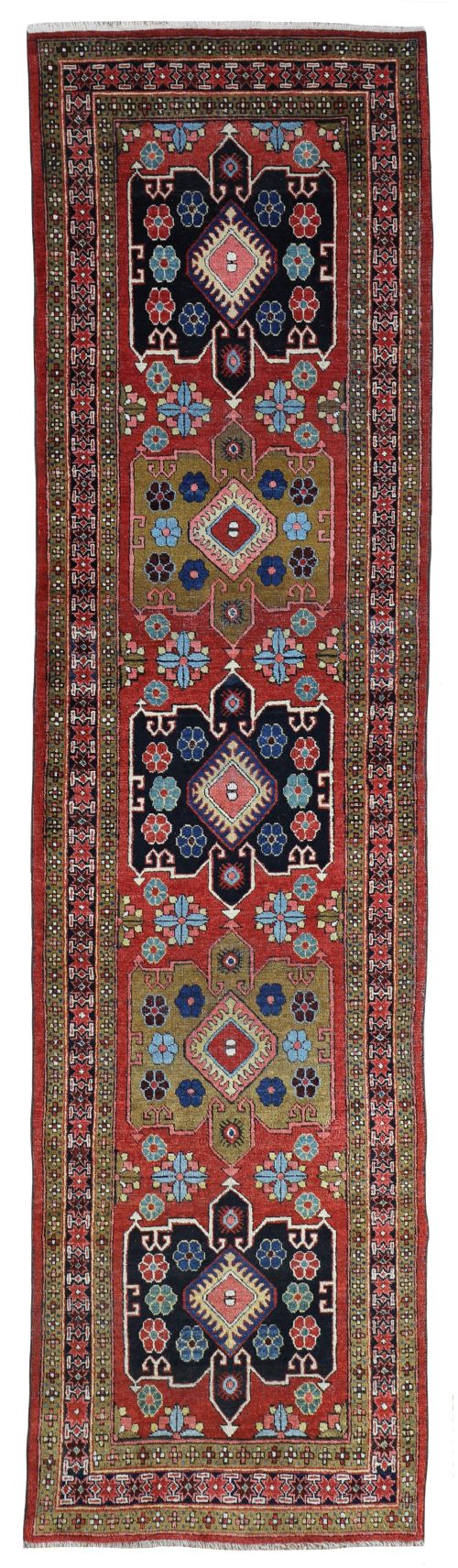


Narrow Floor Runner
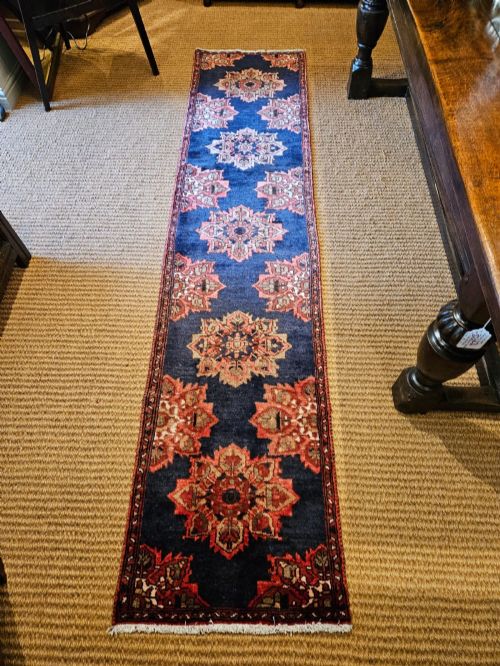
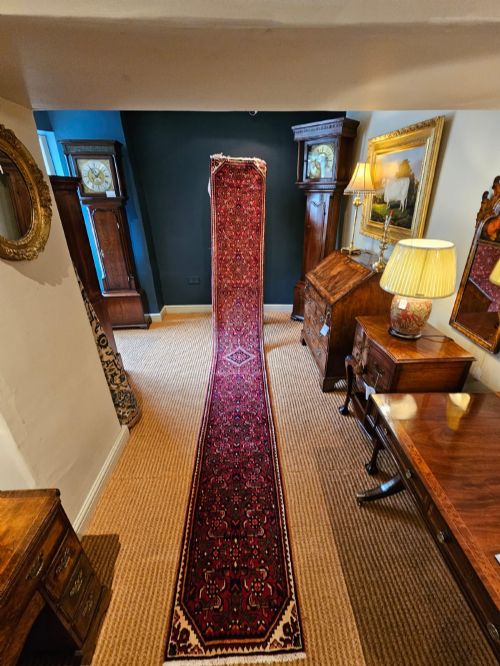
A narrow antique floor runner brings length and character to a hallway, drawing the eye along the boards with traditional patterns.
Narrow Floor Runner
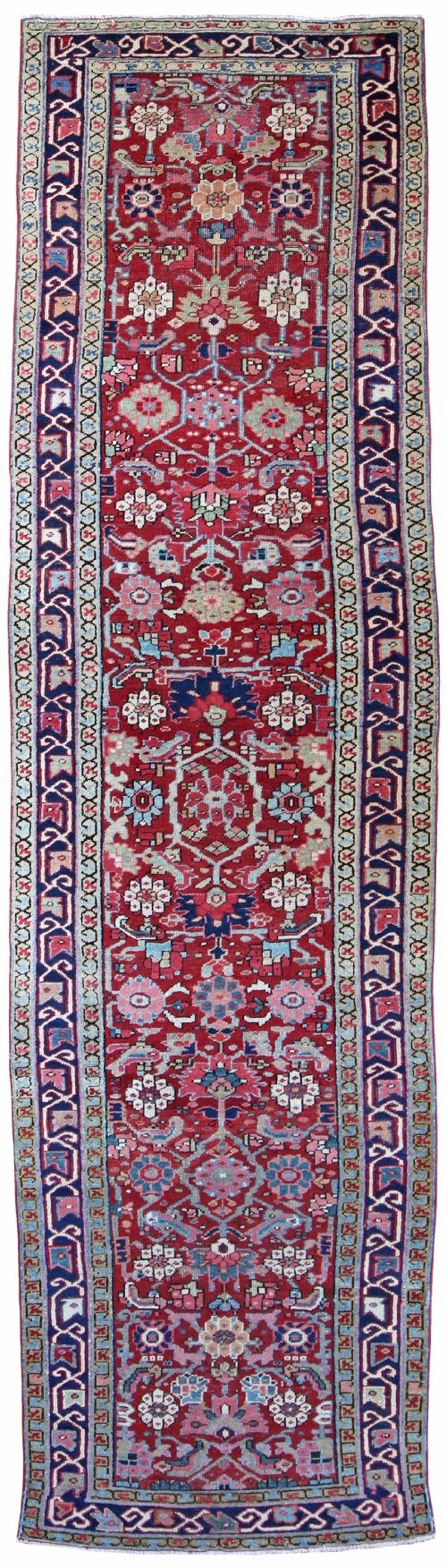
A narrow antique floor runner is a long, linear carpet designed specifically for hallways and corridors. These pieces originate from various regions including Persia, the Caucasus, and Afghanistan, dating from the late nineteenth century through to the 1930s. Buyers look for these items to soften timber flooring while adding traditional pattern and warmth to passage spaces.
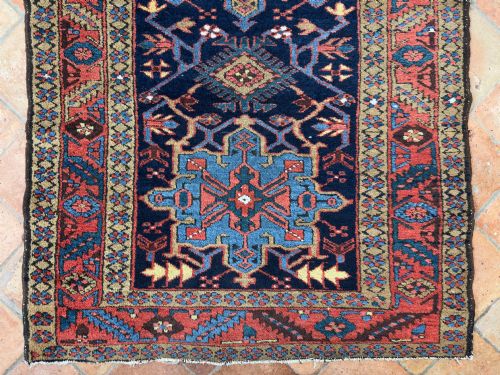
The selections available here lean heavily towards Persian tribal and village weaves, such as Heriz, Karaja, Bidjar, and Hamadan. Alongside these, Caucasian Shirvan and Afghan tribal designs appear in the listings. Lengths vary considerably, from standard room proportions up to exceptionally long formats exceeding ten metres.
How they were made
Weavers constructed these runners using wool pile knotted onto sturdy cotton or wool foundations. The durability of the materials ensured the carpets could withstand generations of heavy footfall in busy hallways. Natural dyes provided the deep red, navy blue, and mellow background colours recorded in the pieces.
Production relied on traditional hand-knotting techniques passed down through generations in workshops and nomadic tribal groups. Artisans created geometric and medallion motifs entirely from memory or local tradition, resulting in individual variations across every length.
Listings feature wool and cotton runners spanning the late nineteenth century through to the 1930s, originating mainly from Persian and Caucasian weaving traditions.
What varies in quality
Quality in a narrow antique floor runner rests on the tightness of the knotting and the crispness of the design execution. Denser knots allow intricate motifs to remain sharp and defined over decades of use.
The handling of the wool and the depth of the palette also distinguish finer examples. Superior pieces display harmonious colour saturation and balanced proportions suited to elongated spaces.
The Narrow Floor Runner Glossary
- Heriz
- A style of Persian carpet originating from the Northwest region, known for bold geometric medallions and robust construction. These runners frequently feature strong graphic layouts.
- Bidjar
- A durable Persian weave renowned for its dense knotting and heavy foundation. Carpenters often refer to these as the iron rugs of Persia due to their rigidity.
- Shirvan
- A style originating from the Caucasus region, distinguished by crisp geometric patterns and tribal motifs. Such pieces often display striking primary colours.
- Runner
- A long, narrow carpet format intended for corridors, stairs, and hallways. Proportions are strictly elongated to fit linear spaces.
Narrow Floor Runner: Frequently Asked Questions
Where should I place a narrow antique floor runner?
These pieces suit long hallways, narrow landings, and corridors where traditional floorboards need protection and warmth.
They also work effectively in galley kitchens or beside large bedroom furniture to anchor the space.
How do I measure for a long runner?
Measure the clear floor space of your hallway, leaving a uniform margin of exposed wood or tile around the perimeter.
Account for door clearance so that doors swing freely over the pile without catching.
Are wool runners durable for heavy traffic?
Traditional wool pile possesses natural resilience and lanolin that resists dirt and stands up well to daily footsteps.
Using a quality underlay beneath the runner prevents slipping and cushions the weave against hard subfloors.
How do I distinguish regional Persian styles?
Heriz runners display bold geometric medallions, whereas Bidjar pieces offer tightly packed, heavy structural knots.
Karaja and Hamadan variations introduce distinct tribal village motifs and characteristic colour combinations.