
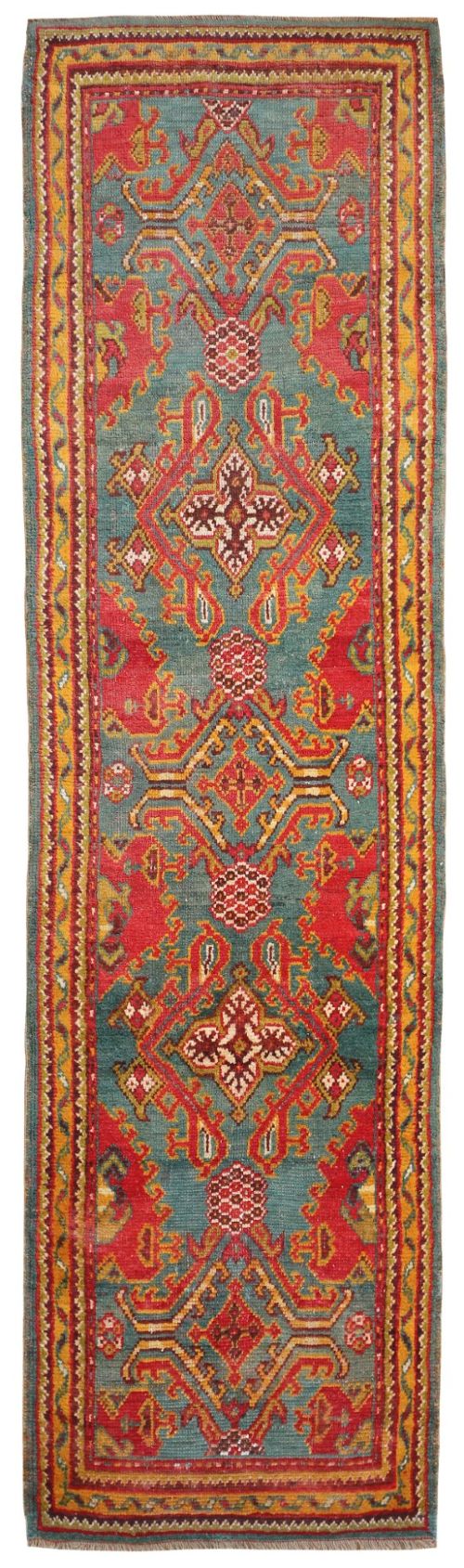
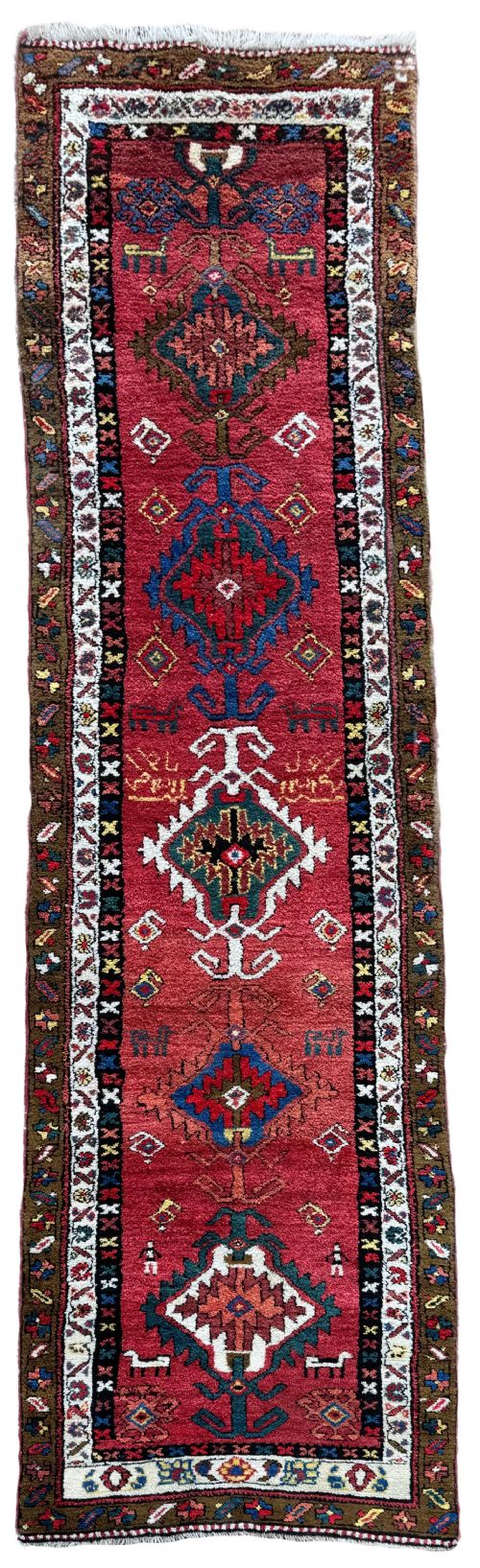
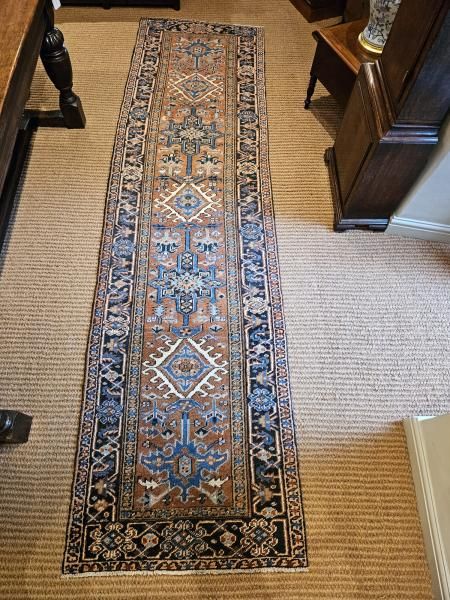
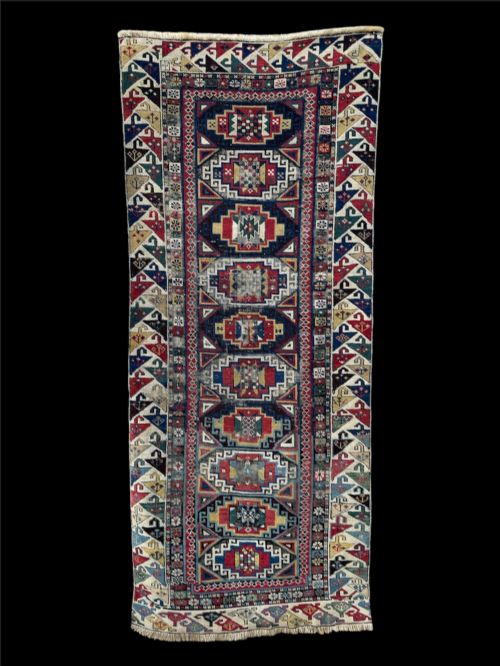


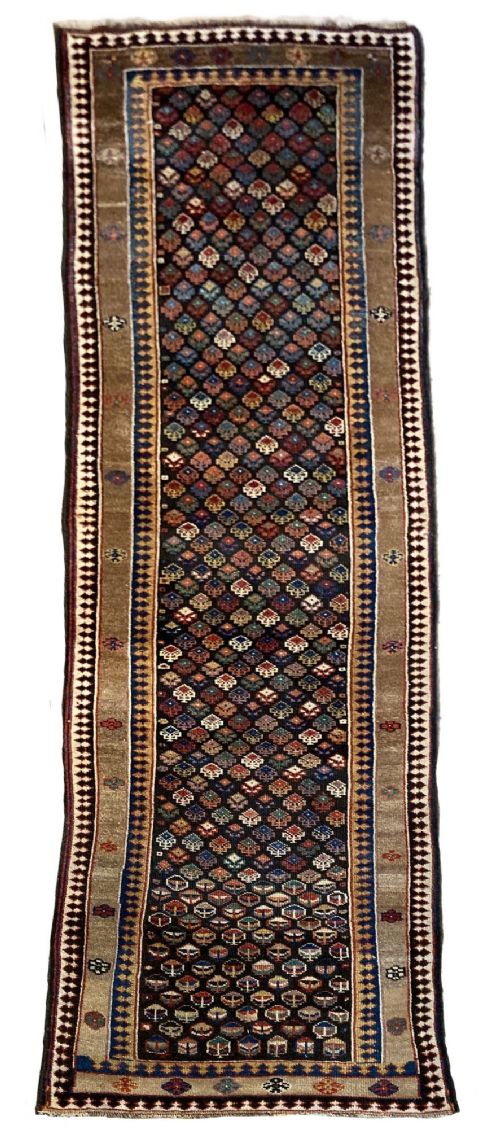


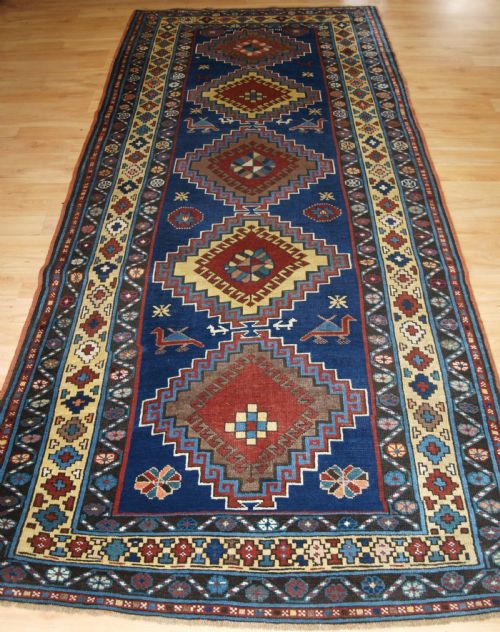
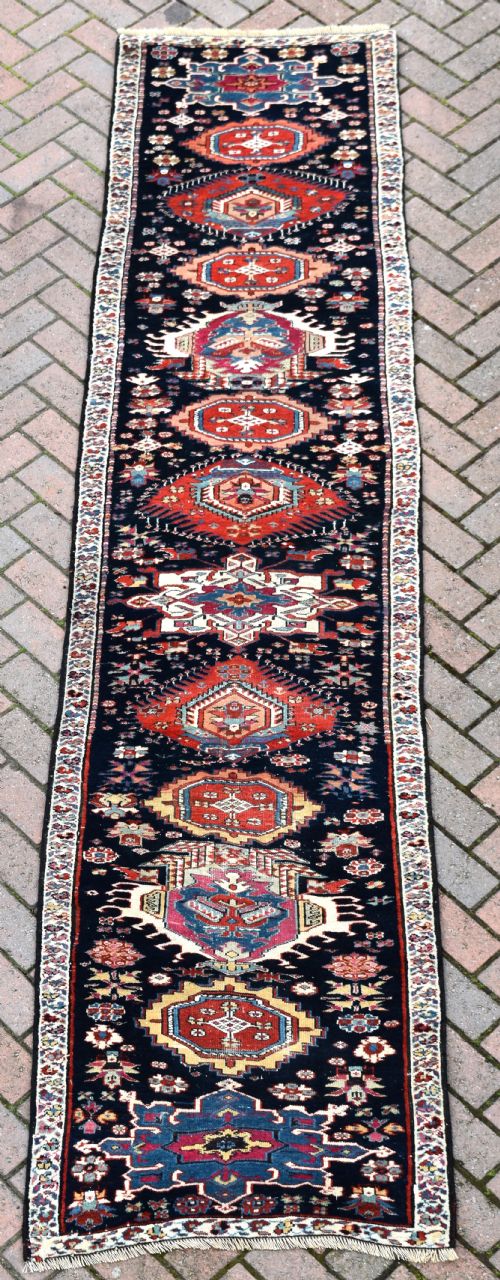

Handwoven Tribal Corridor Carpet
These handwoven tribal corridor carpets bring heavy wool floors and narrow passage paths alive with geometric wool weave.
Handwoven Tribal Corridor Carpet
A handwoven tribal corridor carpet serves as a long, narrow floor covering designed for hallways, passages, and corridors. These textiles originate from nineteenth-century and early twentieth-century weaving traditions across Persia, the Caucasus, Anatolia, and Central Asia.
Most pieces encountered here take the form of elongated runners, measuring substantially longer than they are wide to fit typical domestic corridors. They bring traditional village and tribal patterns into long interior spaces.
The selections span Persian Heriz, Bakhtiari, and Sarab structures alongside Caucasian Shirvan, Kazak, and Kurdish village weaves. Each piece reflects the specific regional palette and knotting style of its maker.
How they were made
Weavers constructed these carpets predominantly from hand-spun wool piled onto sturdy wool or cotton foundations, utilising traditional upright looms. Natural dyes derived from local plants and minerals provided the foundational palette.
Certain Anatolian and Caucasian pieces incorporate flatwoven kilim sections alongside knotted pile areas. Camel hair also appears in select natural undyed portions of the pile and foundation.
Some runners retain the slight natural wedge shape of a rural loom where the weaver simply lost count.
What varies in quality
Knot density and structural tightness dictate the foundational integrity of each carpet. Finer knotting allows for sharper geometric precision in medallions and repeat shield designs.
The depth and stability of the dyestuffs affect longevity and visual resonance. Saturated, evenly struck colours from natural dyes age gracefully compared to weaker or unevenly fixed pigments.
The Handwoven Tribal Corridor Carpet Glossary
- Runner
- A long, narrow carpet format specifically proportioned for hallways and corridors. These pieces measure several times longer than their width.
- Kilim
- A flatwoven textile produced without a pile by tightly interweaving warp and weft threads. These sections often form flat ends or borders on mixed technique rugs.
- Medallion
- A central ornamental design motif placed in the field of the carpet. These geometric or floral shapes anchor the composition.
- Gul
- A repeating octagonal or botanical medallion motif typical of Turkmen, Baluch, and Caucasian tribal weaving. This emblem identifies specific tribal groups.
- Warp
- The vertical foundation threads stretched lengthwise on the loom before knotting begins. The visible fringes at either end of the carpet are the finished warp threads.
Handwoven Tribal Corridor Carpet: Frequently Asked Questions
Where should I place a corridor carpet?
These narrow formats suit long hallways, stair landings, and entrance passages where standard rectangular rugs do not fit. They protect high-traffic wooden floors while adding warmth and colour.
Ensure the corridor width allows adequate clearance along the edges of the rug so doors can swing freely over the pile.
How do I care for antique wool runners?
Regular gentle vacuuming without a rotating power head prevents dust accumulation in the wool pile. Professional cleaning by a specialist in antique textiles preserves the natural lanolin.
Keep the carpet out of direct, continuous sunlight to protect natural dye colours from fading unevenly over time.
How do I identify a tribal design?
Tribal designs feature bold geometric shapes, stylised animals, and repeating medallions rather than curved court-style florals. Village weavers relied on memory and traditional motifs passed down through generations.
Asymmetry and minor irregularities in the pattern indicate hand-knotted village production rather than factory standardisation.
What materials make up these carpets?
The pile consists almost entirely of hand-spun sheep wool, prized for resilience and natural stain resistance. Foundations commonly use cotton or wool, with occasional touches of undyed camel hair.
Natural materials respond well to gentle atmospheric humidity and regular maintenance.