


Orange Wool Runner Rug
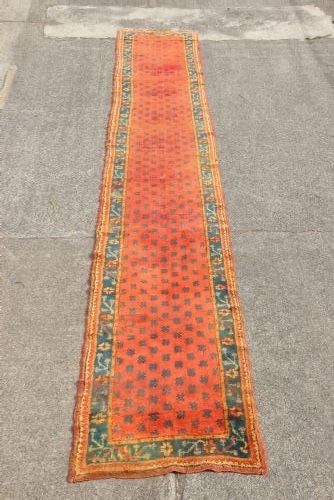
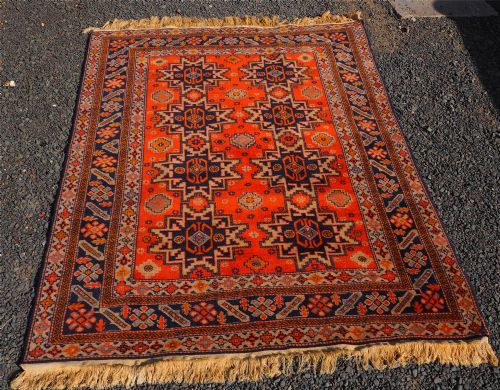
An orange wool runner rug brings warmth and texture to a narrow space through tribal and village designs woven in wool and cotton.
Orange Wool Runner Rug
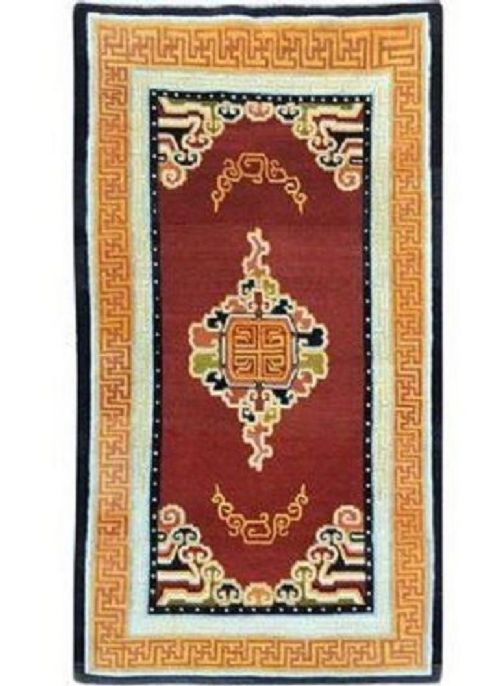
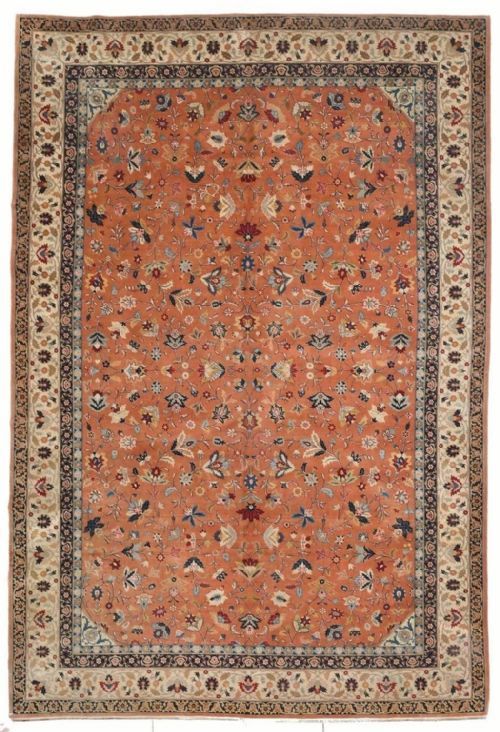
An orange wool runner rug is a long, narrow floor covering originating from village and tribal weaving traditions across Anatolia, Persia, the Caucasus, Afghanistan, and Tibet. These textiles include formats described as rug runners, hallway runners, and long narrow carpets designed to fit corridors and passageways.
The pieces on this page span several decades, featuring examples dated from the late nineteenth century through the early twentieth century. Styles range from Anatolian tribal and Afghan tribal to Persian, Caucasian tribal, and Tibetan pieces, reflecting diverse regional aesthetics and weaving customs.
Buyers seeking an orange wool runner rug will encounter formats such as the long narrow Turkish Oushak runner and Afghan runners alongside kilims and village rugs. These textiles utilise wool pile or flatweave structures, often incorporating cotton foundations depending on the specific regional tradition.
How they were made
These rugs and runners are constructed using wool, frequently combined with cotton elements in the foundation or flatweave structure. The textiles rely on traditional hand-weaving methods characteristic of tribal and village workshops across the Middle East and Central Asia.
Techniques range from knotted pile construction seen in Oushak, Tabriz, and Baluch pieces to flatwoven kelim and kilim structures. Certain pieces, such as the Afghan Baluch kilim, are woven in multiple parts and joined together to create the finished textile.
Some antique Baluch kilims arrived at their final form by being woven in two separate parts and cleverly joined down the middle.
What varies in quality
Quality in these runners depends on the precision of the weave and the resilience of the wool used in the pile or flatweave. Finer knotting and well-balanced proportions contribute to the structural integrity of longer formats like the Oushak runner.
The depth and nuance of the colour palette also distinguish finer examples, as seen in mellow tones and varied regional dyes. The execution of traditional tribal motifs demonstrates the skill of the individual weaver and the workshop tradition.
The Orange Wool Runner Rug Glossary
- Kilim
- A flatwoven textile produced without a pile, traditionally used as a rug or hanging in various Middle Eastern and Central Asian regions.
- Runner
- A long, narrow carpet format specifically proportioned for hallways, corridors, and staircases.
- Oushak
- A tradition of carpet weaving originating from the town of Usak in western Turkey, known for distinctive designs and soft wool.
- Baluch
- A style of tribal weaving associated with nomadic and village groups from the border regions of Iran, Afghanistan, and Pakistan.
- Pile
- The upright yarn loops or tufts that form the soft surface of a knotted rug, distinct from flatwoven textiles.
Orange Wool Runner Rug: Frequently Asked Questions
Where should I place a runner rug?
These long, narrow formats suit hallways, corridors, entryways, and narrow galley spaces where standard rectangular rugs do not fit.
Positioning the runner along high-traffic paths protects flooring while adding warmth and regional character to otherwise overlooked interior spaces.
What is the difference between a kelim and a pile rug?
A kelim is a flatwoven textile created by interweaving warp and weft threads without forming a raised pile surface.
Pile rugs feature knotted wool yarn that stands upright from the foundation, providing a softer texture underfoot and a different visual depth.
How do I identify a tribal rug?
Tribal rugs typically feature geometric motifs, stylized animal forms, and tribal emblems passed down through generations of nomadic or village weavers.
Unlike court carpets, these pieces display regional irregularities and spontaneous design choices that reflect the maker's immediate cultural environment.
Are these runners made of pure wool?
The listings show that wool is the primary material used for the pile and surface design of these runners, frequently paired with cotton.
Cotton often appears in the foundational warp and weft threads to provide structural stability and tension for the tighter woven formats.