

Napoleon III Seating
Napoleon iii seating brings opulent French styling and sumptuous comfort into a room through elaborate buttoned upholstery, rich gilding and graceful curved frames.
Napoleon III Seating
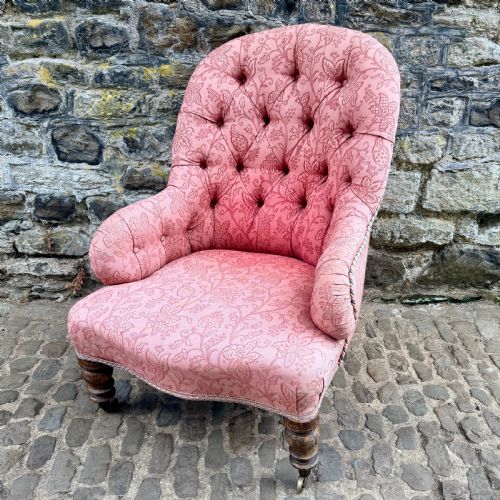
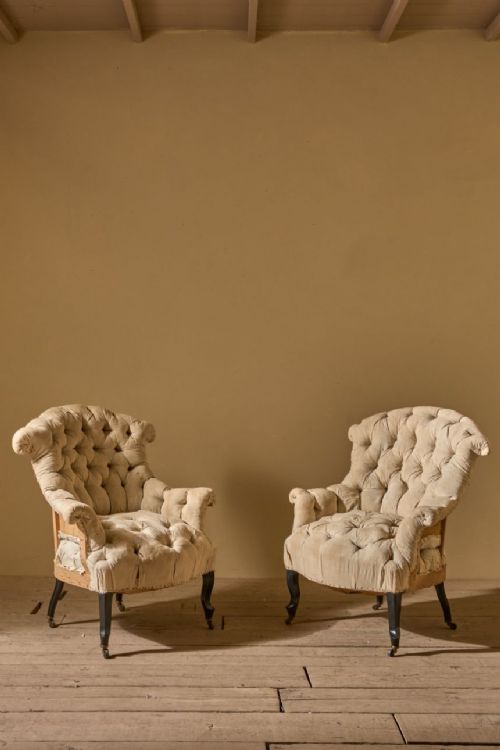
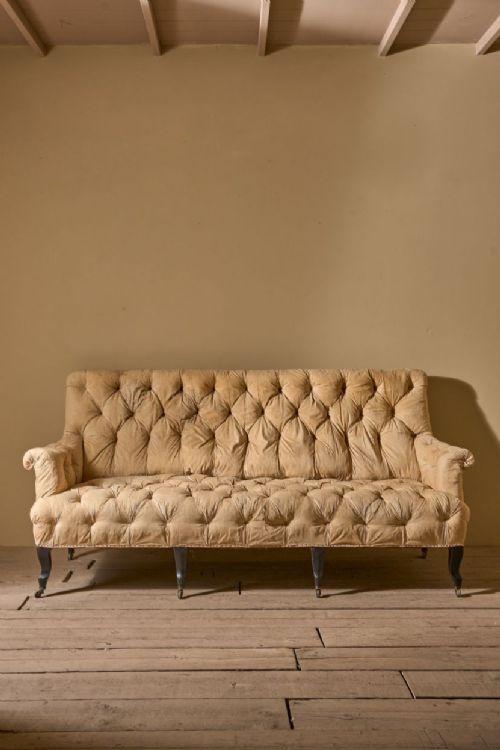
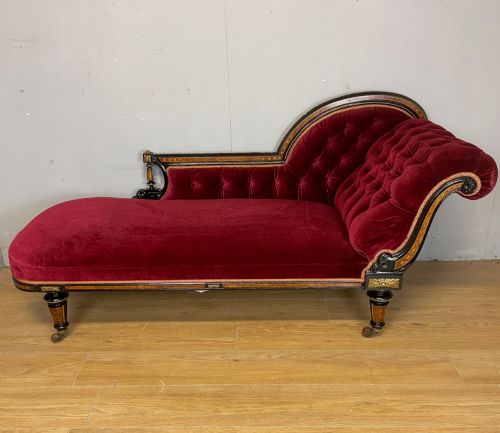
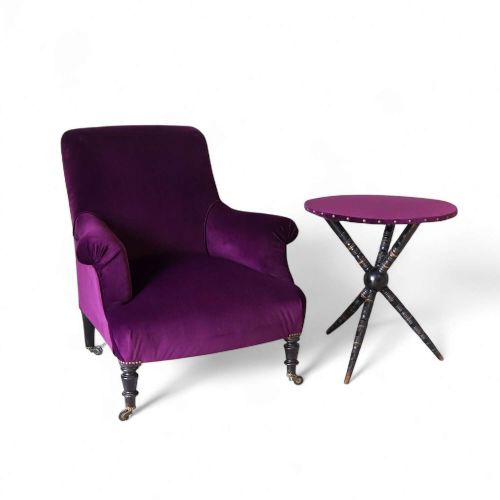
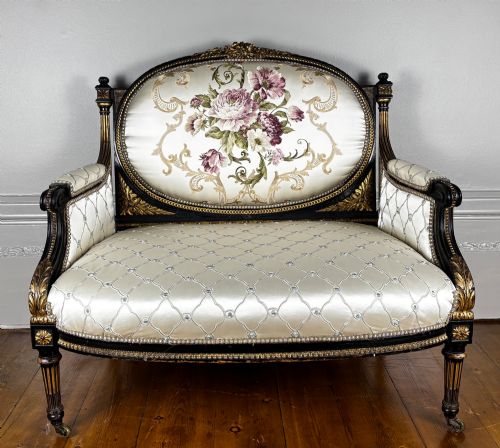
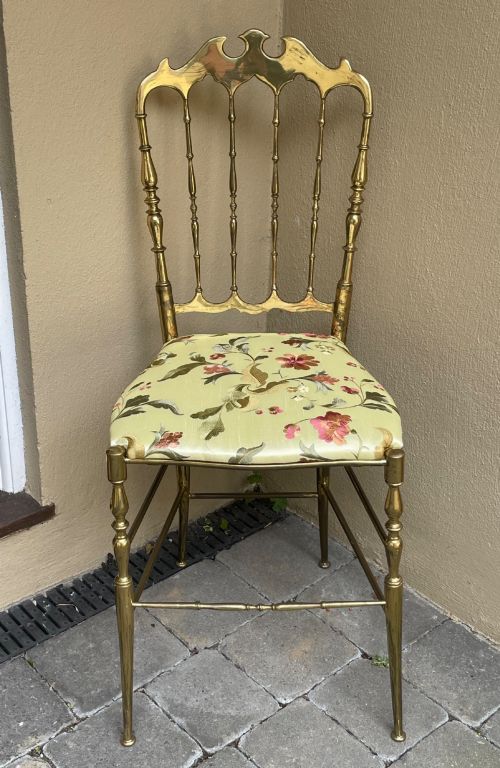
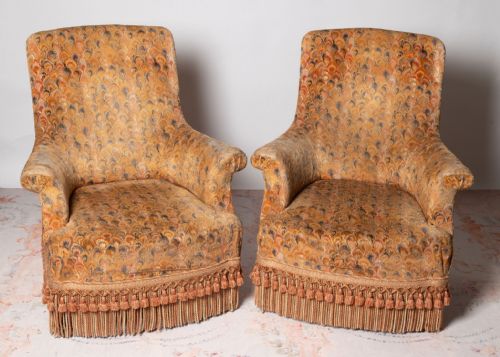
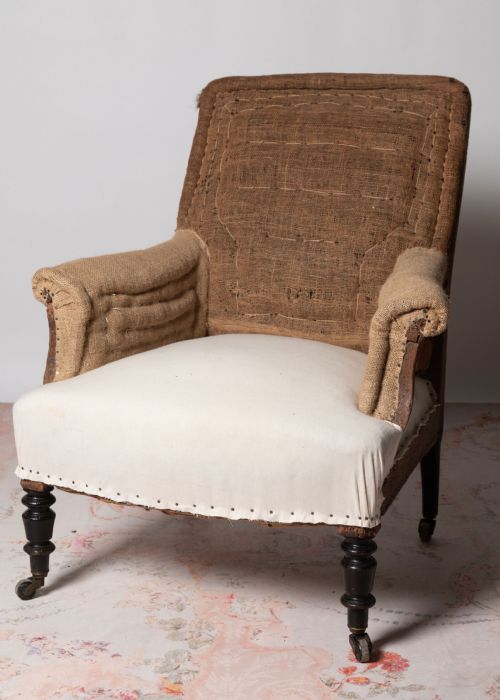
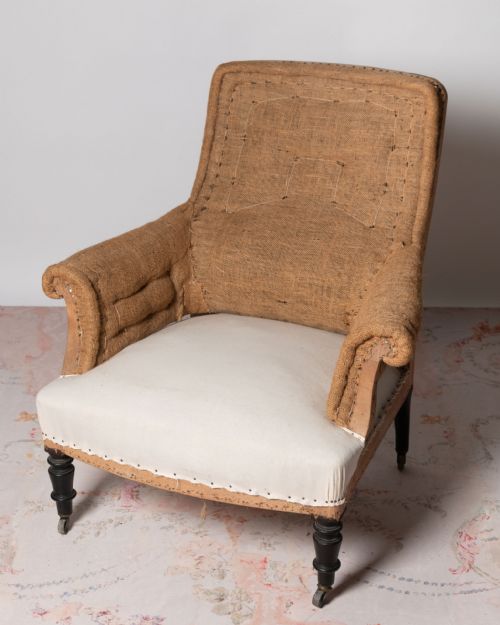
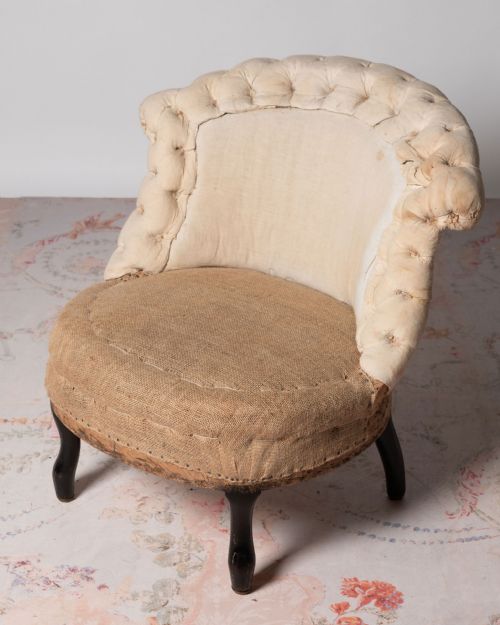
Napoleon iii seating encompasses a rich variety of nineteenth-century French forms designed for salons, drawing rooms and private chambers. The pieces found here range from grand buttoned sofas and sweeping chaise longues to intimate armchairs, slipper chairs and delicate salon seating.
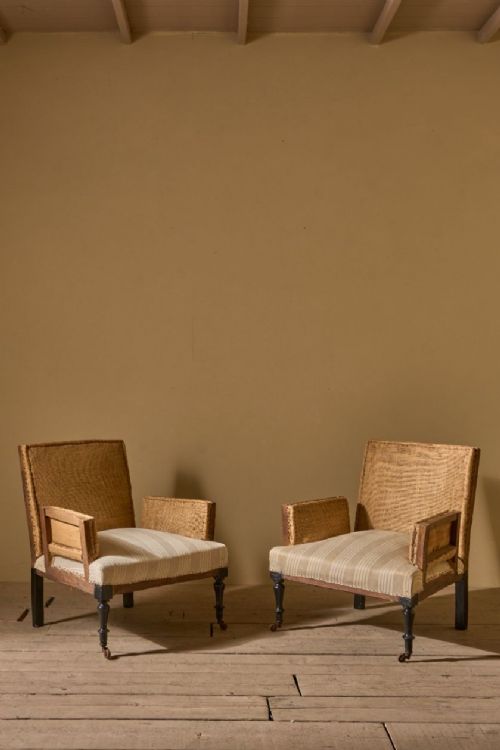
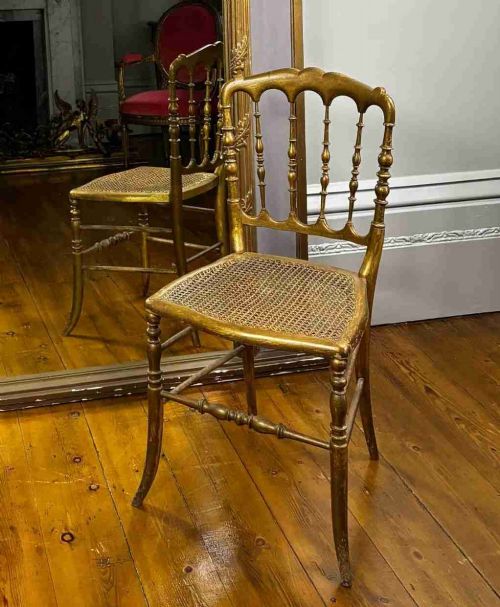
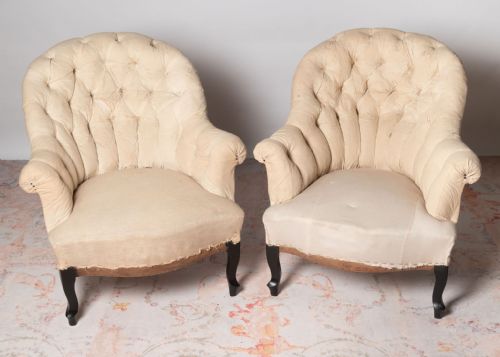
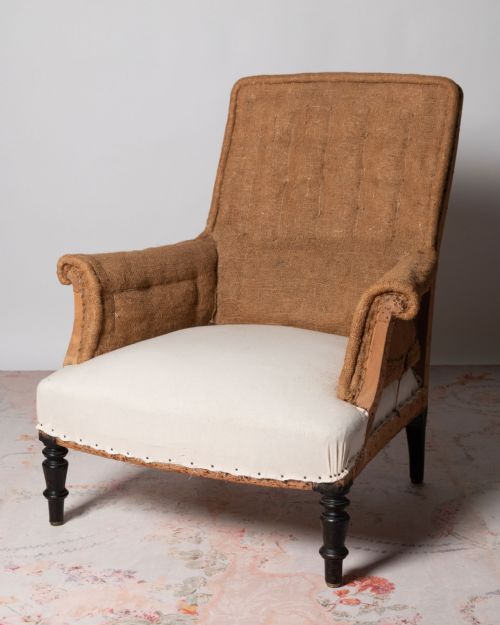
The dominant aesthetic draws heavily on the Second Empire style, alongside echoes of the Louis XVI style and the Aesthetic Movement. Many examples arrive in original frames or require re-upholstery, presenting opportunities to finish them in fabrics such as velvet, calico, hessian or patterned designer textiles.
Makers and designers of the period blended historic revivalism with advanced comfort, producing seating that relies as much on deep spring padding as on visual display. Buyers encounter everything from gilded salon chairs to ebonised frames with inlaid walnut panels and ormolu decoration.
Distinguishing quality in period frames
The integrity of the wooden frame and the precision of its carving dictate the standing of a piece. Finer examples exhibit crisp detailing in gilded surfaces, well-executed ebonising and securely fitted ormolu mounts rather than loose decorative applications.
The depth and execution of buttoned upholstery, the stability of the underlying springs and the quality of secondary timbers such as walnut indicate the level of craftsmanship invested in the construction. Pieces retaining original caning or sophisticated marquetry inlay demonstrate superior atelier production.
A.M.E. Fournier
The Napoleon III Seating Glossary
- Ormolu
- Gilded bronze mounts applied to furniture for decorative contrast. This technique highlights prominent architectural lines on nineteenth-century French frames.
- Ebonised
- Wood treated to resemble expensive ebony through staining or painting. This dark finish creates a dramatic backdrop for gilt accents.
- Chaise longue
- An upholstered sofa in the form of a chair with a long seat for reclining. These pieces combine structural woodwork with extended lounging upholstery.
- Giltwood
- Timber coated with a thin layer of gold leaf or gilt paint. It provides the signature bright sheen seen on formal salon chairs.
- Caned
- Woven rattan material used to form resilient seat panels. This method lightens the visual load of wooden chair frames.
Napoleon III Seating: Frequently Asked Questions
What defines Napoleon iii seating?
Napoleon iii seating is characterised by ornate nineteenth-century French designs that prioritise upholstered comfort alongside visual display. These pieces frequently feature deep buttoning, curved wooden frames, gilt finishes and eclectic stylistic influences.
Craftsmen of the era combined traditional joinery with luxurious textiles and decorative mounts. The resulting forms range from intimate salon chairs to expansive buttoned sofas.
How do I choose between an armchair and a slipper chair?
Armchairs offer substantial frames with supportive sides designed for formal reception rooms and long periods of sitting. Slipper chairs feature lower profiles without arms, originally intended for bedrooms to accommodate voluminous period dresses.
Consider the scale of your room and the intended function when selecting between them. Slipper chairs work well in compact spaces, while armchairs command attention as focal seating.
How should I care for gilded wood?
Gilded wooden surfaces require gentle treatment to preserve the delicate layer of gold leaf or metallic paint. Dust the frames regularly with a soft, dry cloth and avoid harsh chemical cleaners or abrasive materials.
Keep these pieces away from direct sunlight and excessive moisture to prevent the wood from warping and the gilt finish from flaking over time.
Can I reupholster a period frame?
Reupholstering period frames is a common practice that allows you to adapt antique seating to modern interiors. Many pieces are offered specifically for upholstery, providing a sturdy foundation ready for new fabric.
Consult an experienced restorer who understands traditional springing and stuffing methods. Preserving the internal structure ensures the piece maintains its historical integrity and comfort.