


Musical Floor Clock
A musical floor clock brings the mechanical harmony of bells and chimes into a room through tall standing clock cases.
Musical Floor Clock
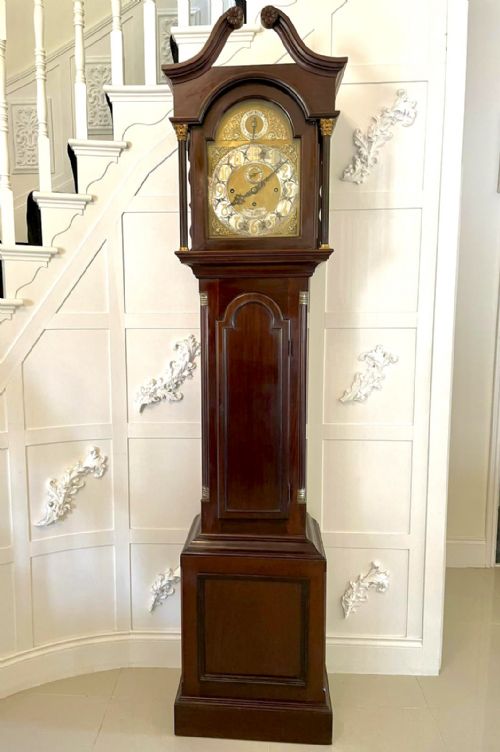
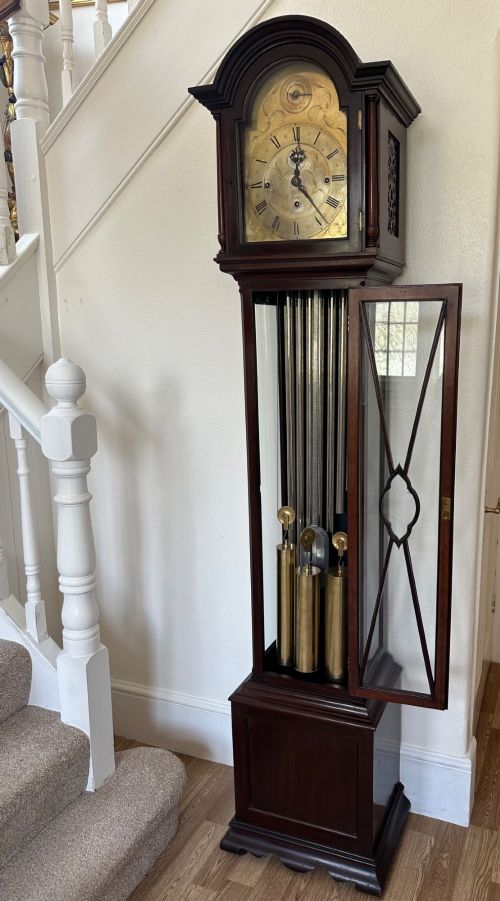
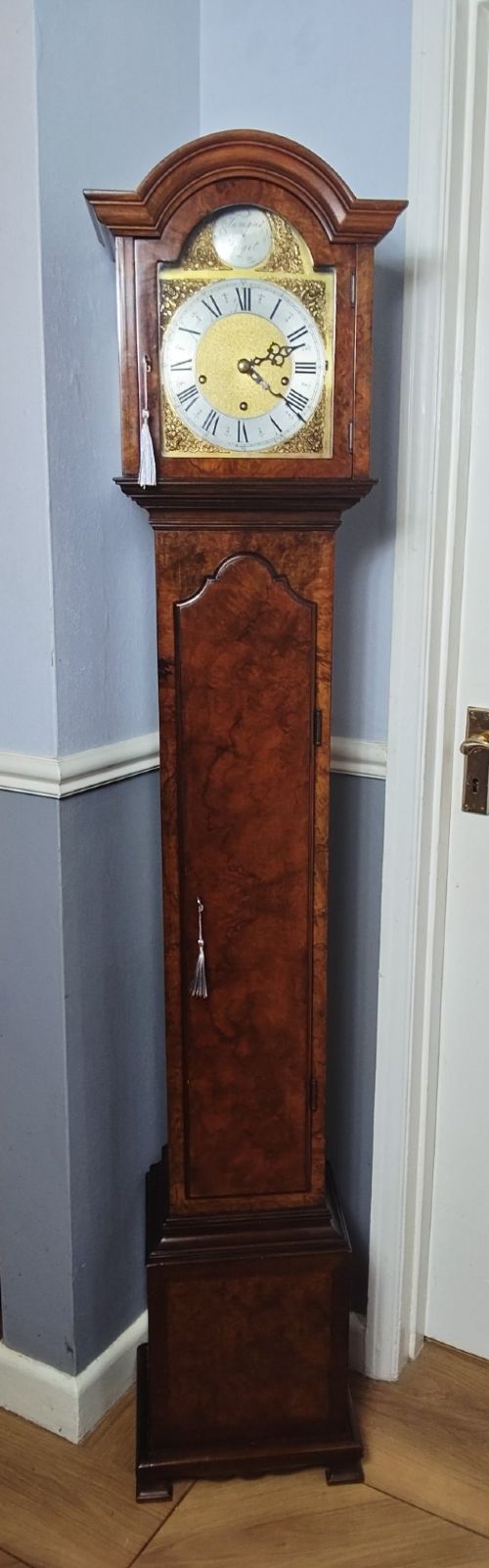
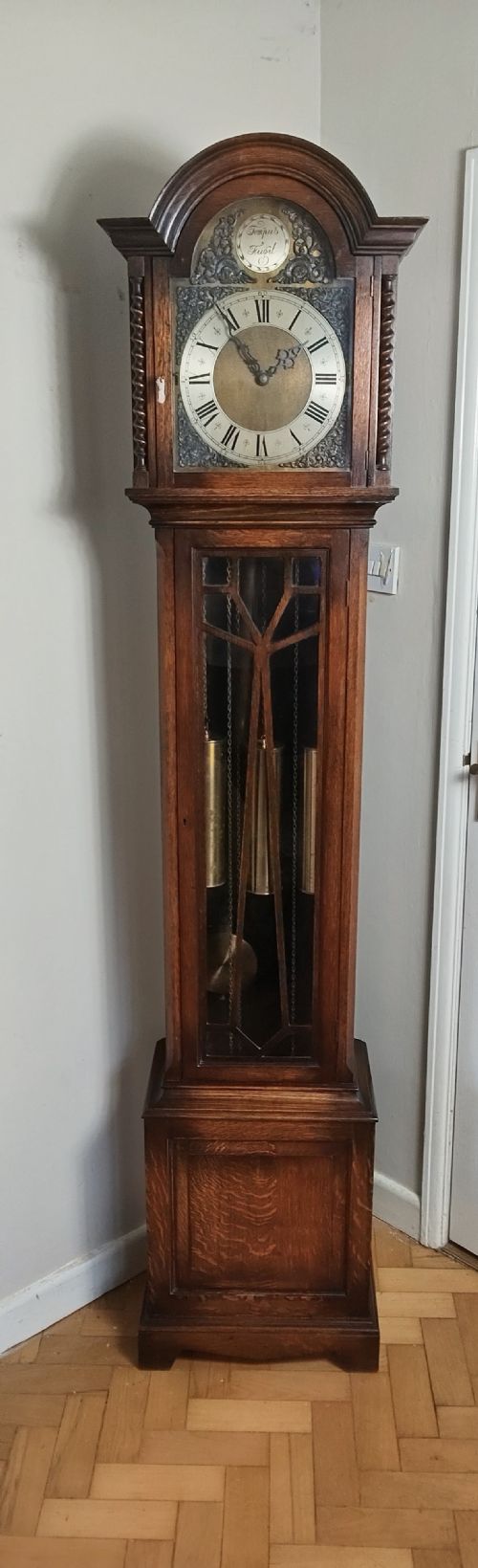
A musical floor clock combines traditional timekeeping with complex chiming mechanisms that play tunes or quarter chimes on bells, gongs, or tubes. When searching for a musical floor clock, buyers encounter both full-sized grandfather clocks and smaller grandmother clocks housed in upright wooden cases.
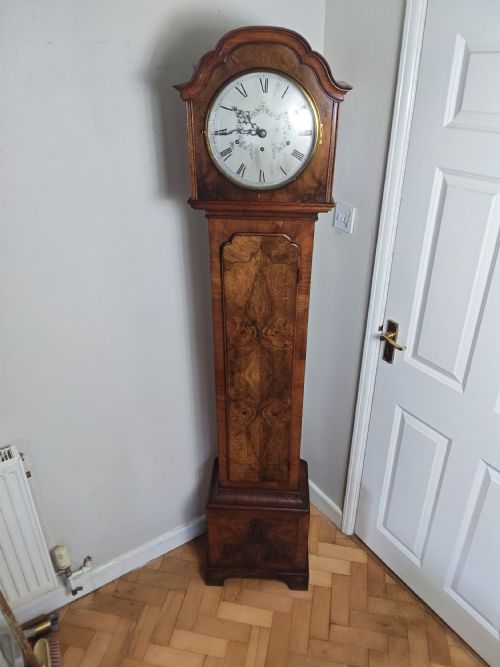
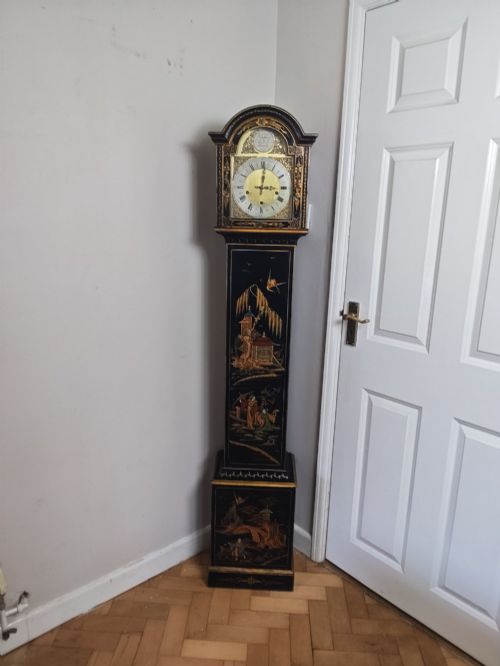
The examples available range from Victorian mahogany pieces and Edwardian productions to later 1920 and 1930 designs, spanning styles such as Georgian Revival, Jacobean Revival, Queen Anne Style, and Chinoiserie.
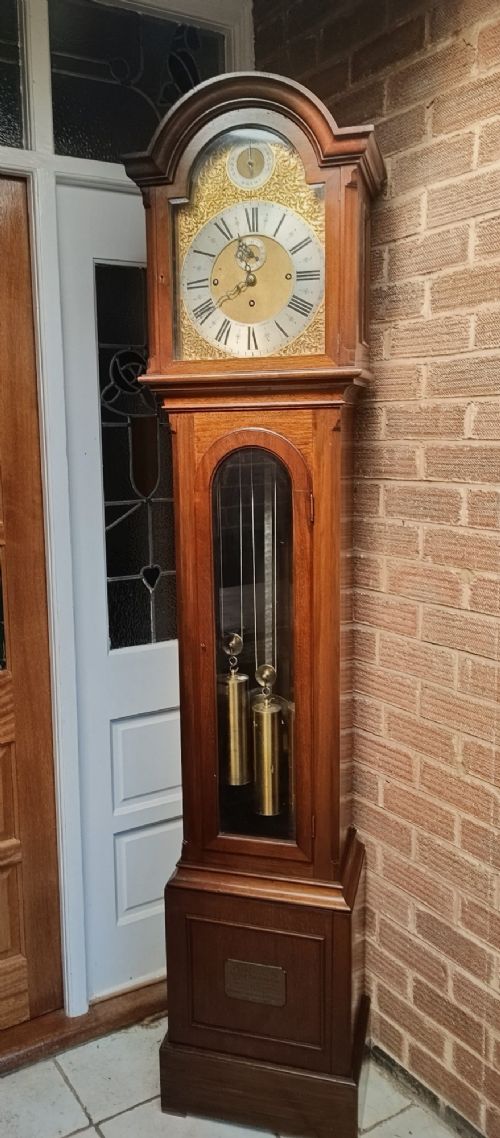
Most standard pieces stand tall with weight-driven or spring-driven movements, incorporating specific musical arrangements like three tunes, eight bells, or tubular bell systems.
Materials and construction
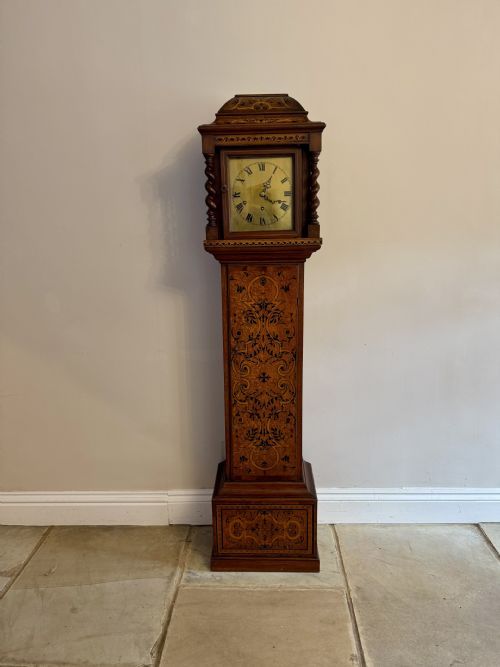
Cases utilise solid timbers and veneers including mahogany, oak, walnut, burr walnut, and satinwood, frequently embellished with satinwood inlay and marquetry work. Brass and glass components house the dials, pendulums, and intricate chime movements.
Cabinetmakers constructed the tall wooden housings to enclose heavy weights, chains, and dials while providing proper acoustic resonance for the bells and chimes inside.
Some slim grandmother clocks were affectionately built small enough to whisper their hourly tunes in corners where giants feared to tread.
Markers of quality
The sophistication of the musical movement separates standard timepieces from finer specimens, particularly those utilising multiple tunes, eight bells, or tubular bell arrangements rather than simple quarter chimes. Master makers sign dials and movements, adding distinction to the engineering.
Cabinet quality shows in the choice of figured walnut, burr walnut, and detailed marquetry or satinwood inlay, alongside the proportions of the tall case itself.
Winsor Bishop Norwich·Elliott·Bravingtons·Lister & Sons·Camerer Cuss & Co·Geo Tarratt of Leicester
The Musical Floor Clock Glossary
- Grandfather clock
- A tall, floor-standing pendulum clock enclosed in a wooden case, typically standing over six feet high. These large housings accommodate long pendulums and heavy weights.
- Tubular bell
- A system of suspended metal tubes struck by hammers to produce resonant chimes in place of traditional cast bells. This mechanism appears in Edwardian and later tall clocks.
- Marquetry
- Decorative woodwork where pieces of veneer are fitted together to form pictorial patterns on the clock case. This technique often employs contrasting timbers like satinwood.
- Chiming movement
- The internal mechanism that drives the music or striking sequence at preset intervals, such as the quarter hour or hour. These can play multiple distinct tunes.
Musical Floor Clock: Frequently Asked Questions
How do musical floor clocks work?
These clocks use weight-driven or spring-driven mechanical movements that release a train of gears at set intervals. This action lifts small hammers to strike bells, gongs, or tubes in a specific musical sequence.
The complexity of the movement dictates whether the clock plays multiple distinct tunes or standard quarter chimes alongside regular timekeeping.
Where should I place a grandfather clock?
Tall clocks require a stable, level floor and solid wall attachment to keep the pendulum swinging evenly. Placing them away from direct sunlight and dampness protects the wooden case and internal finishes.
Adequate clearance is necessary so the chime sounds resonate properly without excessive vibration from surrounding furniture.
What is the difference between grandfather and grandmother clocks?
Grandfather clocks are the standard full-sized tall case clocks, whereas grandmother clocks are scaled-down versions built with slimmer and shorter proportions. Both styles share similar mechanical chime capabilities.
Grandmother clocks gained popularity in the early twentieth century as a space-saving alternative for smaller rooms.
How do I identify the period of a tall clock?
Stylistic details such as heavy Victorian mouldings, Edwardian marquetry inlay, or 1930s walnut veneers point to specific eras of manufacture. Maker signatures on the dial or movement offer further chronological evidence.
Construction methods and timber choices also help differentiate Victorian specimens from later twentieth-century productions.