
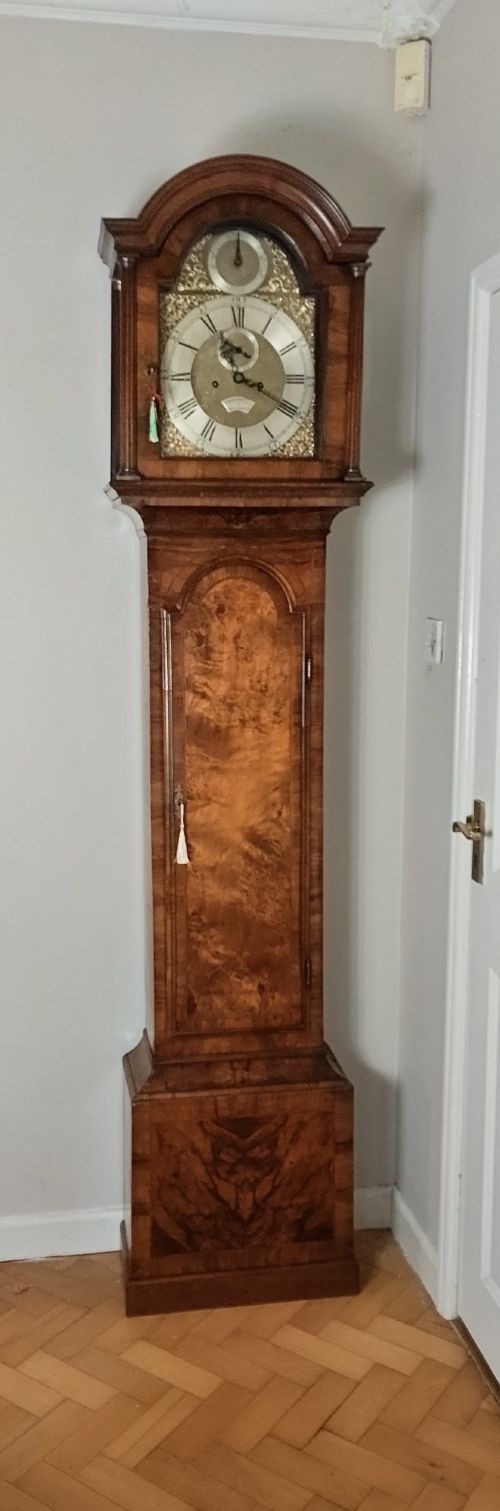
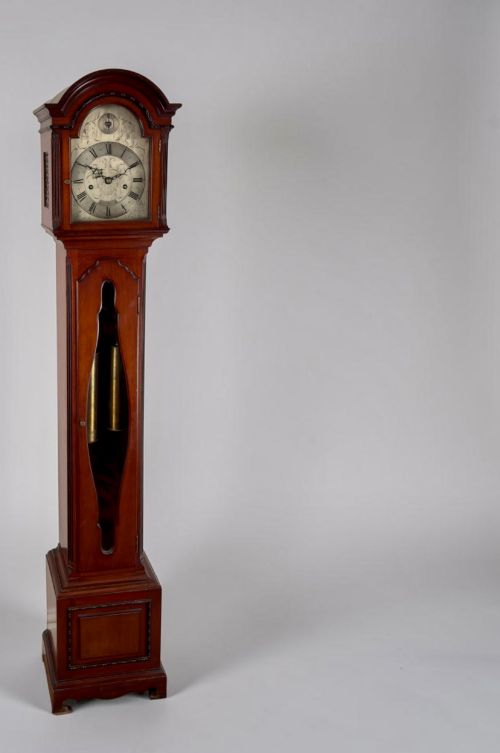

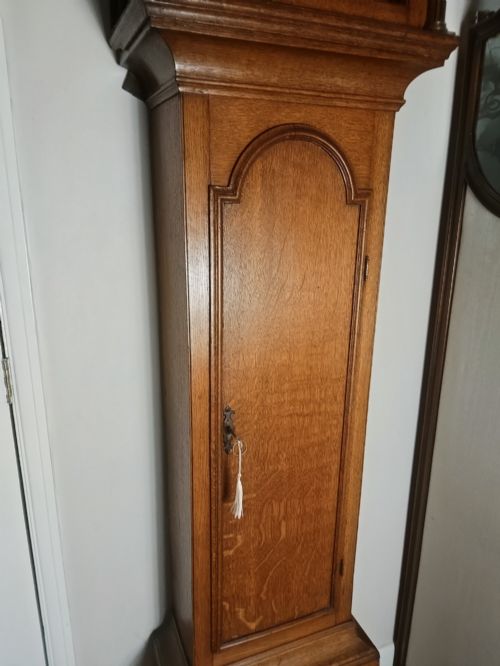
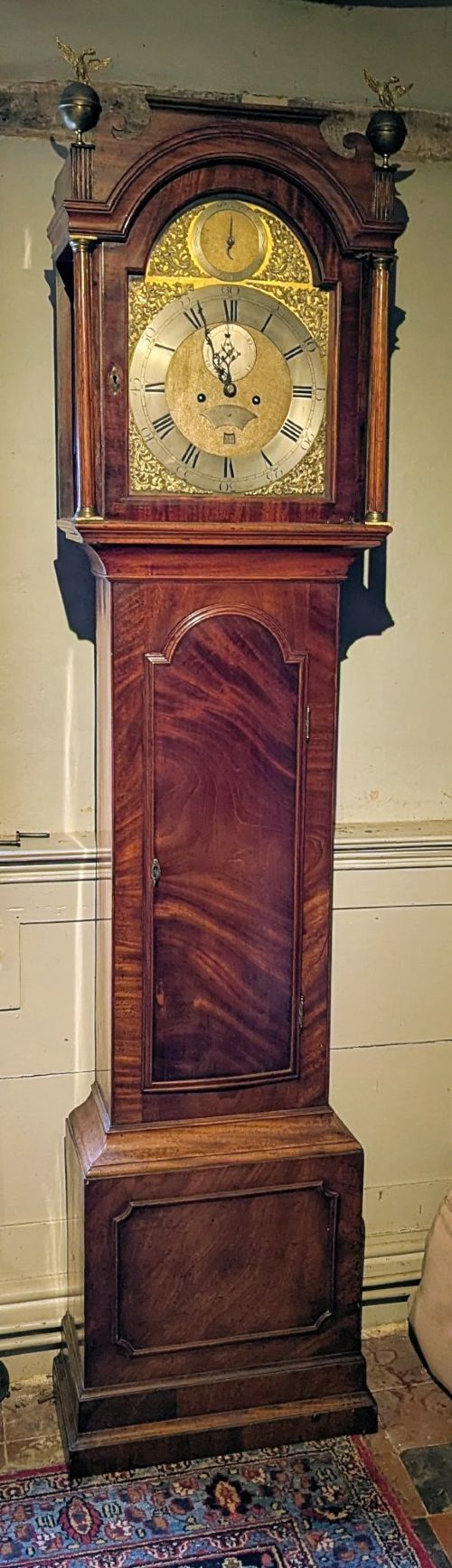
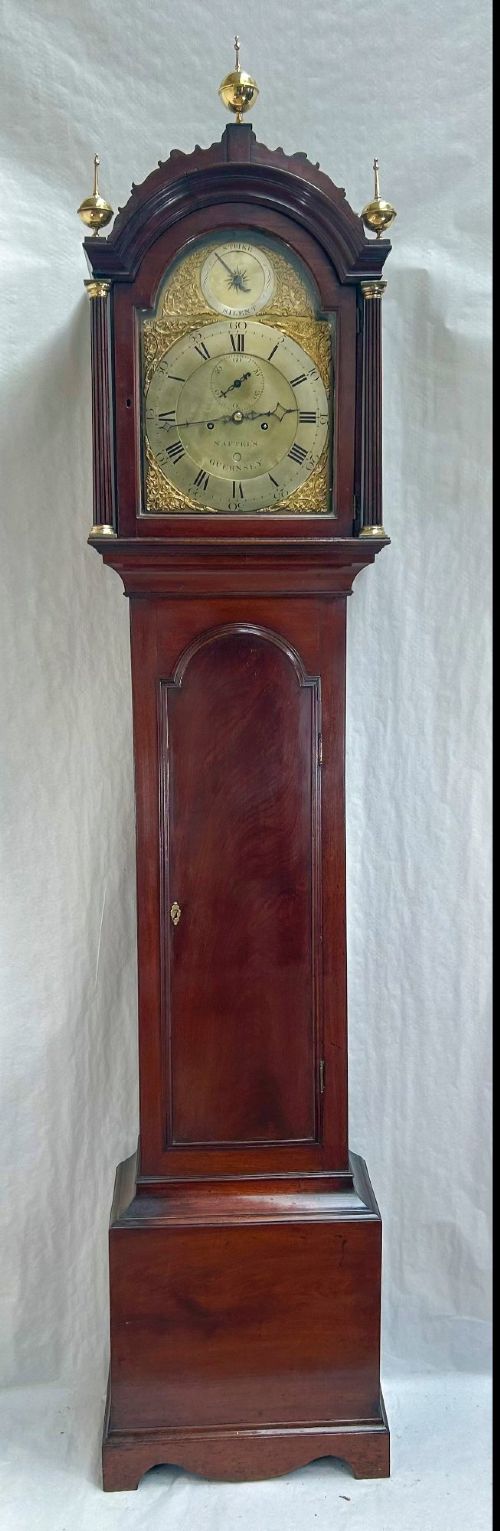
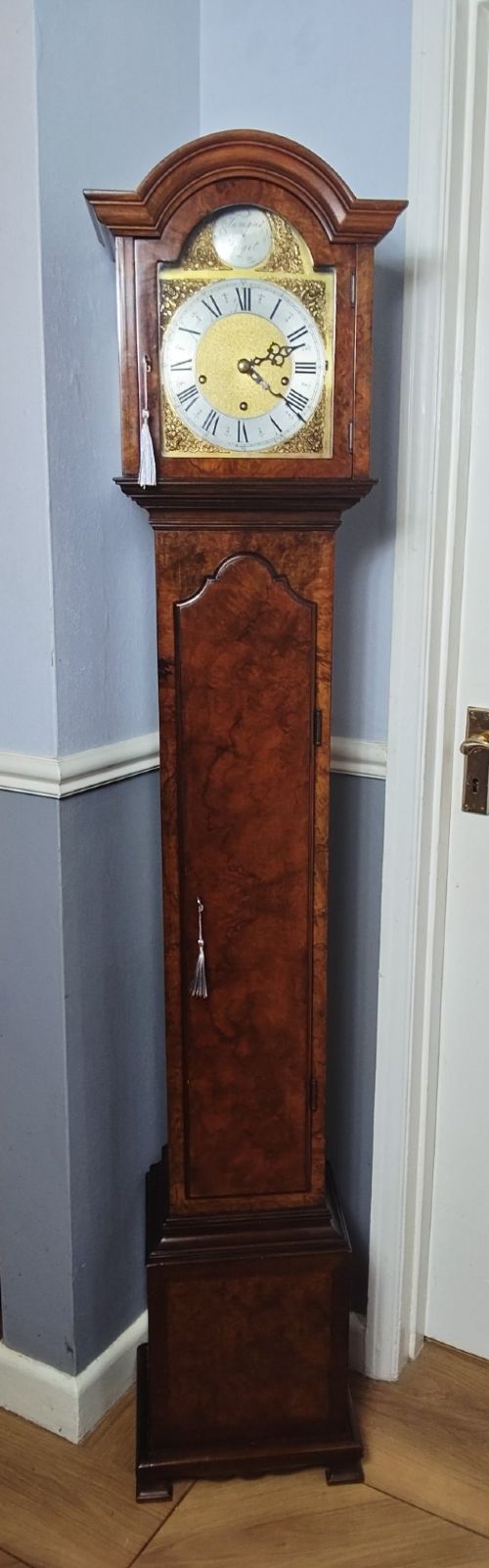
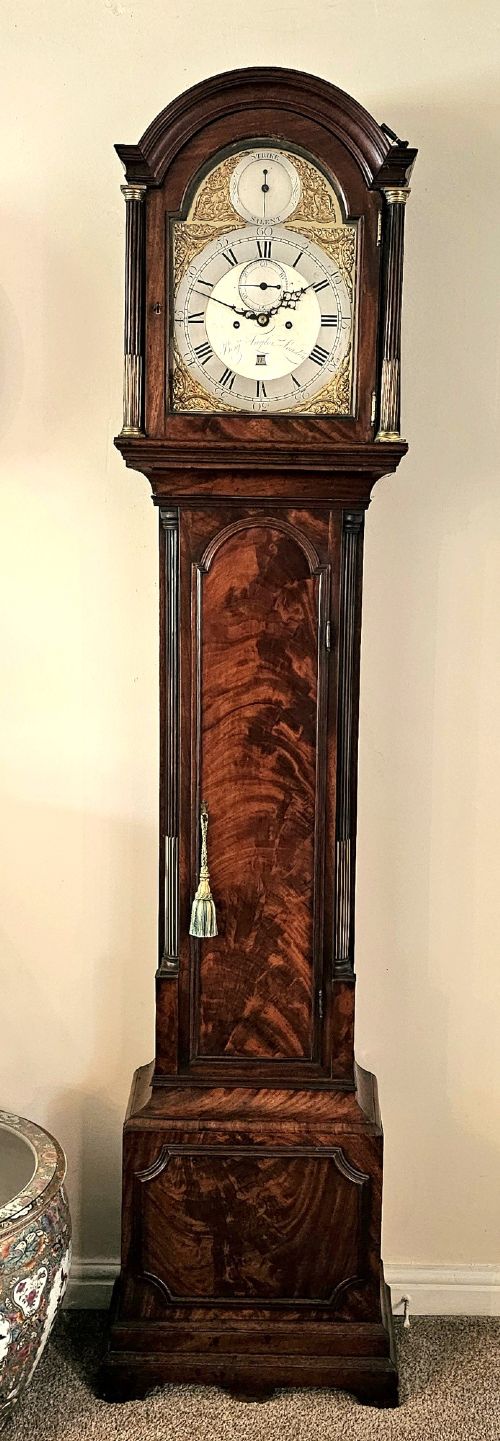
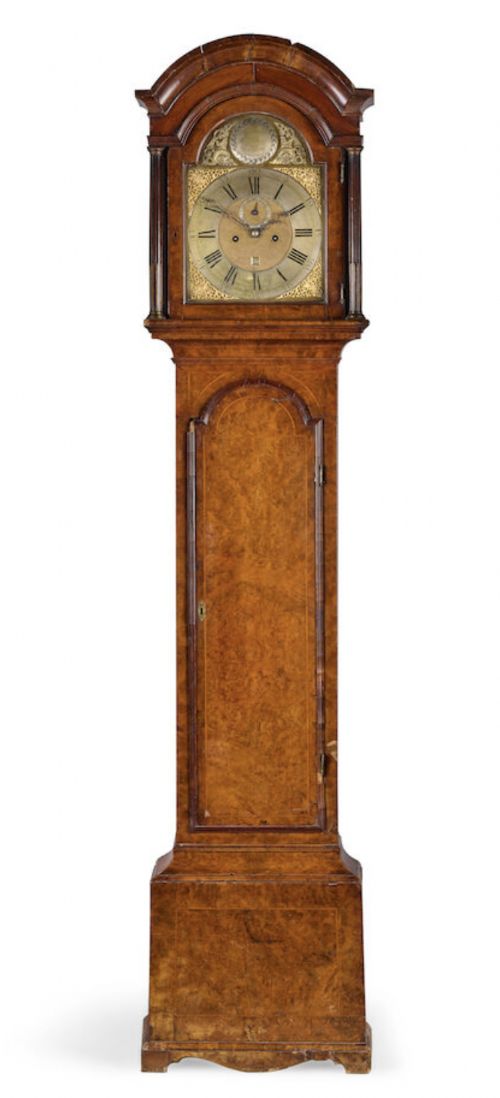
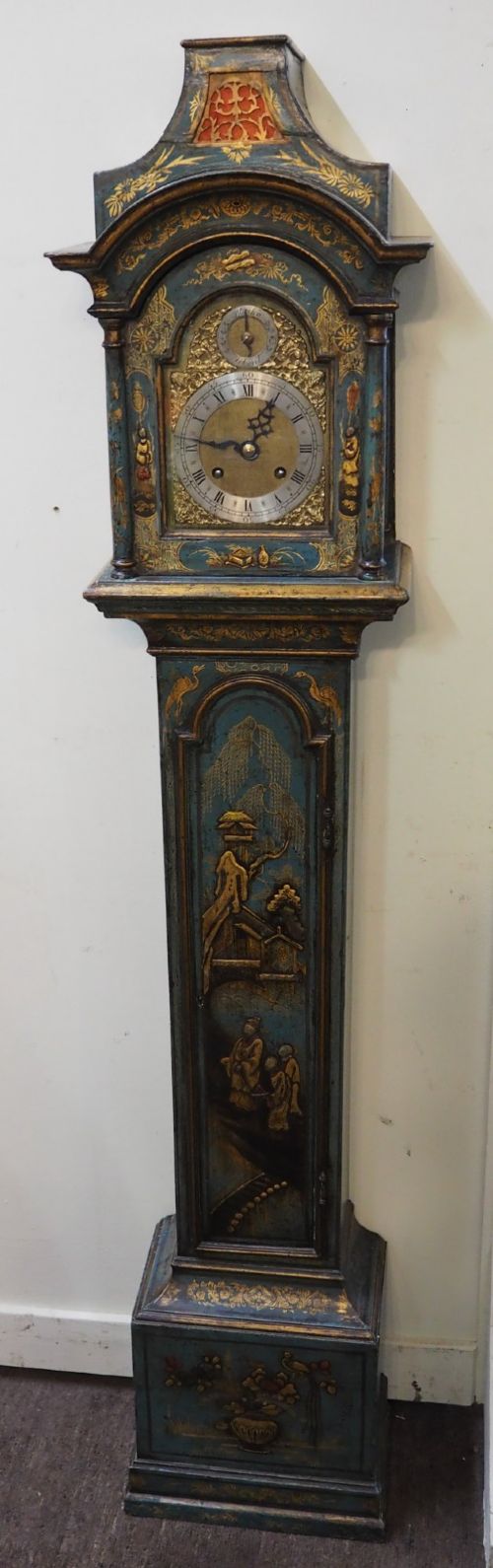
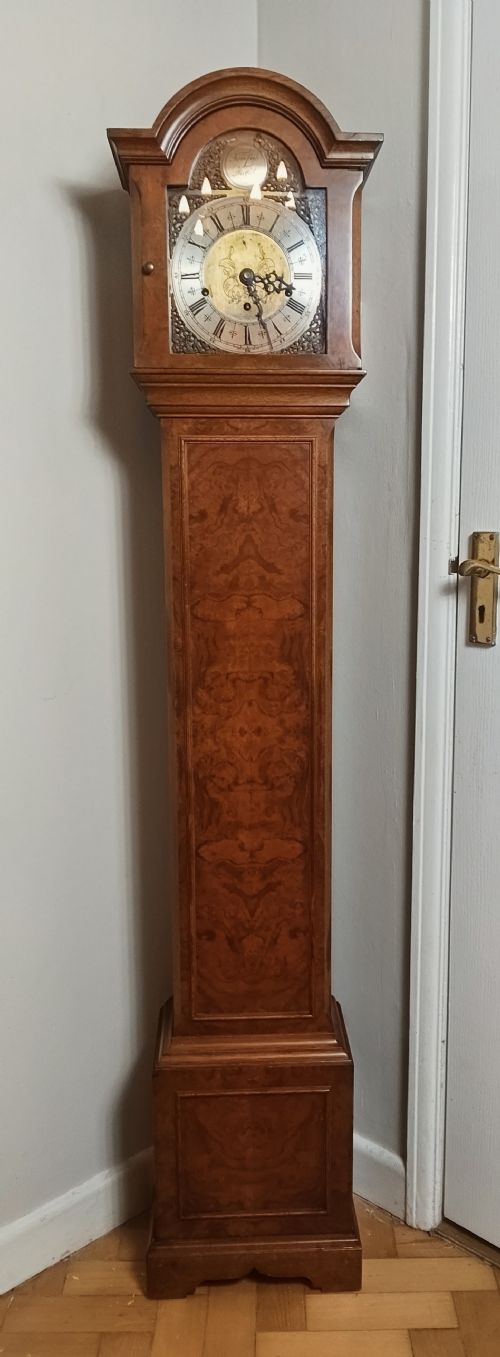

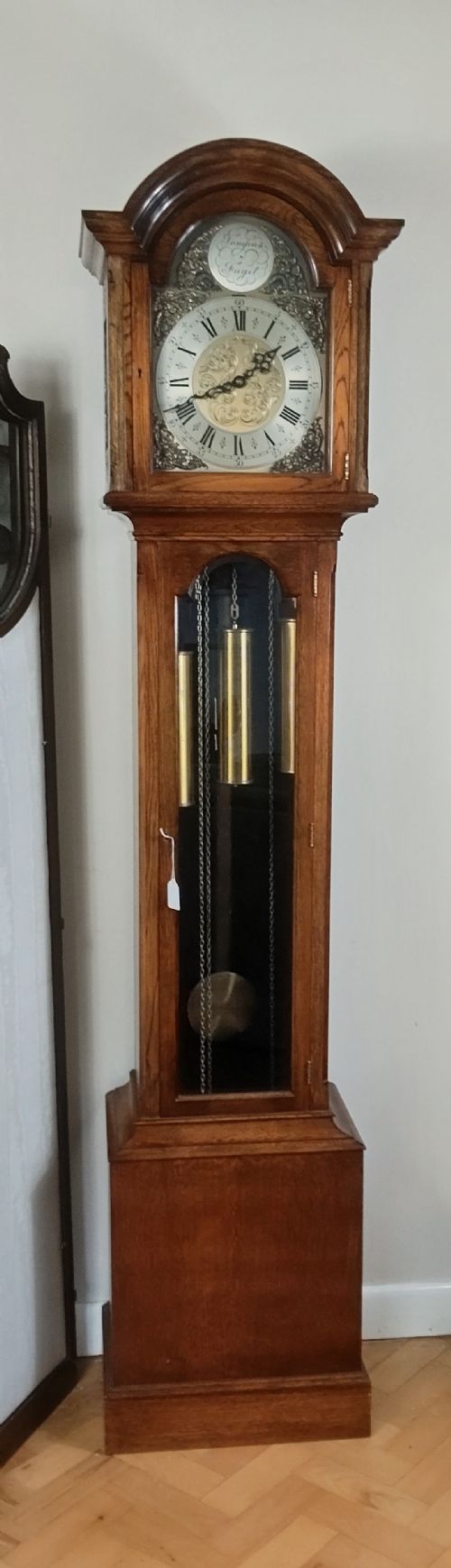
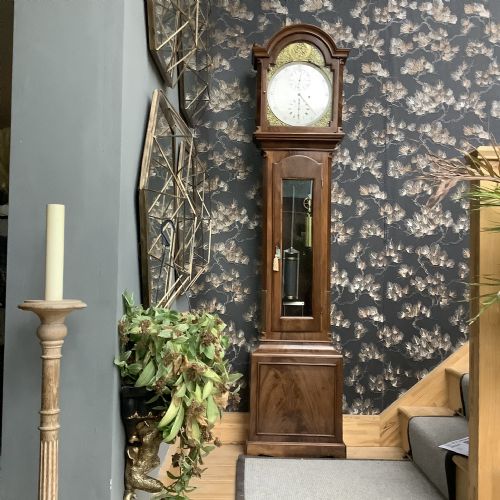


Brass Arch Longcase Clock
A brass arch longcase clock stands as a towering piece of horological furniture, driven by precision brass movements housed within tall timber cases.
Brass Arch Longcase Clock
A brass arch longcase clock combines an architectural timber housing with an ornate metal dial featuring an arched upper section. These timepieces measure time through weight-driven or spring-driven movements that power both the hands and various striking mechanisms.
Most examples found in this selection originate from the eighteenth century or the Georgian period, executed in substantial timbers like oak, mahogany, and walnut. Smaller scaled grandmother clocks from the Edwardian and later twentieth-century periods also appear frequently.
Forms range from simple regional timekeepers to complex London productions complete with musical chimes, lunar moonphases, or automated rocking ships. The dial arches frequently accommodate subsidiary dials, strike-silent levers, or painted phases of the moon.
How They Were Made
Cabinetmakers constructed the tall cases using solid and veneered timbers including mahogany, oak, walnut, and flame mahogany, often applying intricate quarter-veneering or lacquer work. Glass panels protected the dial within the hood, whilst brass finials and mounts adorned the architectural crestings.
Clockmakers cast and engraved the brass dials, integrating steel for hands and movement components, whilst some later twentieth-century iterations incorporated specialised chime rods and musical cylinders.
Listings feature longcase clocks spanning from the early Georgian period through the Edwardian era to 1930s walnut models.
What Varies in Quality
The refinement of the brass dial engraving and the complexity of the movement separate standard production from masterwork horology. London-signed dials often display superior chasing, intricate subsidiary seconds, and calendar work compared to provincial alternatives.
Gillett and Johnston of Croydon·James Field of Hempstead·Benjamin Taylor·Windmills and Wightman·Elliott·Priory of Dundee Scotland·Bravingtons·James Tregent of London·Edward Upjohn Exon·Francis Perigal of Bond Street·William Wady of Twickenham·Upjohn of Exeter·Wightman Of London·Richard Biggs Romsey·John Thompson London
The Brass Arch Longcase Clock Glossary
- Longcase clock
- A tall pendulum clock enclosed in a wooden case designed to stand directly on the floor. These are commonly referred to as grandfather or grandmother clocks depending on their height.
- Grandmother clock
- A smaller, more compact version of the traditional longcase clock. They were produced extensively during the twentieth century, including Edwardian and 1930s periods.
- Moonphase
- A mechanical display on the clock dial that tracks the lunar cycle. It utilises a rotating disc behind a shaped aperture to show the phases of the moon.
- Automata
- Mechanical moving figures integrated into the dial of a clock. Examples include rocking ships that animate with the movement of the clock.
- Strike-silent
- A mechanism allowing the clock's striking train to be disengaged at night. This stops the hours from sounding whilst the movement continues to keep time.
Brass Arch Longcase Clock: Frequently Asked Questions
How do I wind an 8 day longcase clock?
Most 8-day movements require a crank key to wind the weights up via winding holes on the dial face every week.
Care must be taken not to overwind the movement once tension is felt on the line.
What is the difference between a grandfather and grandmother clock?
Grandfather clocks are the standard full-sized tallcase clocks dating primarily from the eighteenth and nineteenth centuries.
Grandmother clocks are significantly shorter versions that gained popularity during the Edwardian era and the 1930s.
How do I date a brass arch longcase clock?
Dating relies heavily on stylistic cues in the dial architecture, such as the shape of the arch, spandrel designs, and signature styles.
Case timber selection, bracket feet versus plinth bases, and fretwork hoods also provide clear indicators of period manufacture.
Where should I place a longcase clock in my home?
These clocks require a stable, dry interior wall away from direct sunlight, central heating vents, and exterior doors.
A solid floor is essential to keep the pendulum swinging evenly and to prevent the case from leaning.
What does quarter chiming mean?
A quarter-chiming movement plays a short musical melody or sequence of notes on bells or gongs at every quarter hour.
The full melody precedes the striking of the exact hour.