
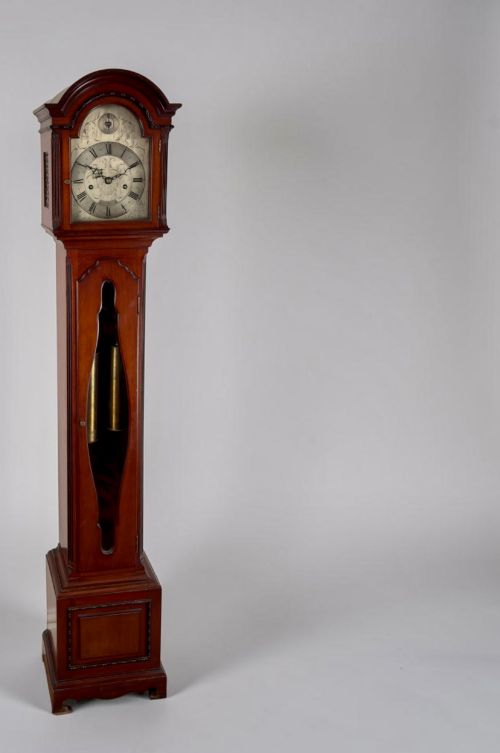
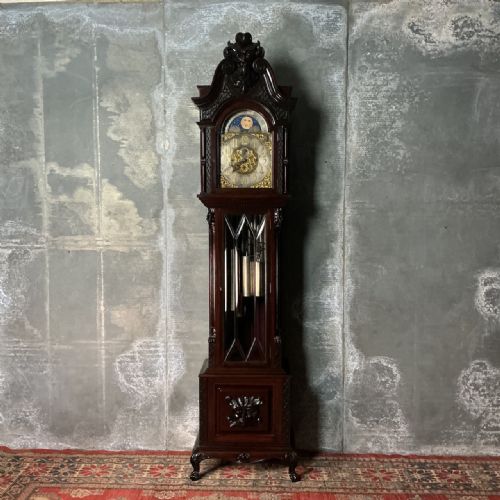
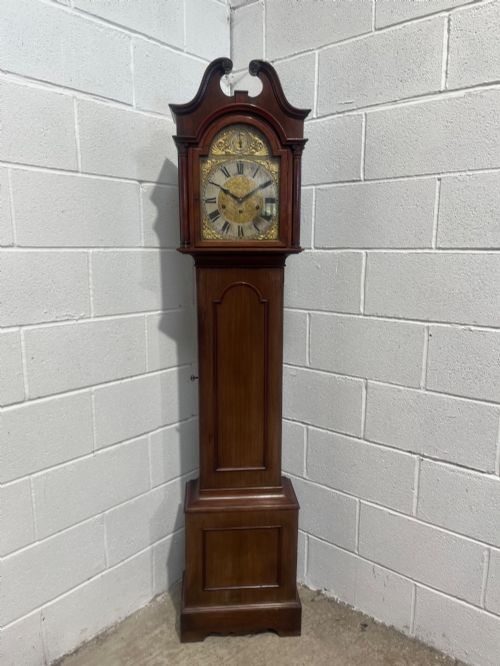
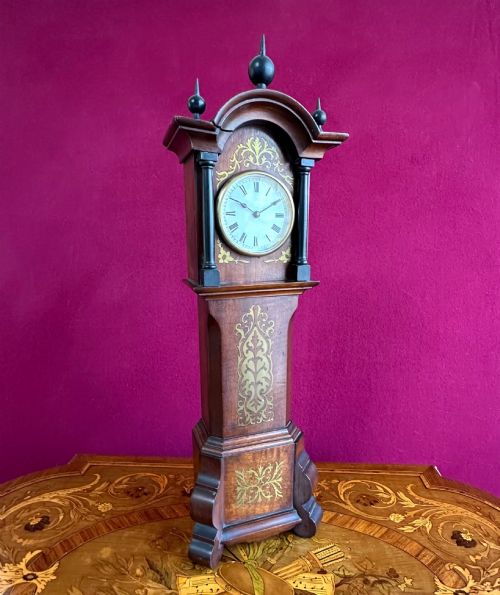
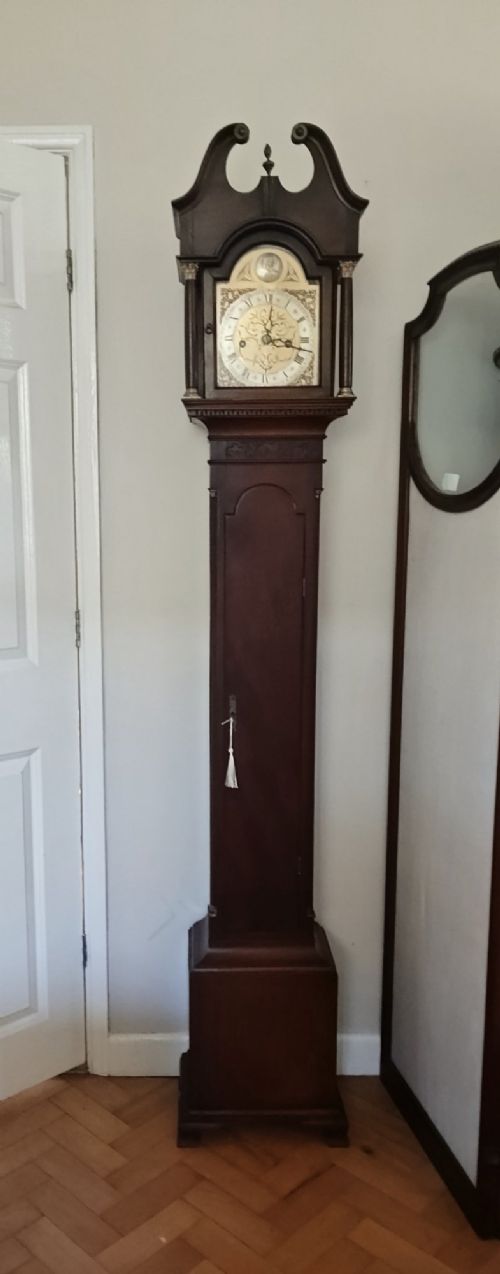
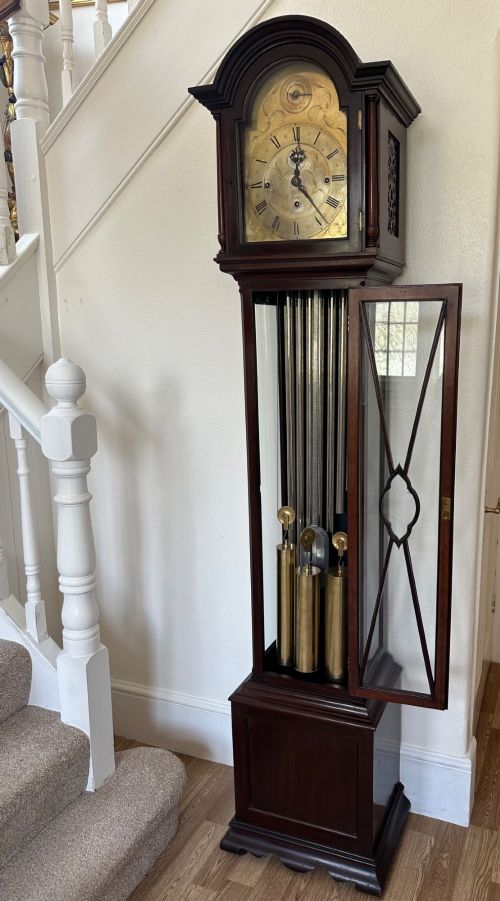

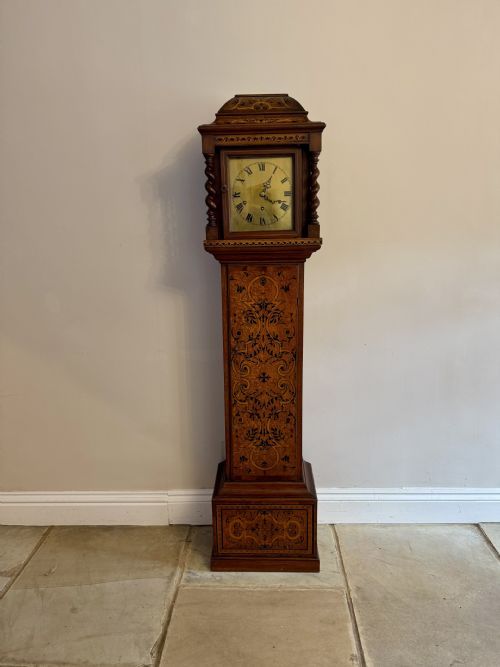


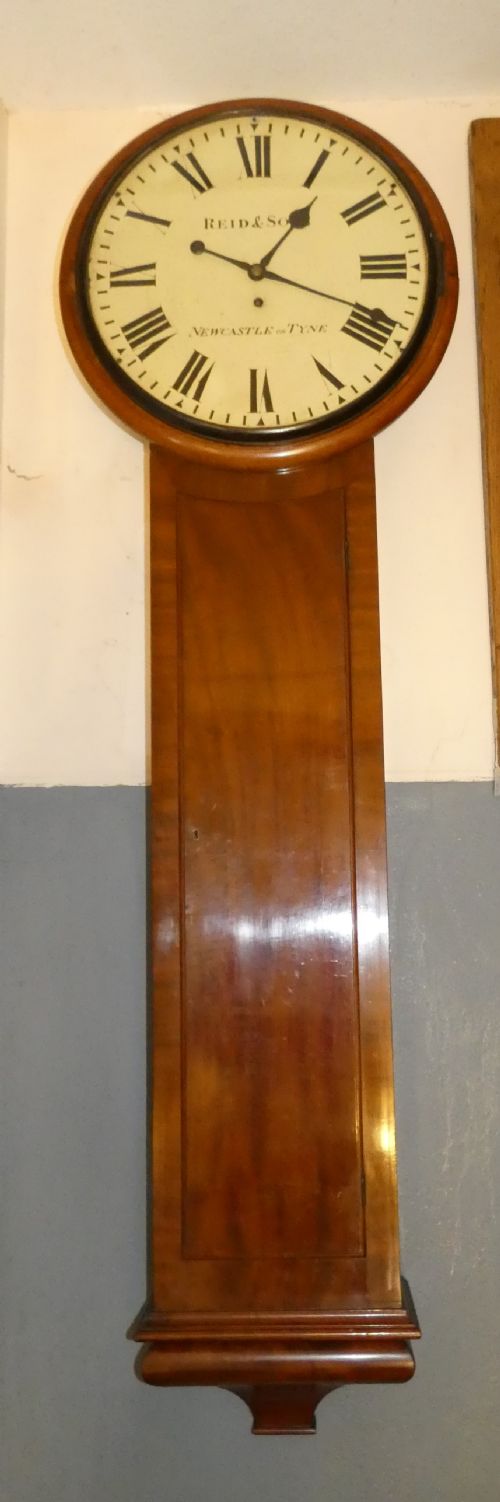


Edwardian Mahogany Longcase Clock
An Edwardian mahogany longcase clock brings architectural presence and mechanical precision into a room through stately floor-standing cabinetry and intricate striking movements.
Edwardian Mahogany Longcase Clock
An edwardian mahogany longcase clock combines tall wooden floor-standing cabinetry with precision weighted or spring-driven timekeeping mechanisms. These tall timepieces appear in various proportions, ranging from full-sized grandfathers to smaller grandmother and miniature formats.
The pieces on this page heavily feature the Edwardian period alongside nineteenth and twentieth-century examples, spanning traditional proportions and revival styles. Cabinet makers utilised rich timbers to construct cases that house intricate dial faces and complex chiming trains.
Makers housed these movements in tall wooden housings featuring glazed doors and brass dials, reflecting both domestic utility and decorative ambition. Buyers encounter everything from simple time-only examples to elaborate musical pieces playing on bells or tubular gongs.
Materials and construction
Cabinet makers constructed the tall housings primarily from solid and veneered mahogany, frequently embellishing the surfaces with satinwood inlay and marquetry details. Brass forms the dials, bezels, and pendulum bobs, providing metallic contrast to the deep brown wood tones.
Movements incorporate steel arbors, brass gears, and glass panels protecting the dial face, while specialised versions utilise tubular bells or wire gongs for musical chiming. Workshops employed skilled joinery techniques to build tall, stable trunk doors and architectural hoods capable of housing heavy weights.
Some miniature models pack full quarter-chiming musical gear trains into cases barely taller than a tall stool.
Distinctions in quality
The standard of a longcase clock rests upon the sophistication of its movement, ranging from basic time-and-strike systems to multi-train musical mechanisms playing on numerous bells or tubes. Superior examples feature complex chiming trains by notable retailers or makers that maintain accurate time and rich acoustic resonance.
Cabinet work distinguishes finer pieces through crisp marquetry inlay, well-figured mahogany grain, and proportioned mouldings rather than plain surfaces. The quality of the engraved or silvered brass dial and the clarity of the glass panels further separate standard production from exhibition pieces.
Gillett and Johnston of Croydon·Edward Shepley of Manchester·Lister and Sons·Camerer Cuss and Co·Dent of London·Maple and Co of London·Cottell Brothers Swindon
The Edwardian Mahogany Longcase Clock Glossary
- Longcase clock
- A tall, floor-standing pendulum clock housed in a wooden case consisting of a hood, trunk, and base. These pieces are frequently called grandfather or grandmother clocks depending on their overall height.
- Grandmother clock
- A smaller, more compact version of the traditional longcase clock produced with reduced proportions. They fit lower ceiling heights while retaining standard weight-driven or spring-driven movements.
- Quarter chiming
- A mechanical capability where the movement sounds a musical sequence every fifteen minutes using bells, gongs, or tubular rods. This complex train requires additional weights or springs alongside the timekeeping mechanism.
- Marquetry inlay
- Decorative patterns formed by fitted pieces of contrasting wood veneers, such as satinwood, applied to the mahogany case surfaces. Craftsmen used this technique to create floral or geometric motifs.
- Regulator
- A high-precision timekeeping clock designed for accuracy, featuring an elongated pendulum and a simplified dial layout that separates the hours, minutes, and seconds.
Edwardian Mahogany Longcase Clock: Frequently Asked Questions
How do I wind a longcase clock?
Winding requires using a specific crank key to pull up the suspended weights inside the trunk or to wind the spring barrels behind the dial face. Care must be taken not to over-wind the mechanism.
Most weight-driven models need attention at regular intervals depending on whether they are eight-day or thirty-hour movements. Consult the specific gear train requirements before adjusting the weights.
Where should I place a longcase clock?
Position the clock against a solid interior wall away from direct sunlight, heating vents, and damp exterior walls to protect the mahogany wood and internal steel components. A stable floor surface is essential for proper operation.
The case must stand completely upright and plumb for the pendulum to swing evenly and keep accurate time. Many examples include adjustable feet or wall-fixing brackets for stability.
Why does the clock not chime properly?
Chiming irregularities often occur if the movement is out of beat or if the striking train has been moved manually while stopped. The synchronization between the hands and the chime train may need adjustment.
Allowing the clock to run through its full sequence without forced intervention usually resolves minor positional slips. Professional adjustment is recommended for persistent mechanical issues.
How do I tell an Edwardian clock from a Georgian one?
Edwardian longcase clocks date from the early twentieth century and often incorporate revival styles, lighter mahogany tones, and refined satinwood stringing. Movements from this era frequently feature automated quarter-chiming functions.
Georgian models, dating from the eighteenth and early nineteenth centuries, typically display heavier architectural proportions, distinct dial painting styles, and simpler time-and-strike configurations. Examining the interior construction and timber age helps confirm the period.