

Music Rack with Drawer
A music rack with drawer combines partitioned storage for folios with a useful base compartment, offering a practical piece for any sitting room.
Music Rack with Drawer
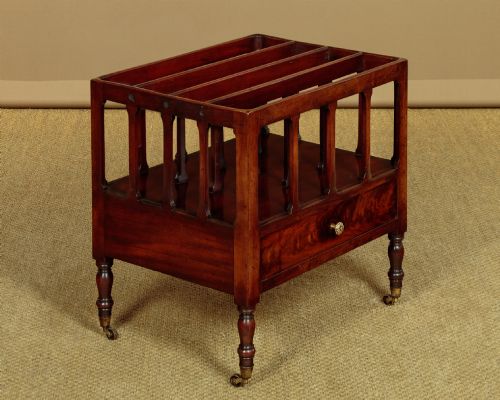
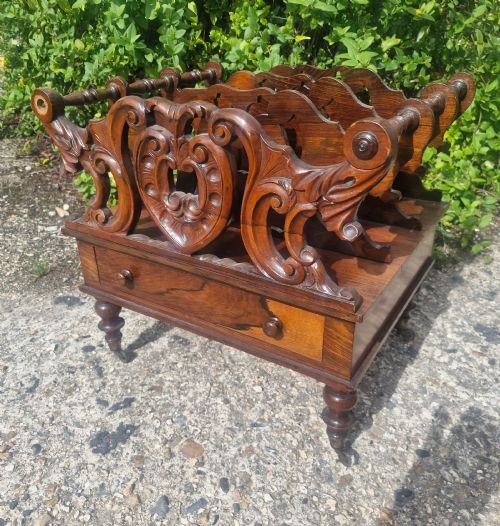
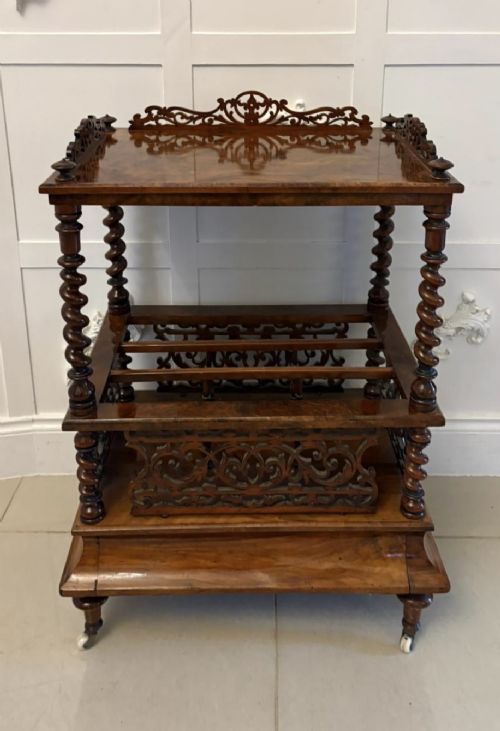
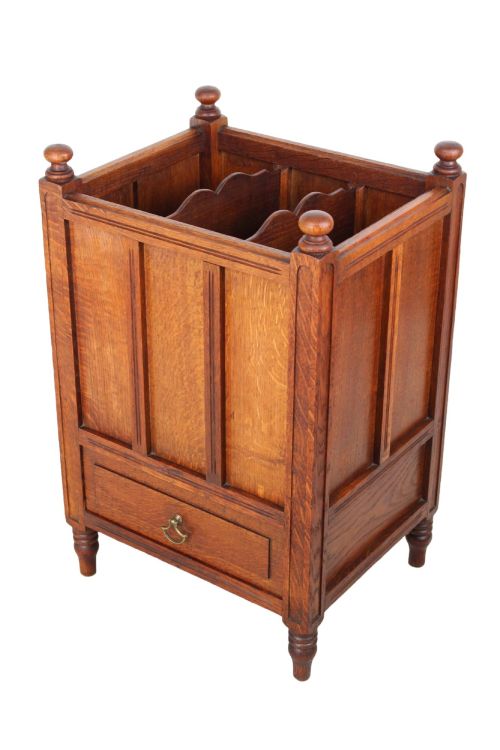
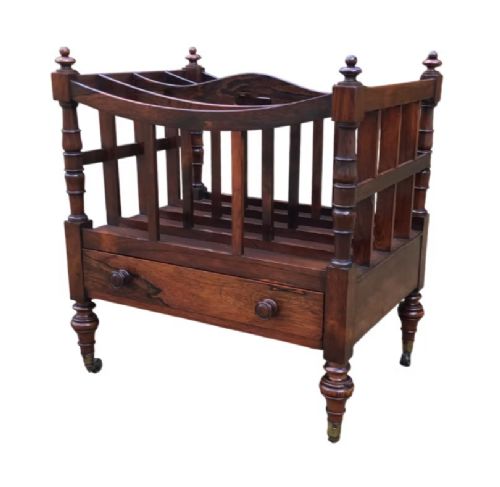
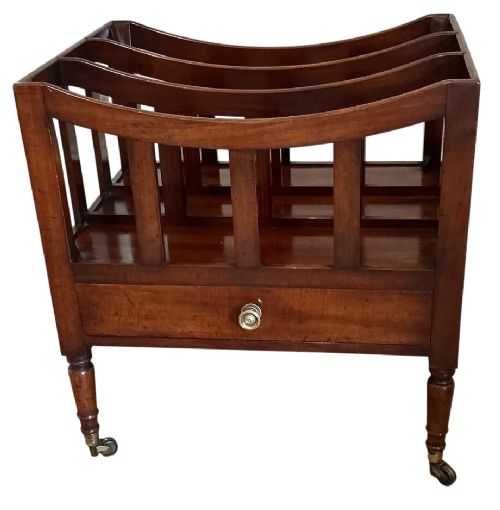
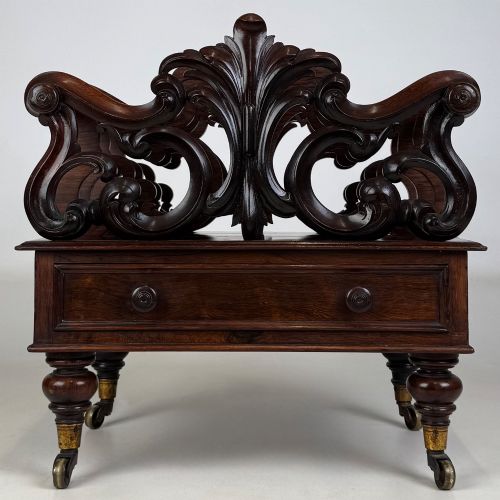
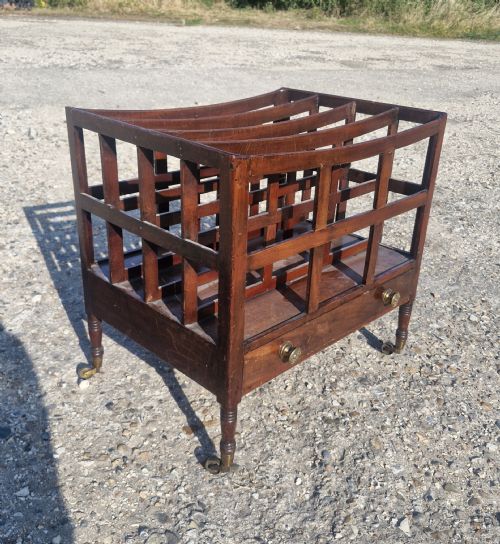
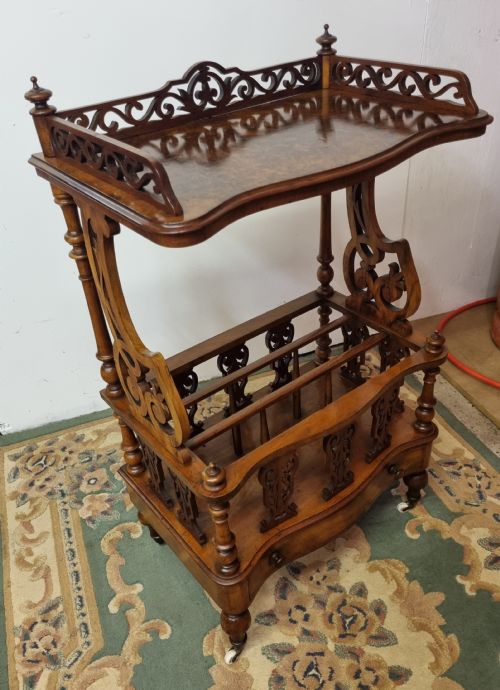
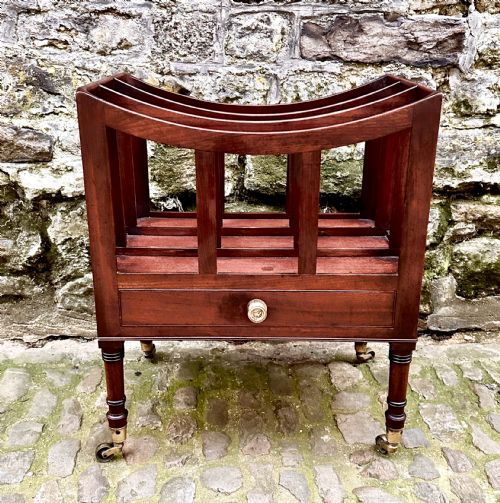
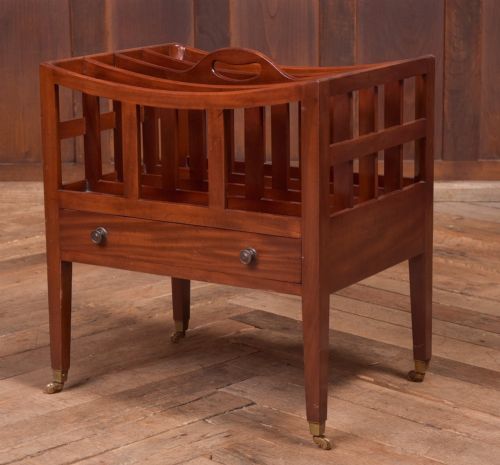
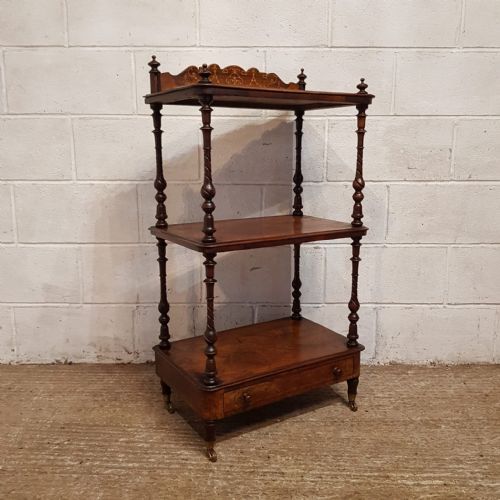
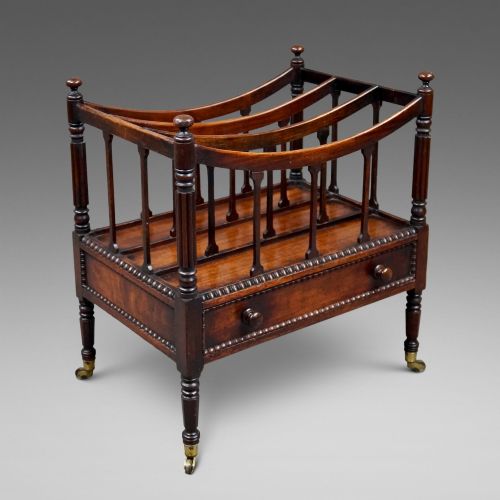
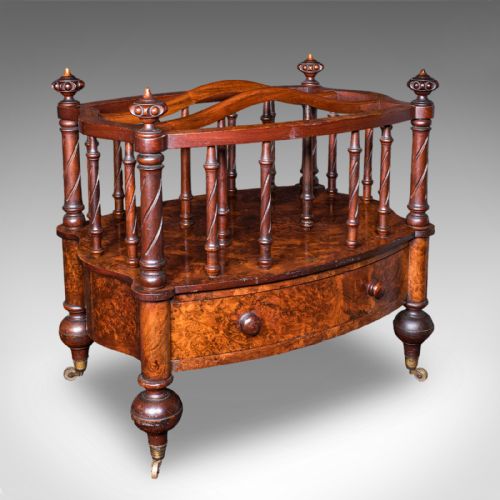
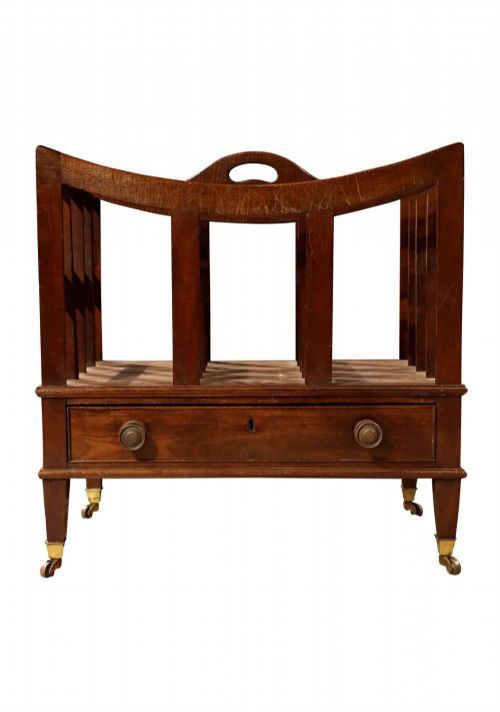
These items typically present divided vertical sections above a shallow drawer, resting on short legs or castors for ease of movement around a parlour. The form ranges from simple open-slat mahogany frames to elaborately carved rosewood and burr walnut designs with intricate fretwork.
Materials and construction methods
Cabinet makers utilised dense hardwoods such as mahogany, rosewood, and walnut, frequently selecting burr veneers and contrasting satinwood or ebony inlays to decorative effect. Brass fittings, including castors and drawer pulls, appear regularly across the period examples.
The vertical divisions are often formed from pierced or turned slats shaped by hand, joined securely to a lower plinth that houses the dovetailed drawer carcase.
Several examples incorporate ceramic elements and intricate brass castors alongside traditional dovetailed drawers.
Distinctions in quality and execution
Superior examples reveal themselves through the crispness of turned supports, the delicacy of pierced fretwork, and the quality of the timber grain selected for the visible surfaces. Finer pieces demonstrate precise joinery in the drawer construction and well-matched veneers.
Conversely, standard commercial production relies on simpler turned spindles and plain mahogany planks with minimal decorative detailing, reflecting utilitarian rather than high-style commission work.
Edwards and Roberts·Howard and Sons
The Music Rack with Drawer Glossary
- Canterbury
- A low, freestanding stand with upright divisions for holding sheet music, newspapers, or folios, usually featuring a drawer below.
- Fretwork
- Ornamental perforated woodwork created by cutting patterns through thin panels, seen on the vertical divisions of finer stands.
- Dovetail
- A traditional interlocking joint used in drawer construction to ensure durable and strong corners.
- Castor
- A small wheel fitted to the base of each leg to allow the stand to be repositioned easily across a carpet.
Music Rack with Drawer: Frequently Asked Questions
What is a music rack with drawer used for?
These pieces were originally designed to hold sheet music and folios upright in a parlour or music room, keeping scores organised and close to the pianoforte.
The integrated drawer provided a secure space to store smaller items such as tuning keys, manuscript paper, or pens.
How do I identify a Regency period piece?
Regency stands often feature classical motifs, sweeping boat-shaped frames, and rich rosewood veneers with brass detailing.
They rely on clean architectural lines and elegant proportions that reflect the neoclassical taste of the early nineteenth century.
Where should I place this in my home?
A freestanding canterbury fits well beside a piano, a reading chair, or a sofa where you need accessible storage for periodicals and books.
Because the piece is finished on all sides, it can sit away from the wall in the middle of a room.
What woods were commonly used?
Makers favoured durable tropical and native hardwoods, most notably mahogany, rosewood, and walnut.
Victorian makers also introduced burr walnut and satinwood to create highly figured surfaces with contrasting dark ebony stringing.