




Carved Wood Music Stand
A carved wood music stand brings both structure and melody to a room, holding scores and folios with traditional craftsmanship.
Carved Wood Music Stand
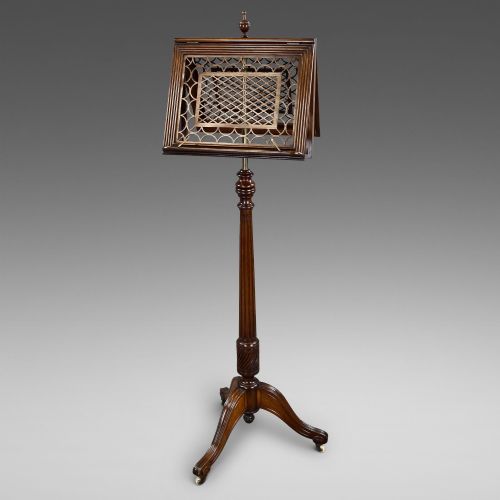
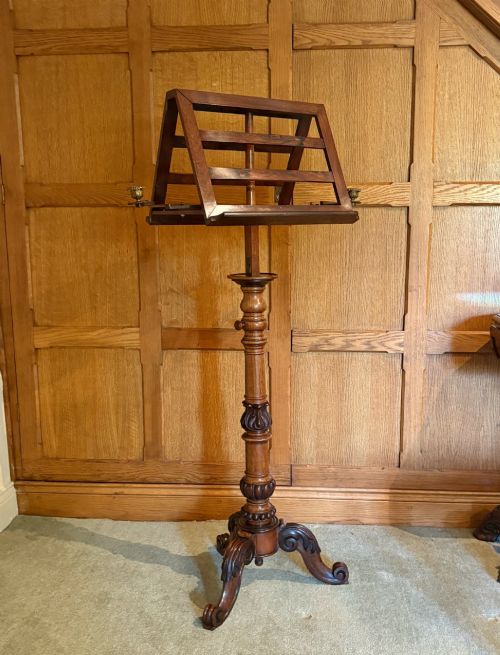
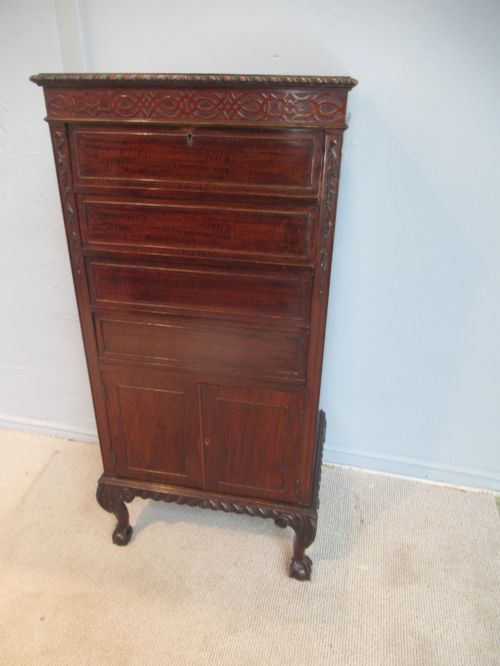
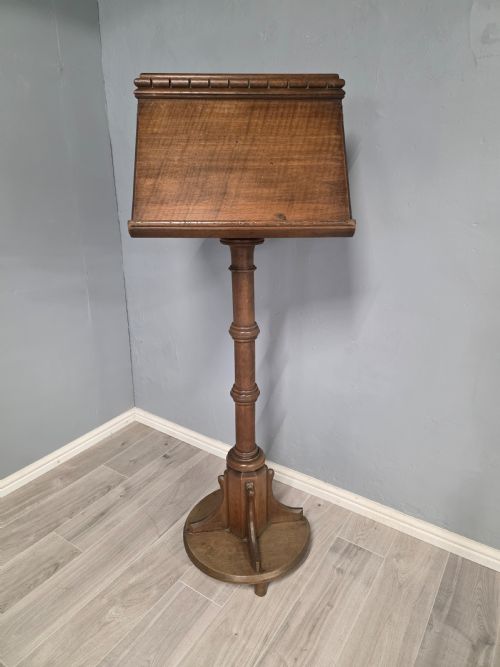
When you search for a carved wood music stand, you find items designed to hold sheet music, books, and folios across periods like the Regency, Victorian, and Edwardian eras. These pieces range from upright tripod stands and duet stands to multi-functional canterburys and music cabinets.
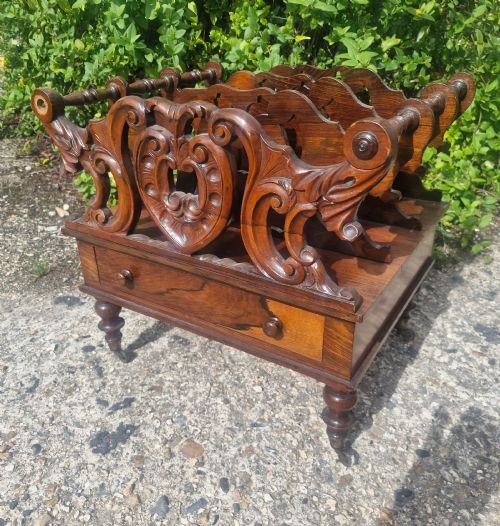
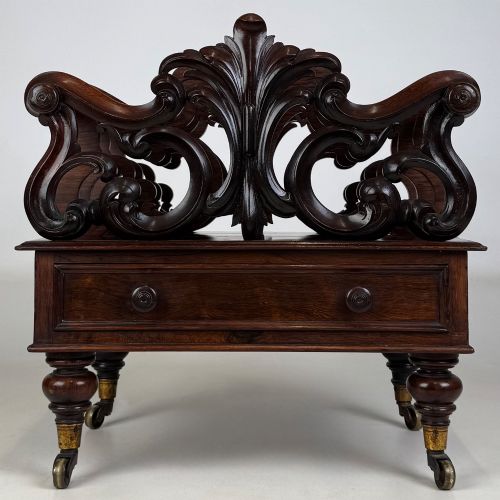
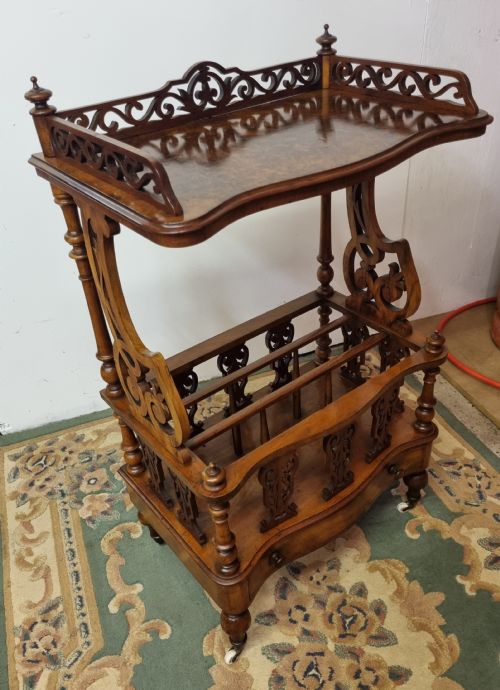
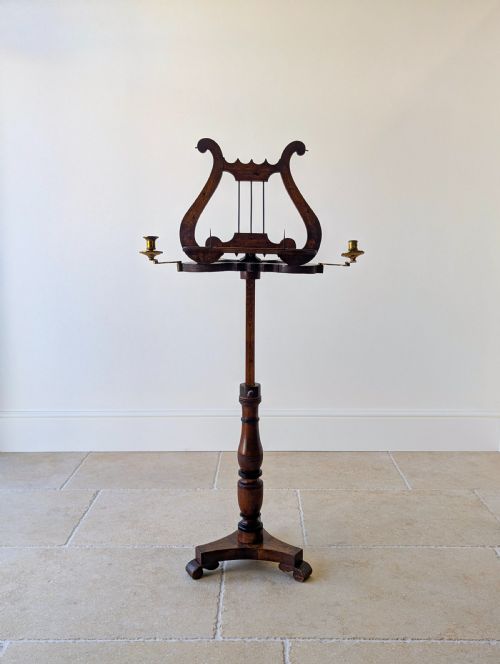
The version you are most likely to meet on this page is a Victorian or nineteenth-century rosewood or mahogany piece, often featuring pierced scroll divisions or lyre motifs. Many of these function equally well as magazine racks or small whatnots.
The selection includes forms influenced by George III, William IV, and George IV styles, along with French Art Nouveau and Japonisme examples. Each piece reflects the domestic musical habits and parlour culture of its time.
How they were made
Cabinet makers utilised dense hardwoods such as mahogany, rosewood, walnut, burr walnut, and satinwood to construct these stands. These timbers provided the structural strength needed for carved details, pierced fretwork, and slender legs.
Metal components like brass hardware appeared frequently to support adjustable desks, castors, and hinges, while ceramic and glass elements occasionally featured in related cabinet designs. Wood carving, turning, and joinery defined the construction of the frames and partitions.
One Victorian music cabinet includes a patented leaf turner, designed to flip sheet music pages without interrupting a pianist's performance.
What varies in quality
The crispness of the timber carving and the choice of veneer figure set the better examples apart from standard workshop output. Stands utilising burr walnut or finely grained rosewood display greater visual depth.
Mechanical execution in adjustable parts, such as brass ratchets or folding desk mechanisms, indicates the standard of original manufacture. Integrated elements like drawers, turned columns, and pierced scrollwork show the maker's attention to detail.
Gabriel Viardot·Gillows
The Carved Wood Music Stand Glossary
- Canterbury
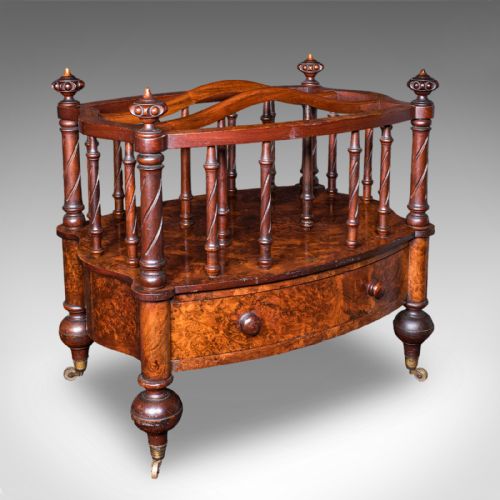
- A low stand with divisions for holding sheet music, newspapers, or magazines, often fitted with castors and a small drawer below. Originating in the late eighteenth century, it remained popular through the Victorian period.
- Lyre-form
- A decorative motif shaped like an ancient Greek lyre, commonly used in the central support of music stands and card tables. Cabinet makers carved this shape from mahogany or rosewood.
- Fretwork
- Ornamental perforated wood carving created by piercing patterns through thin boards. This technique appears on the partitions of music stands and cabinet galleries.
- Whatnot
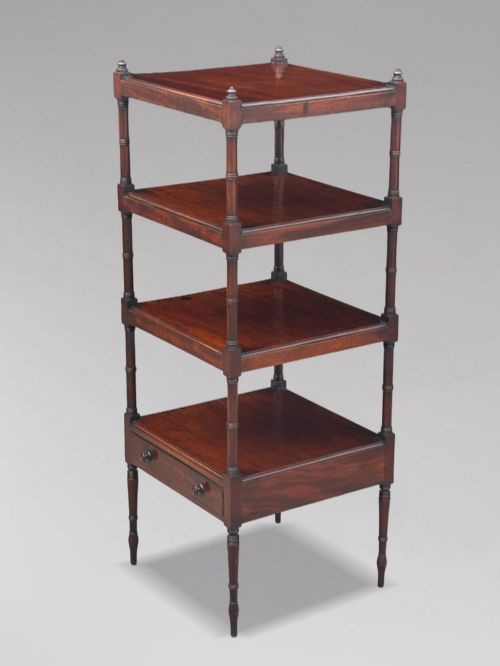
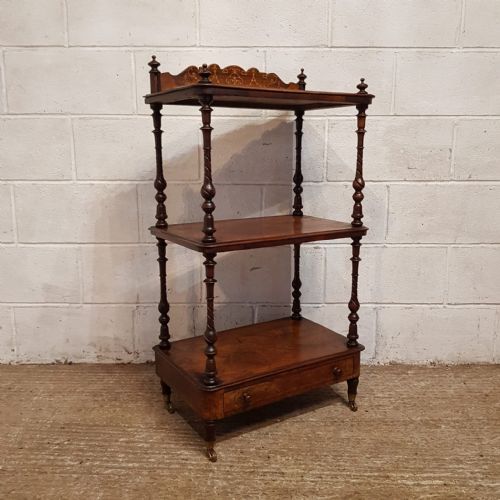
- An open set of tiered shelves used for displaying or storing books, music, and decorative objects. These pieces often combined shelf space with compartments for folios.
- Tripod stand
- A piece supported by three legs radiating from a central pillar, allowing stability on uneven nineteenth-century flooring. Music stands frequently utilised this configuration for adjustable height.
Carved Wood Music Stand: Frequently Asked Questions
What is a music stand with divisions called?
A stand featuring vertical partitions for organising sheets and books is typically termed a canterbury or music rack. These compartments kept folios upright and separated in nineteenth-century parlours.
Such pieces often included lower drawers for smaller accessories and castors for mobility across carpets.
How were music stands used in the home?
Musicians placed them beside pianos or in parlours to hold open scores during practice or recitals. Many designs accommodated duet playing with double-sided or adjustable desks.
Over time, owners repurposed them to hold newspapers, magazines, and portfolios as domestic habits evolved.
How do I tell a Victorian stand from a Regency one?
Regency stands generally display cleaner classical lines, often utilising mahogany or rosewood with brass inlay and restrained reeded columns. They date from the early nineteenth century.
Victorian pieces tend to show heavier carving, burr walnut veneers, serpentine shapes, and more ornate pierced scrollwork reflecting later revival styles.
Can these stands hold modern magazines?
Most standard canterburys and music racks provide enough depth and width between divisions to accommodate contemporary periodicals and large books. The upright partitions support softcover publications effectively.
Checking the internal width of the individual slots ensures a proper fit for oversized art or music folios.