
Magazine Rack Stand
When you want a magazine rack stand, you are choosing a traditional piece for holding periodicals that unites practical storage with fine furniture design.
Magazine Rack Stand
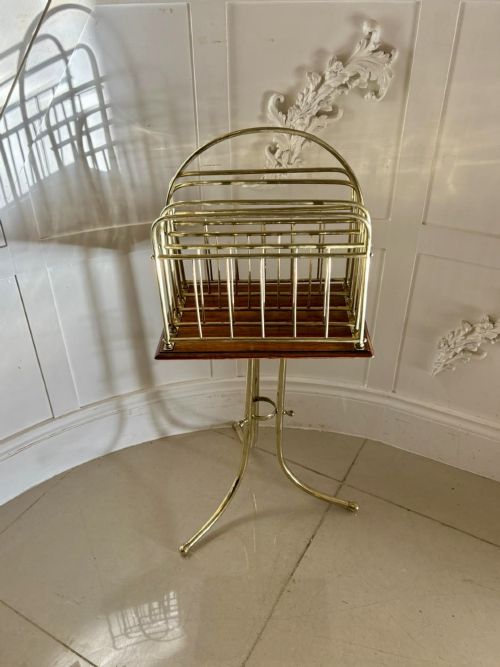
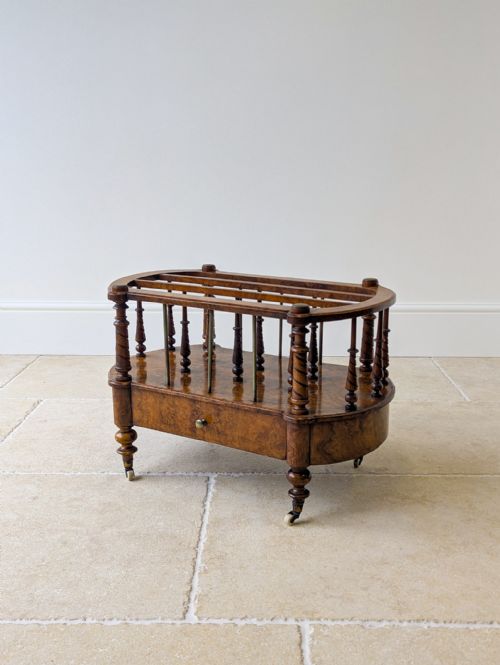
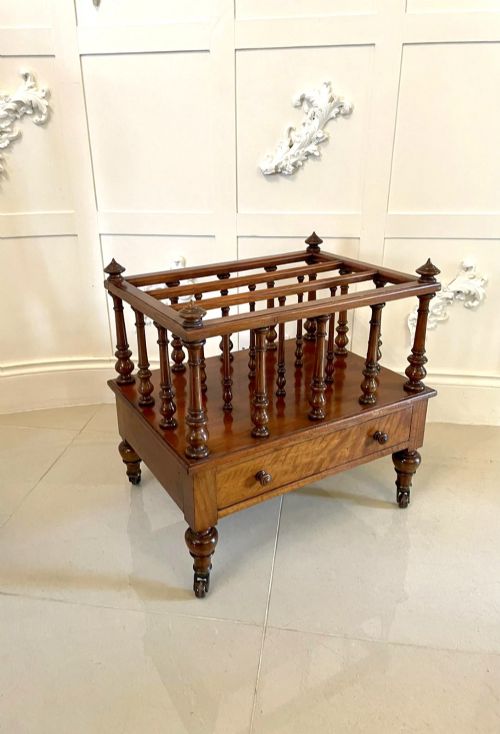
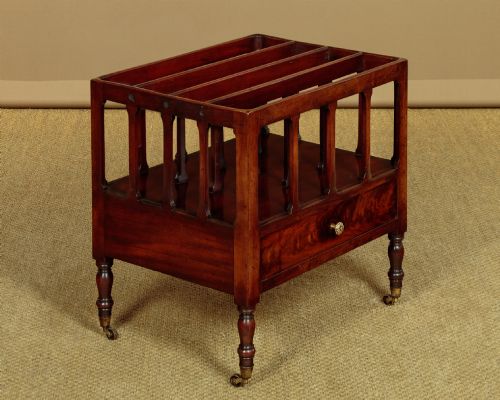
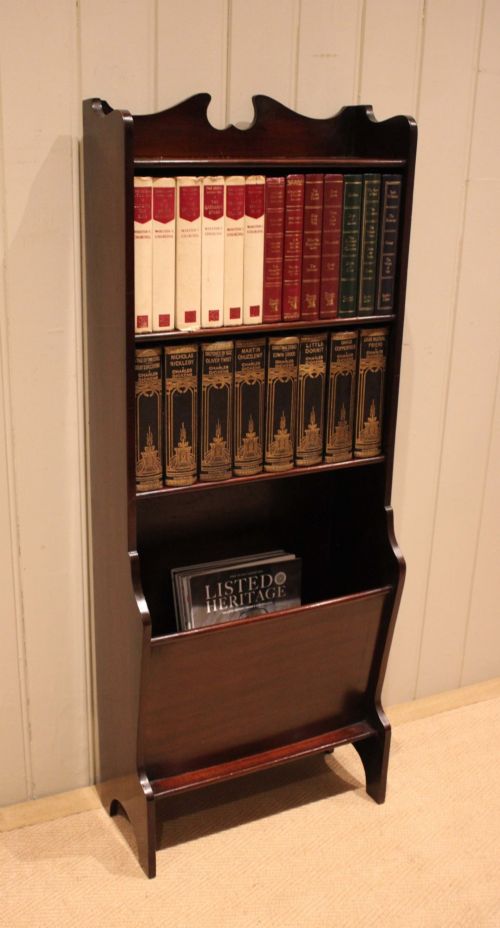
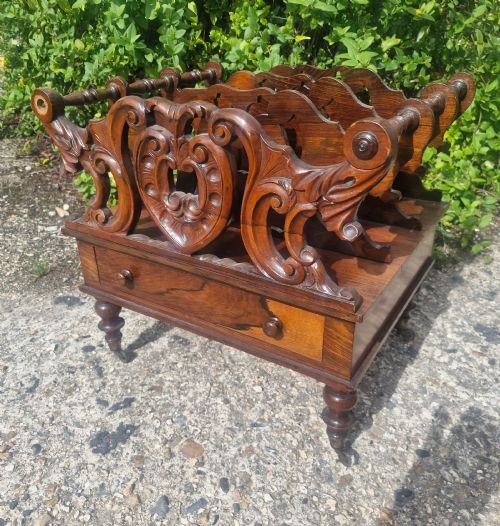
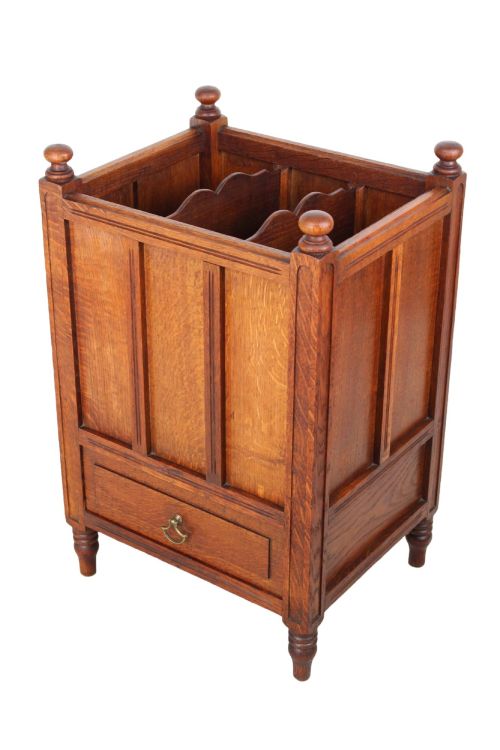
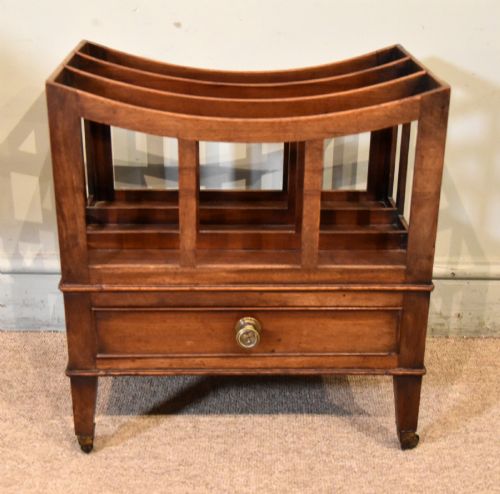
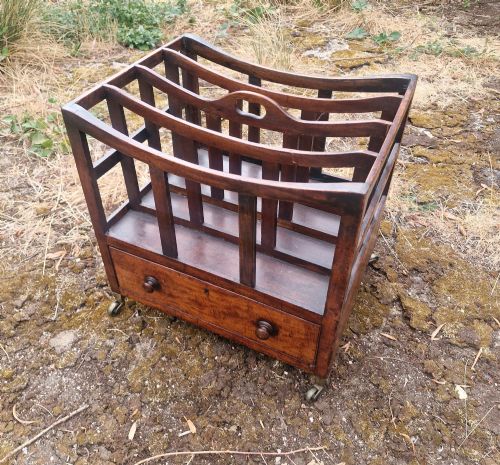
A magazine rack stand takes several historical forms, appearing most frequently as a Canterbury or a dedicated side table with partitioned sections designed to hold periodicals, newspapers, and sheet music. These pieces span multiple eras, encompassing Georgian, Regency, William IV, Victorian, and Edwardian periods.
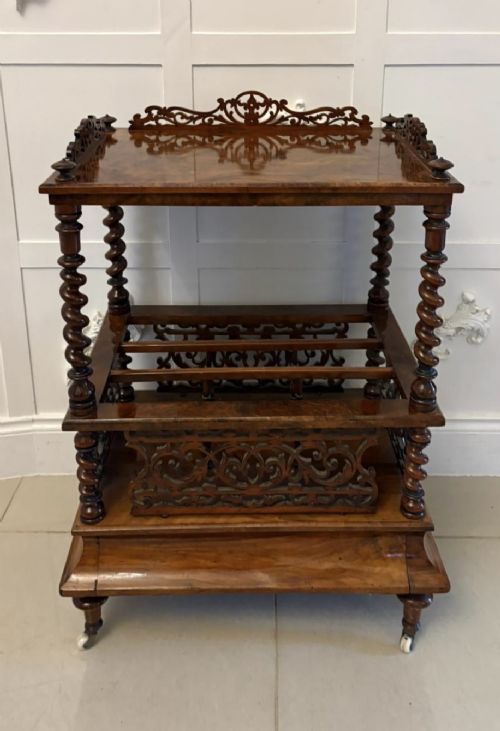
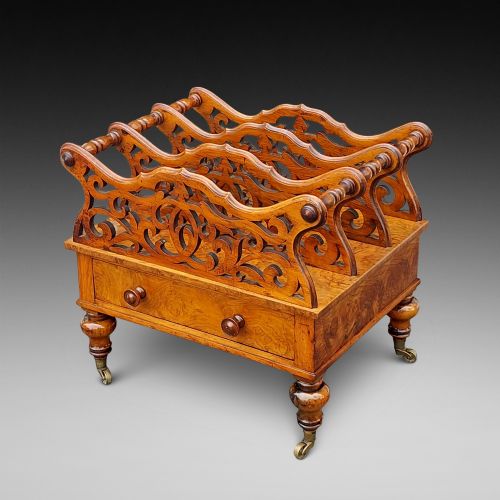
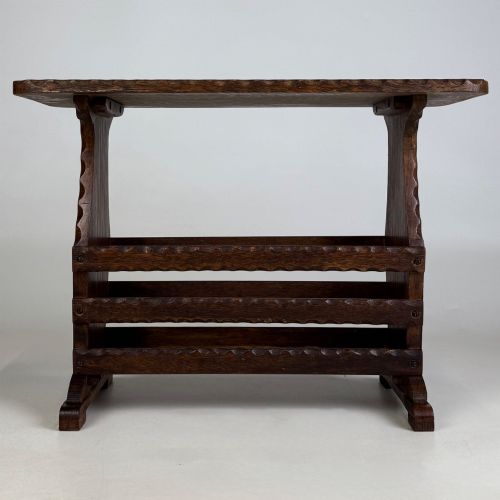
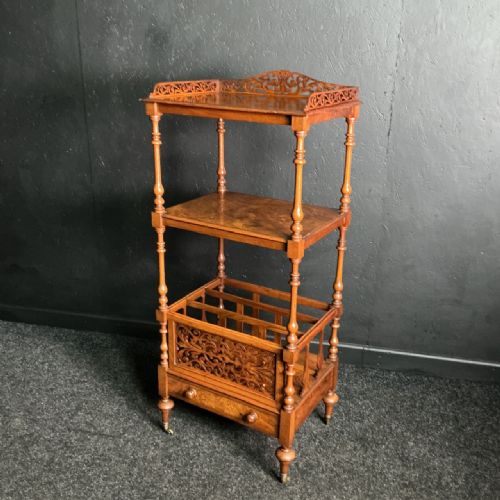
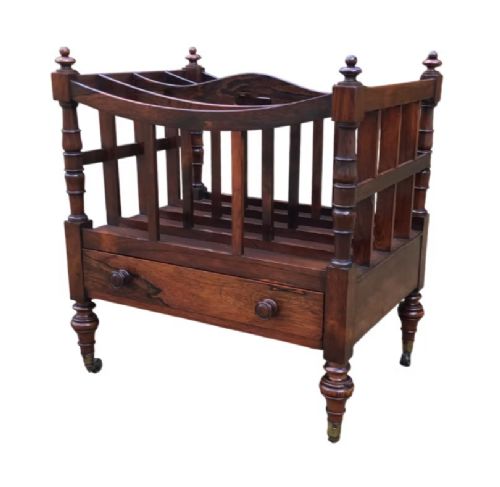
The versions you encounter on this page range from floor-standing wooden models with upright dividers to low-profile designs that double as occasional tables or whatnots. Many items combine open slat partitions with lower drawers, uniting the storage of reading materials with display surfaces.
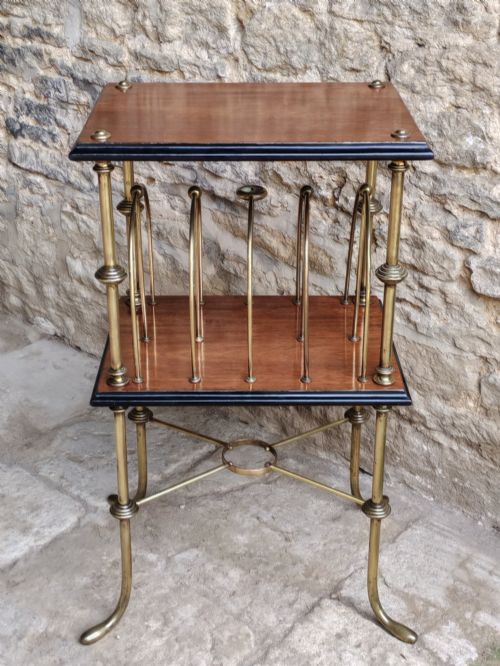
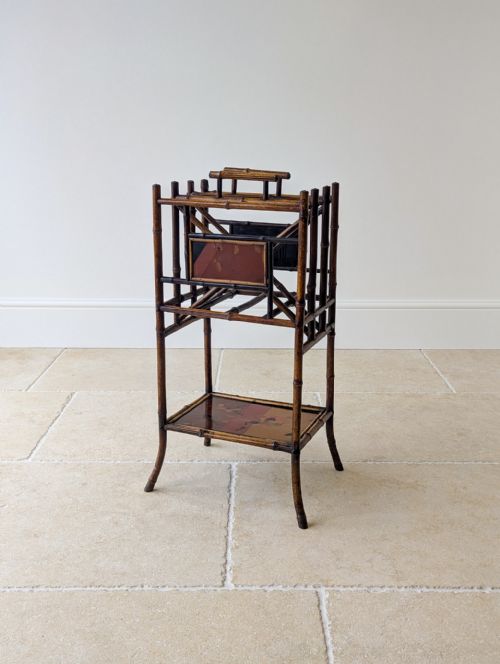
Makers utilised various regional interpretations, producing pieces in standard mahogany and walnut alongside lighter bamboo frames and robust brass or copper constructions. The enduring appeal lies in this versatility, allowing a period stand to serve contemporary living spaces just as it did parlours of the nineteenth century.
Materials and construction
Cabinetmakers constructed these stands using dense hardwoods such as mahogany, walnut, burr walnut, and rosewood, frequently employing rich veneers to create decorative figure on the main panels and tabletops. Oak appears widely in Edwardian and Arts and Crafts examples, bringing a sturdier grain to utility-focused designs.
Metals play a distinct structural role, with brass and copper used for tubular frames, carrying handles, decorative feet, and intricate wirework partitions. Bamboo and ceramic details surface in Aesthetic Movement and late nineteenth-century pieces, reflecting broader shifts in material taste across the periods.
What separates the finest examples
Quality in a magazine rack stand rests on the ambition of the timber selection and the precision of the joinery, particularly where upright dividers meet the base. Highly figured burr walnut veneers, inlaid mother of pearl, and intricate fretwork elevate a piece far above utilitarian models built solely for basic storage.
The integration of secondary functions, such as smooth-running drawers, turned corner columns, and cast brass casters, signals superior workshop execution. Finer examples retain harmonious proportions between the partitioned rack and any accompanying table top or lower shelf.
Edwards and Roberts
The Magazine Rack Stand Glossary
- Canterbury
- A low, freestanding stand with partitioned sections for holding sheet music, newspapers, or periodicals, often featuring a low drawer and carrying handles. Originating in the eighteenth century, the form evolved through the Regency and Victorian eras in various fine woods.
- Whatnot
- A piece of open shelving supported by slender pillars, frequently combined with a magazine rack or Canterbury base. These items were designed for displaying ornaments and holding current reading matter in domestic sitting rooms.
- Aesthetic Movement
- A late nineteenth-century design style that rejected heavy industrial ornamentation in favour of artistic simplicity, Japanese-influenced motifs, and the use of bamboo. Pieces from this movement often feature ebonised wood and contrasting metallic elements.
- Arts and Crafts
- A design movement championing hand craftsmanship, visible construction methods, and simple utility over mass-produced ornamentation. Items from this tradition typically utilise solid oak and hammered copper or brass.
- Regency
- A stylistic period spanning the early nineteenth century defined by classical restraint, elegant curving lines, and classical revival motifs. Stands from this era frequently exhibit fine mahogany framing and brass inlay.
Magazine Rack Stand: Frequently Asked Questions
What is a Canterbury stand?
A Canterbury is a traditional partitioned stand originally designed for holding music sheets and newspapers. Over time, the form adapted to accommodate general periodicals and books.
These pieces typically feature slatted vertical dividers to keep papers upright, often sitting above a small drawer for smaller items.
How do I date a magazine stand?
Dating relies on observing the primary wood species, construction techniques, and stylistic markers. Regency pieces often show clean mahogany lines and brass details, while Victorian stands frequently employ burr walnut and richer carving.
Edwardian and later examples lean towards lighter oak frames, simpler lines, or Arts and Crafts metalwork.
Can these stands hold modern magazines?
Most antique magazine rack stands offer compartments deep and wide enough for contemporary publications. Standard partitions comfortably accept standard-sized periodicals and newspapers.
Larger folios or heavy art books may require wider Regency or Victorian floor-standing models with robust structural dividers.
Where should I place a rack stand?
These stands suit placement beside armchairs, sofas, or within home libraries where reading materials accumulate. Models that double as side tables or occasional tables provide a functional surface for lamps and cups alongside storage.
Keeping them away from direct heat sources helps protect older veneers and polished hardwood surfaces.