




Multicolour Wool Carpet
These multicolour wool carpet pieces are hand-woven tribal textiles from the Caucasus, Persia, Anatolia, and Central Asia.
Multicolour Wool Carpet
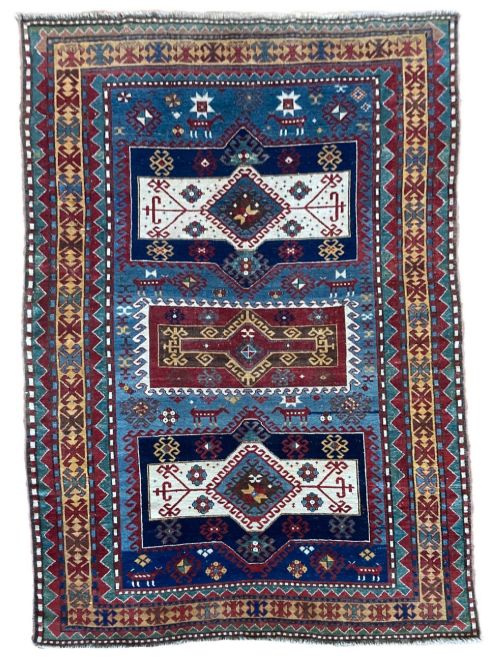
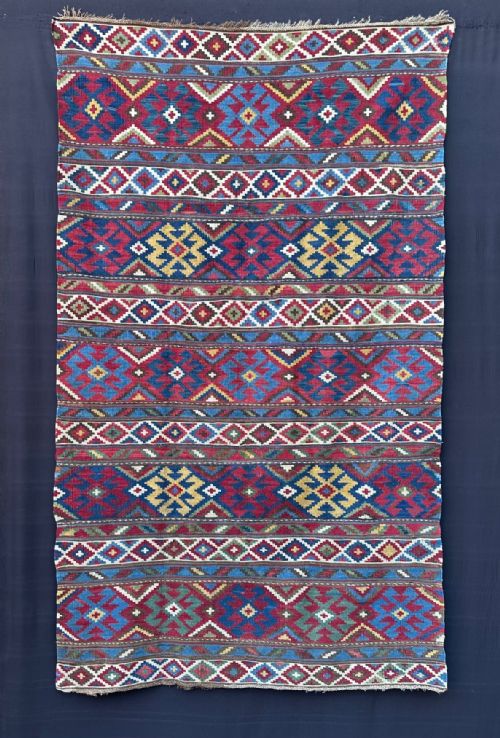
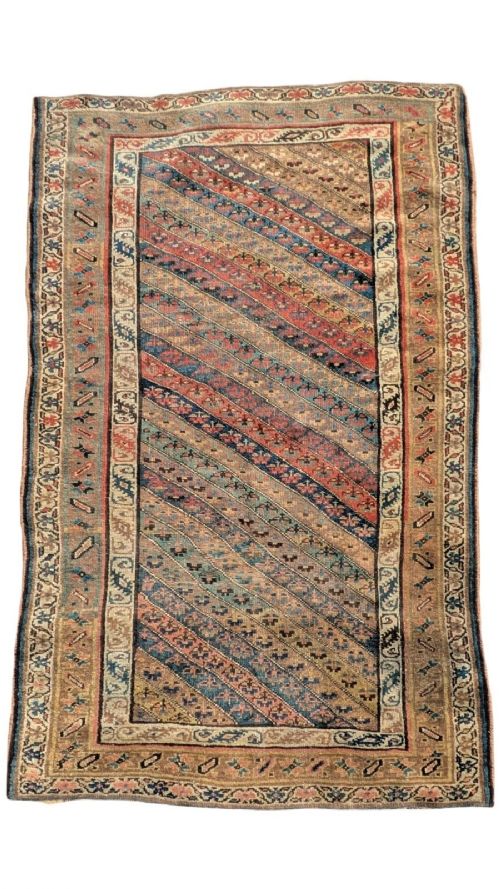
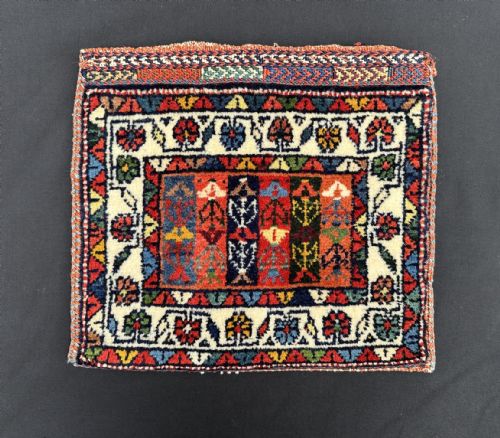
When you search for a multicolour wool carpet, you encounter woven textiles created by nomadic and village communities across the Caucasus, Persia, Anatolia, and Central Asia. These pieces span from the mid-nineteenth century through the early decades of the twentieth century, encompassing runner formats, flatwoven kilims, and piled village carpets. The most frequent examples on this page are tribal flatweaves and long rugs displaying geometric motifs and repeat medallions.
Village weavers produced these floor coverings and utilitarian hangings using traditional upright looms set up in domestic spaces or tents. Regional workshops and tribal groups each developed distinct design vocabularies, from the boteh patterns of Karabagh to the graphic banded layouts of Central Asian Gajeri kilims. Buyers seek these textile works for their direct link to historical weaving traditions and their rich, varied palettes.
What varies in quality
The standard of a multicolour wool carpet rests upon the precision of the weave, the handling of the dyestuffs, and the clarity of the design geometry. Finer knotting or tighter flatweave tension yields a crisper graphic presentation, allowing intricate medallion and repeat shield layouts to read with sharp definition. Furthermore, the harmonious interaction of natural dyes creates depth that cheaper synthetic alternatives fail to replicate over time.
Proportion and scale also separate standard village pieces from exceptional tribal examples, particularly where large formats maintain balanced borders and consistent symmetry. The survival of crisp edges, secure selvedges, and minimal structural restoration distinguishes the highest tier of surviving nineteenth and early twentieth-century examples.
Multicolour Wool Carpet Retail Price Guide 2026
Typical asking prices for multicolour wool carpet among the pieces listed under this phrase on Sellingantiques today, from the lower quarter to the upper quarter. They describe what is for sale here now, not the wider market.
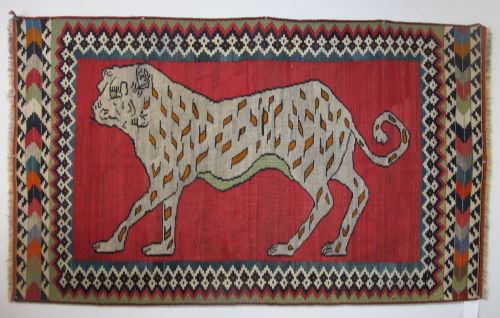
One determined Qashqai weaver decided a domestic carpet needed a fierce lion striding across the field.
The Multicolour Wool Carpet Glossary
- Kilim
- A flatwoven textile produced without a knotted pile, using slit-tapestry techniques to form geometric patterns. These pieces function traditionally as floor coverings, wall hangings, or storage bags.
- Boteh
- A recurring teardrop or almond-shaped motif with a curved upper end, originating in Persian textile design. This symbol frequently appears in repeat arrangements across Caucasian and Persian carpets.
- Medallion
- A central ornamental design element placed in the field of a rug or carpet. It anchors the geometric composition of the textile.
- Selvedge
- The reinforced side edges of a carpet or rug, finished to prevent the weft threads from unravelling. Secure selvedges indicate careful original construction.
- Warp
- The stationary vertical threads stretched onto a loom before weaving begins. These foundation threads carry the structural load of the finished textile.
Multicolour Wool Carpet: Frequently Asked Questions
How do I clean a wool carpet?
Gentle vacuuming without a rotating power brush helps remove surface dust without disturbing the wool fibres. Professional textile cleaning tailored to antique vegetable-dyed rugs remains essential for deeper maintenance.
Water exposure should be managed carefully to prevent dye migration or structural shrinkage. Specialist care preserves the natural lanolin content within the historical wool.
Where were these tribal rugs woven?
Weavers produced these textiles across distinct regions including the Caucasus mountains, Persian tribal territories, Anatolian villages, and Central Asian settlements. Each area maintained specific structural habits and local dyeing recipes.
Nomadic groups and settled village communities alike contributed to this diverse output. Local geography directly influenced the raw materials and design motifs selected.
Are these carpets suitable for heavy floor traffic?
Sturdily constructed pile carpets and dense flatweaves handle everyday domestic placement effectively when supported by an appropriate underlay. Placing them in moderate traffic zones prevents excessive fibre wear on nineteenth-century structures.
Lighter flatweaves and delicate wall-hanging textiles benefit from placement in lower-traffic areas. Proper placement protects the historical foundation threads from undue physical strain.
What indicates a natural dye palette?
Natural dyes present subtle tonal variations and gentle abrash across the field as the colour absorbs unevenly into hand-spun wool. These shades mature harmoniously through decades of exposure.
Harsh chemical dyes tend to remain flat and uniform over time, lacking the luminous depth found in nineteenth-century examples. Examining the base of the wool pile reveals how deeply the colorants penetrated.