

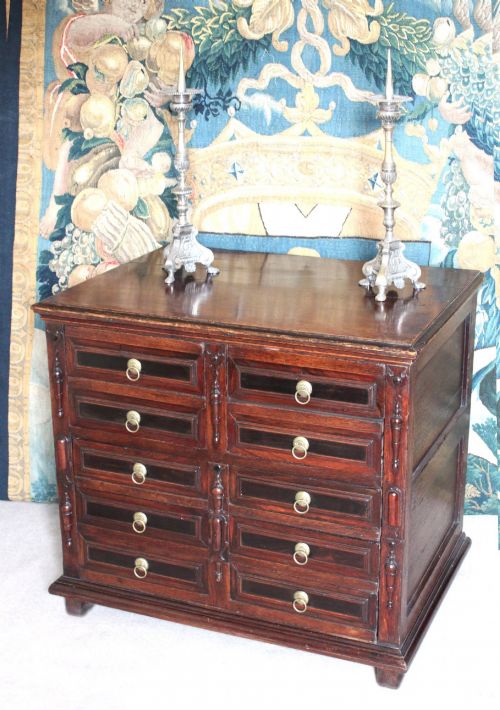
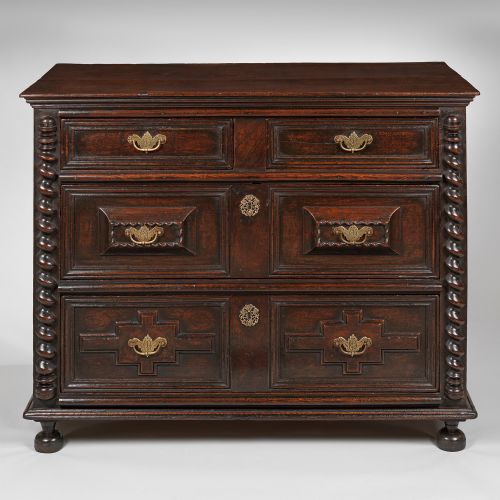
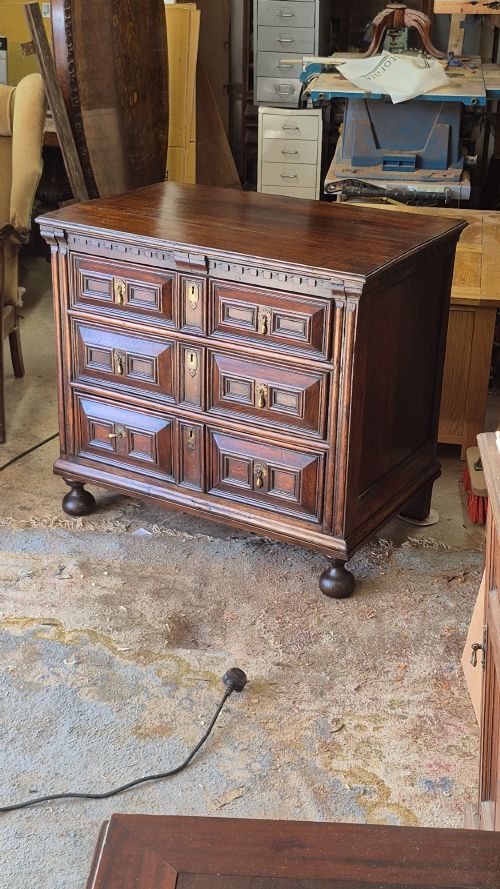

Moulded Oak Commode
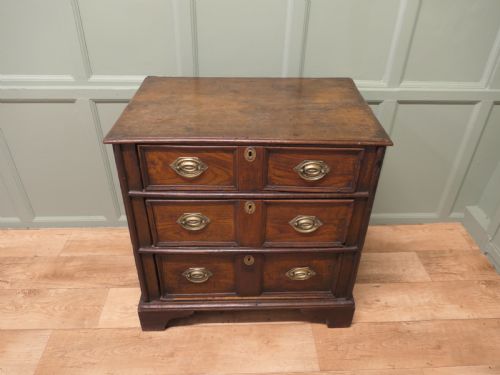
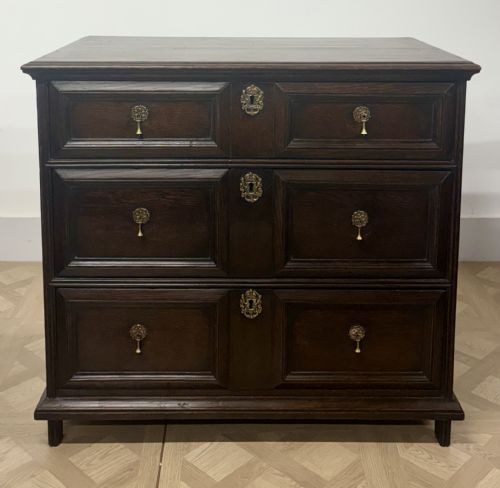
These pieces known as a moulded oak commode are sturdy chests of drawers built to last generations, offering practical storage with distinct period character.
Moulded Oak Commode
A moulded oak commode typically takes the form of a robust chest of drawers designed for domestic storage. These items primarily date from the seventeenth century and the eighteenth century, spanning periods such as the Jacobean era and the Georgian era.
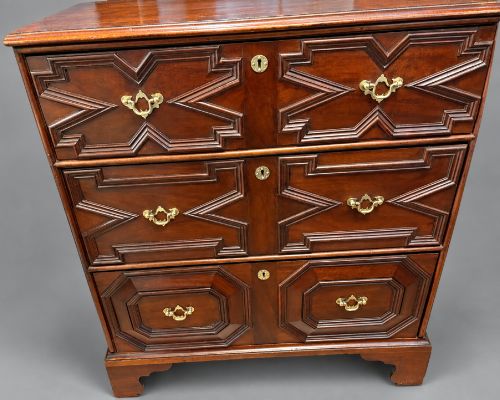
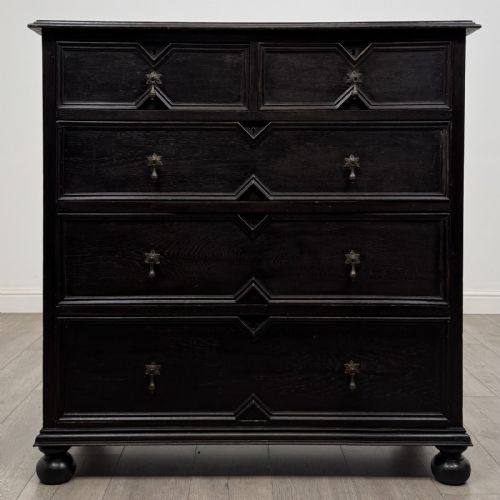
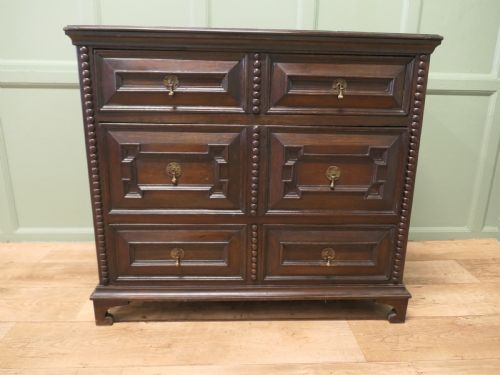
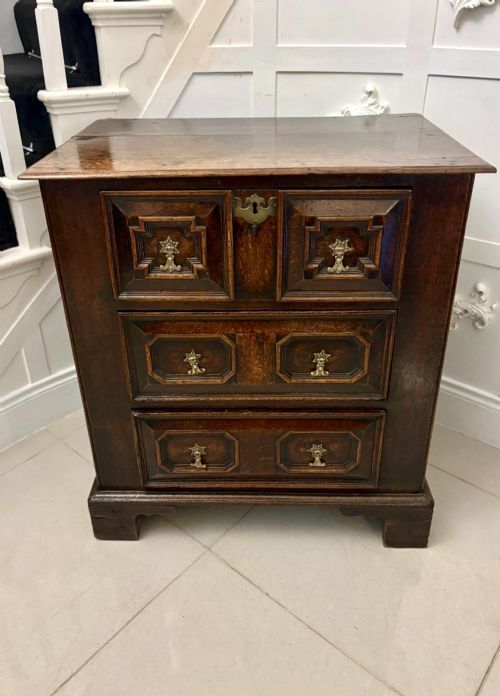
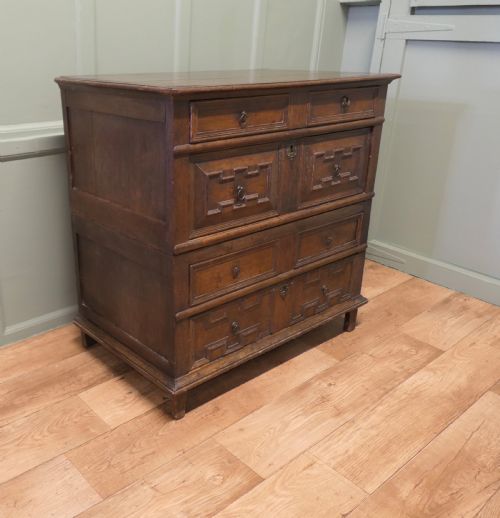
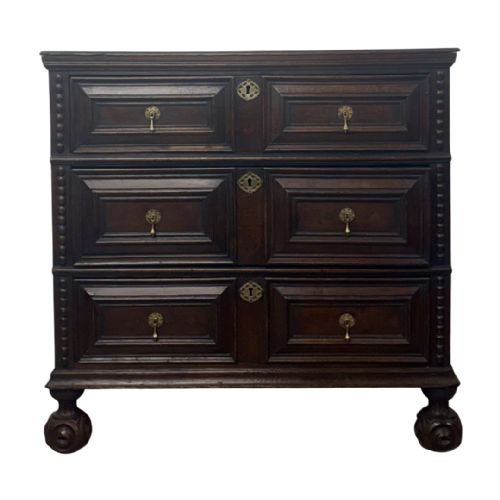
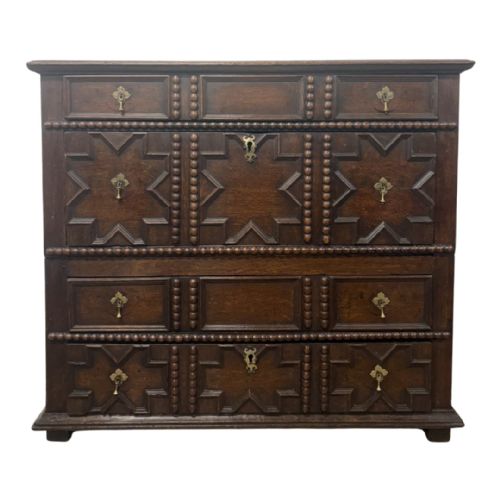
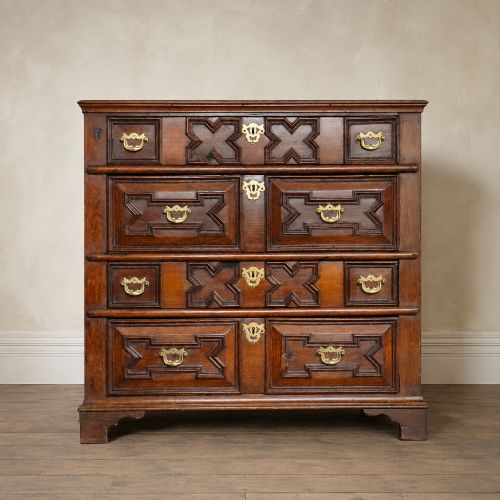
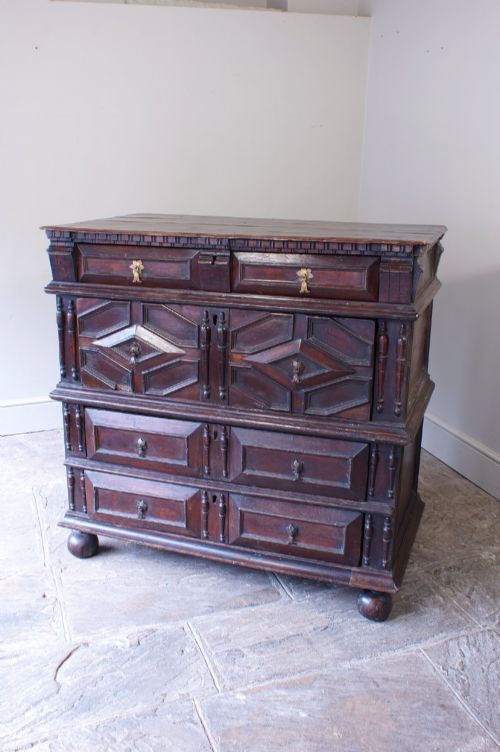
The most frequent examples encountered on this page exhibit seventeenth century craftsmanship with characteristic geometric mouldings applied to the drawer fronts. Such pieces often utilise a two-part construction method, making them easier to transport within a home.
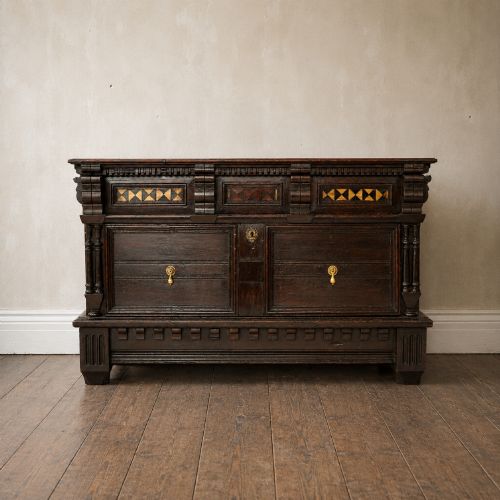
Beyond standard oak builds, variations incorporate walnut, fruitwood, and decorative oyster veneer. Certain examples display French provincial influence or later nineteenth century adaptations while retaining their foundational timber structure.
Materials and construction methods
Makers relied principally upon solid oak as the primary timber, sometimes combining it with walnut or fruitwood for contrasting grain and colour. Wood inlay and intricate oyster veneer patterns appear on select drawer fronts to add decorative depth.
Joinery methods involved heavy framing and applied geometric mouldings fixed to the drawer facades. Iron and brass hardware, including original brass handles and escutcheons, secure the construction and complete the functional design.
Moulded Oak Commode Retail Price Guide 2026
Typical asking prices for moulded oak commode among the pieces listed under this phrase on Sellingantiques today, from the lower quarter to the upper quarter. They describe what is for sale here now, not the wider market.
Some chests arrive in two separate halves, proving that flat-pack convenience was actually invented three hundred years ago by clever carpenters.
Assessing quality in early chests
Quality separates pieces by the precision of their geometric mouldings and the integrity of the timber used throughout the carcase. Crisp, deep relief work on the drawer fronts indicates superior cabinet-making compared to softer, worn profiles.
The presence of original brasses and untouched timber surfaces elevates a piece significantly. Alterations such as later cupboard bases or replacement elements distinguish heavily restored examples from those retaining their original seventeenth century configuration.
The Moulded Oak Commode Glossary
- Geometric moulding
- Applied strips of wood arranged in repeating rectilinear or octagonal patterns across drawer fronts. This technique defined much of the ornamentation during the seventeenth century.
- Oyster veneer
- Thin circular slices cut transversely from small branches or roots, laid down in interlocking patterns to create a rippled, eye-catching surface figure.
- Two-part chest
- A modular cabinet built in upper and lower sections designed to stack securely. This construction aided movement through narrow staircases in historic homes.
- Escutcheon
- A protective metal plate surrounding a keyhole, frequently cast in brass on these period storage pieces. It prevents the timber surrounding the lock from wearing down through repeated use.
Moulded Oak Commode: Frequently Asked Questions
What is a moulded oak commode?
A moulded oak commode is a heavy timber chest of drawers featuring decorative relief mouldings on the facade. These sturdy items served as principal storage furniture in early homes.
Most examples date from the seventeenth and eighteenth centuries, displaying traditional joinery and period hardware such as brass handles.
How do I date a seventeenth century chest?
Dating relies on examining construction techniques, timber species, and decorative motifs like geometric mouldings. Seventeenth century pieces typically utilise hand-split oak panels and early framing methods.
Changes in hardware styles and the introduction of walnut or fruitwood veneers often point toward later periods like the Georgian era.
Are these chests made entirely of solid oak?
While solid oak forms the primary structure and carcase of these chests, secondary timbers often appear in drawer linings and back panels. Some examples also incorporate walnut, fruitwood, or decorative oyster veneer on the front.
Makers selected different woods to achieve specific visual contrasts and structural stability where needed.
How do I care for antique oak furniture?
Keep antique oak furniture away from direct heat sources and sudden temperature shifts to prevent the timber from splitting. Regular dusting with a dry, soft cloth maintains the finish without chemical buildup.
Applying a traditional beeswax occasionally helps nourish the wood and preserves the natural lustre of the surface.