

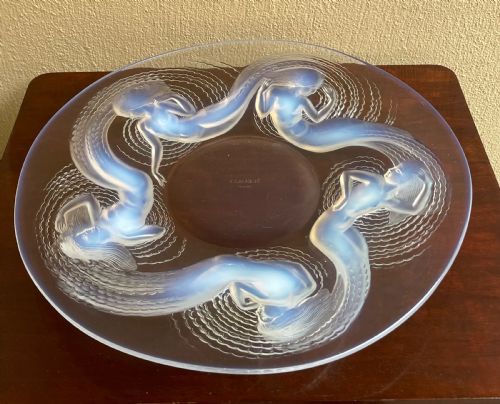


Moulded Glass Dish
Every moulded glass dish carries the imprint of a master maker, offering form and texture that catch the light in domestic interiors.
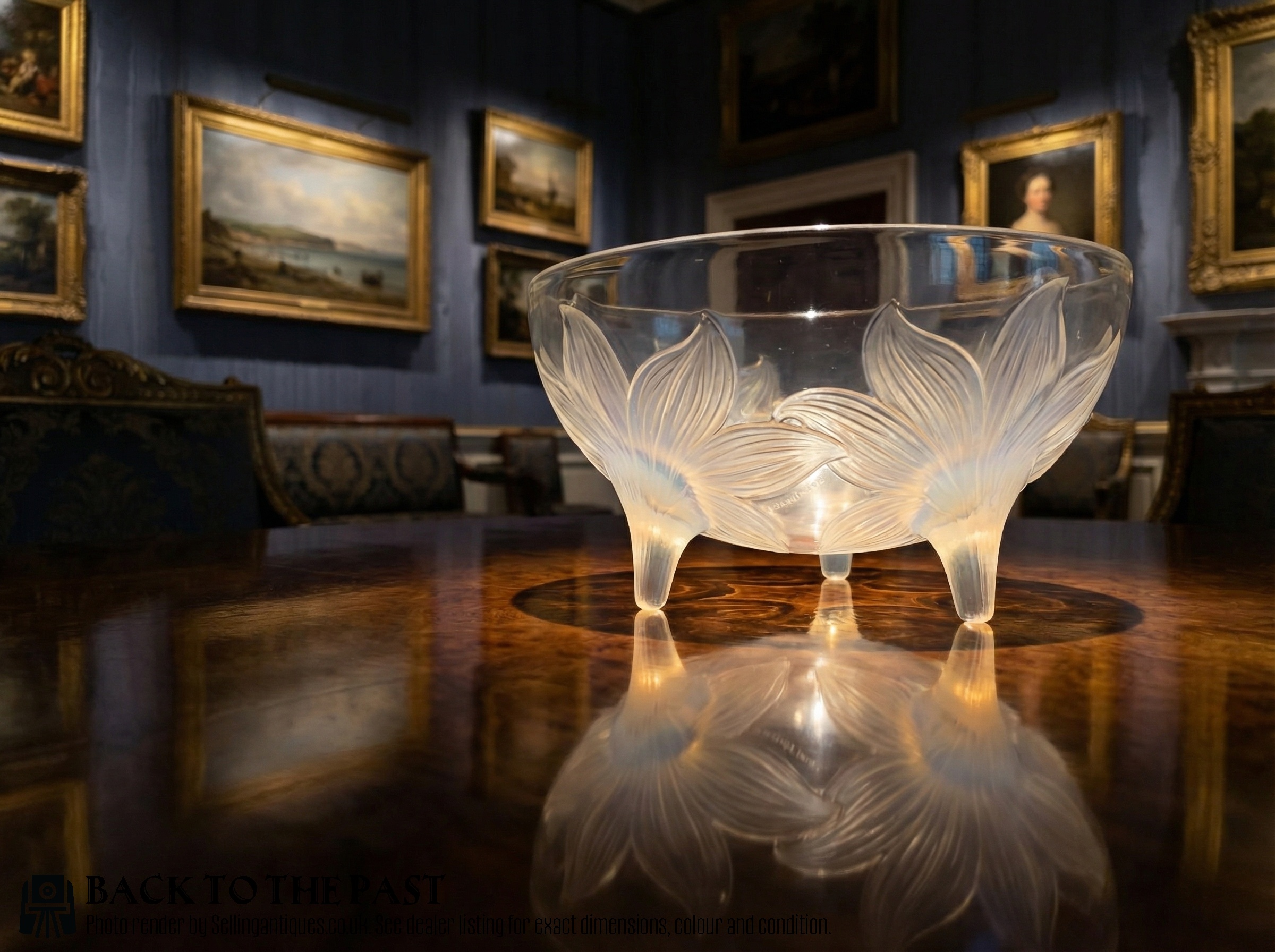
Moulded Glass Dish
A moulded glass dish serves multiple domestic purposes, appearing across periods from Georgian table wares to twentieth-century Art Deco bowls. Buyers seeking these items encounter forms ranging from shallow plates and tazzas to sweetmeat dishes and large decorative bowls.
The selection on this page draws heavily from early twentieth-century French production alongside eighteenth-century English examples. Pieces span decorative bowls, plates, and specialised serving vessels created for both utility and display.

How They Were Made
Makers utilised moulds to shape molten lead glass, clear glass, and pressed glass into intricate geometric or figurative patterns. Techniques involved pressing hot metal into open or closed moulds to transfer relief designs onto the exterior and interior surfaces.
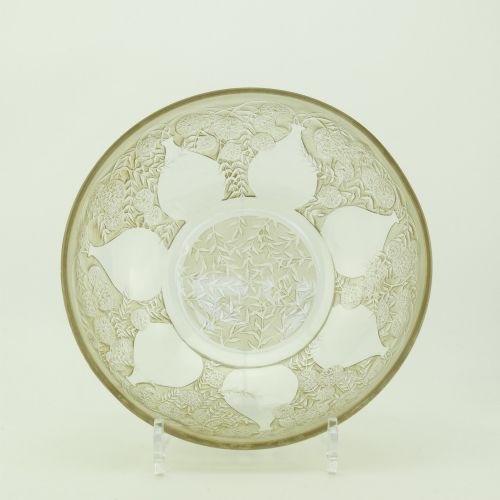
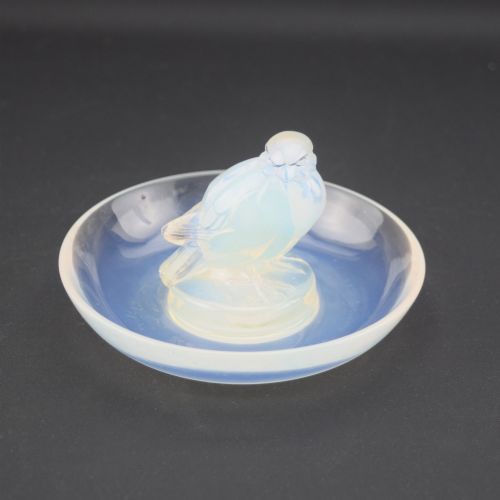
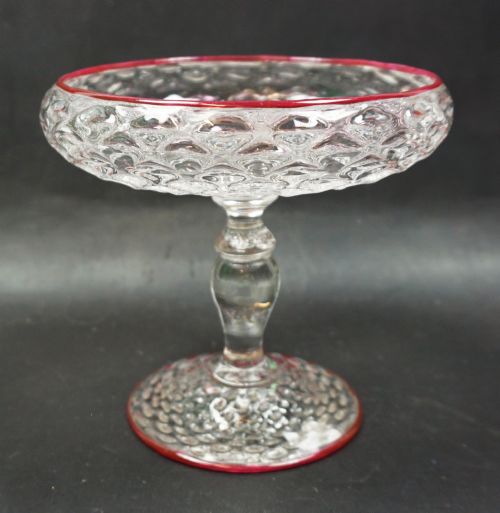
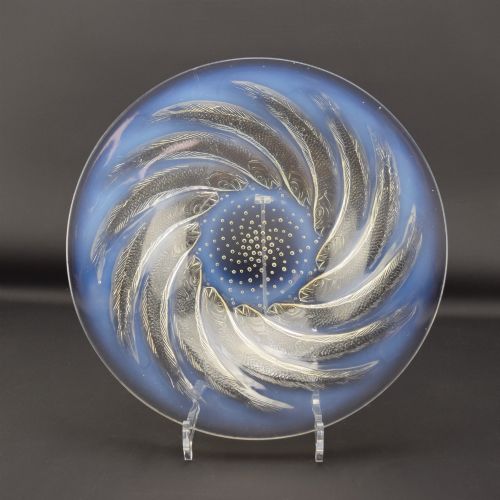
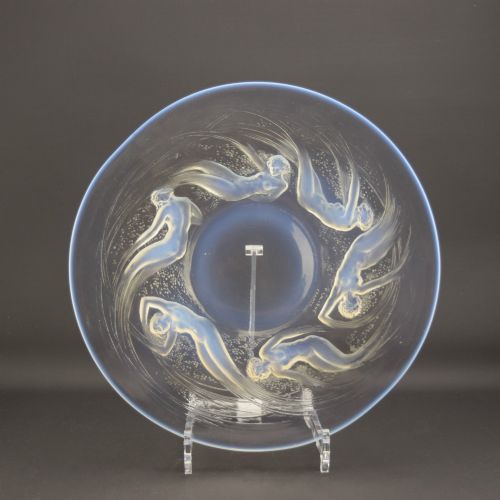
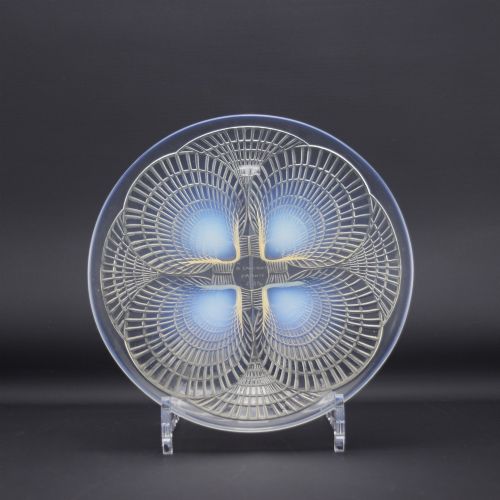
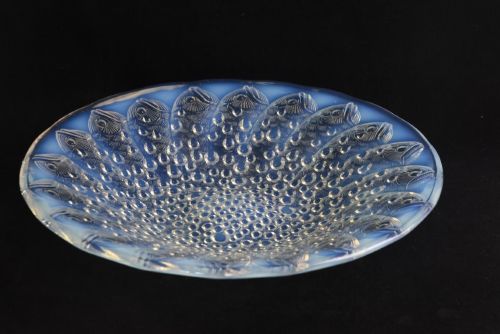
Post-moulding treatments introduced colour variations, including opalescent effects, frosted finishes, sepia stains, and red cane decorations. Artisans manipulated glass composition and cooling processes to achieve characteristic milky glows and contrasting surface highlights.
Moulded Glass Dish Retail Price Guide 2026
Typical asking prices for moulded glass dish among the pieces listed under this phrase on Sellingantiques today, from the lower quarter to the upper quarter. They describe what is for sale here now, not the wider market.
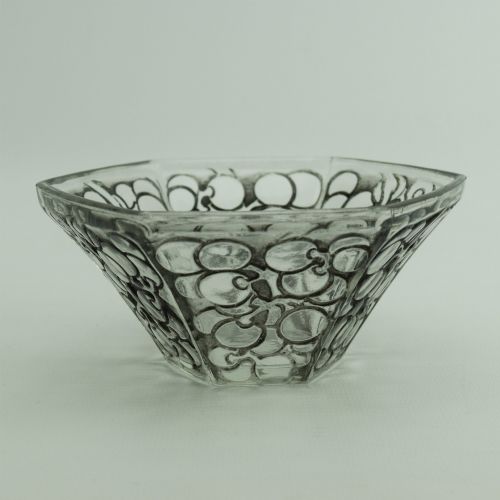
Dogs, fish, cherries, and dancers share table space in these miniature glass landscapes.
What Varies in Quality
The clarity of the moulded relief dictates visual strength, where superior examples exhibit sharp, crisp botanical or figurative details without blurring. Masterpieces of the press show precise handling of opalescent optical properties that shift from blue to amber against the light.
Depth of colour and surface staining separate standard production from exceptional works. Skilled application of enamel, sepia tinting, or contrasting glass threads enhances the tactile dimensionality of the moulded motifs.
Rene Lalique·G Vallon·Etling·Jobling
The Moulded Glass Dish Glossary
- Moulded glass
- Glass shaped by pressing molten metal into a metal or wooden matrix to form a pattern. This technique allows for repeatable relief designs across tableware and decorative items.
- Tazza
- A shallow ornamental bowl raised on a stem and foot. Eighteenth-century examples often display ribbed or honeycomb moulded patterns.
- Sweetmeat glass
- A small stemmed dish or plate designed for confectioneries and preserved fruits. These pieces frequently incorporate moulded details on the bowl base or foot.
- Patch stand
- A miniature glass dish used on dressing tables during the eighteenth century. They are typically moulded with honeycomb patterns and sit on short, solid feet.
Moulded Glass Dish: Frequently Asked Questions
What is a moulded glass dish?
A moulded glass dish is a table or display vessel formed by pressing hot glass into a shaped matrix. These items range from eighteenth-century English sweetmeat stands to twentieth-century French opalescent bowls.
They encompass plates, chargers, and footed vessels designed to hold food or stand alone as decorative objects. The moulding process transfers relief patterns directly onto the glass body.
How do I care for antique glass?
Antique glass requires careful handling and gentle hand washing in lukewarm water with mild detergent. Avoid sudden temperature changes to prevent thermal shock and cracking in older material.
Store pieces on stable, flat surfaces away from direct sunlight and heavy vibrations. Use padded shelving where appropriate to protect delicate rims and moulded feet.
How do I date a glass dish?
Dating relies on stylistic markers, manufacturing techniques, and material composition characteristic of specific eras. Eighteenth-century pieces often show pontil marks and heavy lead content, while 1930s works display Art Deco motifs and maker signatures.
Examining the depth of the mould work and the presence of specific surface treatments helps place an object within periods such as the Georgian era or the interwar years.
What is opalescent glass?
Opalescent glass is a specialised type of glass that exhibits a milky, glowing quality when illuminated. The material scatters light to produce characteristic blue tones in daylight and amber hues against direct light.
This effect was achieved through specific chemical additives and cooling methods. It became a defining feature for decorative bowls and plates during the early twentieth century.