






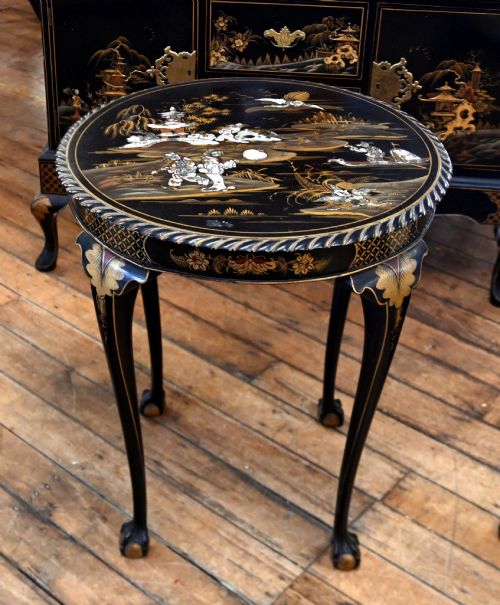


Mother of Pearl Occasional Table
A mother of pearl occasional table brings intricate, shimmering detail into a room, offering a functional surface rooted in global craftsmanship.
Mother of Pearl Occasional Table
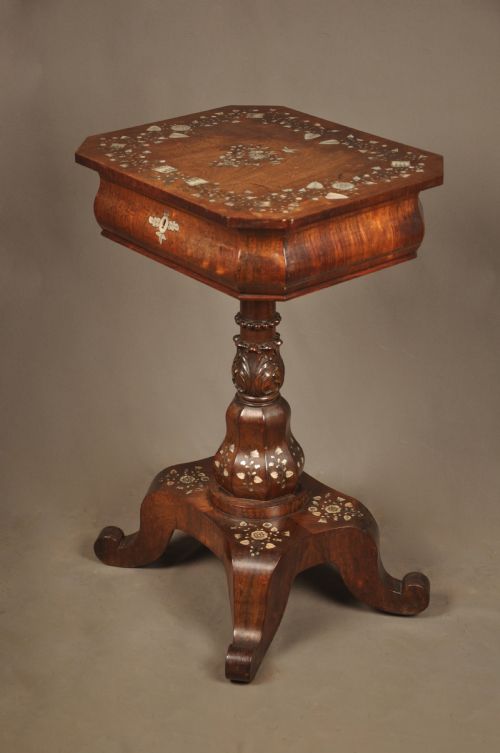
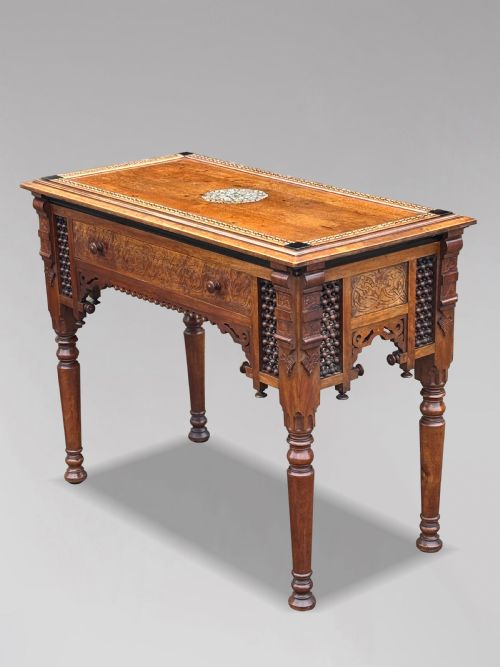
A mother of pearl occasional table encompasses a diverse group of small, movable furniture pieces designed for everyday use and decorative display. The pieces on this page span the nineteenth century into the early twentieth century, drawing on distinct regional traditions from the Middle East, North Africa, China, and Britain.
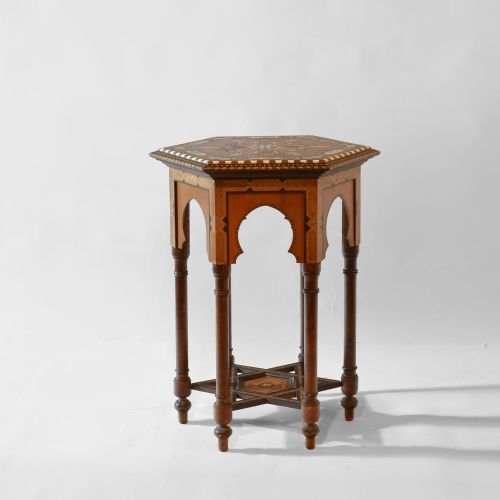
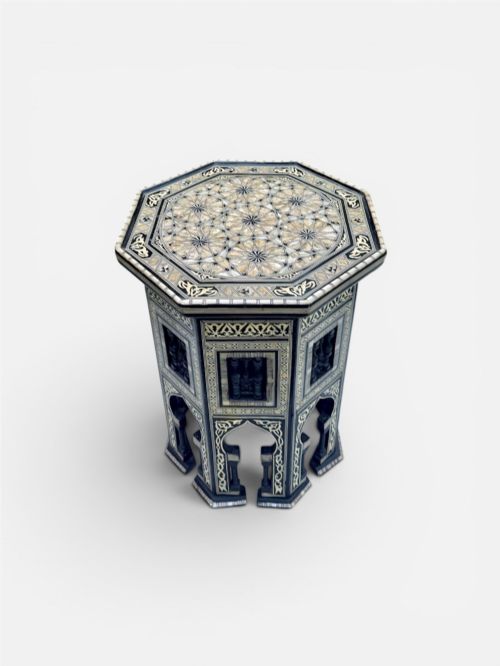
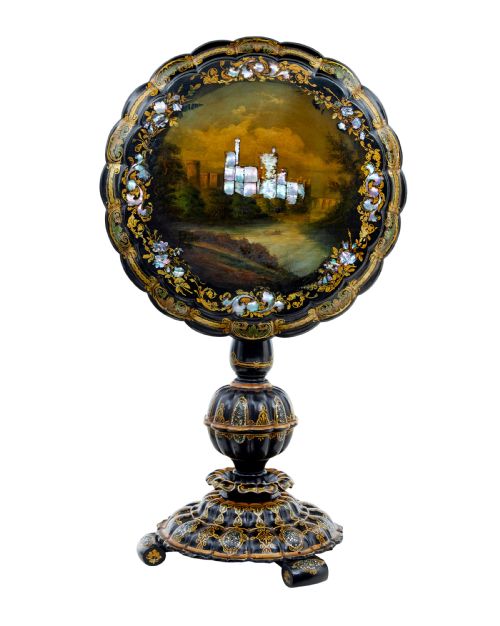
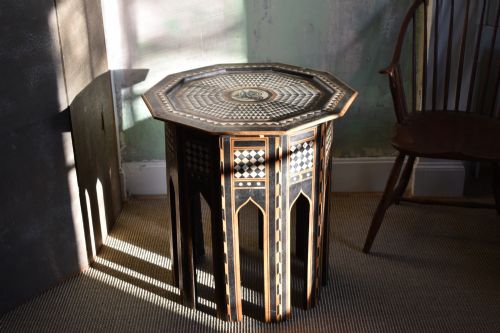
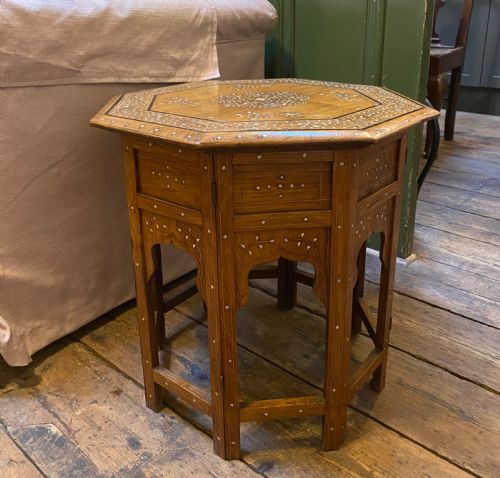
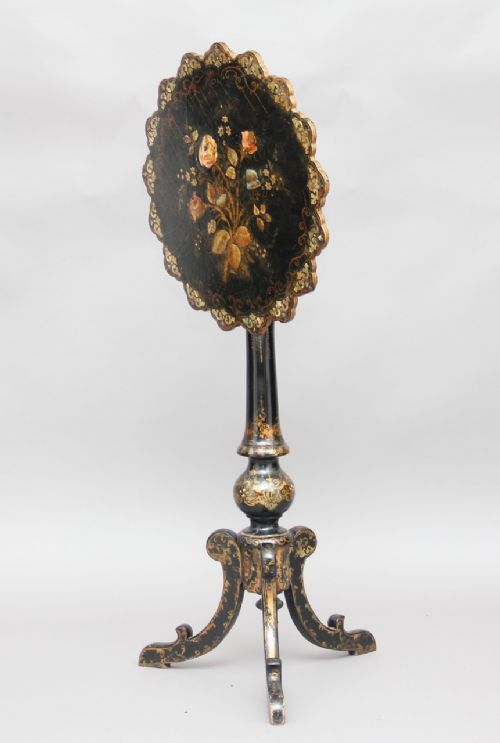
The octagonal or hexagonal side table stands as the most common form you will encounter here, often linked to Moorish Revival or Damascus designs. Alongside these geometric shapes, you will find Chinese hardwood plant stands, black lacquer occasional tables, and English papier-mâché work tables.
Makers utilised various functional formats, including folding frames, plant stands, and tilt-top tables. These items served as focal points in Victorian and Edwardian interiors, functioning as smoking tables, plant stands, or decorative display surfaces.
How they were made
The construction of a mother of pearl occasional table relies on hardwoods, walnut, and exotic timbers combined with meticulous shell inlay. Artisans cut thin pieces of mother-of-pearl and bone, setting them flush into wooden grounds to create geometric mosaics, scrolling foliage, or figurative scenes.
Lacquered and painted surfaces also define certain traditions, particularly in Chinese Export and English papier-mâché pieces. Black lacquer provides a dark, glossy background for gilded and inlaid decoration, while papier-mâché forms lightweight, sturdy tabletops designed for tilt mechanisms.
Mother of Pearl Occasional Table Retail Price Guide 2026
Typical asking prices for mother of pearl occasional table among the pieces listed under this phrase on Sellingantiques today, from the lower quarter to the upper quarter. They describe what is for sale here now, not the wider market.
Tables with folding Damascus bases pack completely flat, meaning nineteenth-century travellers could tuck an entire Levantine parlor suite under their arm.
What varies in quality
Quality in these tables rests upon the density and precision of the inlay work. Pieces featuring densely packed, perfectly fitted mother-of-pearl and bone tesserae represent the upper end of the range, whereas simpler designs show wider gaps in the wooden ground.
The architectural complexity of the base further distinguishes the pieces. Folding Damascus tables and multi-sided Moorish frames require intricate joinery that remains stable over time, separating standard production from exceptional examples.
Liberty and Co
The Mother of Pearl Occasional Table Glossary
- Moorish Revival
- A nineteenth-century architectural and decorative style that reinterpreted Islamic design elements. It heavily influenced European furniture production with horseshoe arches and geometric inlaid patterns.
- Damascus table
- An octagonal or hexagonal occasional table originating from Syria, constructed with folding wooden bases and intricate mother-of-pearl inlay. These pieces showcase traditional Middle Eastern geometric woodwork.
- Papier-mâché
- A composite material made from paper pulp or layers of paper bound with glue, then moulded and dried. It forms a smooth, rigid surface ideal for painting and shell inlay on Victorian tilt-top tables.
- Chinoiserie
- A European artistic style reflecting Chinese artistic influences, popular in English and continental furniture. It frequently appears on black lacquer occasional tables with painted and inlaid details.
- Tesserae
- The small individual pieces of mother-of-pearl or bone cut for mosaic inlay. Artisans arrange these fragments to form intricate geometric or floral patterns across the tabletop.
Mother of Pearl Occasional Table: Frequently Asked Questions
What is a mother of pearl occasional table?
A mother of pearl occasional table is a small, movable piece of furniture decorated with iridescent shell inlay. These items include side tables, plant stands, and work tables from various global traditions.
They range from octagonal Moorish folding tables to Chinese hardwood stands and English papier-mâché pieces. Each type reflects the distinct decorative arts of its period of origin.
How do I identify a Moorish inlaid table?
Moorish inlaid tables typically feature multi-sided geometric tops, such as octagonal or hexagonal shapes. They utilise dense mother-of-pearl and bone inlay arranged in complex star patterns.
Many of these pieces incorporate folding wooden bases designed for easy relocation. Their construction reflects nineteenth-century interest in Islamic and Middle Eastern design.
Where were these tables made?
These tables originate from diverse regions, including the Middle East, North Africa, China, and Britain. Syrian and Egyptian workshops produced intricate geometric inlaid pieces.
Chinese workshops created hardwood tables and black lacquer pieces with pearl inlay. Meanwhile, British makers produced papier-mâché tables and embraced Moorish styles through retailers.
How do I care for an inlaid table?
Caring for an inlaid table involves maintaining stable indoor humidity to protect the wood and shell. Extreme temperature shifts can cause the timber to expand and loosen the delicate mother-of-pearl tesserae.
Dust the surface gently with a dry, soft cloth rather than using liquid polishes. Keep the table away from direct sunlight and heat sources to preserve the lacquer and wood finishes.