



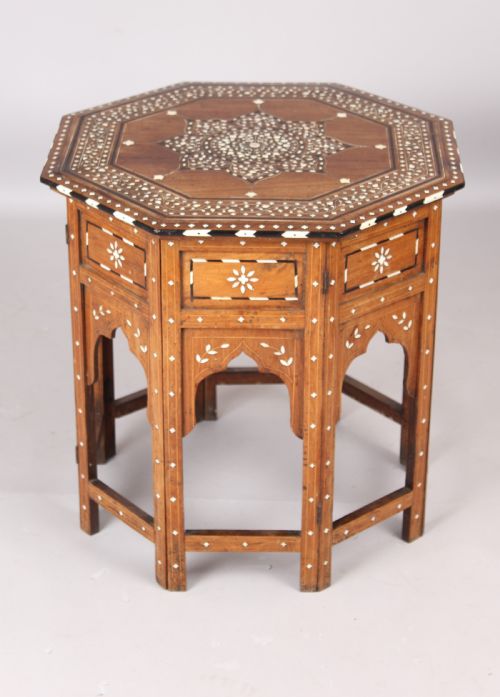


Vintage Moorish Table
These vintage moorish table examples bring intricate geometric inlay and folding frames straight from the Middle East and India into domestic spaces.
Vintage Moorish Table
A vintage moorish table encompasses low occasional pieces, octagonal stools, and folding tray stands originating from revival periods spanning the late nineteenth century into the 1930s. Buyers searching for a vintage moorish table typically encounter geometric folding constructions alongside rigid octagonal forms influenced by Syrian, Persian, and Anglo-Indian traditions.
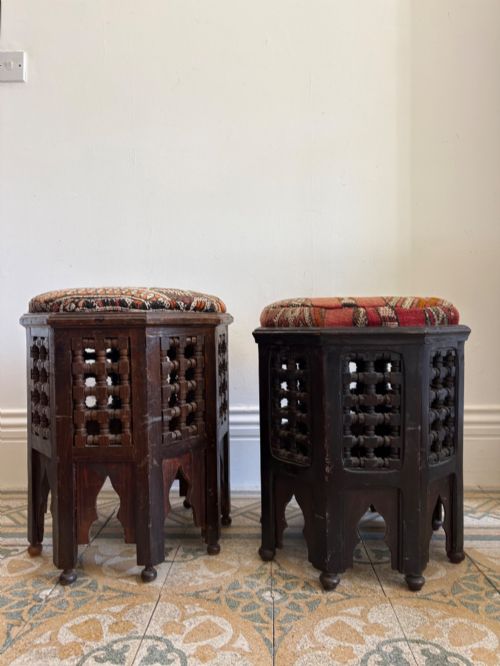
The objects take diverse physical shapes, ranging from compact side tables and coffee tables to pairs of stools fitted with kilim seat covers and large brass tea service arrangements. Most items date from around eighteen-ninety up to the nineteen-thirties, reflecting distinct revival movements including Mamluk and Moorish Revival aesthetics.
Origin points recorded across the inventory extend across North India, Persia, Damascus, and Cairo, demonstrating widespread global trade and British colonial influence during the period. The common thread among these varied objects remains their heavy reliance on intricate surface decoration rather than plain structural timber.
Materials and construction
Makers utilised dense timbers such as hardwood, walnut, rosewood, and general wood as the foundational structures for these tables and stools. Black lacquered finishes also appear on specific early twentieth century examples, altering the natural grain appearance.
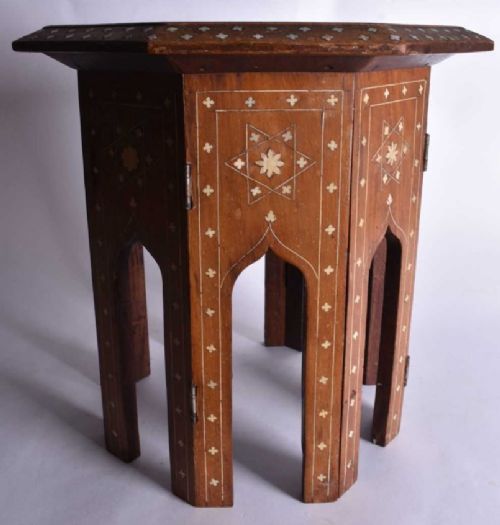
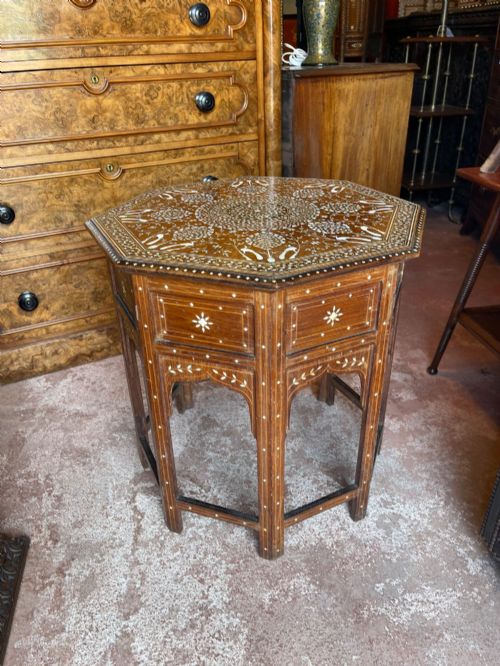
Surface ornamentation relies heavily on contrasting materials pressed directly into carved recesses within the wood. Mother-of-pearl, bone, brass, and copper form elaborate geometric patterns, Islamic stars, and foliate scrolls across tops and folding legs.
Vintage Moorish Table Retail Price Guide 2026
Typical asking prices for vintage moorish table among the pieces listed under this phrase on Sellingantiques today, from the lower quarter to the upper quarter. They describe what is for sale here now, not the wider market.
Listings feature periods from the nineteenth century through the nineteen-thirties, executed in hardwood, walnut, rosewood, brass, copper, bone, and mother-of-pearl.
Assessing quality and execution
The distinction between standard examples and superior pieces rests entirely upon the density, precision, and completeness of the inlay work. Finer tables exhibit tightly fitted mother-of-pearl and bone elements with minimal filler, whereas simpler items rely more heavily on etched metal surfaces.
Structural integrity of the folding mechanisms and the depth of wood carving further separate basic utility items from exceptional decorative commissions. Pieces bearing attribution to established commercial houses or specific regional centres often demonstrate superior joinery and more ambitious geometric design.
Liberty & Co
The Vintage Moorish Table Glossary
- Moorish Revival
- An architectural and decorative style popular in the nineteenth century that reinterpreted traditional Islamic and Moorish design motifs. It heavily influenced European and colonial furniture production during this era.
- Hoshiarpur
- A region in northern India renowned for intricate wood-carving and inlay work, particularly involving shesham wood inlaid with bone and resin. Pieces from this centre were widely exported to Britain.
- Cairoware
- Metalwork objects, often vessels or lamp bases, originating from Cairo and featuring heavy hand-engraved brass or copper inlaid with silver. This decorative technique frequently appeared alongside furniture production.
- Kilim
- A flat-woven textile produced in various regions of the Middle East and Central Asia. These traditional rugs are occasionally repurposed as upholstery covers on low stools and seating furniture.
Vintage Moorish Table: Frequently Asked Questions
What is a vintage moorish table?
A vintage moorish table is a decorative occasional piece, often featuring octagonal geometry and folding frames, produced during the late nineteenth and early twentieth centuries under the influence of Middle Eastern and Indian design movements.
These items are characterised by heavy surface ornamentation, utilising contrasting materials like mother-of-pearl and brass set into dark timber.
How were these tables used originally?
Many of these pieces functioned as portable occasional tables, coffee tables, or support stands for tea services in domestic drawing rooms and smoking rooms.
The folding design allowed households to store or move the furniture easily when not in use.
How do I care for inlaid wood?
Inlaid surfaces require gentle dusting with a soft brush and protection from direct sunlight and extreme humidity fluctuations to prevent the wood from shrinking.
Moisture can loosen delicate bone and mother-of-pearl elements from their channels, so liquid polishes should be avoided.
How can I tell the period?
Dating relies on examining the timber species, the style of metalwork, and the specific revival movement indicated by the geometric motifs.
Later pieces from the nineteen-twenties and thirties often incorporate simpler construction methods compared to elaborate nineteenth-century examples.