

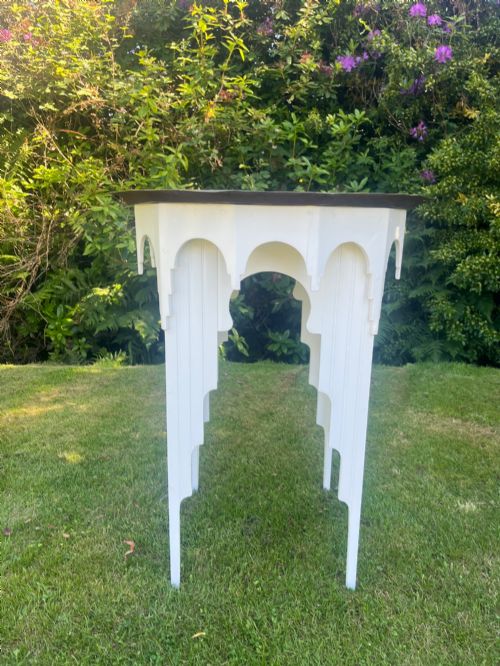
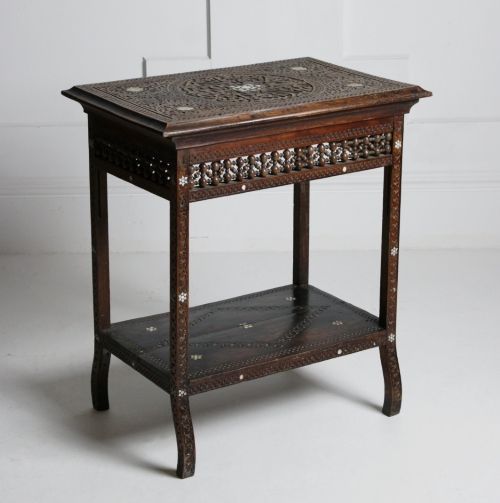
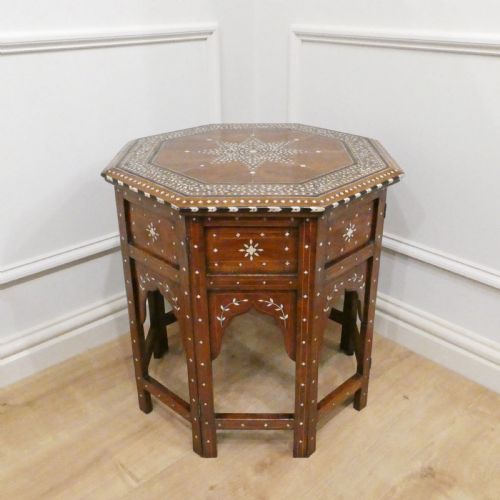
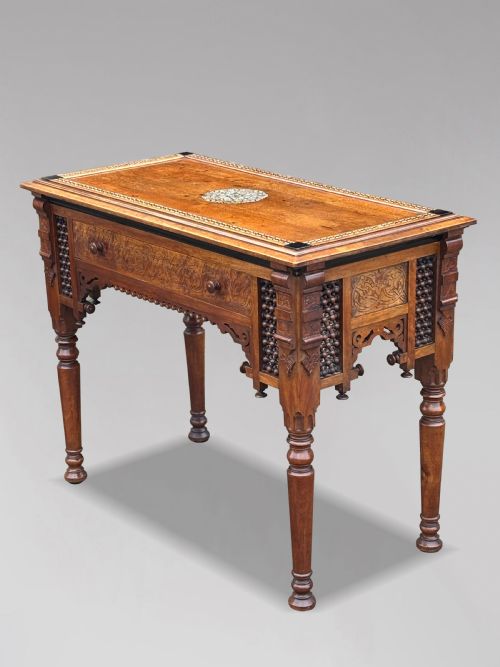
Moorish Carved Table
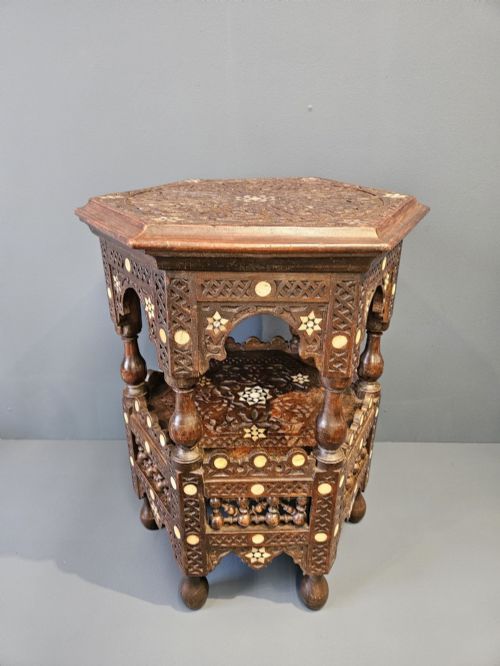
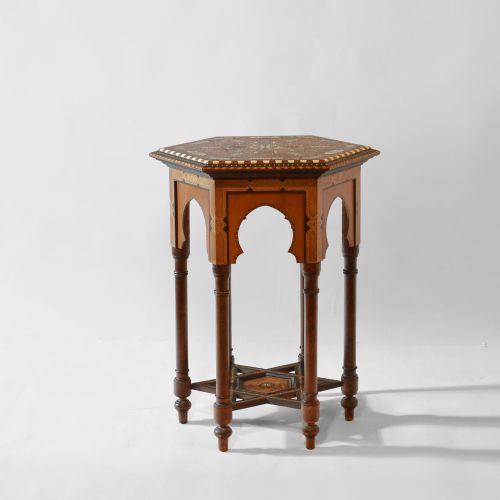
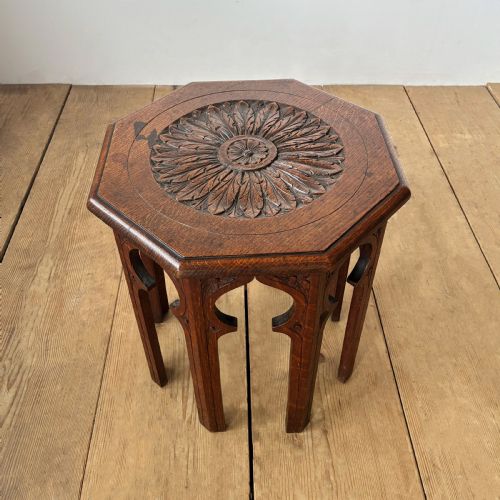
These intricate wooden pieces offer complex geometry and dense floral carving, bringing rich historic texture to an interior.
Moorish Carved Table
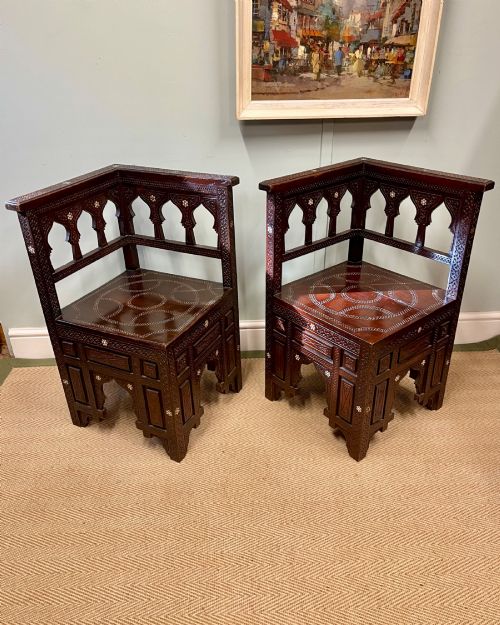
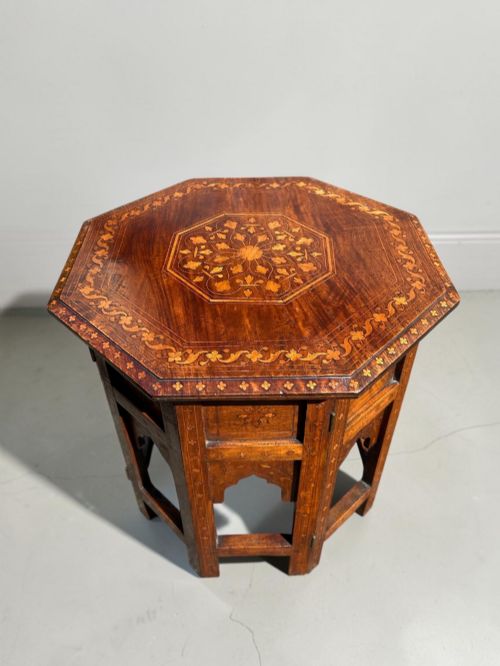
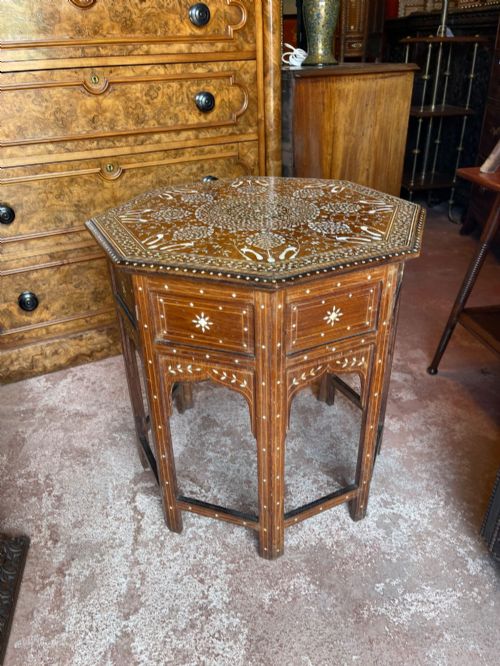
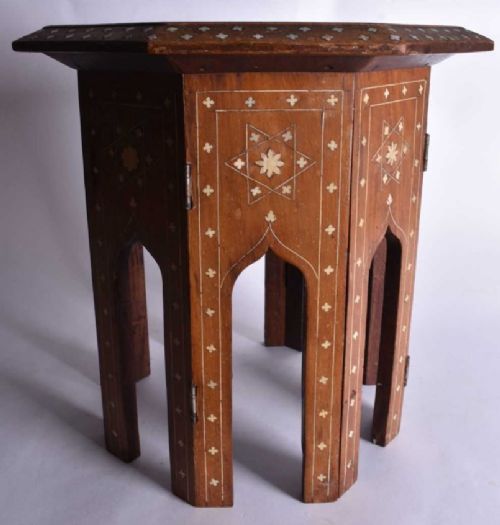
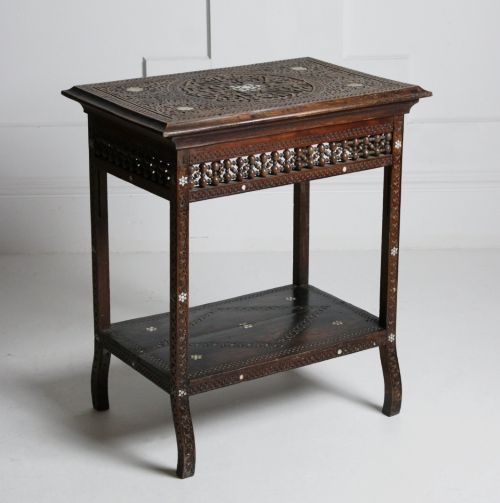
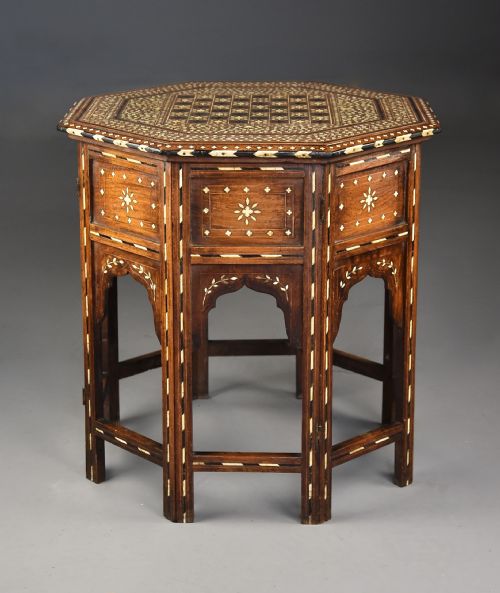
A moorish carved table brings complex geometric woodwork and dense surface decoration into domestic interiors, often taking the form of octagonal or hexagonal occasional, side, and coffee tables. Many examples found on this page date from the nineteenth century into the early twentieth century, reflecting a strong period interest in Middle Eastern and South Asian craftsmanship.
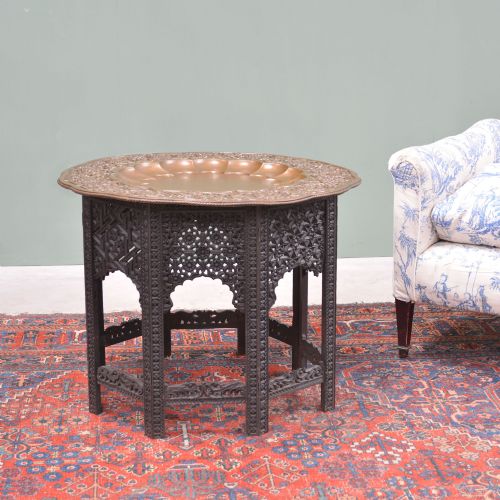
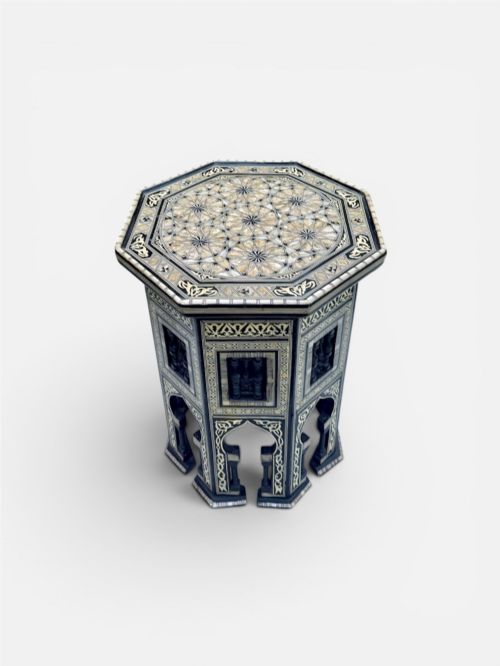
The selection frequently includes folding tray tables and two-tier Syrian side tables alongside Anglo-Indian Hoshiarpur pieces. These items serve easily as lamp tables or small centre tables, designed to fold or dismantle for simple storage when not in use.
Materials and construction
Carpenters utilised dense timbers such as teak, walnut, hardwood, and sandalwood, carving the surfaces deeply with interlocking geometric patterns and floral motifs. Folding designs rely on articulated lattice hinges cut directly from the wood.
Inlayers pressed contrasting materials into hand-cut recesses, combining bone, mother-of-pearl, brass, and copper wire to create luminous geometric mosaics across the tops and sides.
Some folding tables arrive with complete brass tea services tucked away, ready for an impromptu gathering.
Judging the workmanship
Quality rests upon the crispness of the chisel work and the density of the surface ornamentation. Superior examples maintain tight joints and complete inlay work without missing sections of bone or mother-of-pearl.
Makers who incorporated fine metal wire alongside meticulously fitted shell and bone achieved greater decorative depth, whereas simpler versions relied solely on surface carving without contrasting inlays.
Liberty & Co·Carlo Bugatti
The Moorish Carved Table Glossary
- Hoshiarpur
- A style of woodwork originating from northern India, known for dense bone and sandalwood inlay on folding tables.
- Damascus
- A term associated with Syrian furniture production, typically denoting intricate mother-of-pearl and metal inlay on geometric frames.
- Octagonal
- Having eight sides, which remains the predominant geometric form for these occasional and coffee tables.
- Moorish Revival
- The nineteenth-century architectural and decorative movement that inspired Western makers to adopt Islamic design motifs.
Moorish Carved Table: Frequently Asked Questions
How do I care for inlaid tables?
Dust regularly with a dry cloth and avoid harsh chemical polishes that can loosen bone or mother-of-pearl inlay.
Keep these wooden pieces away from direct heat sources and strong sunlight to prevent the timber from drying and splitting.
Are these folding tables sturdy?
Most examples utilise interlocking wooden lattice hinges designed for occasional use rather than heavy weight loads.
Care should be taken when moving them while fully assembled to avoid putting undue stress on the folding mechanism.
What is the difference between Hoshiarpur and Syrian tables?
Hoshiarpur pieces typically feature dense bone or sandalwood inlay with intricate floral carving characteristic of northern Indian workshops.
Syrian tables lean more toward mother-of-pearl and brass wire geometric mosaics set into dark walnut or hardwood.
Where should I place a moorish table?
These compact items function well as bedside tables, lamp stands, or decorative occasional pieces in living spaces.
Their detailed surfaces make them suitable as focal points where light can catch the inlaid mother-of-pearl and metalwork.