


Mother of Pearl Desk
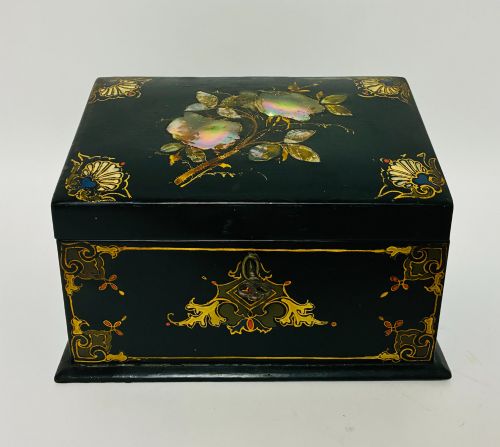
When you search for a mother of pearl desk, you enter a world of nineteenth-century portable writing furniture and fitted wooden boxes embellished with iridescent nacre.
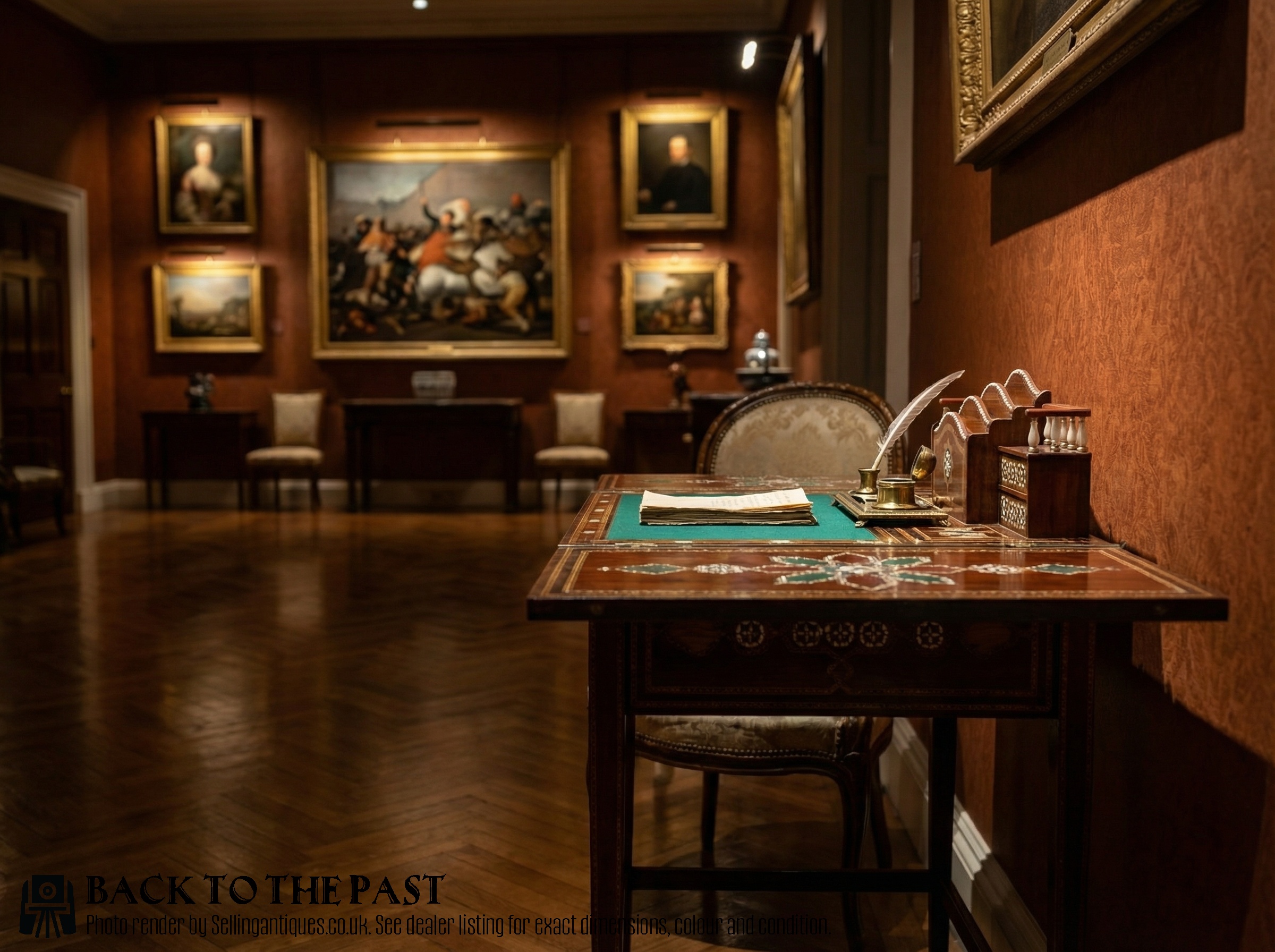
Mother of Pearl Desk
A mother of pearl desk encompasses portable writing slopes, lap desks, stationary boxes, and full-sized writing tables produced primarily during the Victorian and Regency periods. The pieces appearing most frequently take the form of compact, timber-bodied writing slopes and correspondence boxes designed for tabletop use.
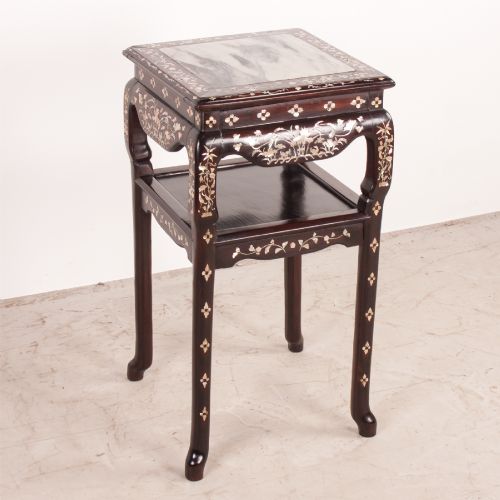
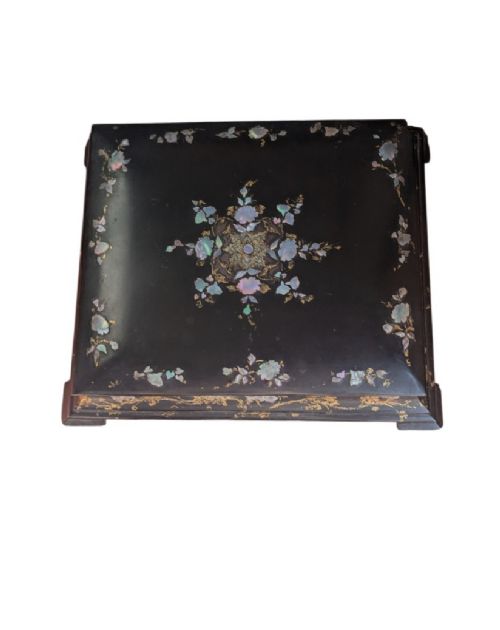
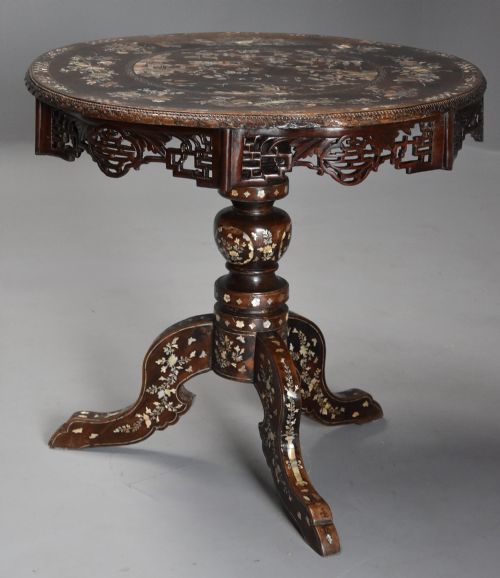
Makers utilised rich hardwoods such as rosewood and coromandel to build the carcases, setting shimmering shell fragments into the grain alongside brass stringing. Alongside English portable boxes, the selection includes East Asian lacquered pieces and Chinese export tables decorated with intricate shell inlay.
While some items serve purely as desktop storage for letters and ink, others function as travelling writing desks featuring folding surfaces and secret compartments. These objects reflect the nineteenth-century preoccupation with correspondence and organised study.
Materials and Construction
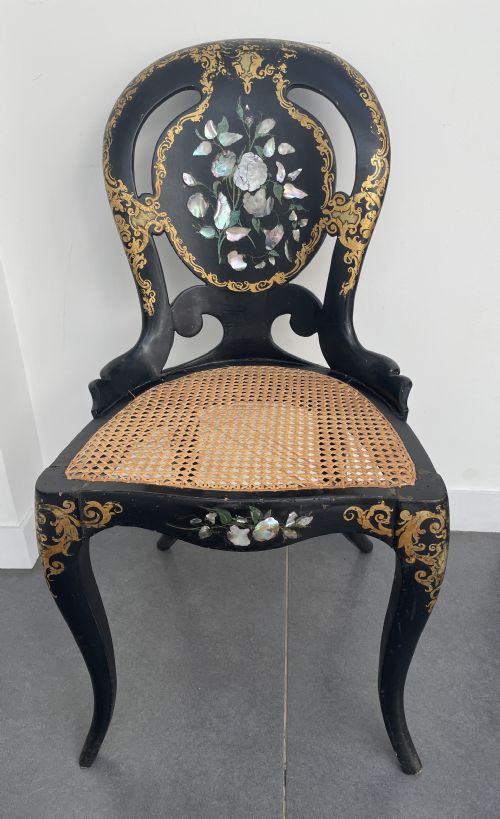
Craftsmen built the foundations of these pieces using dense hardwoods like rosewood, coromandel, and papier-mâché, often shaping them into sloping boxes or rigid cabinetry. The surfaces were then painstakingly prepared to receive thin, iridescent slices of nacre and mother of pearl shell.
Inlayers embedded the shell pieces directly into routed channels within the wood, securing them flush with the surrounding surface before polishing the entire panel to a smooth finish. Brass escutcheons, glass inkwells, and silver mounts were subsequently added to complete the functional hardware of the desk.
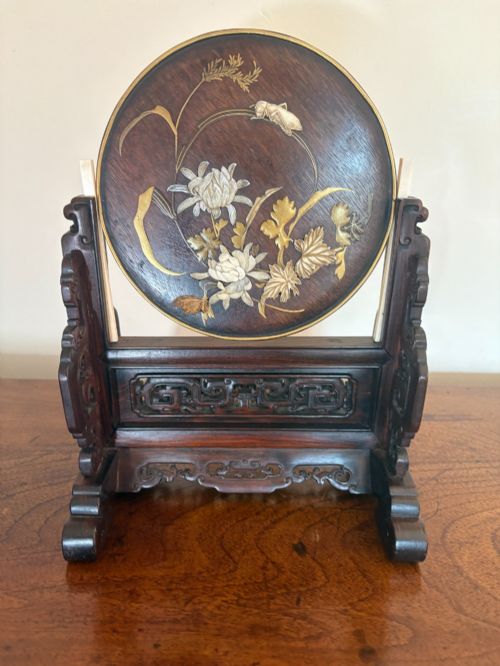
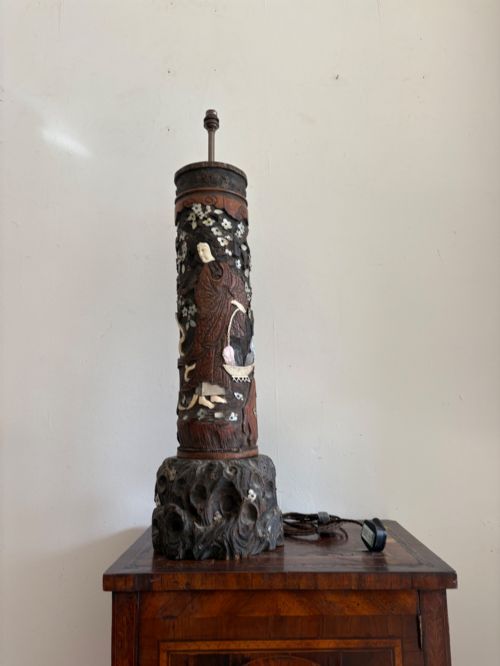
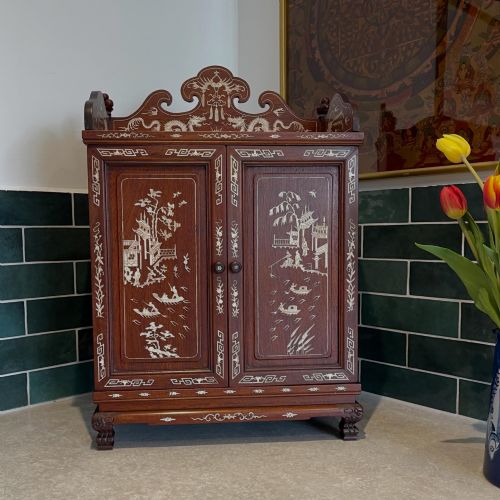
Asian workshops applied contrasting techniques, embedding mother of pearl into dark lacquer grounds or dense Vietnamese and Chinese hardwoods to create pictorial table screens and decorative occasional furniture.
Secret spring-loaded drawers hide beneath false bottoms in many writing slopes, keeping love letters safe from prying eyes.
Judging the Workmanship
The distinction between ordinary production and superior work lies in the precision of the inlay and the selection of the timber. Finer examples display tightly fitted nacre pieces with minimal filler, where every geometric or floral motif sits perfectly flush with the polished hardwood.
Interior fittings also dictate the standard of the piece, with better boxes incorporating matching glass inkwells, finely tooled leather writing surfaces, and concealed secret drawers operated by hidden spring catches. Poorer examples rely on stamped metal details and loose-fitting partitions.
The figure of the rosewood or coromandel veneer provides another measure of quality, as master makers selected highly grained timber frames that complemented the iridescent flash of the shell rather than competing with it.
George Austin, Dublin·Mabie Todd & Co·Crisford & Norris·Walker and Hall·Henry Greaves·James A. Scholes·Archibald Knox for Liberty & Co
The Mother of Pearl Desk Glossary
- Mother of Pearl
- An iridescent inner layer of shell produced by mollusc species, utilised extensively for decorative inlay on nineteenth-century boxes and furniture. It reflects light in shifting tones of pink, green, and silver.
- Writing Slope
- A portable desk featuring a slanted lid that opens to reveal a velvet-lined writing surface and compartments for stationery and ink. These boxes were standard travel items for the Victorian writer.
- Coromandel Wood
- A dense, heavily grained dark timber imported from Asia, prized by cabinetmakers for luxury Victorian desk boxes and stationery cabinets. Its distinct striped pattern provides a striking contrast to bright shell inlay.
- Papier-mâché
- A composite material made of paper pulp mixed with glue and resin, pressed into moulds and baked before being lacquered and inlaid with mother of pearl. It formed the body of many decorative Victorian desk sets and trays.
- Lap Desk
- A smaller variant of the writing slope designed to be placed directly on the user's knees while seated in an armchair. These units house folding writing boards and small storage wells.
Mother of Pearl Desk: Frequently Asked Questions
What is a mother of pearl desk?
A mother of pearl desk typically refers to nineteenth-century portable writing slopes, lap desks, and stationery boxes adorned with iridescent shell inlay. These pieces combine dense timbers like rosewood with decorative nacre motifs.
Larger items on the market also include occasional tables and writing surfaces featuring similar shell ornamentation from both English and East Asian workshops.
How do I date a writing slope?
Dating a writing slope involves examining the brass hardware, the construction of the interior partitions, and the style of the wood grain. Pieces from the Regency period often feature simpler brass stringing, whilst Victorian examples frequently showcase elaborate mother of pearl floral and geometric patterns.
Makers' marks stamped onto the lock plates or velvet inserts can also help narrow down the decade of production.
Were these desks used for travel?
Many nineteenth-century writing slopes and lap desks were specifically engineered for travel, allowing individuals to maintain correspondence whilst away from home. They incorporate secure brass locks and tightly fitted internal lids to prevent ink spills during transit.
Stationery boxes and larger desk cabinets, conversely, were designed to remain stationary upon a study table or library desk.
How should I clean mother of pearl inlay?
Cleaning mother of pearl requires a soft, dry cloth to remove dust without scratching the delicate shell surface or the surrounding wood finish. Avoid harsh chemical cleaners and excessive moisture, which can degrade the glue securing the inlay.
Applying a small amount of appropriate furniture wax to the surrounding timber helps maintain the lustre of rosewood or coromandel carcases.