
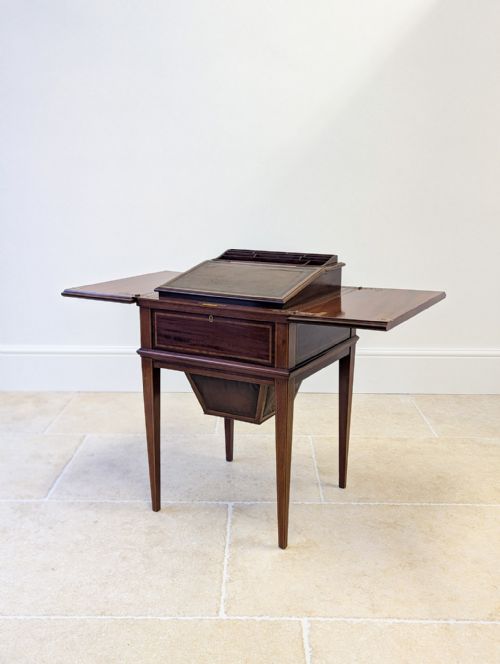
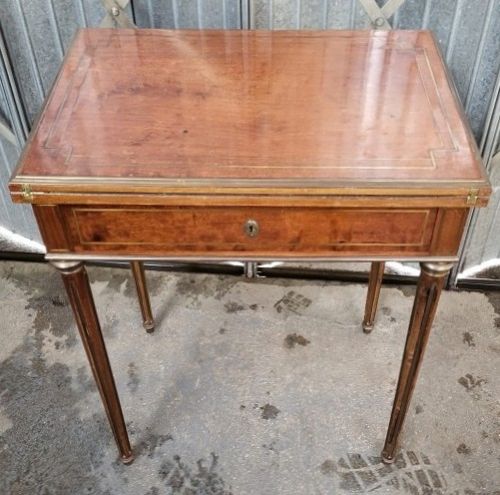
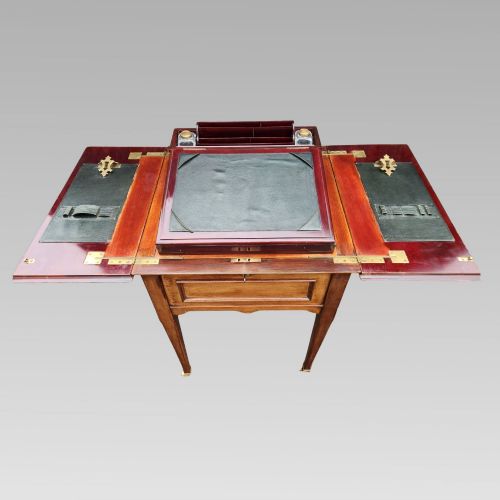


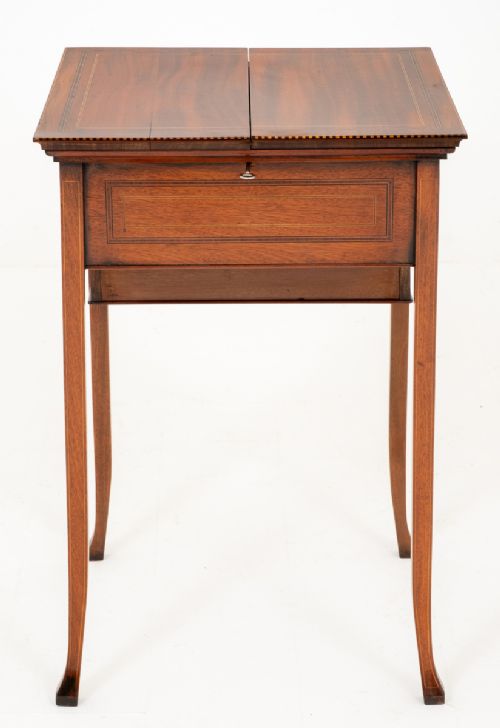
Metamorphic Writing Desk
A metamorphic writing desk transforms from a simple table or chest into a fully fitted workspace, offering hidden utility for the clever collector.
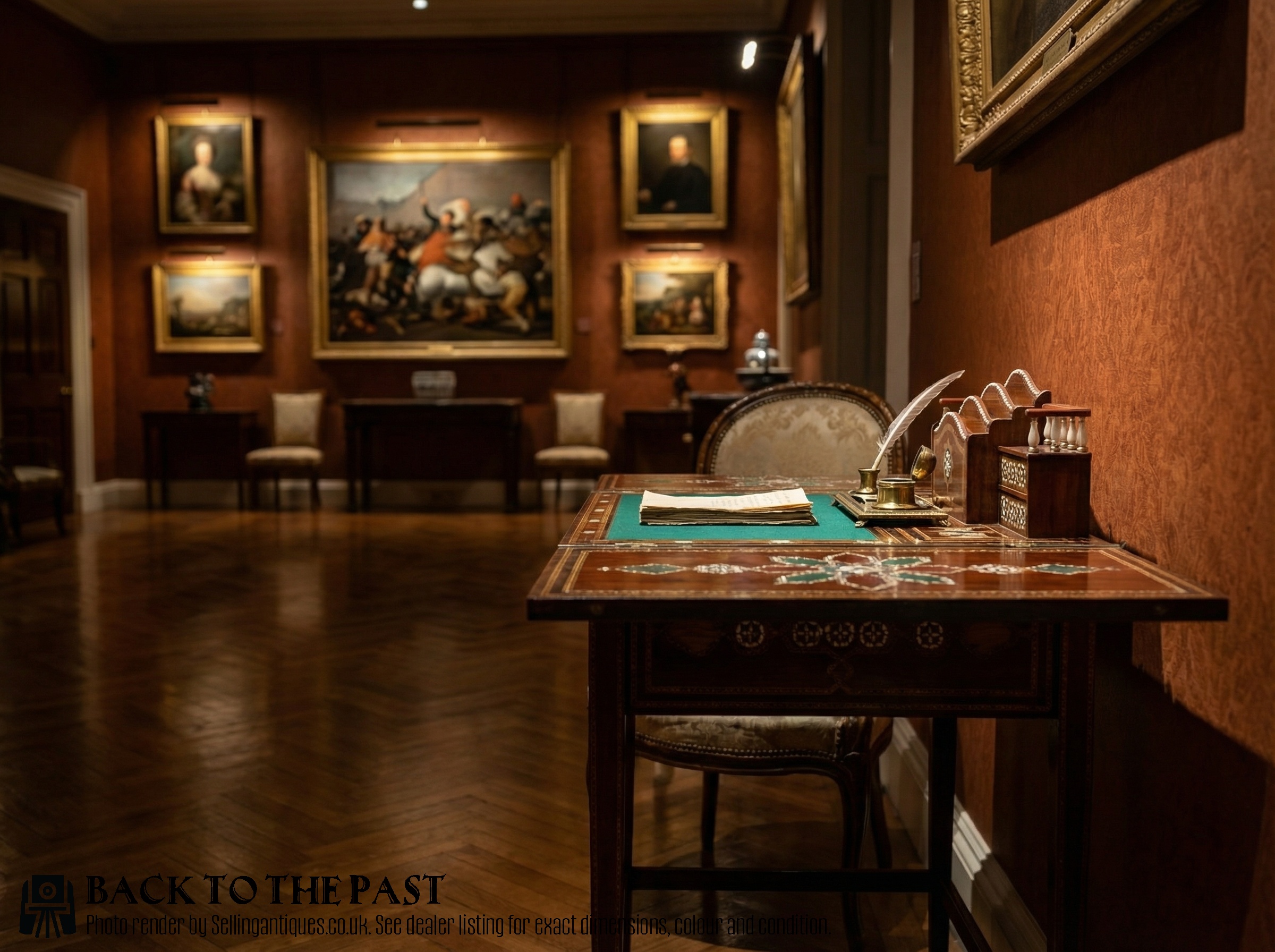
Metamorphic Writing Desk
A metamorphic writing desk is a piece of furniture engineered to alter its form, shifting from a side table, chest of drawers, or cabinet into a functional writing surface. When searching for a metamorphic writing desk, buyers encounter forms ranging from compact Edwardian ladies' tables to substantial Georgian library tables and campaign pieces.
The selection on this page spans several centuries, drawing heavily from Edwardian, 19th century, and 18th century periods. Pieces frequently appear in mahogany, walnut, and camphor wood, adopting styles such as Regency, Georgian, campaign, and French designs.
The most common version met here is the Edwardian inlaid mahogany writing table or desk utilising fold-over and lift-action mechanisms. Alongside these, buyers find campaign writing slopes, lap desks, bachelor's chests, and side tables that conceal their mechanics beneath domestic disguises.
What varies in quality
The distinction between standard examples and superior pieces rests entirely on the precision and smoothness of the mechanism. A finer desk conceals its transformation points seamlessly within the cabinetry, allowing leaves to rise and drawers to extend with minimal effort and absolute stability.
Material selection and decorative detail further define the range. Superior pieces employ choice timber grains, intricate boxwood and satinwood inlay, and heavy brass hardware, whereas simpler examples rely on basic plank construction and straightforward folding actions.
Britisher patent mechanisms allow walnut desks to transform with surprising theatrical flair.
J.C Vickery of London·Edwards & Sons
The Metamorphic Writing Desk Glossary
- Metamorphic
- Furniture designed to change its shape or function through hinges, pivots, or rising sections. This clever engineering allows a single object to serve multiple domestic purposes.
- Campaign
- Portable furniture made for military officers on the move, typically constructed from robust timbers like camphor with recessed brass handles and corner brackets.
- Writing slope
- A portable box with a slanted lid that opens to reveal a velvet or leather-lined writing surface and compartments for ink and pens.
- Inlay
- A decorative technique where contrasting woods such as boxwood and satinwood are fitted into recesses within the primary timber surface to create patterns.
- Bachelor's chest
- A small chest of drawers featuring a fold-over top that creates an impromptu writing ledge or surface.
Metamorphic Writing Desk: Frequently Asked Questions
How do metamorphic desks work?
These desks use hidden hinges, folding leaves, and internal counterweights to shift from a closed table or chest into an open workspace. Users simply lift, fold, or slide the designated sections to reveal the interior.
Mechanisms vary by period, ranging from simple fold-over tops on 18th-century chests to complex scissor actions and riser systems found in later Edwardian and Regency pieces.
Where were these desks used?
They served primarily in libraries, drawing rooms, and studies where space economy mattered. Owners valued furniture that could look like a standard side table when not in use.
Campaign versions travelled with military personnel across colonies, providing a portable desk that packed down securely for transport.
How do I identify the period?
Dating relies on timber choice, construction methods, and stylistic details. Georgian and 18th-century pieces often feature solid mahogany and restrained lines, while Edwardian examples frequently show elaborate satinwood inlay and lighter framing.
Hardware offers another clue, as brass castors, campaign mounts, and lock types changed significantly between the 1750s and the early 20th century.
Are these desks suitable for daily use?
Most pieces function well for writing and laptop use, provided the operating mechanism is handled with care. The internal folding surfaces are built to bear standard writing pressure.
Owners should operate the transforming parts smoothly and avoid forcing any joints that have settled over the centuries.