


Antique Cartography Desk
These antique cartography desk pieces range from globes to map magnifying glasses that bring historical geography straight to your study.
Antique Cartography Desk
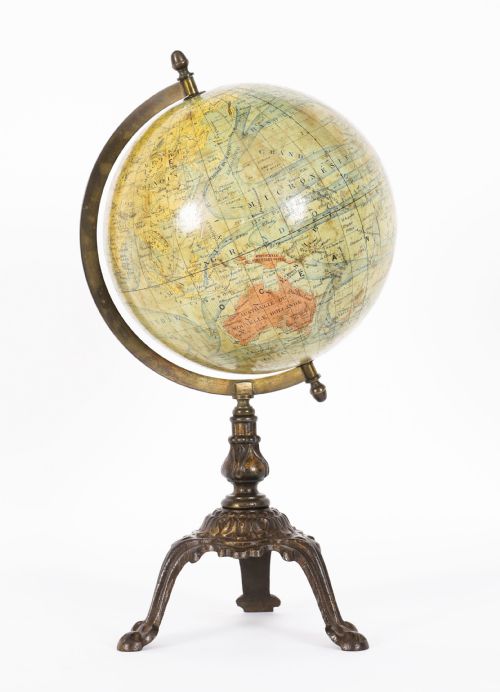
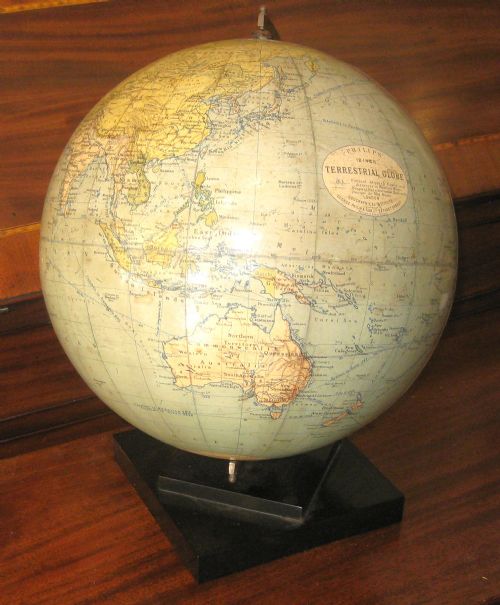
An antique cartography desk selection brings together globes, magnifying glasses and riser desks designed for map work. You will most frequently encounter terrestrial globes mounted on stands, alongside practical magnifying glasses and occasional specialist desks.
The objects span from the 18th century through the Victorian and Edwardian eras up to the 1930s. They include pieces from makers such as Lebegue and Cie, Phillips, Malby's, Bacon, and Crunchley.
Forms vary from miniature table globes and eight-inch or twelve-inch globes to large Victorian pairs and mammoth map magnifying glasses. Each item reflects the scientific and geographical interests of its respective period.
Materials and Construction
Construction relies heavily on traditional materials such as wood, including mahogany and ebonised timber, paired with brass fittings and cast iron components. These materials provide the necessary weight and stability for desk-mounted instruments and heavy globe stands.
Map surfaces and globe spheres incorporate printed paper applied over plaster bases, capturing detailed geographical information of the period. Metal mounts and brass hardware secure the axes and adjustable frames of the globes and magnifying glasses.
Listings feature items spanning the 18th century, Regency, Victorian, and Edwardian periods up to 1930, utilising brass, paper, plaster, and mahogany.
Assessing Quality
Quality depends upon the clarity and detail of the cartographic printing on the paper globe spheres and the precision of the brass or wood mountings. Finer pieces demonstrate careful hand-colouring and superior mounting mechanics that allow smooth rotation.
The condition of the original paper surface and the integrity of the plaster underneath dictate the desirability of globes and related items. Examples retaining their original maker labels and fine wood or metal stands hold greater historical value.
Lebegue and Cie·Phillips·Malby's·Bacon·Crunchley
The Antique Cartography Desk Glossary
- Terrestrial globe
- A spherical map representing the earth mounted on a stand or axis. These instruments show geographical boundaries and place names specific to the date of manufacture.
- Table globe
- A compact globe designed to sit upon a desk, table or surface rather than stand independently on the floor. They often measure between eight and twelve inches in diameter.
- Riser desk
- A specialist desk featuring adjustable mechanisms to alter the working height. These were utilised by architects and cartographers for drafting and map reading.
- Map magnifying glass
- A larger optical lens framed in brass or wood used for examining fine cartographic details. These handheld or stand-mounted glasses assist in reading small place names on period maps.
Antique Cartography Desk: Frequently Asked Questions
What is an antique cartography desk?
An antique cartography desk refers to specialised furniture such as architect's riser desks used for map making and drawing, often associated with globes and map reading instruments.
These pieces reflect the workspace requirements of historical cartographers and draughtsmen.
How do I date an antique globe?
You can date an antique globe by examining the political boundaries, place names, and railway lines printed on the paper sphere. Maker labels and copyright dates often provide a precise year of manufacture.
Comparing the depicted nations to historical maps helps narrow down the production era.
Were these globes used in schools?
Many table globes from the Victorian and Edwardian periods were produced for educational use in classrooms as well as for private studies and libraries.
Smaller eight-inch or twelve-inch examples fit conveniently on desks for everyday reference.
How should I clean a paper globe?
Cleaning paper globes requires extreme care to avoid damaging the fragile printed surface and plaster interior. Dust gently with a dry, soft cloth and keep the piece away from direct sunlight and moisture.
Avoid using any liquids or household cleaning agents on the paper map.