


Moonphase Longcase Clock
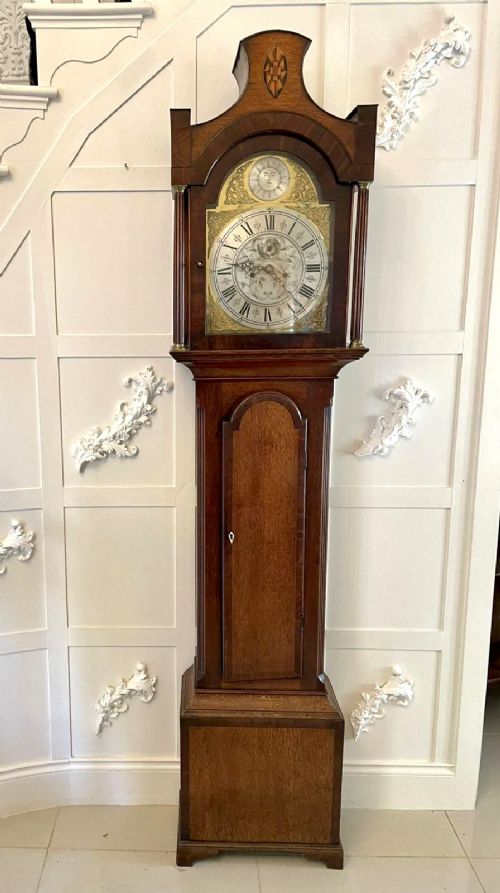
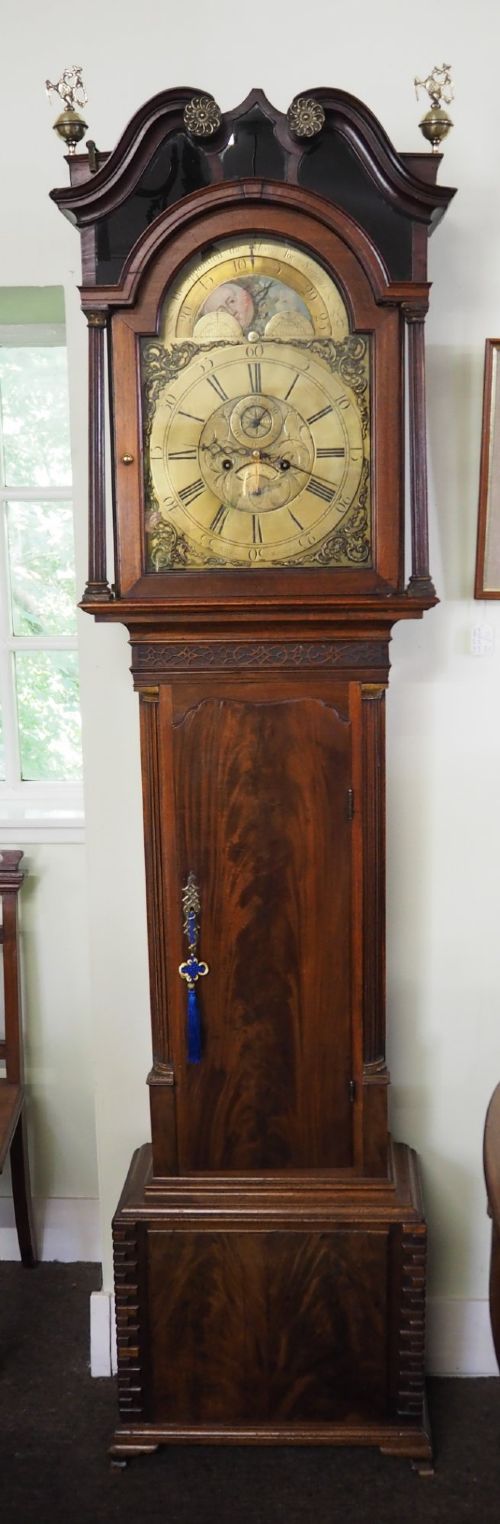
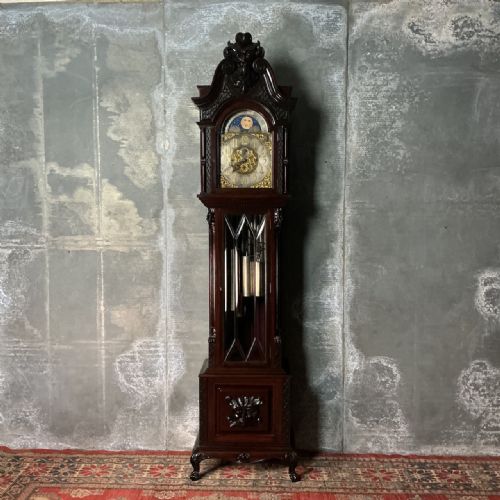
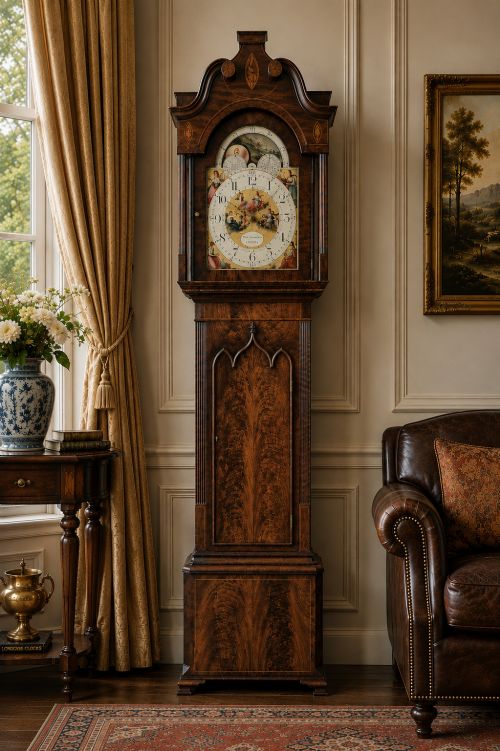
A moonphase longcase clock measures time while tracking the lunar cycle on a painted dial inside a tall timber case.

Moonphase Longcase Clock
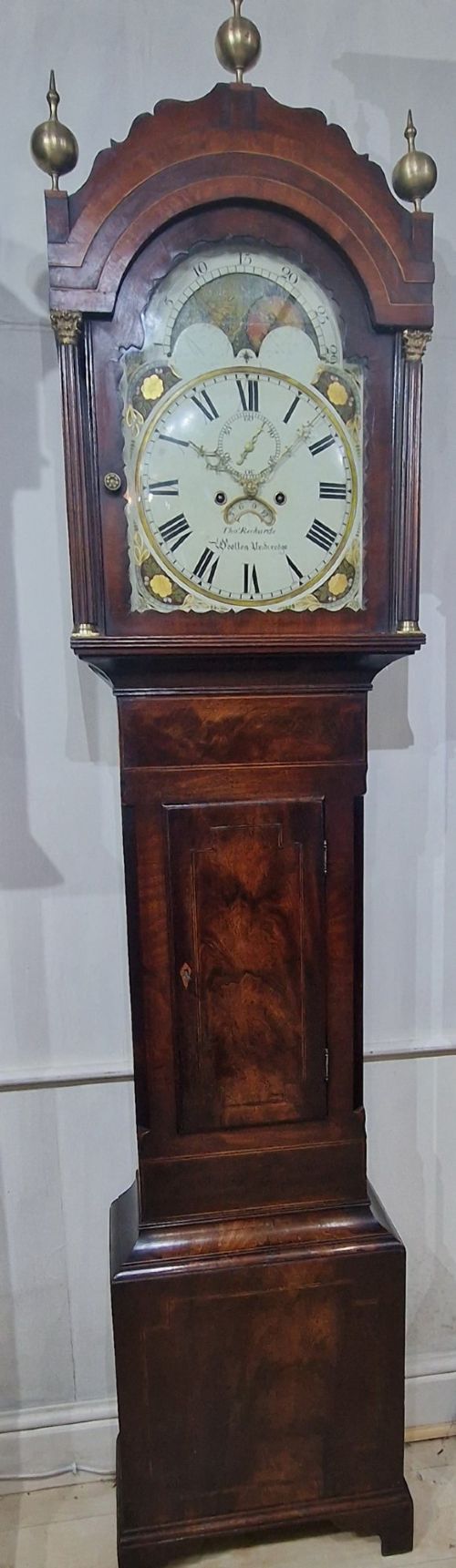
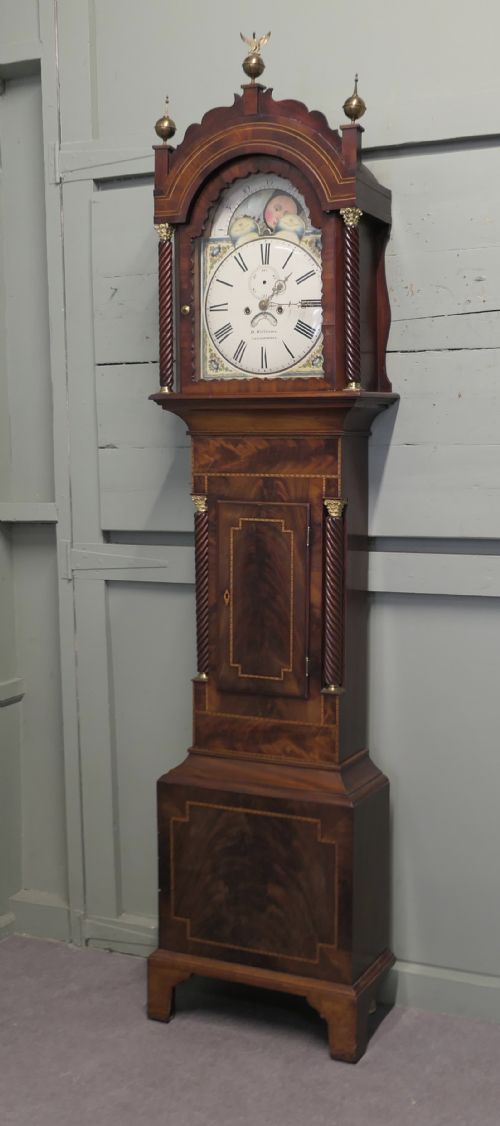
A moonphase longcase clock combines mechanical timekeeping with a revolving painted disc that tracks the phases of the moon through a shaped aperture on the dial. These tall case clocks stand upright in hallways and living spaces, serving as both household timepieces and focal points of interior joinery. Buyers searching this phrase meet examples spanning from the early eighteenth century through the Victorian period, housed in timber trunks built by regional and metropolitan cabinetmakers.
The predominant form on this page is the mahogany or oak longcase clock originating from Georgian workshops, often featuring an eight-day brass or painted iron dial. Makers from regional centres like Bristol, Liverpool, and Manchester appear frequently alongside London names, showing distinct local cabinetwork styles. Many incorporate subsidiary hands for seconds or dates, while others include mechanical complexity such as tidal dials or quarter striking trains.
Materials and Construction
Cases rely on dense timbers such as mahogany, flame mahogany, oak, and walnut, often reinforced with secondary pine or deal for internal framing. Cabinetmakers constructed the long trunk, base plinth, and hood with glazed door access to the dial, utilising crossbanding, inlay, and veneer to decorate the primary surfaces. Timber selection dictates the structural weight and visual grain pattern of each case, varying from figured regional oak to polished metropolitan mahogany.
Dials combine engraved or painted iron and brass backplates with steel hands and brass gear trains driven by lead or iron weights suspended on cords or chains. The revolving moonphase disc beneath the dial utilises hand-painted oil imagery on metal or tin, rotated by internal wheelwork connected to the hour motion. Clockmakers cut brass wheels and steel pinions by hand or early machine methods, mounting the movement within brass plates held by turned pillars.
Moonphase Longcase Clock Retail Price Guide 2026
Typical asking prices for moonphase longcase clock among the pieces listed under this phrase on Sellingantiques today, from the lower quarter to the upper quarter. They describe what is for sale here now, not the wider market.
Listings feature regional English and Welsh makers spanning the Georgian, Regency, and Victorian eras in oak, mahogany, and walnut cases.
Judging Quality
Quality rests upon the harmony between the movement and the cabinetry, where original proportions and matching timber patination elevate a piece. Clocks retaining their signed dial and maker-matching movement hold greater integrity than those assembled from mixed components over generations. The crispness of the dial painting, the complexity of the wheel train, and the fineness of the case mouldings define the upper tiers of the market.
Cabinetwork precision separates standard production from exceptional vernacular joinery, evident in the tight mitres of hood mouldings and the depth of the timber grain. The artistic merit of the painted moon disc and the legibility of the maker signature on the dial plate indicate the level of craftsmanship invested in the workshop. Movement stability, original weight setups, and clean train finishing complete the criteria that distinguish a master clockmaker's output.
Samuel Kellett of Bredbury·Charles Dowsett Of Canterbury·Thomas Vernon London·James Rayner of Hull·Aynsworth Thwaites
The Moonphase Longcase Clock Glossary
- Longcase clock
- A weight-driven pendulum clock housed in a tall wooden case designed to stand directly on the floor. These pieces are also widely known by the traditional term grandfather clock.
- Moonphase
- A mechanical display utilising a rotating painted disc with two moons to show the lunar cycle through an arched window on the dial face. This complication tracks the waxing and waning of the moon across approximately twenty-nine and a half days.
- Eight day
- A movement design requiring winding once a week via key-operated arbors on the dial face. This superior mechanical specification replaced thirty-hour weight drives in finer domestic clocks.
- Hood
- The upper glazed enclosure that protects the dial and hands, usually lifting or swinging open on hinges for hand access. It is frequently framed by architectural columns and decorative mouldings.
Moonphase Longcase Clock: Frequently Asked Questions
How do you wind a moonphase longcase clock?
Winding requires inserting a crank key into the winding holes on the dial face and turning it clockwise until the internal weights rise near the top of the trunk.
Care must be taken not to overwind the movement, and the pendulum should be allowed to settle into an even beat once the weights are raised.
Why does the moonphase dial need manual adjustment?
Standard mechanical moon dials operate on a fifty-nine-tooth gear wheel that tracks a twenty-nine and a half day lunar cycle, which diverges slightly from the true synodic month over prolonged periods.
Owners periodically correct the disc position by hand using fingers or a small pusher behind the dial aperture to match the actual night sky.
Where should a longcase clock be placed at home?
These clocks require a structurally stable, vibration-free interior wall where the floor remains level and dry away from direct sunlight and heating vents.
Sufficient vertical clearance is essential to accommodate the height of the case, and adequate surrounding space allows easy access for weekly winding.
How can you tell an eighteenth-century dial from a later one?
Eighteen-century brass dials feature engraved details and applied spandrels in the corners, whereas painted iron dials display hand-brushed floral motifs and regional maker lettering characteristic of the period.
Examination of the rear mounting pins and the integration of the movement plates helps confirm whether the dial and mechanism originated together.