





Mirrored Wall Lights
Mirrored wall lights combine reflective glass with candle branches or electrical fittings to project candlepower and daylight across a room.
Mirrored Wall Lights
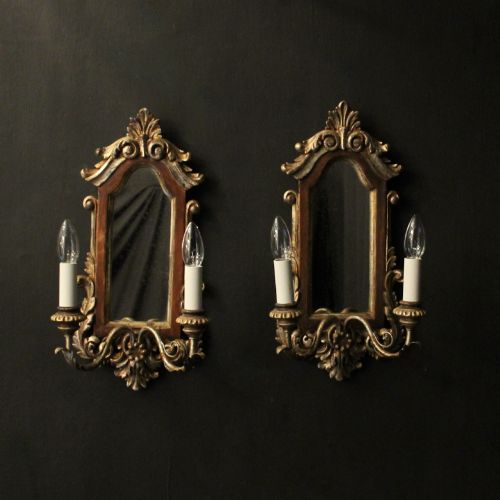
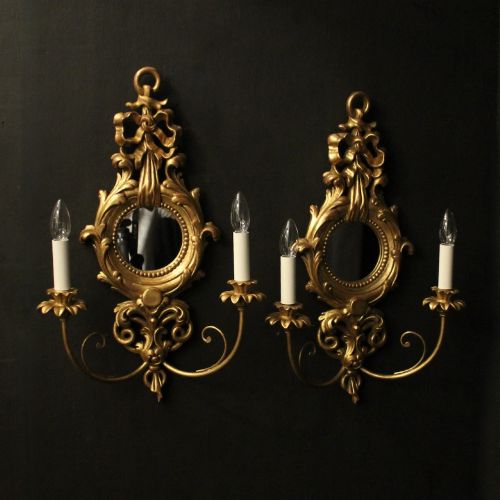
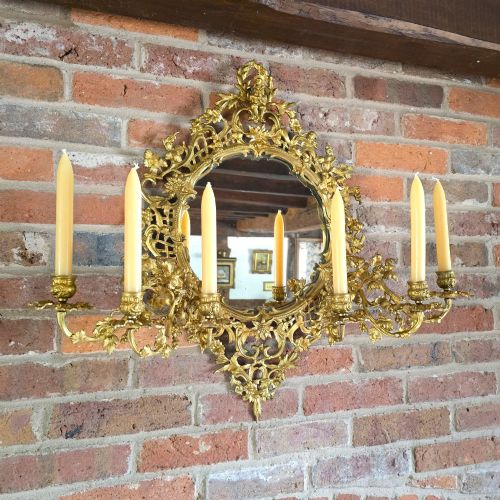
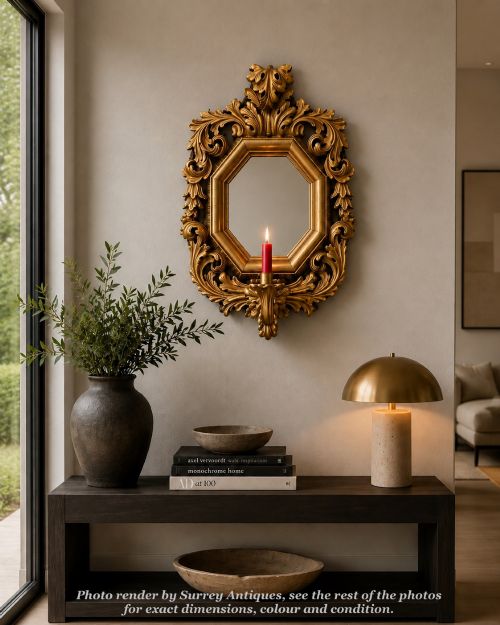
When you search for mirrored wall lights, you are looking at functional wall-mounted pieces designed to amplify illumination through reflected light. These objects appear in forms such as wall sconces, girandoles, and overmantel mirrors fitted with arms for candles or lamps. The versions you are most likely to meet on this page date from the nineteenth century through the early twentieth century, spanning Victorian, Rococo Revival, and Regency styles.
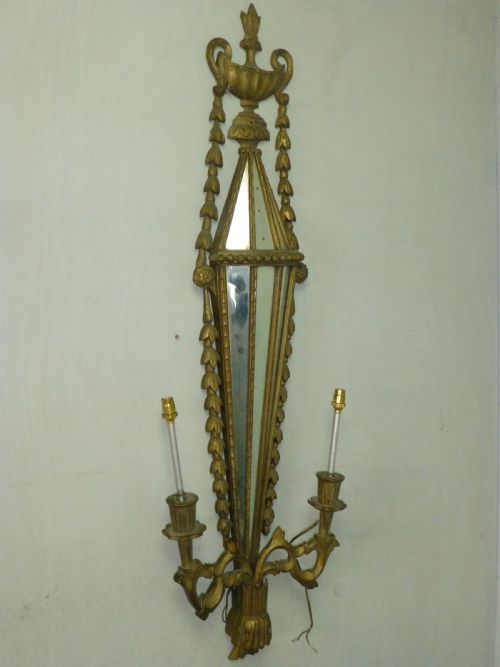
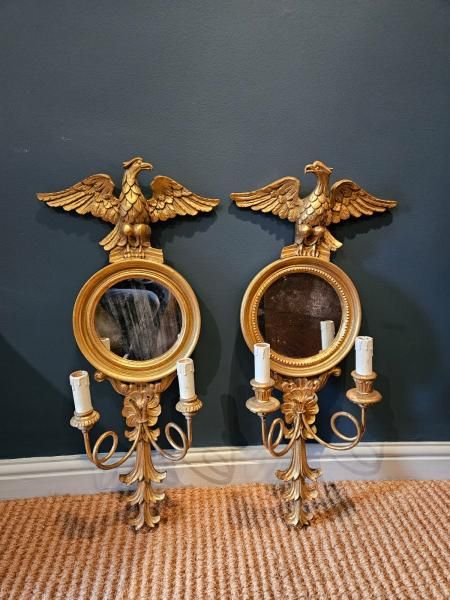
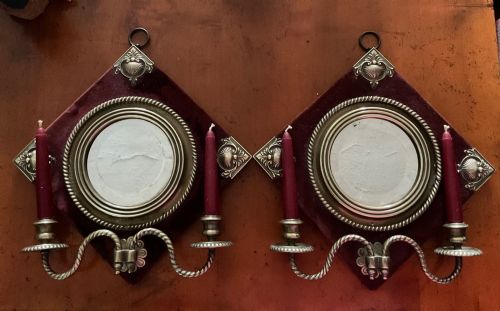
The selection ranges from carved giltwood frames originating in France, Italy, and England to bronze, brass, and gilt metal designs. Many pieces incorporate candle branches, known as girandoles, which project forward from the reflective glass plate. Others use simple mirror backs paired with brass or spike wall lights to hold candles safely against panelled or plastered walls.
How they were made
Makers constructed the frames of these lights using carved timber such as oak, maple, and softwoods finished with layers of gesso and gold leaf or polychrome paint. Giltwood and gilt bronze, or ormolu, provide the primary metallic sheens seen across the French and Italian pieces. Artisans shaped metal through casting and chasing, applying mercury or silver backing to glass plates to create the mirrors.
Candle arms and branches attach securely to the main frame, often cast in bronze or brass with multi-branch configurations holding crystal drops or drip pans. Carvers used chisels to form intricate Rococo scrolls, floral motifs, and Gothic arches on the wooden surrounds. The integration of mirror glass behind the light source required precise framing to support the weight of both the glass and the metal sconces.
What varies in quality
The distinction between tiers rests upon the crispness of the carving and the depth of the gilding on the frame. Hand-carved giltwood with deep undercut foliage and burnished details stands apart from simpler moulded gesso or plain metal frames. The quality of the mirror glass itself, including the presence of hand-bevelling and original silvering, also dictates the visual weight of the piece.
Engineering integrity in the arm attachments defines the better examples, ensuring that heavy bronze or brass branches support candles without sagging. The harmony between the proportions of the reflective plate and the branching candelabra determines how successfully the light disperses. Pieces retaining matching original components throughout show greater compositional unity than those assembled from mismatched parts.
E.G Paris
The Mirrored Wall Lights Glossary
- Girandole
- A branched wall light or candelabrum incorporating a mirrored backplate to reflect and multiply the light. They frequently feature two or more candle arms extending from the base of the frame.
- Ormolu
- Gilded bronze used extensively for decorative mounts, candle branches, and decorative frames on French pieces. The technique involves applying a mercury and gold amalgam to a bronze base and heating it.
- Gesso
- A plaster-like mixture applied to wooden frames as a smooth base for gilding or painting. Artisans carved intricate details directly into this layered substance before applying gold leaf.
- Overmantel mirror
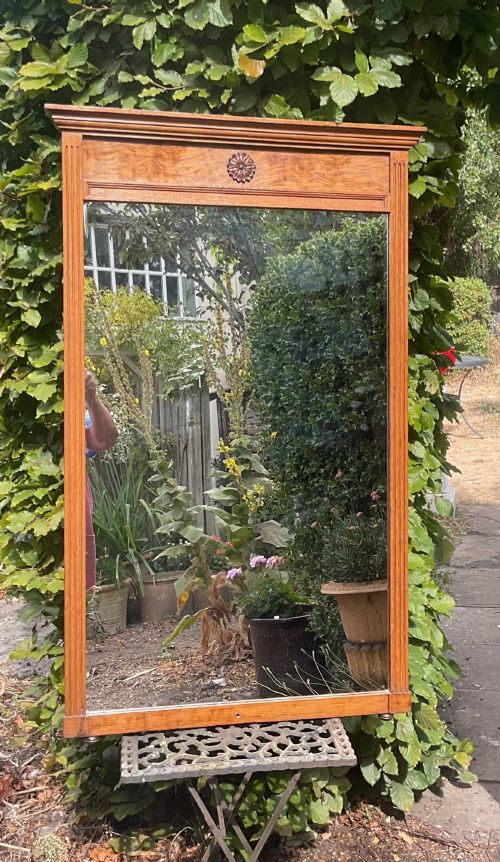
- A large wall mirror specifically designed to hang above a fireplace mantelpiece. Some examples incorporate twin sconces or candle branches directly attached to the lower frame.
Mirrored Wall Lights: Frequently Asked Questions
What is a girandole mirror?
A girandole mirror is a specific type of wall light that combines a reflective glass plate with one or more projecting candle branches. The design uses the mirror surface to bounce candle flame illumination back into the room.
These pieces typically feature decorative carved wooden or cast metal frames. They were historically placed between windows or above mantelpieces to maximise light before the advent of electricity.
How do I hang a mirrored wall light?
Hanging these pieces requires locating solid wall anchors or studs due to the combined weight of the glass, frame, and metal arms. The mounting hardware must support the outward pull exerted by the projecting candle branches.
Professional installation is recommended for heavier bronze or giltwood pieces to ensure the weight distributes evenly across the wall surface. Wall fixings should match the specific construction material of your interior walls, whether plaster, brick, or stud.
Can these lights be wired for electricity?
Many surviving examples retain their original candle sockets or have undergone conversion to electricity at various points in their history. The choice to wire them depends on whether you prefer the ambiance of wax candles or the convenience of electric illumination.
When electrical conversion is desired, a qualified electrician can route wiring through the existing hollow channels or behind the backplate without damaging the antique frame. Rewired pieces frequently appear alongside those preserved in their original candle-holding state.
How do I date an antique mirror?
Dating relies on examining the construction methods of the frame, the composition of the metal, and the manufacturing traits of the glass. Hand-beveled edges, backplate materials, and specific regional styles such as Rococo Revival or Gothic provide clear chronological markers.
Maker marks, stamps on bronze elements, and the type of screws or fasteners used in assembly also help narrow down the period of production. Comparing the decorative motifs to known nineteenth and early twentieth-century design patterns confirms the era.