


Gold Mirrored Sconce
A gold mirrored sconce brings warmth and reflection to a room, combining the practicality of a wall light with the decorative depth of a gilded glass plate.
Gold Mirrored Sconce
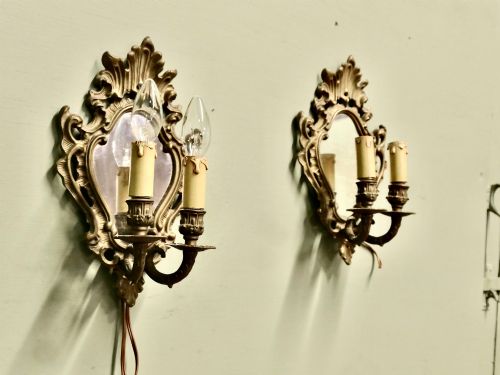
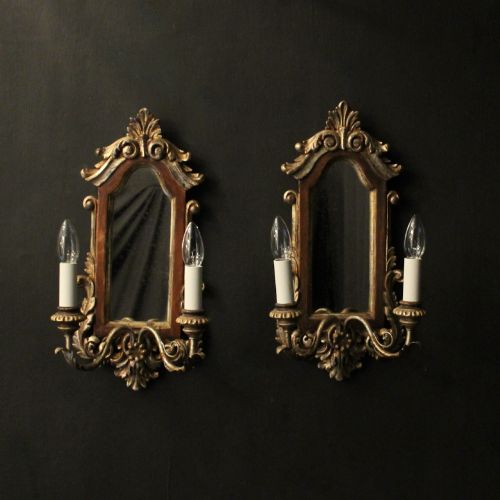
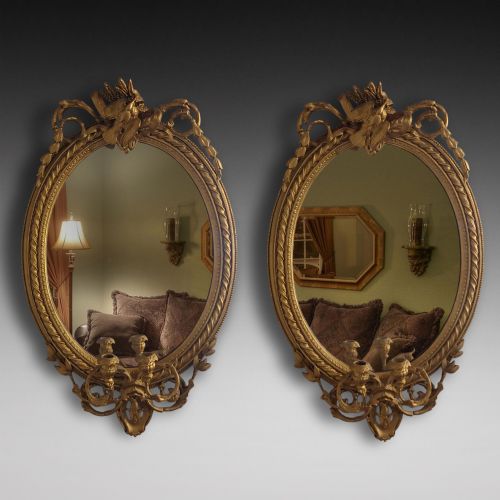
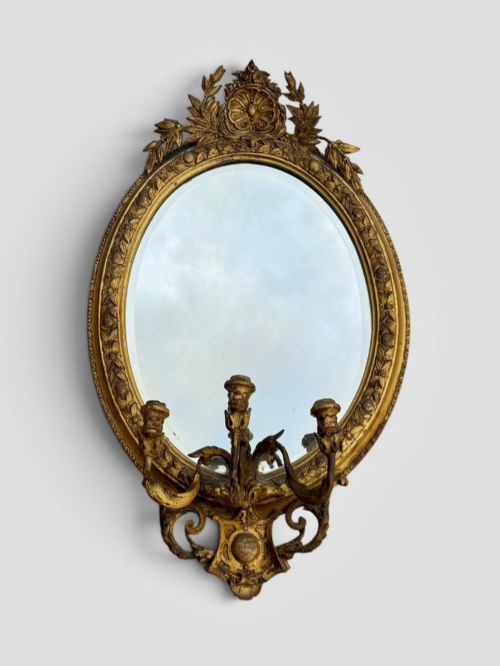
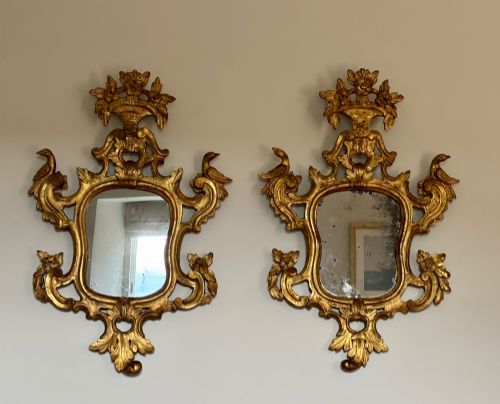
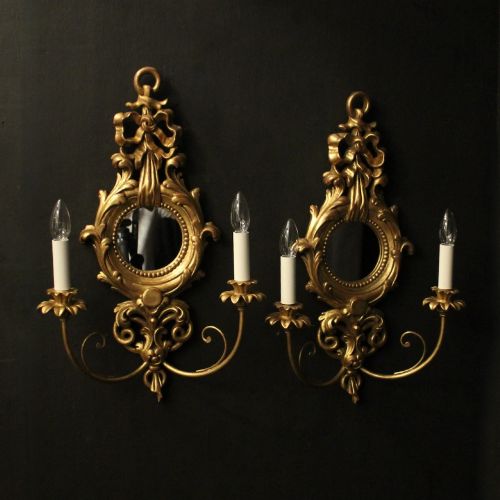
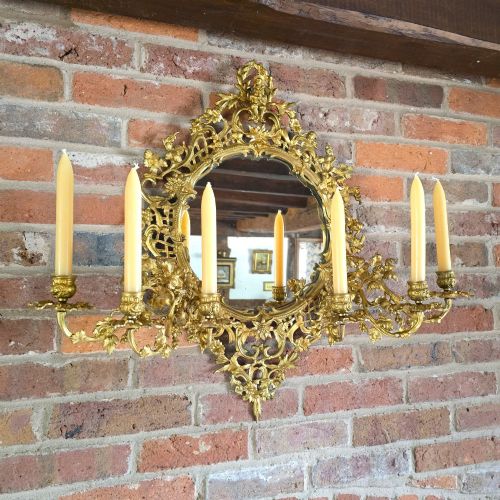
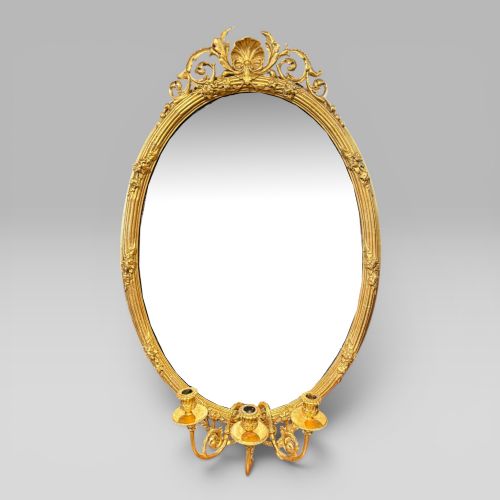
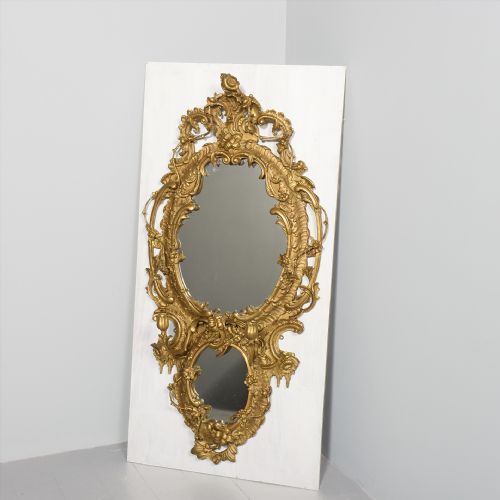
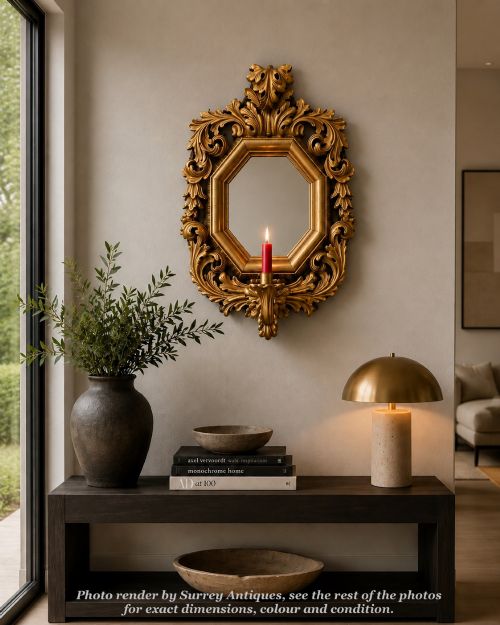
A gold mirrored sconce is a wall-mounted fixture designed to hold candles or artificial light while reflecting it through a glass plate set within a decorated frame. When searching for a gold mirrored sconce, buyers encounter pieces ranging from compact eighteenth-century Italian cartouche designs to ornate nineteenth-century girandoles and twentieth-century French twin-arm wall lights.
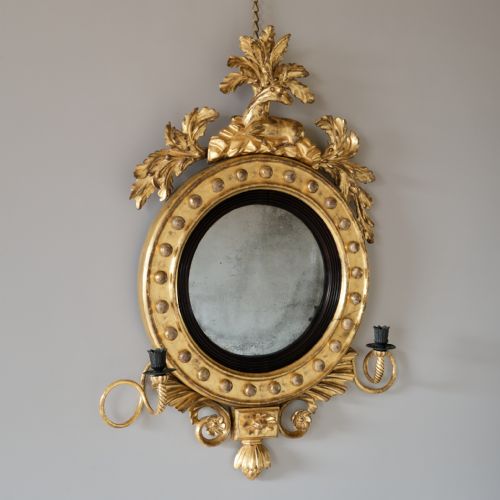
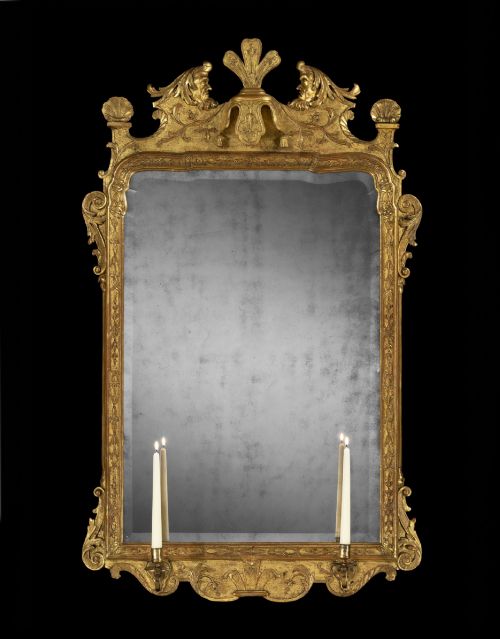
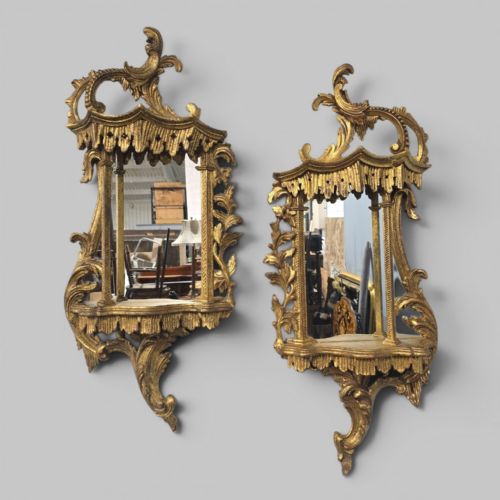
The selection on this page draws heavily from eighteenth-century George periods, Regency convex forms, and Victorian revivals, alongside French and Florentine workshops. These items function primarily as decorative wall lights or mirrored shelves, often appearing in matched pairs intended to flank a fireplace or a larger central picture.
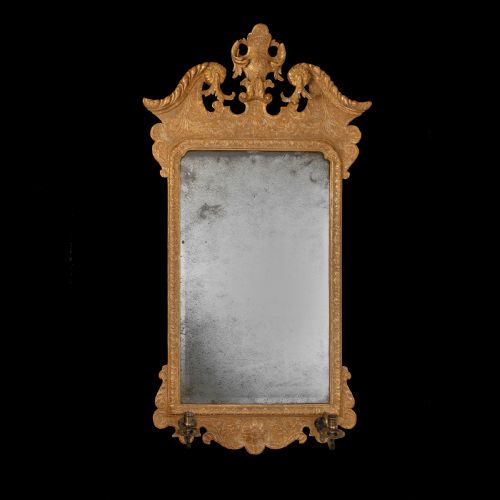
The forms span simple brass or gilt metal frames to heavily carved giltwood and gesso structures featuring sconce arms for illumination. Surviving examples demonstrate how period makers integrated reflective glass with candle branches to maximise ambient light in darker rooms.
Materials and Construction
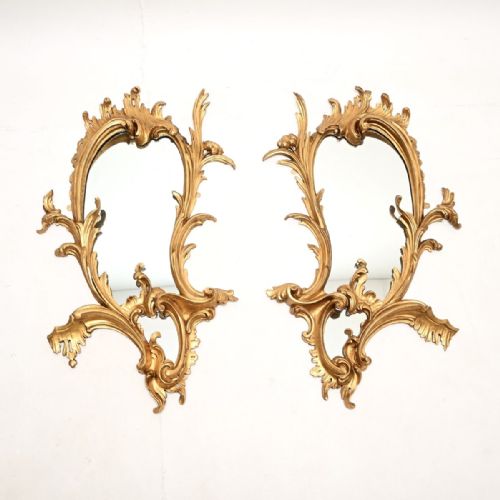
Makers built the foundational frames of these pieces using carved timber such as giltwood, or shaped metal including brass and ormolu. Artisans applied layers of gesso to wood substrates before gilding them with gold leaf or applying paint finishes to achieve a bright, reflective surface.
The optical elements rely on flat mirror glass or convex plates, sometimes showing age-related foxing on the original surfaces. Sconce arms were fitted securely to support branches for candles or early electrical conversions, balancing the heavy weight of the timber and glass components.
Gold Mirrored Sconce Retail Price Guide 2026
Typical asking prices for gold mirrored sconce among the pieces listed under this phrase on Sellingantiques today, from the lower quarter to the upper quarter. They describe what is for sale here now, not the wider market.
Listings for this phrase feature pieces spanning the 18th Century, Victorian era, and Regency period, constructed primarily from giltwood, glass, and brass.
Factors of Quality
Quality in these pieces rests upon the crispness of the carver's hand in the gesso and giltwood ornament, where deeper undercut foliage and defined scrolls outclass shallow, mass-produced moulding. The integrity of the original gilding and the depth of the carved wooden substrate separate superior Georgian and Regency examples from later reproductions.
The glass plate itself indicates standard, with original mirror plates displaying desirable foxing and age spots that modern replacements lack. Additionally, the structural stability of the attached sconce arms and the joinery of the frame dictate whether a piece maintains its integrity over centuries of wall mounting.
Benjamin Goodison
The Gold Mirrored Sconce Glossary
- Giltwood
- Wood that has been coated with a thin layer of gold leaf over a prepared gesso ground. This technique creates a durable, luminous finish characteristic of fine antique frames.
- Girandole
- A decorative wall mirror featuring integrated candle branches or sconces. The arms project forward to cast light directly onto the reflective glass plate.
- Gesso
- A plaster mixture applied to wood frames to provide a smooth surface for gilding and carving. Finer pieces exhibit deep, hand-tooled gesso relief work.
- Foxing
- Age-related spots and discoloration within the silvering of a mirror glass plate. Collectors often prize original foxing as evidence of authentic antique age.
- Convex Mirror
- A round mirror with a curved, outward-bulging glass surface designed to capture a wide-angle reflection of the interior. These pieces became particularly popular during the Regency period.
Gold Mirrored Sconce: Frequently Asked Questions
Where should I hang a gold mirrored sconce?
These pieces suit spaces where reflected light and decorative framing enhance the room, such as either side of a fireplace, above a console table, or along a hallway. Their dual function as a mirror and a light source makes them effective in narrower areas.
Ensure the wall construction can support the weight of the timber frame and glass plate, particularly for larger Regency convex mirrors or heavy giltwood girandoles.
How do I identify a Regency period piece?
Regency examples often feature round convex mirror plates set within deep round frames decorated with ball details and an eagle crest. They frequently date from the early nineteenth century and rely on giltwood or painted finishes.
Check the construction of the backboards and the style of the gilding to confirm the period against standard eighteenth-century or Victorian alternatives.
What is the difference between a girandole and a standard wall mirror?
A girandole specifically incorporates attached arms or branches designed to hold candles or lights directly in front of the glass. Standard wall mirrors simply provide reflection without the lighting function.
Many listings for gold mirrored sconces cross over into girandoles due to the presence of these integrated candle branches.
Should I replace foxed mirror glass?
Original mirror glass often develops foxing, which appears as dark spots and cloudy oxidation within the silvering over time. Most collectors prefer to retain original plates with foxing as a sign of authenticity.
Replacing the glass can remove the historical character of an antique piece, so preservation is generally recommended unless the damage obstructs the reflection entirely.