


Minton Ceramic Display Plate
A minton ceramic display plate brings remarkable Victorian artistry to your walls and cabinets, offering intricate hand-painting and delicate gilding that collectors treasure.
Minton Ceramic Display Plate
A minton ceramic display plate encompasses cabinet plates, decorative plates, and large charger plates originating from the Victorian era. These pieces showcase a variety of forms designed primarily for visual appreciation rather than daily dining.
The selections span distinct stylistic movements, featuring both Aesthetic Period Japanese style designs and traditional hand-painted floral or landscape motifs. Collectors encounter porcelain and earthenware bodies decorated with meticulous detail.
Dating ranges across the nineteenth century, capturing Victorian innovation in ceramic manufacture from blue and white marine charger plates to jewelled dessert plates. Each minton ceramic display plate represents the refined output of this historic pottery.
How they were made
The pieces utilise fine porcelain and earthenware bodies, shaped into plates and large chargers before receiving detailed hand-painted decoration. Artisans applied enamel colours and intricate glaze treatments to achieve deep surface textures.
Gilt and gold leaf highlights frequently frame the central artwork, contrasting with pink grounds or blue and white underglaze decoration. Techniques like pate sur pate built up relief designs in white slip over a coloured ground.
Pierced rims and jewelled porcelain borders required precise ceramic firing and skilled hand-finishing by period decorators.
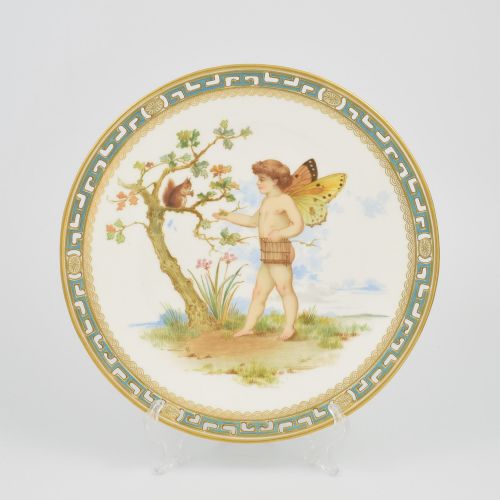
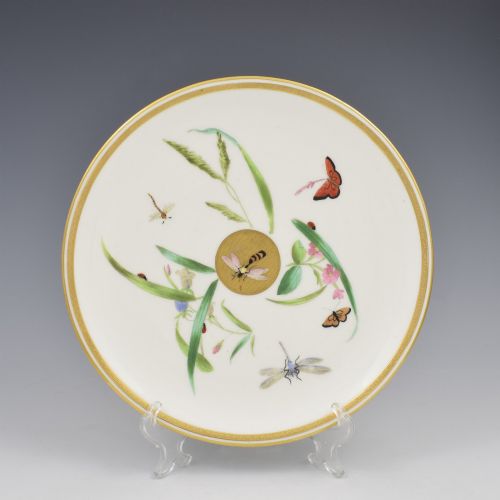
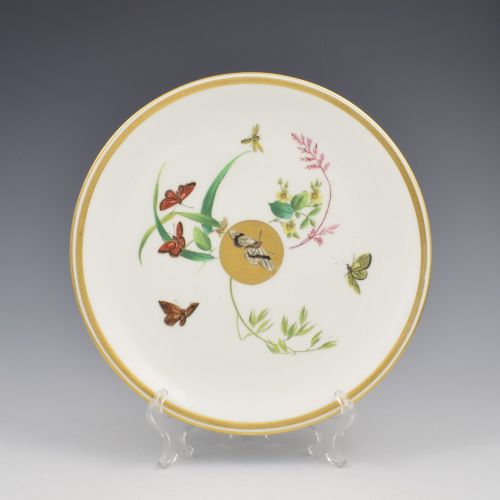
Nineteenth-century fairies and squirrels occasionally share plate space with Japanese-style suns and insects.
What varies in quality
The standard of painting determines the desirability of each piece, distinguishing simple floral motifs from intricate figural scenes by known artists such as W.S. Coleman. The precision of the gilding and the crispness of relief work also dictate the standing of an item.
Complexity of form elevates certain plates, particularly those featuring pierced porcelain borders or raised jewelled enamels. The harmony between the Japanese style motifs and the porcelain ground shows the confidence of the maker.
W.S. Coleman
The Minton Ceramic Display Plate Glossary
- Cabinet plate
- A decorative plate intended for display in a cabinet or on a wall rather than for table use. These pieces often feature elaborate hand-painting and gilding.
- Charger plate
- A large decorative plate that serves as a base piece or stands alone for display. Nineteenth-century examples often display bold blue and white patterns.
- Pate sur pate
- A ceramic decoration technique where successive layers of white slip are built up on a coloured body to create a low relief cameo effect. This method demands immense skill from the decorator.
- Jewelled porcelain
- Ceramic decoration incorporating small raised enamel dots that resemble precious gems. This technique adds tactile dimension to the painted surface.
Minton Ceramic Display Plate: Frequently Asked Questions
How were these plates displayed?
Victorian households displayed these plates in glass-fronted cabinets or mounted them directly onto walls to showcase their artistic merit. Their vibrant glazes and gilded borders made them focal points in formal rooms.
Today, modern collectors continue this tradition by using specialised plate hangers or dedicated display stands to protect the edges while showing the artwork.
How do I identify the period?
Identifying the period relies on examining the stylistic cues, such as Aesthetic Movement Japanese motifs or traditional Victorian armorial designs. The materials, ranging from earthenware to fine porcelain, also point towards specific decades within the nineteenth century.
Backstamps and registry marks, where present on the reverse, help narrow down the exact manufacturing window.
Are these plates meant for food?
These decorative plates are intended strictly for display and appreciation. The delicate gilding, enamel work, and specialised techniques like pate sur pate are vulnerable to cutlery and frequent washing.
Preserving the historic surface requires keeping them away from daily dining use and handling them with clean hands.