
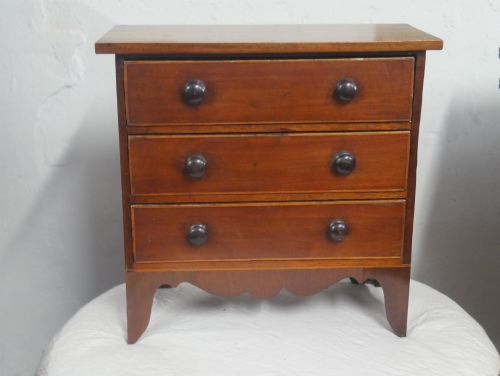
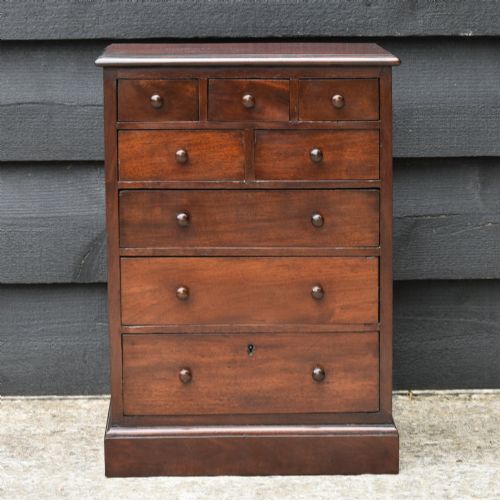
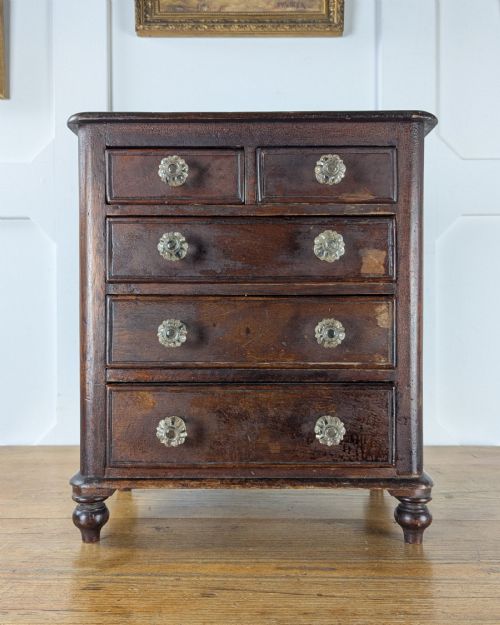
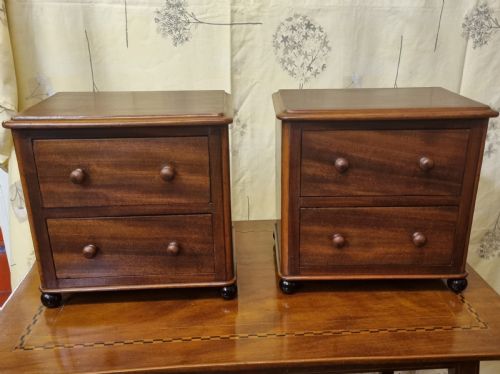
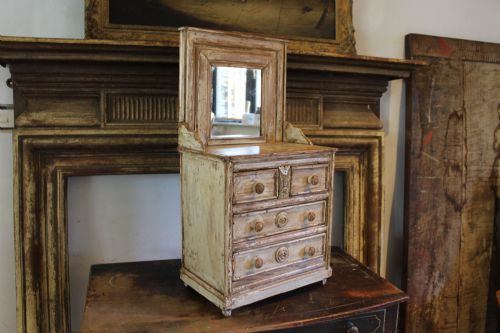
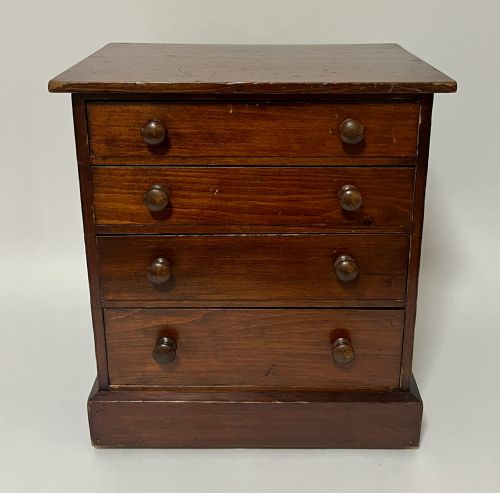
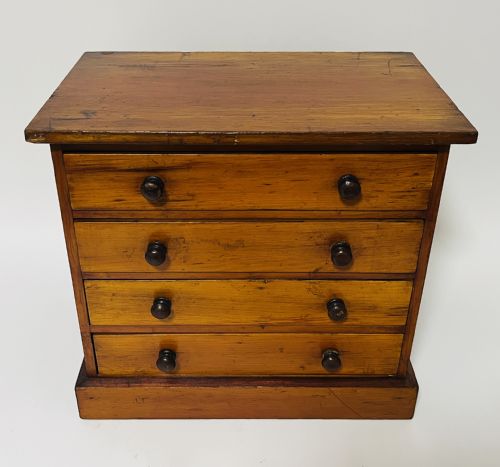
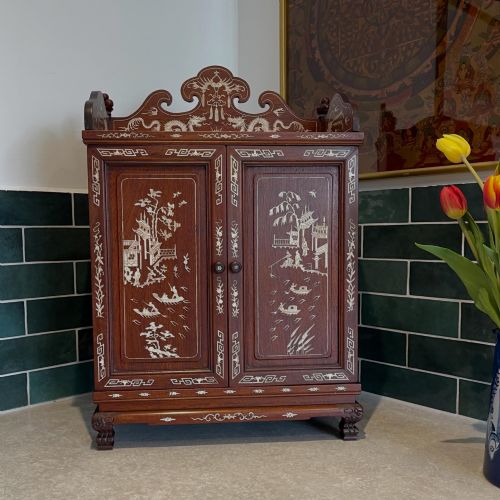
Miniature Desktop Chest
These small wooden cabinets mimic domestic furniture at a fraction of the scale, offering intimate storage for trinkets or specimens.
Miniature Desktop Chest
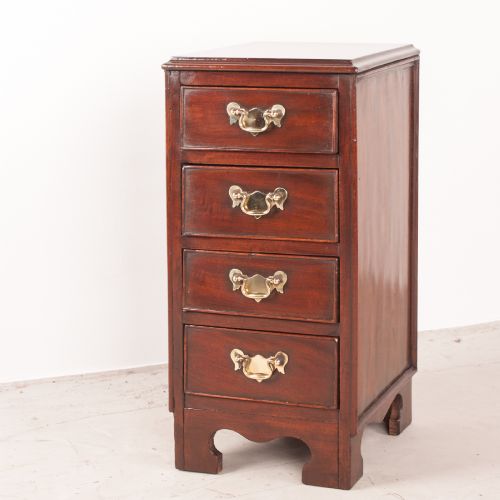
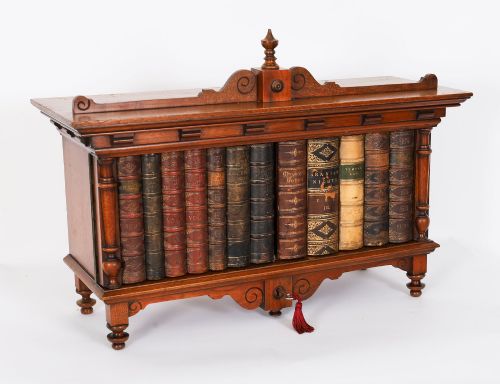
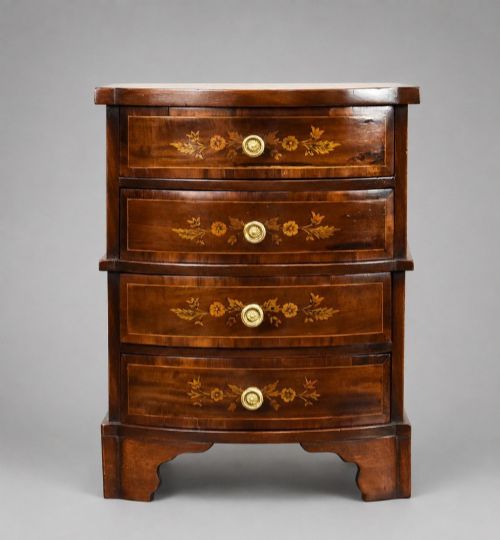
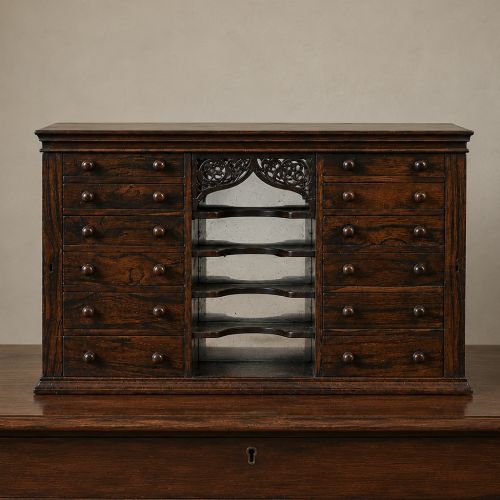
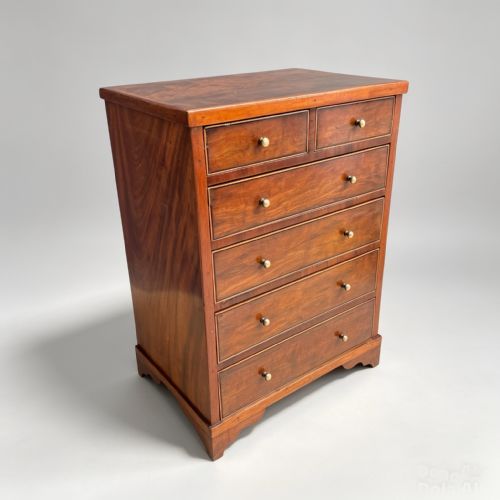
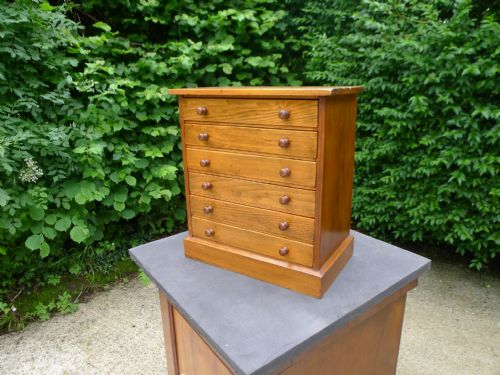
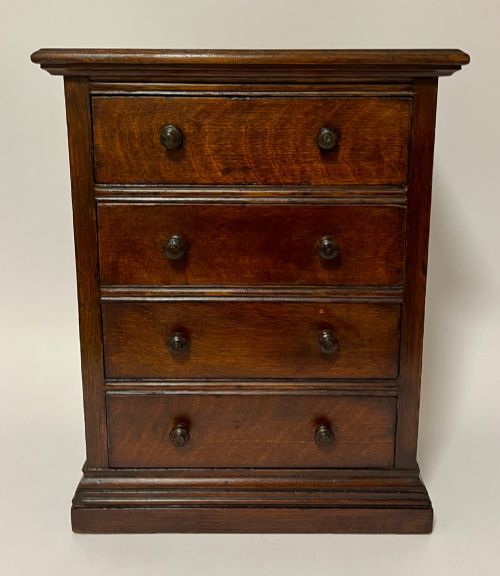
When you search for a miniature desktop chest, you encounter a variety of small-scale case furniture built for tabletops and writing desks. These pieces mirror full-size chests of drawers, Wellington chests, and collectors cabinets from past centuries.
The versions you meet most frequently on this page date from the nineteenth century and the Victorian era, constructed in mahogany, walnut, or pine. They take the form of apprentice pieces, specimen cabinets, and spice drawers designed for practical desktop use.
Origins stretch from Georgian England to Anglo-Indian workshops and French provincial centres. Cabinetmakers scaled down architectural proportions to create these functional tabletop pieces for households and offices.
Materials and construction methods
Timbers dictate the character of these pieces, with dense hardwoods like mahogany, rosewood, and walnut forming the primary structures. Workshops utilised secondary woods such as pine and deal for internal drawer linings and secondary panels.
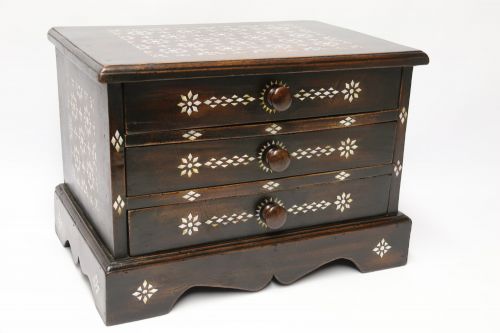
Cabinetmakers applied decorative techniques including marquetry, inlay, and veneers of burr walnut or kingwood to enhance visual depth. Joinery relies on traditional dovetail joints for drawers and precise mitres for mouldings and frames.
Listings demonstrate a strong presence of mahogany and walnut, alongside regional variations in fruitwood, palmwood, and pine.
Distinctions in craftsmanship
Gradations in quality rest upon the precision of the cabinetwork and the selection of timber figures. Fine examples display carefully matched wood grain across drawer fronts and tight, hand-cut dovetailing that survives decades of opening.
Secondary details separate standard utility pieces from exceptional items. Original brass hardware, working locks with keys, and subtle ebonised mouldings elevate a desktop chest beyond basic storage into high-tier cabinetmaking.
The Miniature Desktop Chest Glossary
- Apprentice piece
- A small item of furniture demonstrated by a journeyman to prove skill before admission to a guild. These objects often share the exact detailing of full-scale furniture.
- Wellington chest
- A tall, slender chest featuring a locking stile on one side that secures all drawers simultaneously. The design originated in the nineteenth century.
- Specimen cabinet
- A specialised storage unit with shallow drawers built for organising natural history collections, coins, or geological samples. Interiors often retain original lining materials.
- Marquetry
- The art of applying thin slices of wood veneer in decorative patterns onto a structural carcase. This technique creates pictorial or geometric surface designs.
- Deal
- A historical term for softwood timber, typically pine or fir, utilised extensively for drawer bottoms and carcase backs in British cabinetmaking.
Miniature Desktop Chest: Frequently Asked Questions
What is a miniature desktop chest?
A miniature desktop chest is a small-scale piece of case furniture designed to sit upon a table, desk, or surface. These items replicate the drawers and compartments of larger furniture for desktop organisation.
Craftsmen built them to hold small valuables, writing paraphernalia, or natural history specimens. They function as both decorative objects and practical storage containers.
How were apprentice pieces used?
Apprentice pieces served as physical examinations for woodworkers demonstrating mastery of their trade. An aspiring cabinetmaker constructed a scaled model to exhibit proficiency in joinery and design.
Domestic households later adopted these small chests as trinket boxes or sewing companions. Their sturdy construction allowed them to survive centuries of handling.
What is a specimen cabinet?
A specimen cabinet contains multiple shallow drawers intended for sorting botanical, geological, or entomological samples. Collectors utilised these units to protect delicate items from dust and light.
Inside, the drawers often feature shallow depths and smooth wooden bases. These interiors safeguard fragile objects without causing physical damage.
How do you date an antique chest?
Dating relies on observing timber choices, construction techniques, and hardware styles. Eighteenth-century pieces typically show hand-sawn timber boards and early dovetailing methods.
Nineteenth-century examples introduce machine-sawn components alongside Victorian revival styles. Examining the secondary woods and ageing patterns helps establish the period of manufacture.