





Mina Khani Rug
A mina khani rug delivers a classic repeating floral lattice across wool, brought down from the nineteenth and early twentieth centuries.
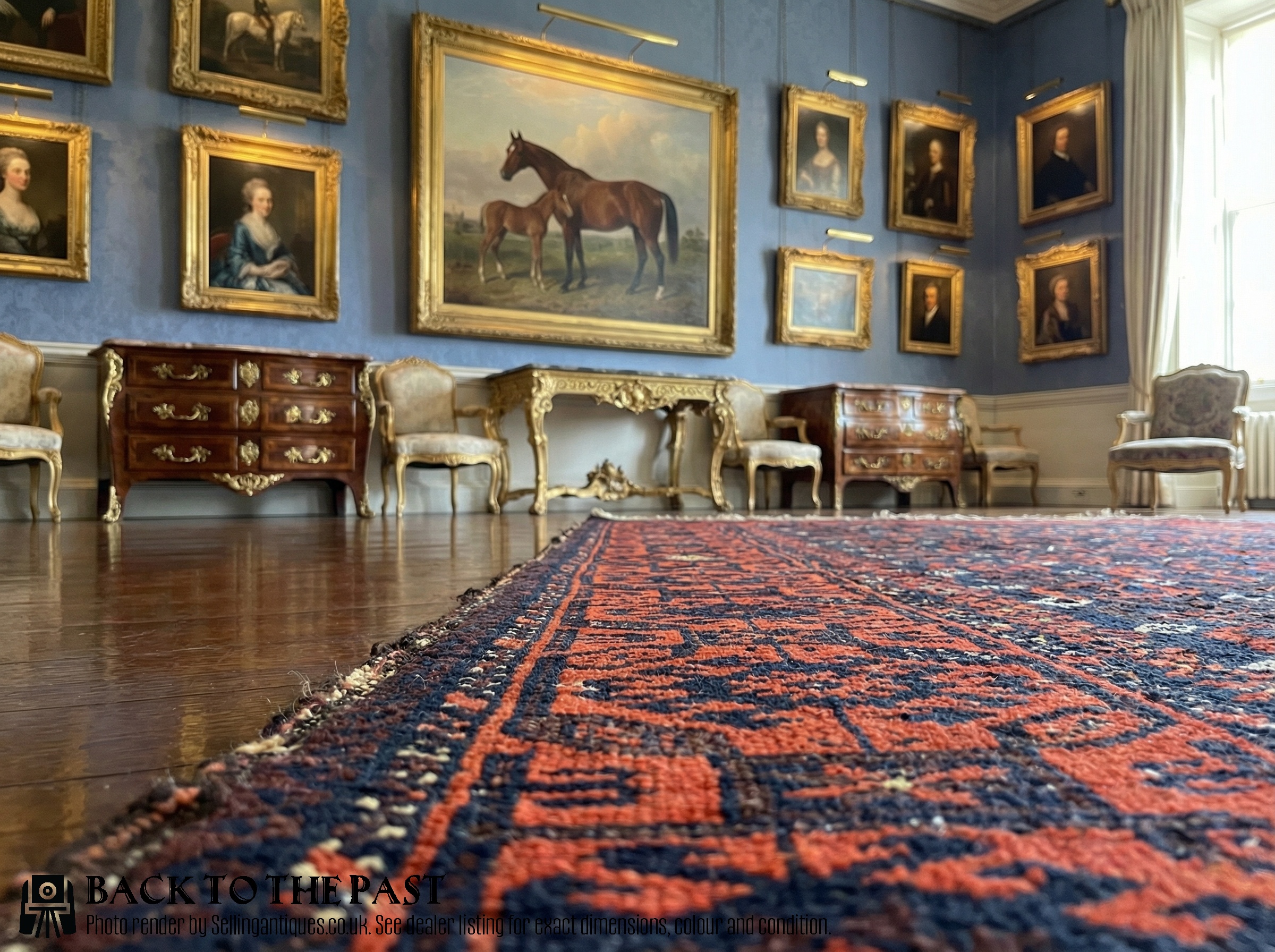
Mina Khani Rug
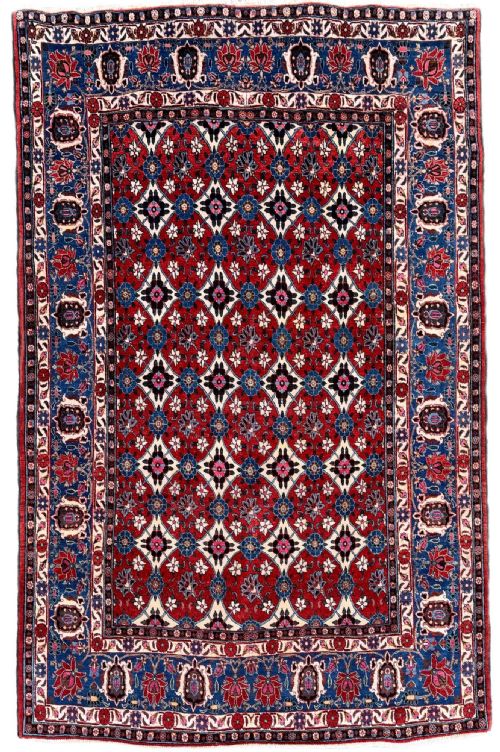
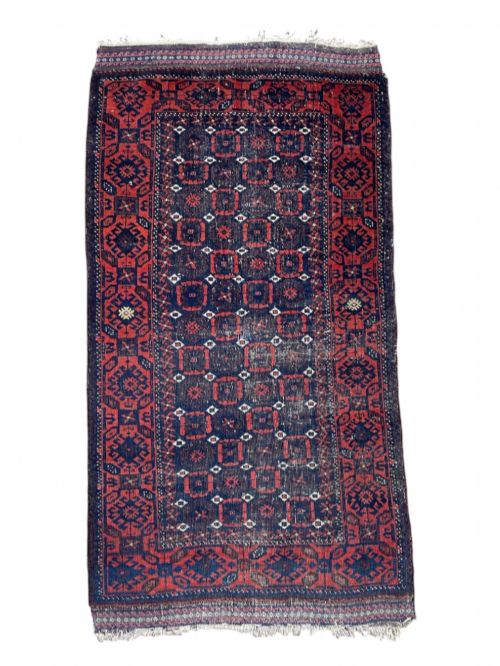
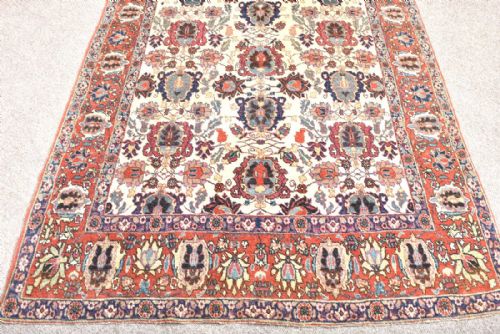
The mina khani rug centres on a repeating geometric grid of flower heads joined by delicate vines, creating an all-over pattern across the field. Buyers searching for this phrase encounter Persian weaving traditions spanning from the late nineteenth century through to the 1930s. The Veramin region and Khorasan Baluch groups provide the majority of these pieces, alongside examples from Bijar, Bakhtiari, Mahal, and Kurdish workshops.
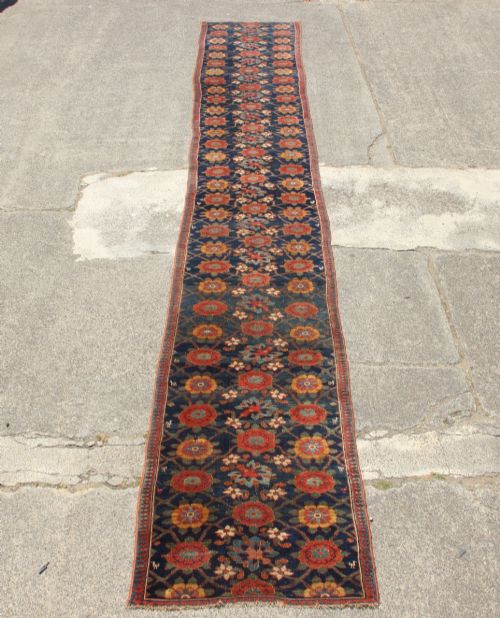
Most pieces on this page take the form of standard area rugs or substantial carpets, while longer runner formats appear for hallway settings. The palette relies on wool foundations carrying traditional regional hues, with mid blue grounds sitting alongside deeper tones. Each piece reflects the specific tribal or village traditions of its origin, maintaining the characteristic floral lattice through generations of hand-knotting.
Materials and construction
These carpets and rugs use wool for the pile and cotton for the structural foundation of warps and wefts. Hand-knotting techniques executed by Persian, Kurdish, and Baluch weavers ensure dense, resilient structures designed to withstand decades of heavy use. Natural dye traditions supply the deep blues and earthy tones found across the pieces from the nineteenth and early twentieth centuries.
The construction varies between the fine knotting of Veramin carpets and the heavier, sturdier handle typical of tribal Baluch and Kurdish pieces. Weavers built the repeating lattice design stitch by stitch, balancing tension across the cotton foundation to keep the geometric grid aligned over large areas.
Mina Khani Rug Retail Price Guide 2026
Typical asking prices for mina khani rug among the pieces listed under this phrase on Sellingantiques today, from the lower quarter to the upper quarter. They describe what is for sale here now, not the wider market.
The inventory includes square area rugs, expansive carpets exceeding three metres, and long narrow runners suited for hallways.
Assessing quality and execution
Quality in these rugs rests upon the precision of the knotting and the crispness of the floral lattice execution. Finer examples display high knot densities that allow the intricate curves of the connecting vines and flower heads to remain sharp and distinct against the ground colour.
The depth and saturation of the wool pile also separate standard village pieces from exceptional town carpets. Better execution shows in the balanced distribution of natural dyes across the field, maintaining visual harmony from edge to edge without abrupt shifts in tone.
The Mina Khani Rug Glossary
- Mina khani
- A traditional Persian all-over pattern composed of repeating floral heads linked by a delicate lattice of curved vines. This design appears frequently in rugs originating from Veramin and Khorasan.
- Veramin
- A region south of Tehran known for producing distinctive carpets and rugs with dense floral and lattice motifs. Pieces from this area often utilise crisp dark blue or red grounds.
- Baluch
- A term describing rugs woven by nomadic and village groups associated with the Baluchistan region. These pieces typically feature tribal motifs and compact formats.
- Bijar
- A town in western Iran famous for producing exceptionally heavy and durable carpets. Weavers here utilised a unique hammering technique on the wefts to create a rigid, long-lasting structure.
- Warp
- The vertical threads stretched tightly on the loom that form the foundational skeleton of the rug. In these pieces, the warp is predominantly made from cotton.
Mina Khani Rug: Frequently Asked Questions
What is a mina khani rug?
A mina khani rug is a hand-knotted Persian textile defined by an all-over repeating pattern of floral heads and connecting vines. These pieces date from the nineteenth and early twentieth centuries, originating from regions such as Veramin, Khorasan, and Kurdistan.
The design forms an infinite geometric grid across the field rather than featuring a single central medallion. This layout gives the surface a balanced, rhythmic appearance that works well in both traditional and contemporary interiors.
Where were these rugs made?
The pieces listed here originate from various districts and tribal territories across Persia, including village workshops and nomadic groups. Veramin, Khorasan, Bijar, and Bakhtiari are among the primary regions represented in these carpets and runners.
Each area brought distinct handling of materials and regional colour palettes to the traditional lattice design. Baluch and Kurdish weavers adapted the motif with their own tribal interpretations and heavier wool textures.
How do I style a large carpet?
Large carpets from this group anchor a room by providing a strong textural and geometric base for surrounding furniture. Placing the main seating group partially or entirely on the rug helps define the living space.
Because many examples feature mid blue grounds or rich earthy tones, they pair effectively with both neutral wooden floors and traditional interiors. The repeating floral pattern adds movement to the floor without overwhelming other decorative elements in the space.
How do I care for antique wool?
Regular gentle vacuuming without a rotating brush roll keeps dust from settling deep into the wool pile of these antique rugs. Professional cleaning suited for vintage textiles helps maintain the integrity of the natural fibres and dyes over time.
Placing a quality underlay beneath the carpet prevents slipping and reduces friction between the cotton foundation and the floorboards. Rotating the rug periodically ensures even wear in rooms with heavy foot traffic.