
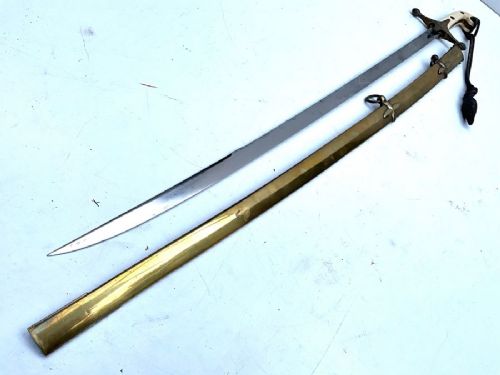
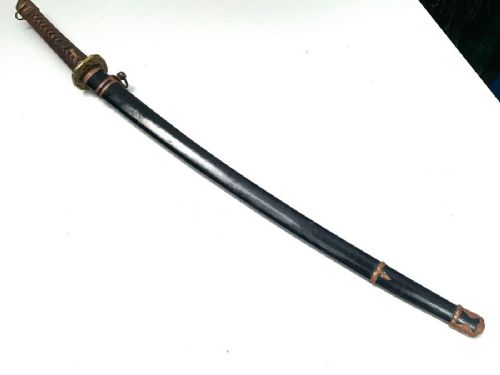


Military Dress Sword
These military dress sword pieces range from nineteenth-century British and French patterns to mid-twentieth-century examples, offering historians and collectors tangible pieces of martial history.
Military Dress Sword
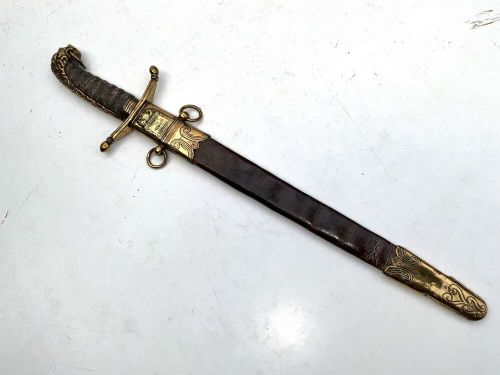
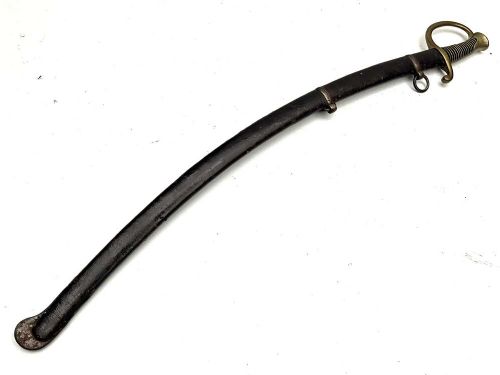
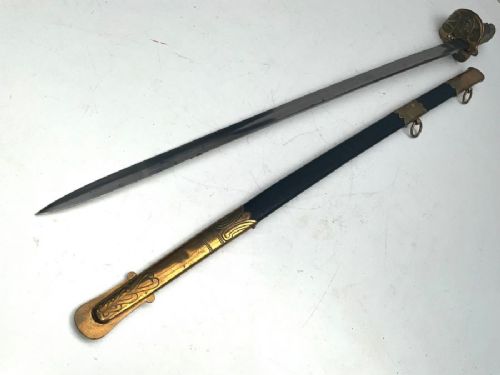
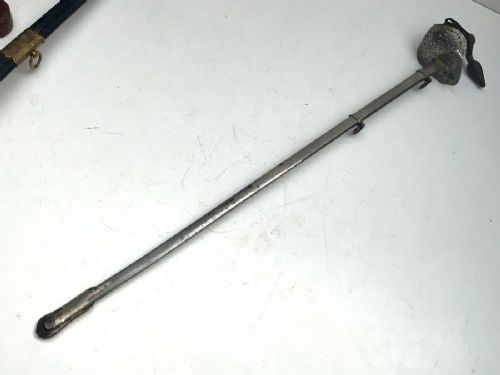
A military dress sword encompasses edged weapons, sabres, and daggers associated with armed forces from the nineteenth century onward. Collectors encounter various forms here, including British, French, German, and Japanese examples dating from eighteen hundred through the Showa period.
Most entries reflect nineteenth-century Victorian military production, alongside mid-twentieth-century items from nineteen forty. These items serve collectors of militaria who study the evolution of military equipment and officer accoutrements across European and global contexts.
How they were made
Construction relies heavily on steel for blades, paired with brass, gilt brass, nickel, and iron for hilts and guards. Artisans incorporated organic and tactile elements such as leather, wood, and wire for grips and scabbards.
Manufacturing techniques varied by origin, encompassing standard military arsenals and individual makers such as Wilkinson. Decorative items utilised cast gilded brass to replicate the intricate basket-guards of cavalry swords for domestic lighting.
Military Dress Sword Retail Price Guide 2026
Typical asking prices for military dress sword among the pieces listed under this phrase on Sellingantiques today, from the lower quarter to the upper quarter. They describe what is for sale here now, not the wider market.
The inventory encompasses swords, sabres, daggers, and cavalry-inspired candlelamps from British, French, German, and Japanese origins.
What varies in quality
Quality differences emerge in the preservation of materials like wire-bound grips, leather scabbards, and etched steel blades. Finer examples maintain the integrity of their original gilt brass mounts and maker signatures.
The precision of assembly between hilt, guard, and blade distinguishes standard-issue military equipment from presentation pieces or refined officer requirements.
H Wilkinson
The Military Dress Sword Glossary
- Mameluke sword
- A curved military sabre inspired by Middle Eastern scimitar designs, adopted by Western cavalry and general officers during the nineteenth century. These swords typically feature distinct cross-guards and curved grips.
- Basket-guard
- A protective metal hilt enclosing the hand with a lattice of bars, commonly seen on cavalry swords and later adapted into decorative items like candlelamps. It provides structural strength and hand defence.
- Sabre
- A backsword with a curved blade intended primarily for cutting, frequently utilised by cavalry forces across nineteenth-century European militaries. Blade curvature and fullness varied according to specific service regulations.
- Dirk
- A long-bladed dagger associated with naval officers and specific historical periods, often worn as part of formal military dress. They reflect the rank and branch of the bearer through specialised mountings.
- Scabbard
- A protective sheath of leather, steel, or iron designed to house an edged weapon when not in use. Surviving scabbards often complete the historical context of the sword.
Military Dress Sword: Frequently Asked Questions
What is a military dress sword?
A military dress sword is an edged weapon carried by officers and cavalry personnel for ceremonial occasions, parades, and formal uniform wear rather than frontline combat. These pieces reflect the official regulations and aesthetic standards of specific historical armed forces.
Examples range from nineteenth-century Victorian patterns to mid-twentieth-century Japanese and German service swords, each bearing the distinct marks of its military origin.
How do I identify periods?
Dating relies on blade patterns, guard designs, and historical inscriptions associated with specific conflicts or reigns. Reference to nineteenth-century Victorian styles or nineteen forty Showa period markers helps establish the timeline.
Maker signatures, such as Wilkinson, and specific pattern years noted in the titles further narrow down the exact manufacturing era of each piece.
How should I display them?
Displaying edged weapons requires secure wall mounts or dedicated display cases that support the weight of the sword and scabbard safely. Stable indoor environments protect organic components like leather and wood from excessive humidity changes.
Keeping steel and brass surfaces clean from moisture preserves the historical finish of the metal.