
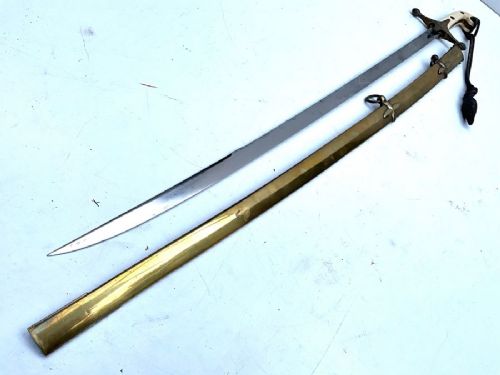


Brass Hilt Sword
A brass hilt sword brings tangible military history into your room, offering solid metal grips and edged steel from centuries of conflict and parade.
Brass Hilt Sword
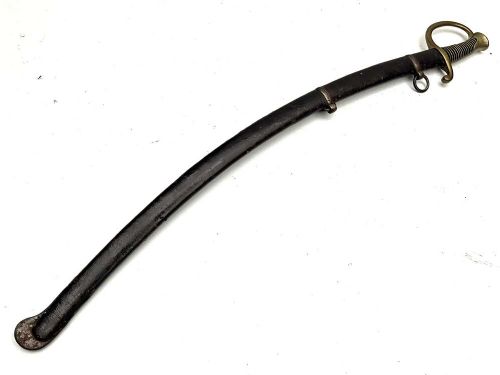
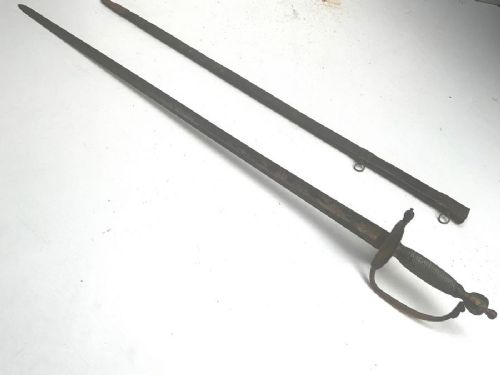
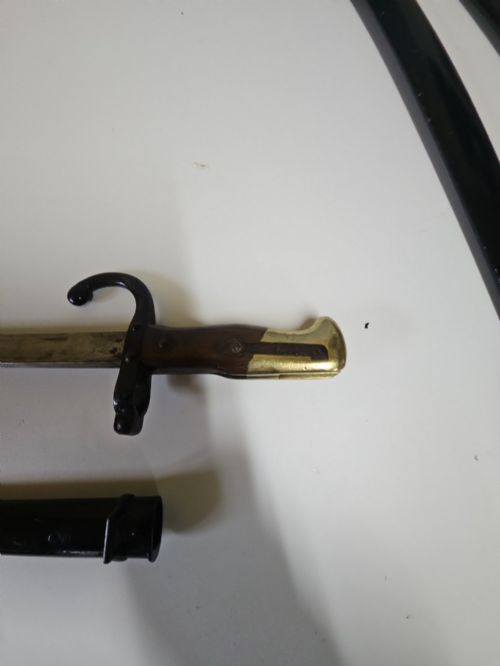
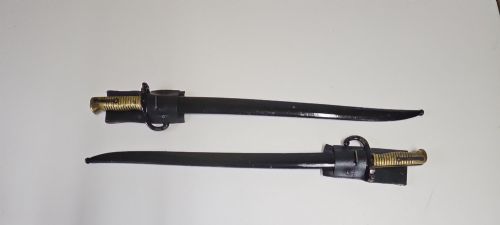
When you search for a brass hilt sword, you encounter edged weapons and related items spanning the Georgian period, the Victorian era, and mid-twentieth century military contexts. The selection includes cavalry sabres, officer spadroons, bayonets, naval daggers, and decorative candlelamps modelled on basket-guard dress swords.
Most examples originate from British, French, American, and German sources, reflecting standard military issue and officer private purchases across the nineteenth century and the twentieth century. Forms range from heavy cavalry sabres to mameluke swords and socket-mounted bayonets.
Domestic interpretations also appear alongside operational militaria, notably gilded brass candlelamps and candlesticks designed with sword-hilt bodies during the nineteenth century. These varied objects demonstrate how military motifs translated into nineteenth century interior decor.
Materials and construction methods
The primary structural components combine cast or forged brass for the hilts and guards with steel for the blades, bayonets, and daggers. Leather, wood, bone, and iron frequently appear in grips, scabbards, and internal mountings.
Surface treatments include blue and gilt finishes on blades, alongside gilded and lacquered brass on hilts and decorative lighting pieces. Fabric components occasionally supplement scabbards and dress knots.
Nineteenth century makers doubled as interior decorators, casting gilded brass sword hilts into functional candlelamps for civilian drawing rooms.
Assessing quality and execution
The distinction between standard service issue and officer-grade pieces lies in the crispness of casting on the brass hilt and the presence of decorative bluing and gilding on the steel blade. Finely chased guards and well-fitted grips separate private purchase weapons from mass-produced military stock.
Survival of original scabbards, whether in leather, steel, or brass-mounted wood, heavily influences the completeness of the piece. Decorative domestic items such as candlelamps rely on the precision of the cast brass sword-hilt bodies to maintain their visual impact.
The Brass Hilt Sword Glossary
- Mameluke
- A curved sword style adopted by Western officers following Middle Eastern patterns. The Victorian general officers version uses a distinctive crossguard and curved grip.
- Sabre
- A backsword with a curved blade designed primarily for slashing cavalry use. Heavy cavalry variants feature robust brass guards and wider blades.
- Bayonet
- A solid blade designed to fit onto the muzzle end of a rifle. Nineteenth century French examples demonstrate socket and Yataghan blade designs.
- Scabbard
- A protective sheath for a sword or dagger blade, constructed from materials such as leather, steel, or wood with brass fittings.
Brass Hilt Sword: Frequently Asked Questions
How do I clean the brass hilt?
Maintenance requires minimal intervention to preserve the historic patina built up over decades or centuries. Light dusting and microcrystalline wax help protect the metal without stripping its character.
Aggressive metal polishes should be avoided because they remove original surface evidence and lower historical integrity.
Were these swords used in battle?
Many nineteenth century patterns saw active service in European conflicts and colonial campaigns, while others served purely for parade and dress uniform wear. Officer-grade weapons were often privately purchased for ceremonial duties rather than combat.
Inspection of edge wear, scabbard fit, and regiment markings often reveals whether a piece experienced active deployment or remained an officer's dress item.
What is a basket-guard?
A basket-guard is an intricate metal hilt design that envelops the hand in a protective web of brass bars or plates. This form provided superior hand defence for cavalry troopers during mounted engagements.
In domestic items, this distinct military silhouette was adapted into decorative nineteenth century candlelamps.
How are periods dated?
Dating relies on official pattern introduction years, maker marks, and stylistic design markers recorded across military archives. A model designated as an 1796 pattern or an 1829 pattern indicates the year the military design was officially approved.
Manufacturing can occur during or decades after the pattern introduction date, depending on regimental demand and ongoing production.