


Antique Officer Sword
An antique officer sword carries the weight of military history, taking the form of steel blades, brass hilts and leather scabbards shaped for service across the centuries.
Antique Officer Sword
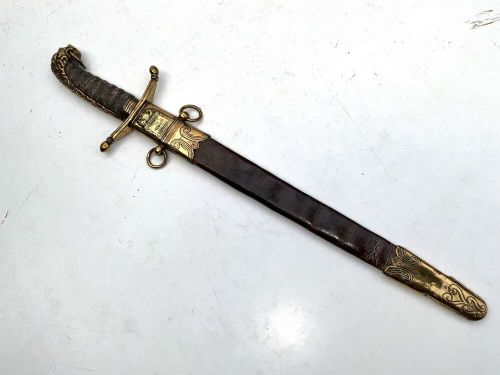
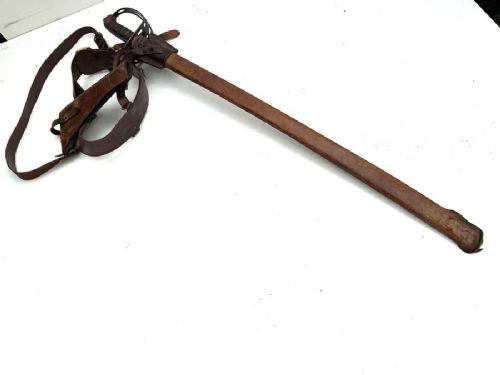
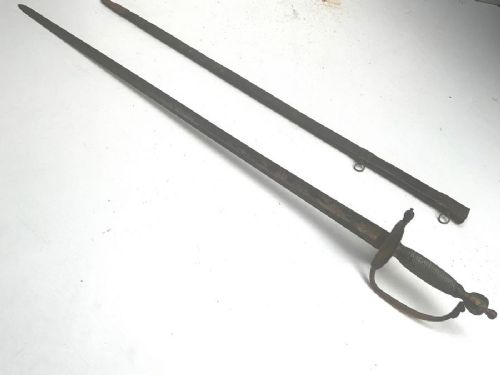
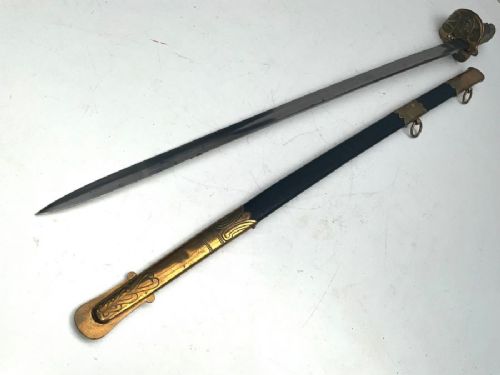
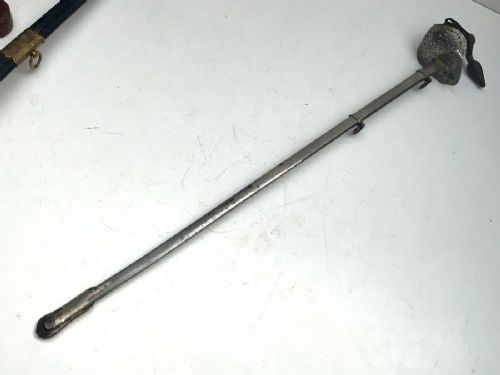
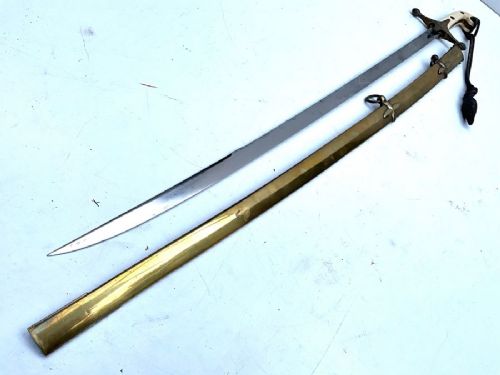
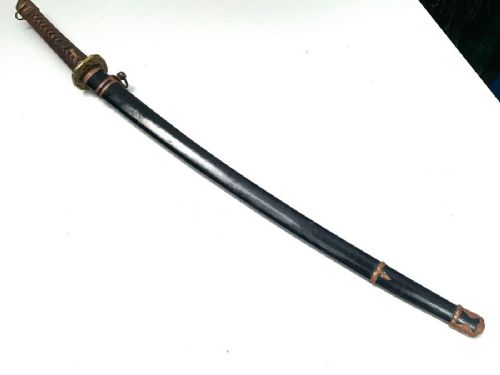
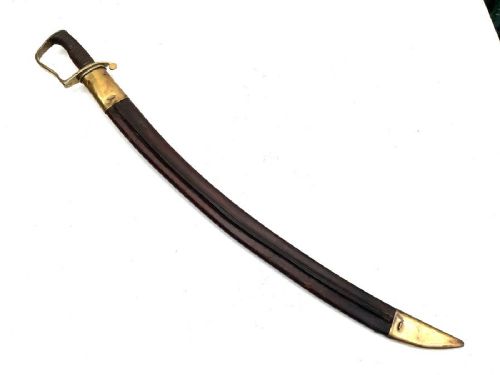
An antique officer sword encompasses edged weapons issued to military leaders and gentlemen from the eighteenth to the mid-twentieth century. The selection ranges from regulation British cavalry sabres and naval dirks to German naval presentation pieces and Japanese Shin-Gunto katanas.
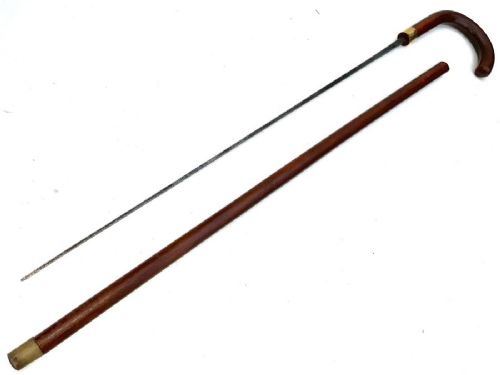
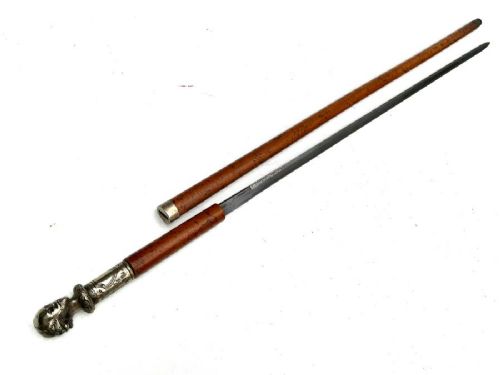
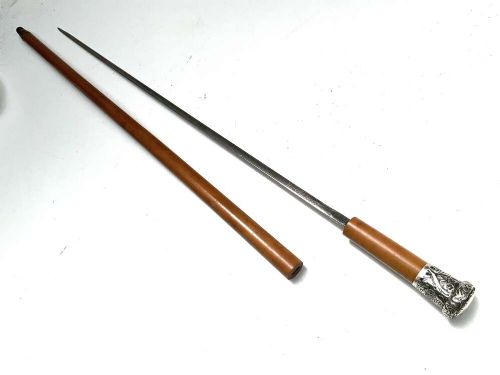
Walking sticks and swagger sticks containing concealed blades also appear alongside traditional sabres and spadroons. These pieces span Georgian, Victorian, Edwardian and mid-twentieth century military contexts.
The version most commonly met on this page is the Victorian military pattern, alongside nineteenth-century British and international examples. Naval dirks, heavy cavalry sabres and disguised sword sticks frequently represent the category.
How they were made
Steel forms the primary blade material, often paired with brass, gilt brass and iron for hilts, guards and mountings. Wooden grips are frequently wrapped in wire, while scabbards combine leather, metal and wood.
Makers utilised specialised forging and blue-and-gilt etching techniques on blades, supplemented by shagreen coverings on grips. Structural assembly relied on traditional metalworking and woodworking methods suited to military service.
Listings feature steel, brass, leather, wood, iron and wire across Victorian, Georgian, Edwardian and Showa periods.
What varies in quality
The distinction between tiers rests upon the prestige of the maker or outfitter and the grade of materials employed in the hilt and blade. Finer examples display crisp etched blading, robust wire-bound grips and well-fitted leather or metal scabbards.
Presentation and regulation pieces exhibit clear variations in ornamentation, from gilt brass mountings to bespoke blue and gilt finishes. Maker signatures on the ricasso elevate the historical standing of a piece.
E Thurkle of Soho·H Wilkinson·Whiteman Outfitter
The Antique Officer Sword Glossary
- Spadroon
- A lightweight single-edged cutting and thrusting sword favoured by infantry officers in the eighteenth and nineteenth centuries. It bridges the gap between smallswords and heavy sabres.
- Dirk
- A short dagger historically carried by naval officers as a sidearm. These pieces often feature ornate hilts and compact leather scabbards.
- Swagger stick
- A short cane or stick carried by military officers as a symbol of authority. Some examples incorporate concealed blades.
- Shagreen
- A prepared skin, often shark or ray skin, utilised for wrapping sword grips to ensure a secure hold. Its textured surface provides both grip and decorative value.
Antique Officer Sword: Frequently Asked Questions
How do I identify a Victorian officer sword?
A Victorian officer sword typically exhibits regulation guard patterns associated with nineteenth-century British military dress. Cyphers or specific blade etchings often denote the reign during which the piece was commissioned.
Examination of the hilt materials, such as brass or wire-bound grips, helps confirm the nineteenth-century production period.
Were sword sticks used by military officers?
Military officers utilised walking sticks and swagger sticks containing concealed blades as part of walking out dress or informal uniform. These pieces offered a discreet personal sidearm.
Examples from the late nineteenth and early twentieth centuries survive with integrated locking mechanisms for the blade.
How should I care for an antique steel blade?
Maintaining an antique steel blade requires a light application of microcrystalline wax or specialist oil to prevent active rust. Keeping the piece in a stable environment away from high humidity preserves both the metal and the leather scabbard.
Avoid aggressive cleaning agents that might remove historical patina or blue-and-gilt finishes.