


Vintage Military Blade
These vintage military blade pieces are edged weapons and tactical knives from various global conflicts, offering collectors a tangible connection to martial history.
Vintage Military Blade
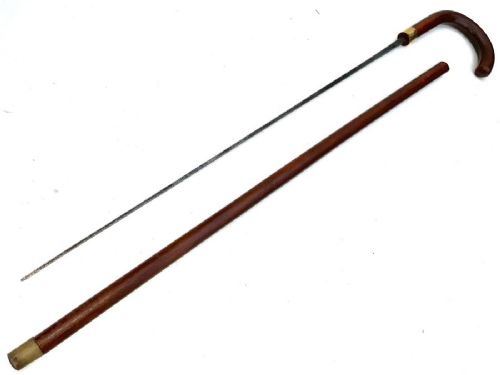
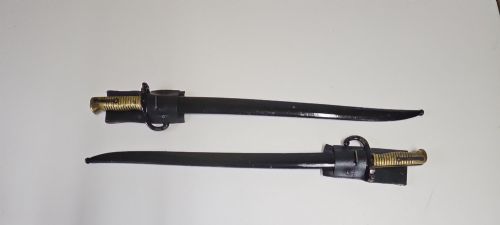
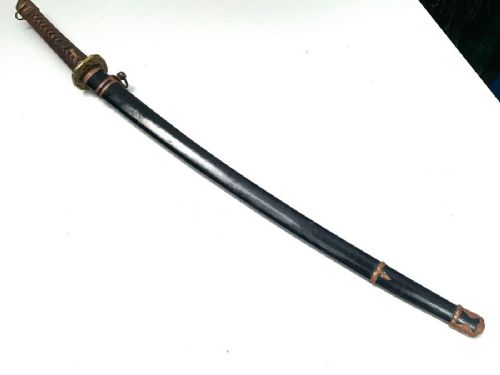
When you search for a vintage military blade, you are looking at edged weapons, daggers, swords, and bayonets issued for service or carried by officers and troops across multiple centuries. These objects range from Victorian cavalry sabres and nineteenth-century frontier swords to twentieth-century commando knives and Showa period Japanese swords. You will also encounter walking sticks concealing blades alongside unusual combination pieces like pinfire pistols fitted with foldaway bayonets.
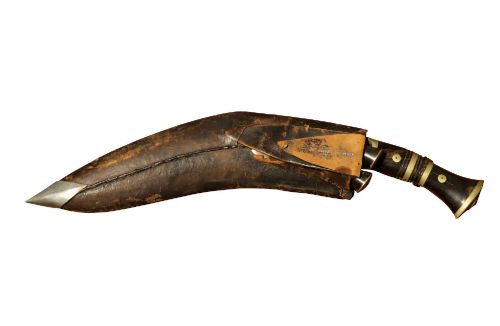
The versions you are most likely to meet on this page hail from the Victorian era up through the Second World War. Examples include Gurkha kukris complete with original scabbards and companion knives, Lee-Metford pattern bayonets, and German or Japanese officers' swords. Regional pieces such as Nepalese kora-type swords and Anglo-Afghan war knives also appear regularly among the military antiques.
Materials and construction
The construction of a vintage military blade relies heavily on forged steel for the cutting edges, paired with durable mountings of brass, iron, and wood. Scabbards and grips frequently incorporate leather, hardwood, horn, and cord wrap to ensure a secure hold and protect the metal.
Makers utilised traditional metalworking and blade-smithing techniques appropriate to the origin and period of the weapon. Engraved details on blades and cast or turned elements on hilts and walking stick handles reflect the manufacturing standards of military contractors and regional smiths.
Some officers preferred their defence discreet, packing a concealed sword inside an ordinary walking stick.
Judging quality and condition
The standard of a vintage military blade depends on the integrity of the steel, the crispness of any engraved markings, and the survival of original components like scabbards and companion knives. Pieces that retain their matching parts and show honest service wear without heavy pitting command greater interest among collectors.
Artisanal execution in the hilt fittings, grip materials such as horn or hardwood, and specialised forms like custom engraving or regional forging techniques further separate standard issue pieces from finer examples. The preservation of historical context, from dated bayonets to officers' walking sticks, dictates the standing of each piece.
The Vintage Military Blade Glossary
- Bayonet
- A blade designed to be attached to the muzzle of a firearm for close combat. These appear frequently in nineteenth-century military configurations.
- Kukri
- A distinctive heavy, recurved knife originating from Nepal, typically issued with a scabbard and smaller companion knives.
- Scabbard
- A protective sheath for a sword, dagger, or bayonet, constructed from materials like leather or metal to preserve the blade.
- Sabre
- A backsword with a curved blade intended primarily for slashing, commonly associated with cavalry forces from the Victorian era and earlier.
- Shin-Gunto
- A Japanese military sword produced for officers during the Shoda period of the twentieth century.
Vintage Military Blade: Frequently Asked Questions
How do I identify a vintage military blade?
Examine the overall form, blade geometry, and any visible markings or dates stamped onto the ricasso or hilt. Materials like steel, brass, and hardwood paired with specific military patterns point to their era of service.
Compare the piece against known historical types, such as Victorian cavalry sabres or twentieth-century commando knives, to confirm its origins and intended branch of service.
Were these blades used in combat?
Many items found in this category were manufactured for active military service, carried by officers and enlisted personnel across various global conflicts. Some show the distinct marks of field use and age.
Others functioned as walking stick concealments or swagger sticks for officers, serving a ceremonial or secondary defensive purpose rather than frontline combat.
How should I display a sword or knife?
Mount your edged weapon securely on a wall using specialised brackets that support the weight without damaging the scabbard or blade. Keep the display away from direct sunlight and damp environments to protect the metal and organic grip materials.
If storing the piece flat, use a dedicated cabinet lined with non-reactive material to prevent accidental knocks and maintain stable humidity levels.
How do I care for antique steel?
Apply a very light coat of microcrystalline wax or specialist museum-grade oil to the steel surface to protect it from moisture and active corrosion. Avoid using abrasive cleaners or modern metal polishes that can remove historical patina and stamps.
Inspect the blade periodically and handle it with clean gloves to prevent natural skin oils from transferring to the metal and causing tarnishing over time.