




19th Century Military Sword
A 19th century military sword carries the weight of statecraft and combat, offering collectors edged weapons forged in steel, brass and iron.
19th Century Military Sword
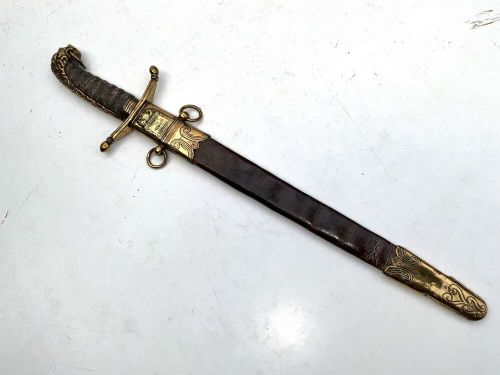
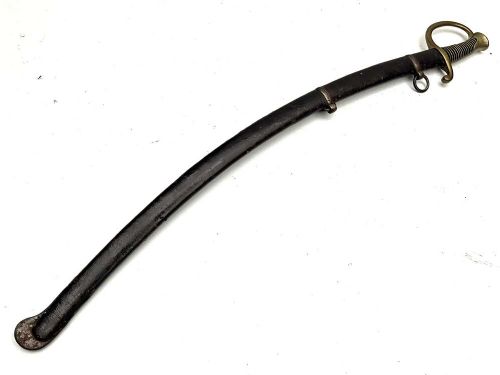
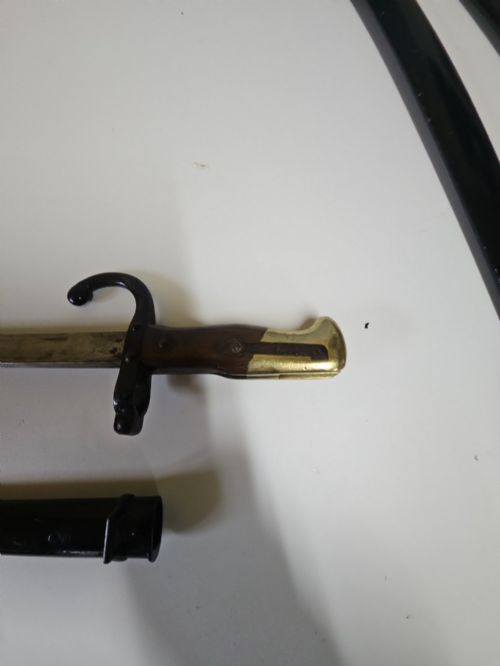
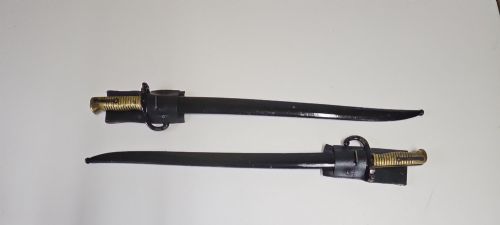
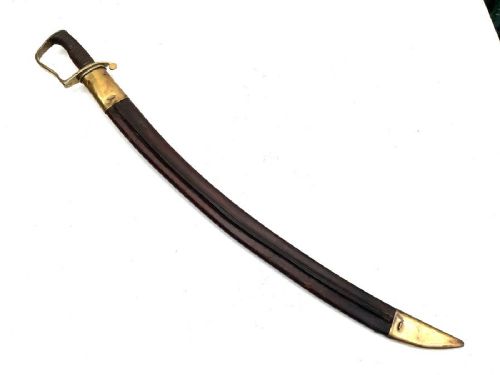
A 19th century military sword encompasses heavy cavalry sabres, naval dirks, bayonets and daggers spanning the Victorian era through the Napoleonic period. These edged weapons reflect standard military equipment produced for British, French and American services.
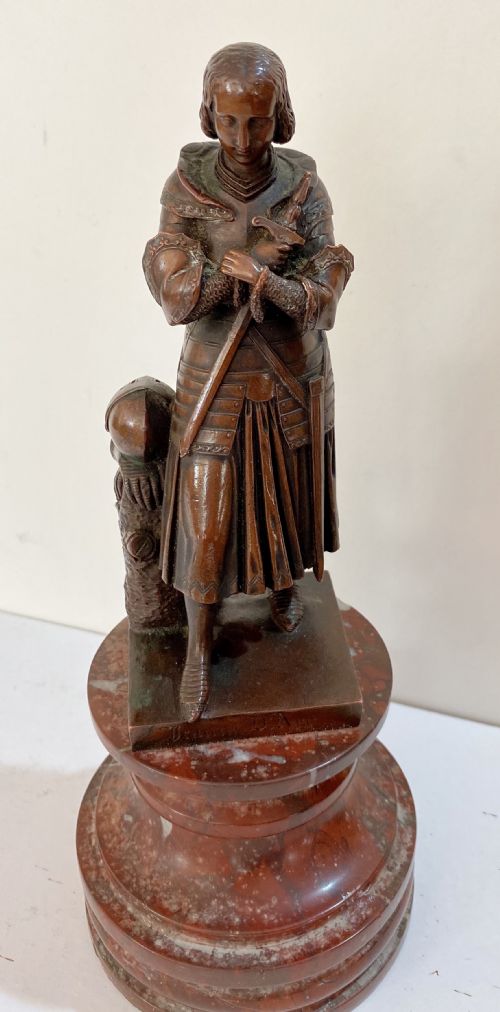
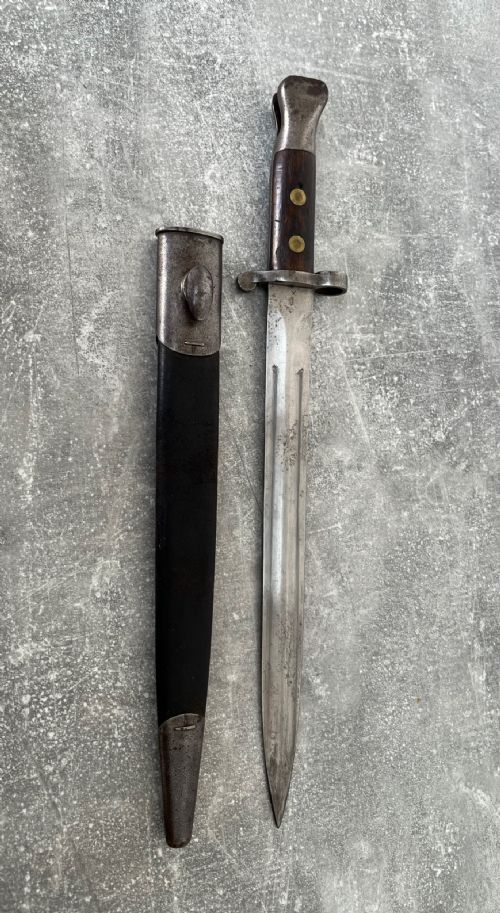
The pieces on this page range from British pattern sabres and French cavalry swords to bayonets and commemorative bronze sculptures. Buyers encounter both fighting blades and dress weapons carrying the distinct marks of nineteenth-century armouries.
Naval dirks and heavy cavalry sabres represent the core forms available, alongside specialised bayonets designed for service rifles. Each object records a specific military utility from the eighteen-hundreds.
Materials and Construction
Blades are forged from steel, paired with hilts constructed from brass, gilt brass, iron and bronze. Grips incorporate wire wrapping, leather and wood to secure the hand during combat or ceremonial use.
Maker signatures and patterns are etched or stamped directly onto the steel blades near the ricasso. Metal mounts and guards demonstrate period casting techniques typical of nineteenth-century military manufacturing.
Admiral Sir William Sidney Smith once paused his naval duties long enough to pose holding both a sword and a torch.
Assessing Quality and Execution
Quality in a 19th century military sword rests upon the crispness of the maker mark, the integrity of the steel blade and the tightness of the hilt assembly. Superior examples retain original wire wrapping on the grip and unblemished metal surfaces.
The distinction between standard issue pieces and high-grade officer swords appears in the depth of blade etching, the quality of gilt brass mountings and the balance of the weapon in the hand.
E Thurkle Of Soho·H Wilkinson
The 19th Century Military Sword Glossary
- Ricasso
- The flat section of a sword blade immediately below the hiltguard where makers typically stamped their details.
- Sabre
- A backsword with a curved blade intended primarily for cutting, commonly used by cavalry forces.
- Bayonet
- A solid blade designed to be fitted to the muzzle of a rifle for close combat.
- Dirk
- A short dagger carried by naval officers as part of their service dress uniform.
- Gilt brass
- A brass base metal treated with a thin layer of gold to improve appearance and prevent tarnish.
19th Century Military Sword: Frequently Asked Questions
How do I identify a British pattern?
British patterns are typically identified by specific numerical designations tied to the year of adoption, alongside inspection stamps and maker marks stamped near the hilt.
Examination of the blade geometry and guard style further clarifies the exact military branch and period of issue.
Were these swords used in battle?
Many nineteenth-century swords saw active service in conflicts ranging from the Napoleonic Wars to the American Civil War and colonial engagements.
Other examples served purely as dress weapons for officers during formal parades and court functions.
How should I display a heavy sabre?
Heavy cavalry sabres require sturdy wall brackets or horizontal display mounts capable of supporting significant steel and brass weight safely.
Keep the metal away from direct sunlight and damp environments to preserve the leather grips and steel finish.
What maintenance do steel blades need?
Steel blades benefit from a very light application of micro-crystalline wax or specialised oil to protect the surface from atmospheric moisture.
Avoid aggressive cleaning methods that might remove historical patina or obscure original maker stamps.