

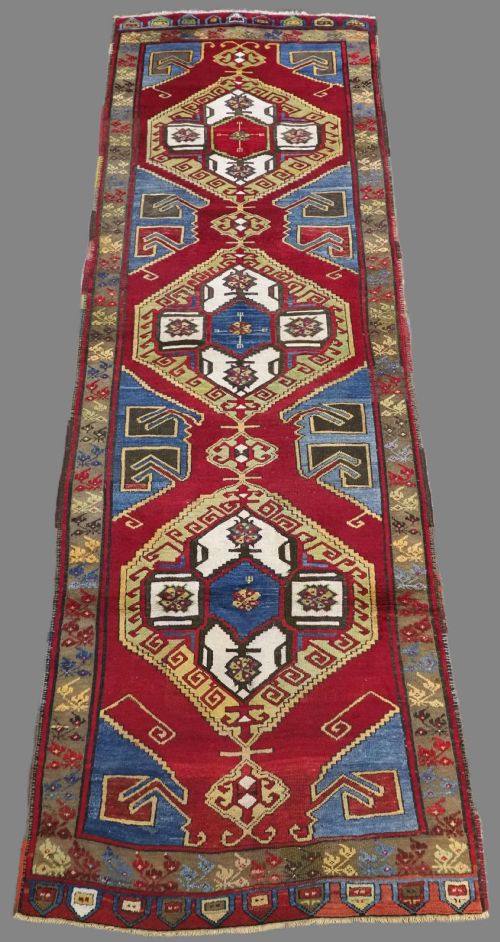


Middle Eastern Floor Rug
A middle eastern floor rug brings rich pattern and enduring wool warmth to a room, offering centuries of weaving heritage for modern spaces.
Middle Eastern Floor Rug
When you search for a middle eastern floor rug, you encounter hand-knotted and hand-woven pieces originating from Persia, Turkey, and Afghanistan. These floor coverings range from compact tribal prayer mats to large palace-sized carpets produced across the late nineteenth and early twentieth centuries.
The selections available here lean heavily into traditional Persian styles, including Kashan, Tabriz, Malayer, and Hamadan designs. Alongside these Persian works, regional tribal pieces such as Afshar, Baluch, and Anatolian Konya carpets appear frequently.
Buyers select these textiles for their distinct regional motifs, varied medallion layouts, and rich natural palettes. Each piece reflects the specific weaving traditions of the village, tribe, or urban workshop from which it originated.
What varies in quality
The fineness of the knot count and the precision of the underlying structure largely determine the sophistication of the weave. Higher knot densities permit intricate curves in floral designs and sharper definition in geometric tribal patterns.
The choice of wool and the depth of the dye saturation contribute significantly to the visual longevity of the textile. Superior materials retain their supple handle and retain rich hues across decades of use.
Current listings span from eighteen seventy to nineteen forty, featuring traditional Persian styles alongside Anatolian and Afghan tribal weaves.
Benlian
The Middle Eastern Floor Rug Glossary
- Pile
- The upright yarn loops that form the soft surface of a rug. This upper layer absorbs wear and displays the woven pattern.
- Warp
- The vertical threads stretched tightly on the loom that form the structural skeleton of the textile. Wefts are then interlaced across these foundational threads.
- Prayer rug
- A small format textile featuring a distinct mihrab or arch design at one end. Historically, worshippers used these portable rugs for daily prayers.
- Hand-knotted
- A construction method where individual strands of yarn are tied by hand to the warp threads. This labour-intensive process creates durable carpets with identical patterns visible on both the face and reverse.
Middle Eastern Floor Rug: Frequently Asked Questions
How do I clean an antique rug?
Gentle surface vacuuming without a beater bar removes loose grit and dust effectively.
Professional specialist washing remains essential for deep cleaning to protect delicate wool and cotton foundations.
Where should I place my rug?
These textiles suit low-traffic living areas, studies, and bedrooms where heavy foot traffic is minimised.
A quality underlay prevents slipping and cushions the wool pile against hard flooring.
How do I identify a tribal rug?
Tribal pieces often display geometric repeating motifs, asymmetrical layouts, and earthy palettes woven by nomadic or village communities.
Urban workshop pieces, by contrast, frequently feature refined symmetrical floral medallions and curved vines.
What does a prayer design look like?
A prayer design incorporates a distinct pointed arch motif, known as a mihrab, at one end of the field.
This architectural element traditionally pointed toward Mecca during use.