

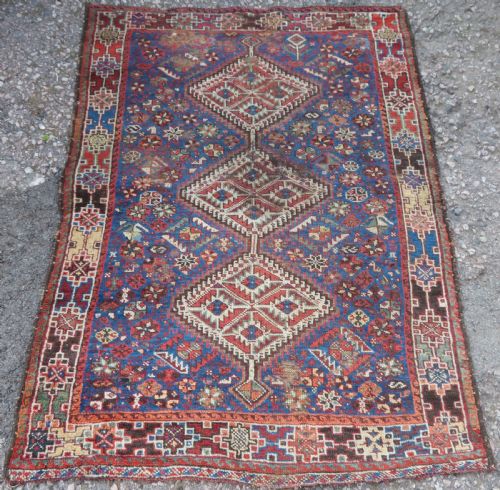
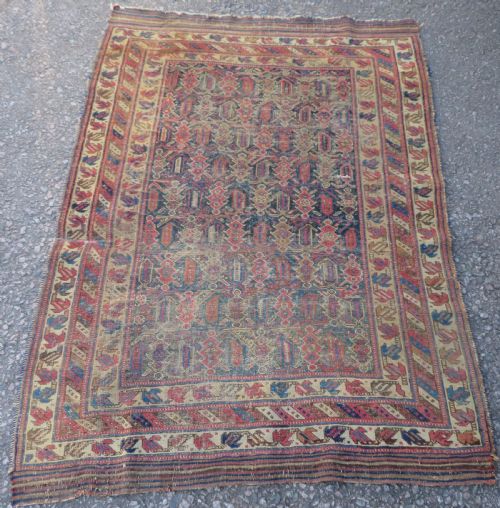
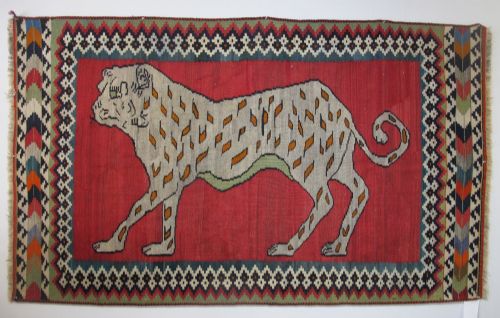
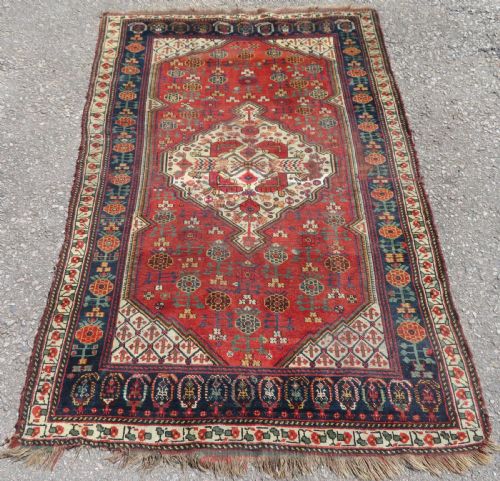
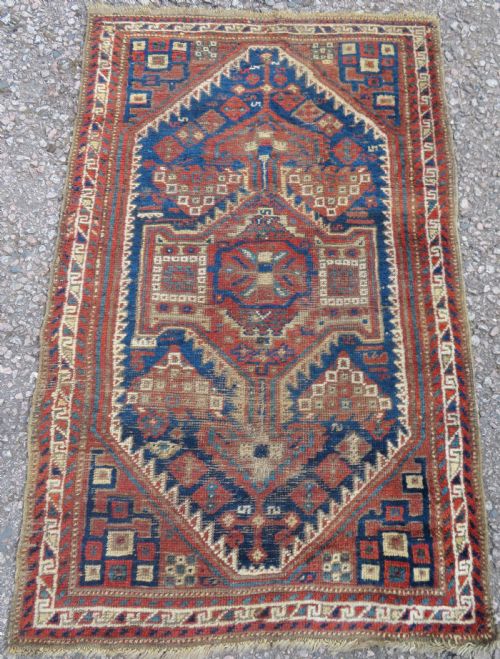
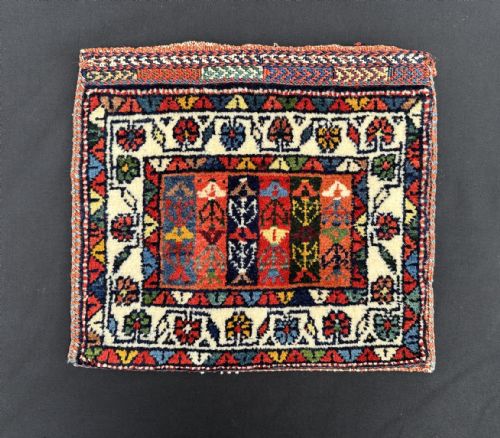
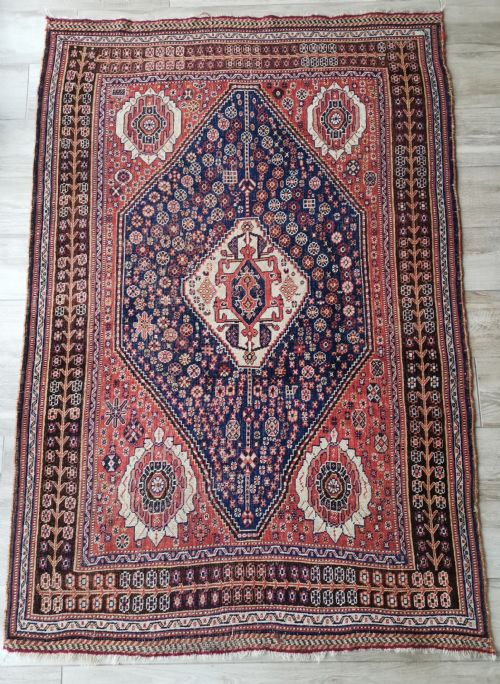
Vintage South Persian Rug
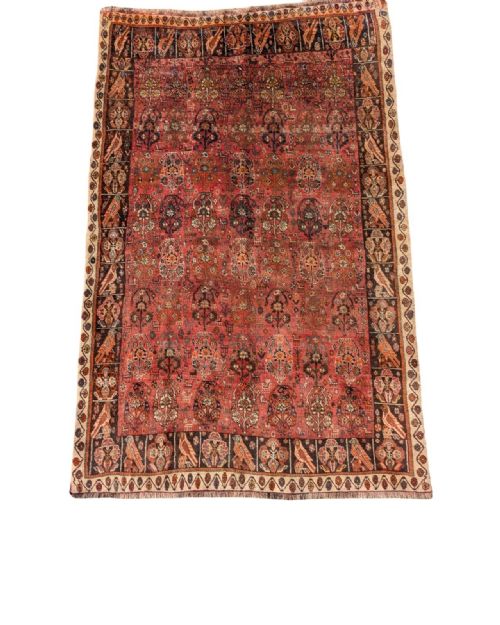
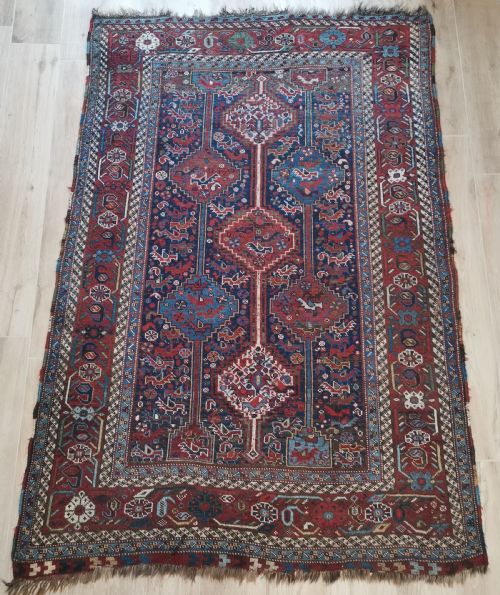
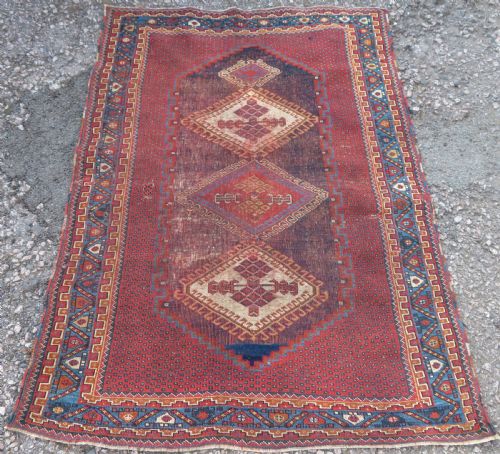
A vintage south persian rug brings the rich nomadic heritage and expressive geometric weaving of the southern tribal confederacies directly onto the floor.
Vintage South Persian Rug
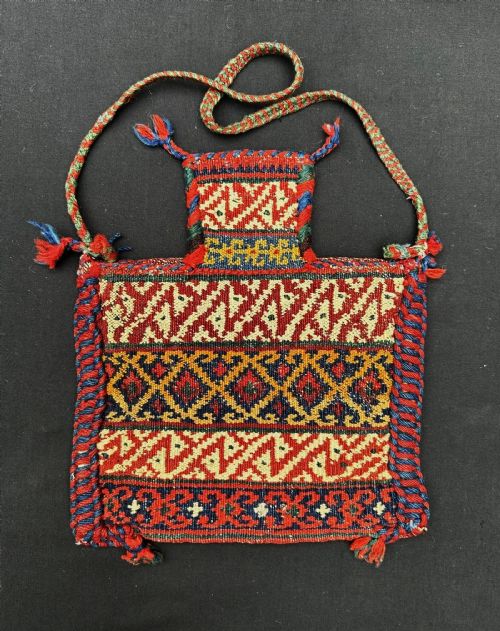
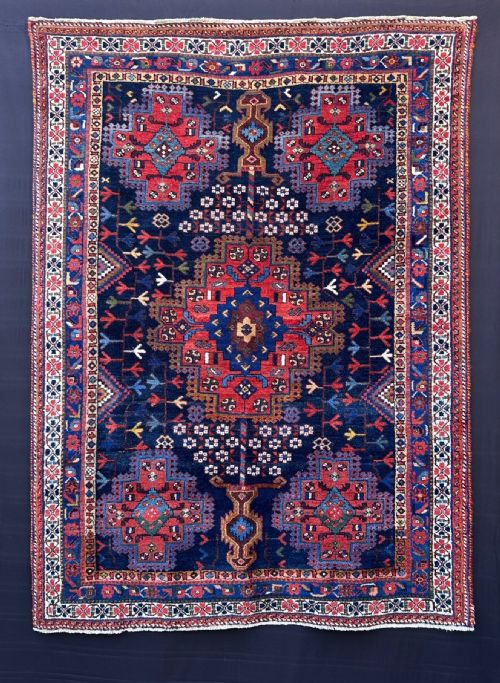
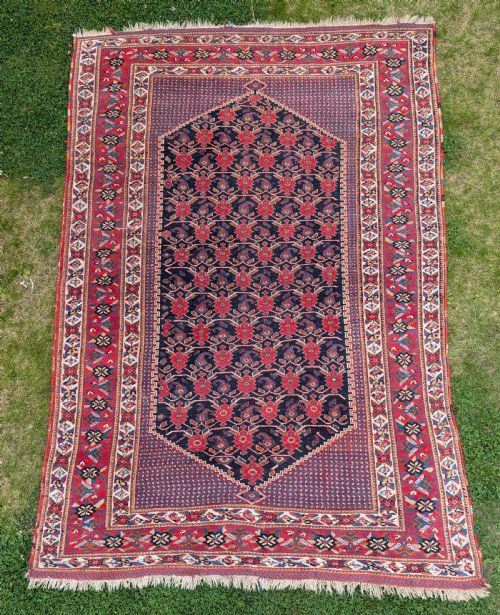
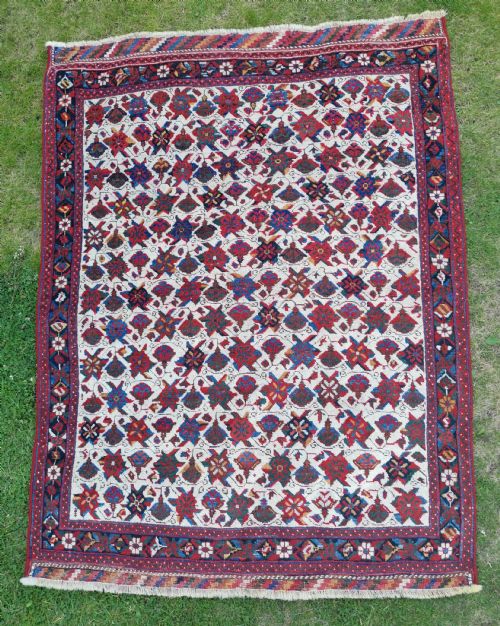
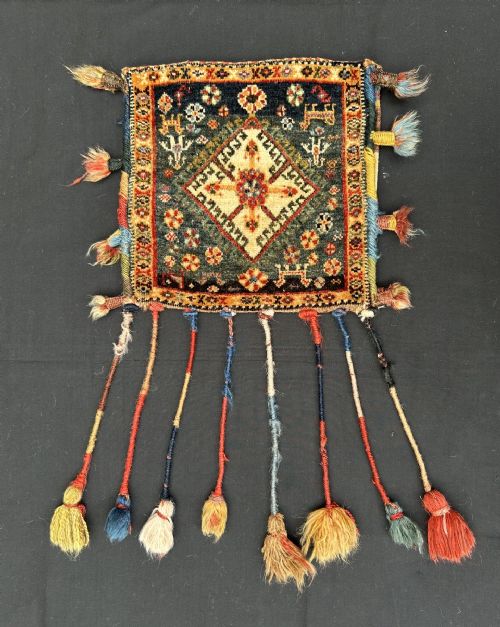
When searching for a vintage south persian rug, buyers encounter tribal weaving originating from nomadic groups and confederacies such as the Afshar, Qashqai, Khamseh, and Luri. The selection spans floor rugs and carpets alongside practical tribal textiles like storage pouches, vanity bags, bread sofrehs, and wall hangings.
The objects date from the nineteenth century through the early decades of the twentieth century, reflecting traditional village and tribal production methods. Most pieces display distinct regional characteristics linked to Fars Province, Kerman Province, and the Neiriz region.
Materials and construction
These textiles are hand-woven utilising wool and hand-spun wool foundations, often paired with cotton elements in later examples. Natural dyes provide the palette, creating deep colour variations across the wool pile and flat-woven surfaces.
Nomadic workshops and tent weavers also incorporated wood, leather, and tribal storage components into utilitarian items like cradles, pipe bags, and horse or camel transport pouches.
Evaluating the weaving
Quality rests upon the fineness of the hand-weaving, the integrity of the wool, and the complexity of the tribal design motifs such as tree of life patterns or animal figures. Pieces with well-preserved natural dyes and tightly packed knots demonstrate superior craftsmanship.
The condition of the wool pile and the structural stability of the flat-weave or pile sections dictate the grade, distinguishing everyday utility items from master weaver tribal carpets.
The Vintage South Persian Rug Glossary
- Kilim
- A flat-woven carpet or textile produced without a pile. These pieces rely on warp and weft interweaving to form geometric patterns.
- Sofreh
- A tribal spreading cloth or dining cloth used for kneading and serving bread. They often feature minimalist field designs.
- Kelleh
- A long, narrow format carpet traditionally suited to specific room dimensions in Persian domestic architecture.
- Kashkuli
- A sub-tribe of the Qashqai confederacy known for exceptionally finely knotted carpets and rugs. Their textiles frequently display high wool quality.
- Neiriz
- A town and district in the Fars region associated with Afshar weaving traditions. Rugs from this area often show distinctive medallion layouts.
Vintage South Persian Rug: Frequently Asked Questions
How do I identify tribal designs?
Tribal designs typically feature repeating geometric motifs, stylised flowers, animals, medallions, and tree of life imagery rather than the curved floral court designs found in city rugs. Each confederacy utilised characteristic colour palettes and symbol systems.
Examining the weave structure and wool type also helps connect a piece to specific nomadic groups operating in southern Persia.
Where were these rugs made?
The pieces originated in the southern provinces of Persia, particularly Fars and Kerman, where nomadic tribes and confederacies migrated seasonally. Weavers produced them inside tents or small village settlements.
Towns such as Neiriz served as local trading hubs where these tribal textiles were gathered and marketed.
How should I care for antique wool rugs?
Protect the wool pile by placing a breathable rug underlay beneath the textile to prevent sliding and reduce friction against hard floors. Vacuum gently using suction only, avoiding the rotating brush bars that can pull hand-spun wool fibres.
Keep the textile out of direct sunlight to protect the natural dyes from fading, and consult a specialist in antique oriental carpets for professional washing.