
Mid 19th Century Seating
Mid 19th century seating brings solid timbers and upholstered comfort together, offering practical places to sit with strong period character.
Mid 19th Century Seating
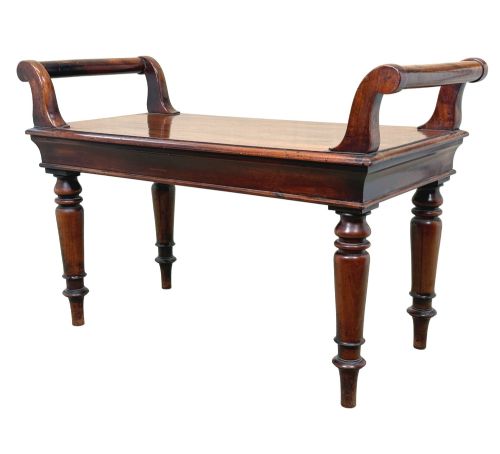
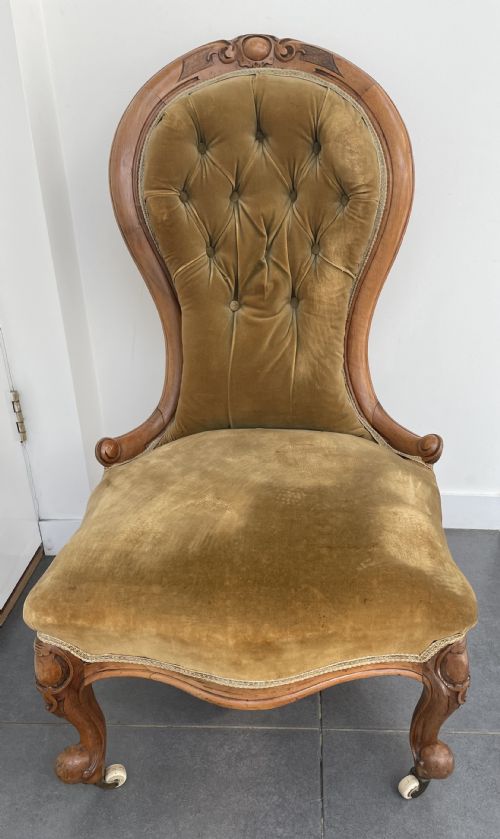
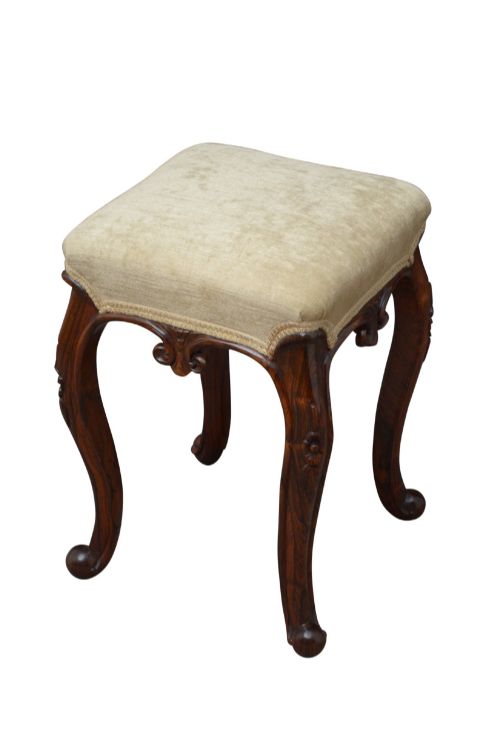
Mid 19th century seating encompasses a wide variety of domestic forms, ranging from dining chairs and armchairs to hall benches, window seats, and stools. Buyers searching for mid 19th century seating most frequently encounter dining sets, library armchairs, and nursing or slipper chairs from the Victorian era.
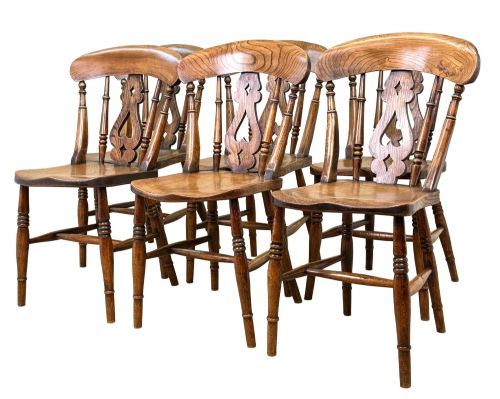
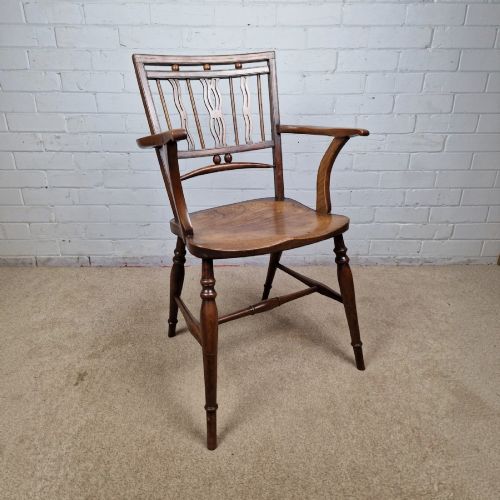
The regional diversity within these listings is considerable, covering formal mahogany pieces made in England alongside robust country Windsor chairs fashioned from ash and elm. Specialised regional variants such as Mendlesham chairs and Channel Islands hall chairs also appear, reflecting distinct local cabinet-making traditions.
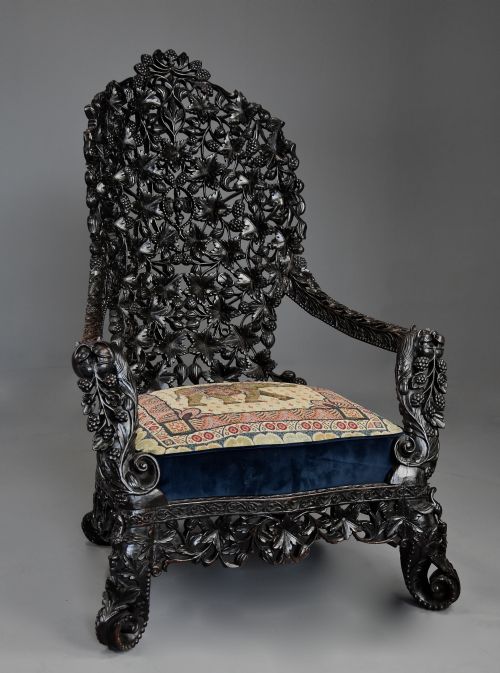
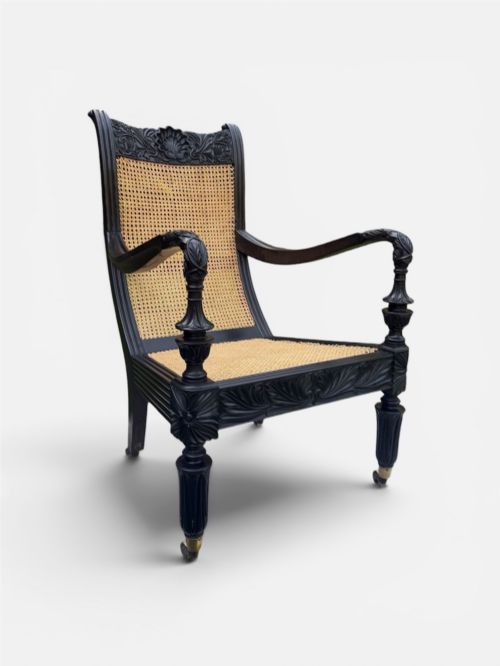
Imported materials and international influences shape several notable pieces, seen in Anglo-Indian carved armchairs utilising dense tropical hardwoods. Alongside these, standard domestic seating utilises native British timbers such as oak, walnut, and yew wood.
Timbers and Construction
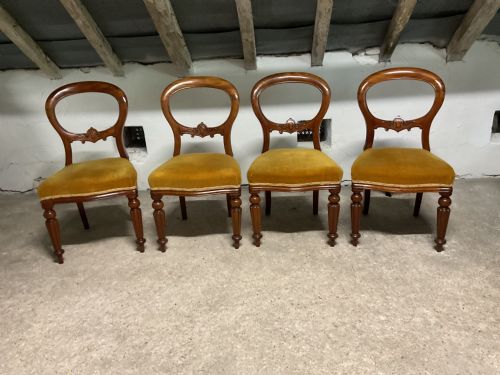
Cabinet-makers relied heavily on durable hardwoods like mahogany, rosewood, and walnut for formal parlour and dining furniture, frequently shaping them with balloon backs or cabriole legs. Country seating took a different approach, turning to combinations of ash, elm, and oak to construct sturdy stickback and Windsor forms.
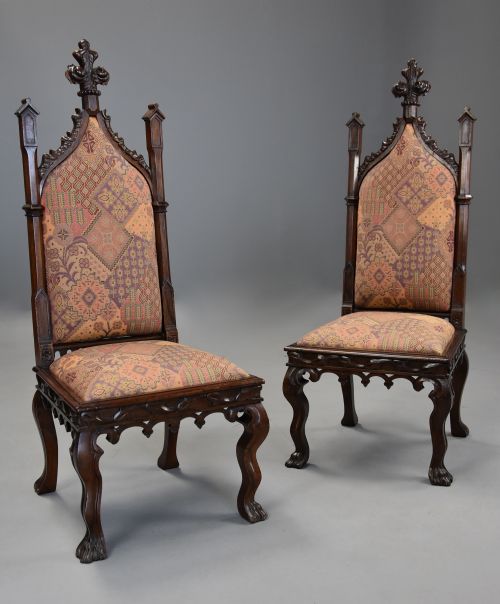
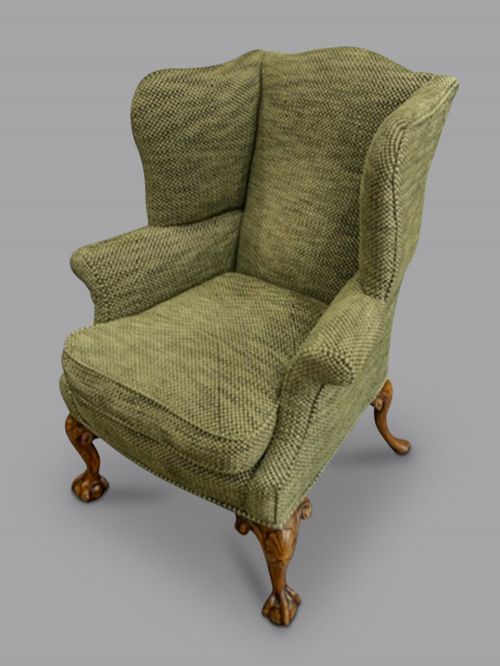
Joinery methods varied according to the intended use, employing traditional mortise and tenon joints for robust country frames and detailed carving for Gothic revival or decorative hall chairs. Upholstered pieces integrated webbing and horsehair stuffing beneath outer coverings of fabric, leather, or velvet.
Rest easy knowing that mid 19th century sleeping figures and campaign chairs have quietly anticipated every modern nap.
Craftsmanship and Material Selection
The distinction between ordinary production and top-tier work rests on the choice of timber and the precision of the carving. Superior pieces utilise figured woods such as burr elm, burr maple, or solid rosewood, paired with deep, crisp hand-carved ornamentation rather than shallow moulding.
Attribution to documented workshops or makers elevates certain items, distinguishing standard regional output from pieces carrying maker labels or distinct stylistic signatures associated with prominent cabinet-makers.
W.A. Willcocks·Gillows·Howard and Sons
The Mid 19th Century Seating Glossary
- Windsor chair
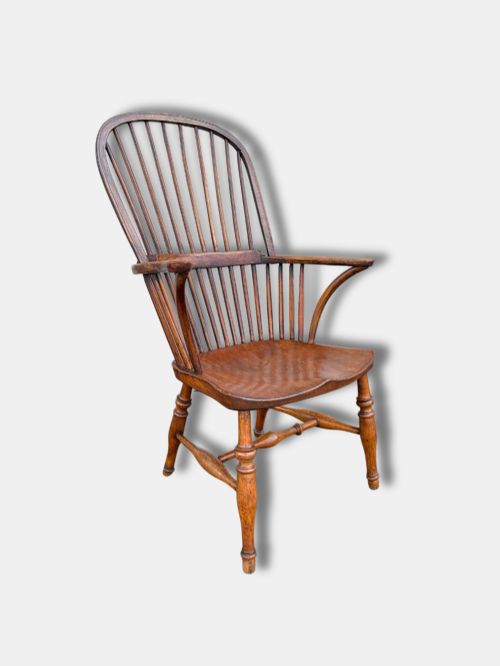
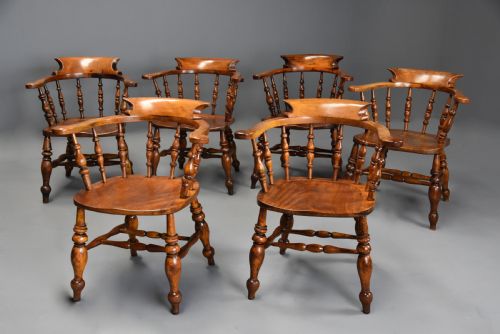
- A wooden chair built with a heavy solid saddle seat into which the legs and back spindles are wedged directly. These country pieces often combine elm seats with ash or yew frames.
- Balloon back
- A rounded, continuous backrest frame shaped like a balloon, commonly found on Victorian dining and side chairs made of mahogany or walnut.
- Smokers bow
- A sturdy, low-backed Windsor armchair with a rounded arm rail, frequently utilised in public houses or smoking rooms during the nineteenth century.
- Hall chair
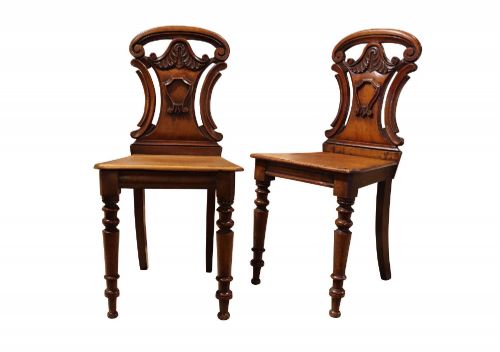
- A stiff, entirely wooden chair intended for a hallway or entrance space, often featuring a carved or painted family crest on the solid back panel.
- Goncalo Alves
- A dense, highly figured tropical American hardwood utilised for cabinet-making and decorative furniture items during the Victorian period.
- Padouk
- A heavy, durable reddish-brown tropical timber frequently employed in Anglo-Indian furniture production.
Mid 19th Century Seating: Frequently Asked Questions
What is a Windsor chair?
A Windsor chair is a traditional wooden seat constructed by inserting individual spindles and legs directly into a thick, shaped solid wood saddle seat. They rely on turned components and steam-bent parts rather than standard upholstered frames.
These chairs were widely produced in country regions utilising local timbers like ash, elm, and yew. Their sturdy construction made them enduring staples of farmhouse kitchens and cottages.
What is a nursing chair?
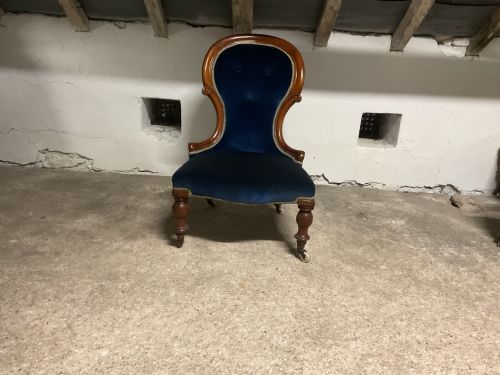
A nursing chair is a low-seated upholstered armchair designed originally for sitting close to a nursery fire or feeding infants. The reduced height distinguishes them from standard parlor armchairs.
They frequently feature padded seats and backs covered in fabric, velvet, or floral upholstery, often supported on short turned wooden legs with castors.
How do I care for antique wood seating?
Antique wood seating requires stable indoor humidity and protection from direct sunlight to prevent the timber from drying out or splitting. Regular dusting with a soft, dry cloth preserves the polished finish of hardwoods like mahogany and rosewood.
Harsh chemical cleaners should be avoided in favor of traditional beeswax polishes applied sparingly when the wood appears dry.