
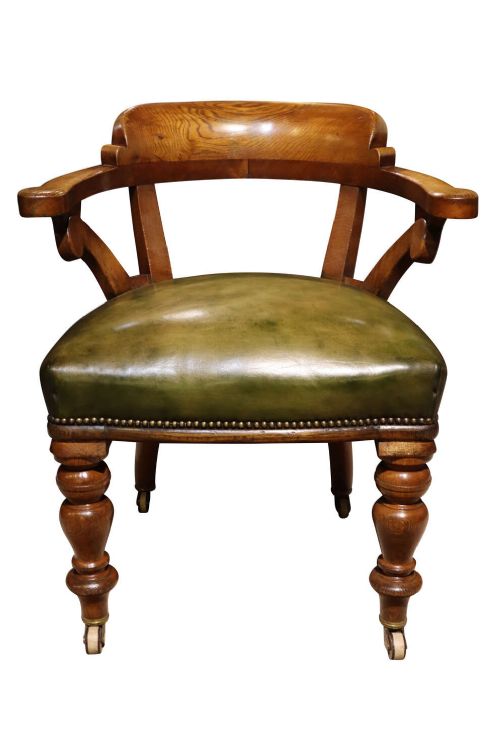
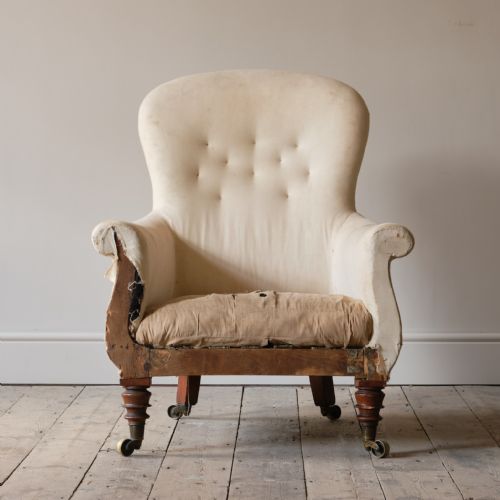
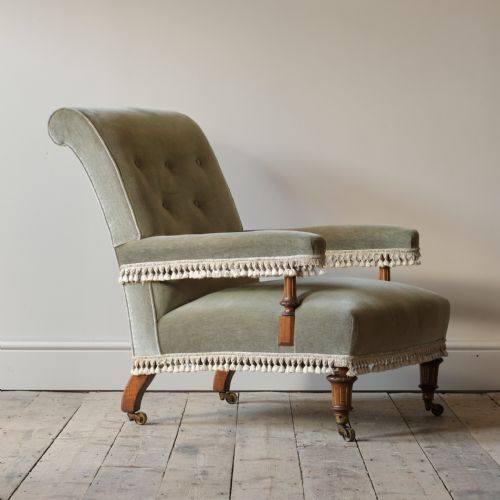
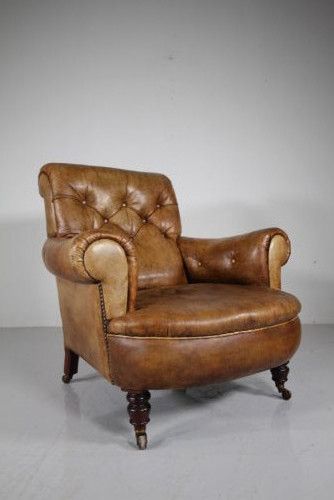
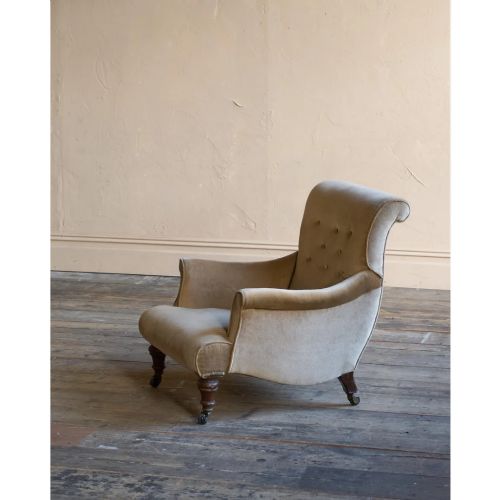
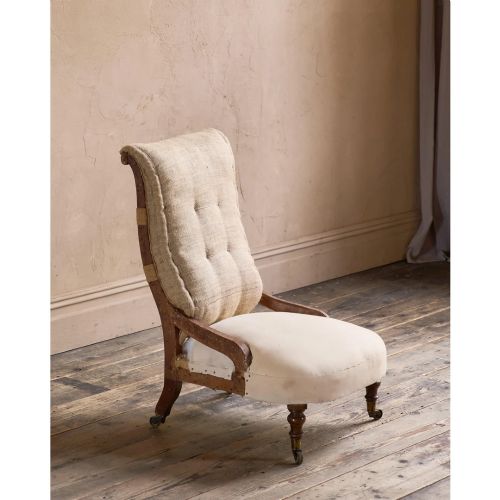
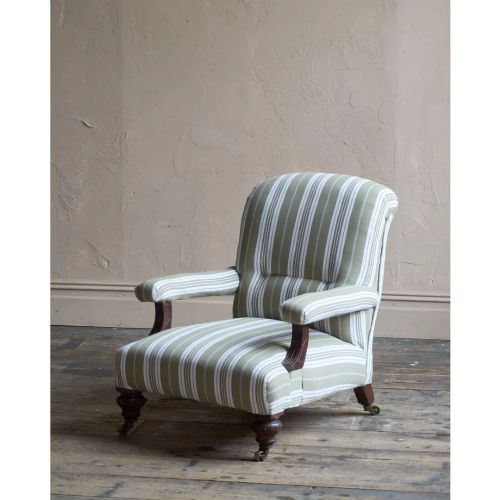
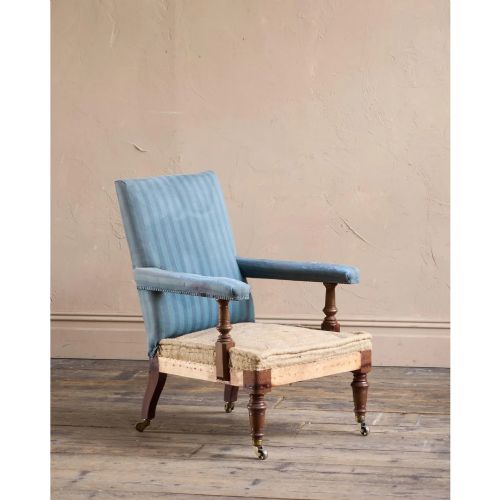
Turned Leg Library Chair
A turned leg library chair is a sturdy seat built for long hours at a desk or in a study, valued for solid timber frames and comfortable upholstered forms.
Turned Leg Library Chair
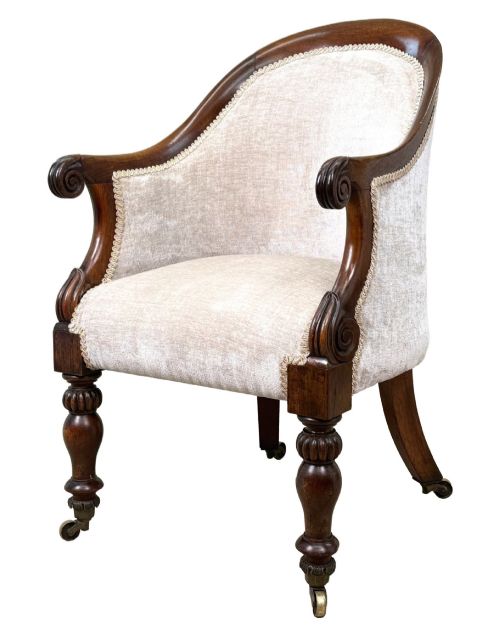
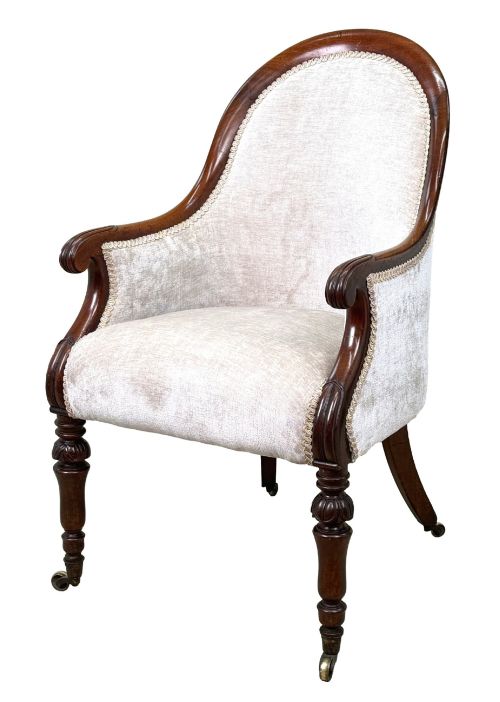
A turned leg library chair brings together comfortable seating and practical proportions designed for studies, offices, and country house libraries. Buyers hunting a turned leg library chair will find pieces spanning the Regency, William IV, and Victorian periods, alongside later Edwardian examples.
Makers and workshops recorded in the past and present include Gillows, Howard and Sons, Holland & Sons, Morison and Co, Robert Strahan, and William Birch. These pieces serve as functional seating that anchors a traditional room.
How they were made
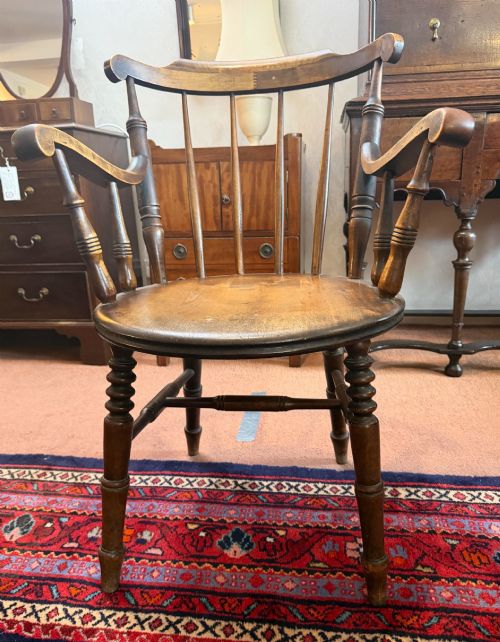
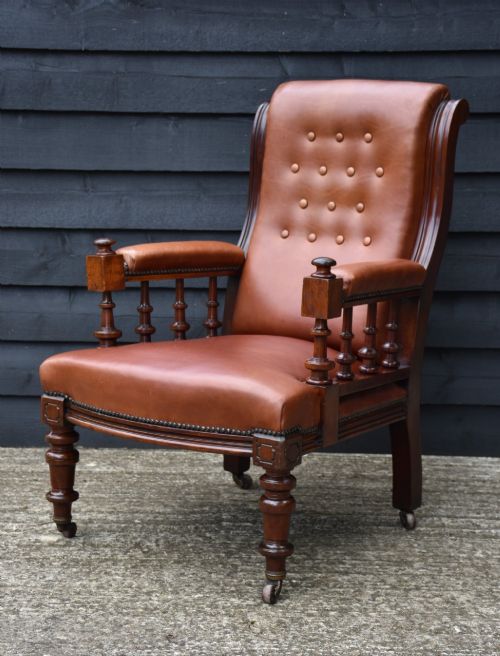
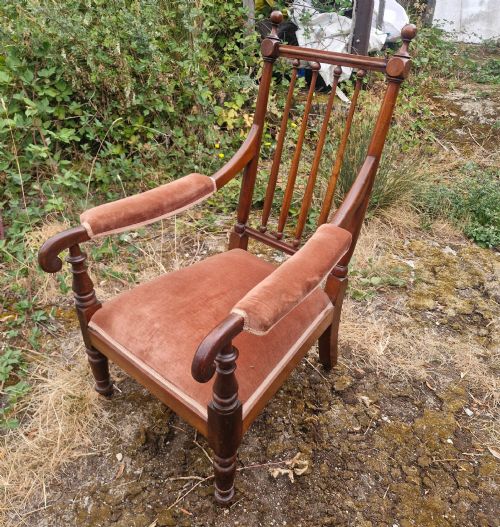
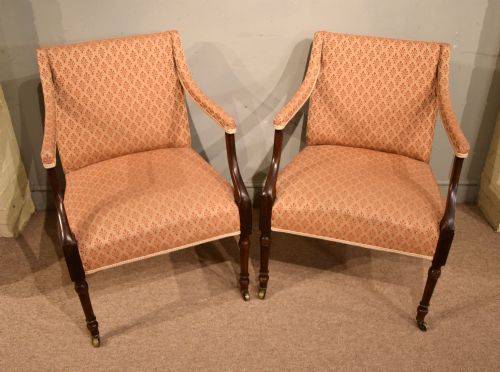
Timbers such as mahogany, walnut, ash, and oak form the structural frames, shaped by hand-turning on a lathe to create the characteristic turned legs. These wooden supports are frequently mounted with brass cappings and castors for mobility across carpets and floorboards.
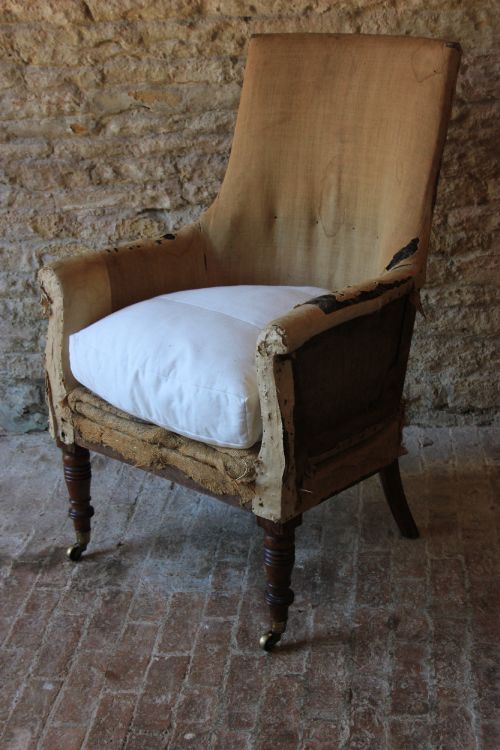
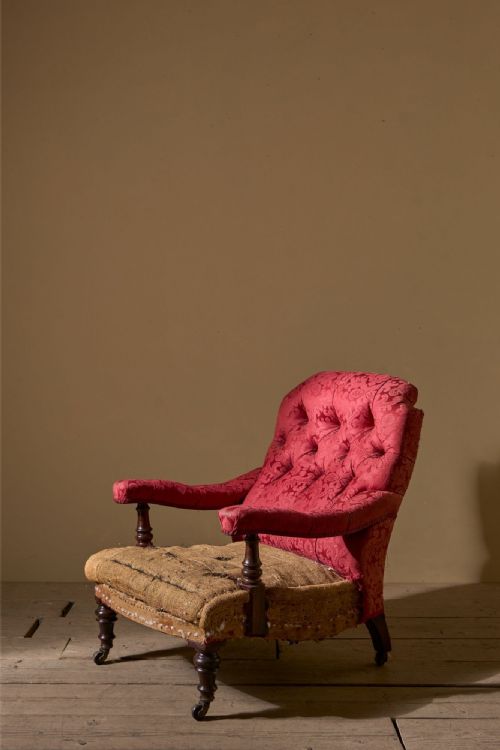
Upholstery techniques rely on traditional stuffing materials like horsehair held by hessian and calico, finished with top coverings of leather, velvet, fabric, or original morocco leather. Spindle backs, spoon backs, and deep-sprung seats provide the support engineered into each frame.
Listings feature 19th Century, Regency, 1850, 1860, 1880, Victorian, 1870, and 1900 periods.
What varies in quality
The distinction between standard commercial seating and top-tier workshop production lies in the weight of the timber and the precision of the frame joinery. Superior pieces display crisply turned wooden elements and heavy-gauge brass castors that indicate maker attribution.
Upholstery execution and the retention of original leather or period coverings alter the character of individual chairs. Balance in the proportions and the crispness of carved details separate workshop-stamped examples from ordinary country furniture.
Gillows·Howard and Sons·Holland & Sons·Morison and Co·Robert Strahan·William Birch
The Turned Leg Library Chair Glossary
- Tub chair
- An armchair with a continuous curved back and arms forming a rounded enclosure. This form provides enclosing comfort for reading and writing.
- Morocco leather
- Goat skin tanned with sumac, noted for its fine grain and durability. It serves as a traditional writing-desk and library chair covering.
- Castor
- A small wheel mounted on a swivel attached to the foot of a leg. It allows heavy armchairs to move easily across floor surfaces.
- Hessian
- A coarse woven fabric made from jute or hemp fibres. It acts as the foundational webbing beneath upholstery stuffing.
- Bergere
- An enclosed upholstered armchair with exposed wooden framing and woven cane panels. It appears in refined drawing rooms and libraries.
Turned Leg Library Chair: Frequently Asked Questions
What is a library chair?
A library chair is a sturdy upholstered armchair designed for long periods of reading or writing at a desk. These seats prioritise comfort and lumbar support above decorative carving.
They appear in studies, libraries, and large country houses, often featuring leather upholstery to withstand daily use.
How do I identify a Regency chair?
Regency chairs date from the early nineteenth century and display classical restraint influenced by ancient Greek and Roman design. Look for dark mahogany timbers, reeded components, and clean architectural lines.
Decoration is sparing, relying on subtle brass inlay or neat turned elements rather than heavy carving.
Are these chairs suitable for daily desk work?
Many of these pieces function well as desk chairs, particularly the captain's chairs and lower tub models. Their solid frames and supportive upholstered backs accommodate extended sitting.
Checking the seat height against modern desk measurements ensures comfortable daily use.
What wood was used most often?
Mahogany and walnut dominate the mid-nineteenth century production, offering rich grain patterns and structural strength. Oak and ash appear more frequently in country house models and utilitarian desk seating.
Turned legs on these pieces make extensive use of hardwood turned on a lathe for uniform weight distribution.