


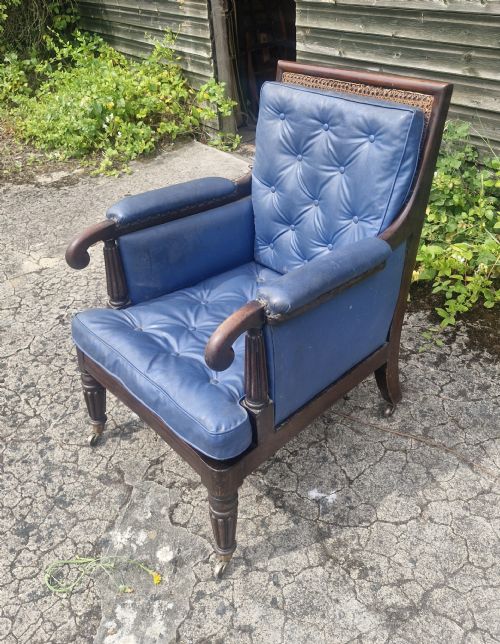
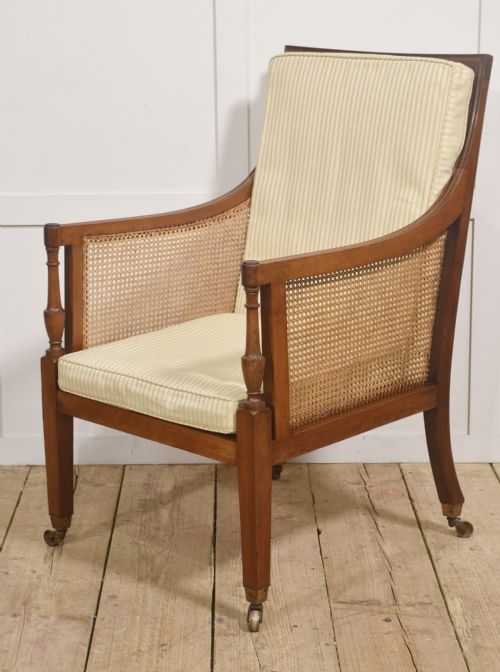


Caned Mahogany Library Chair
A caned mahogany library chair offers deep, comfortable seating in rich timber, combining sturdy construction with woven panels for daily reading.
Caned Mahogany Library Chair
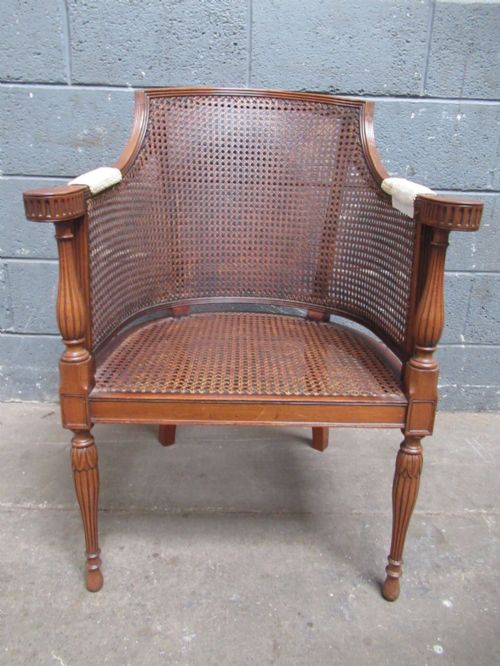
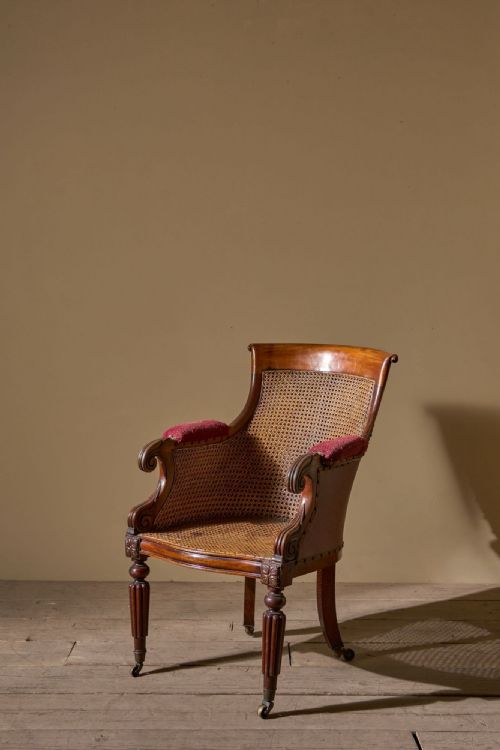
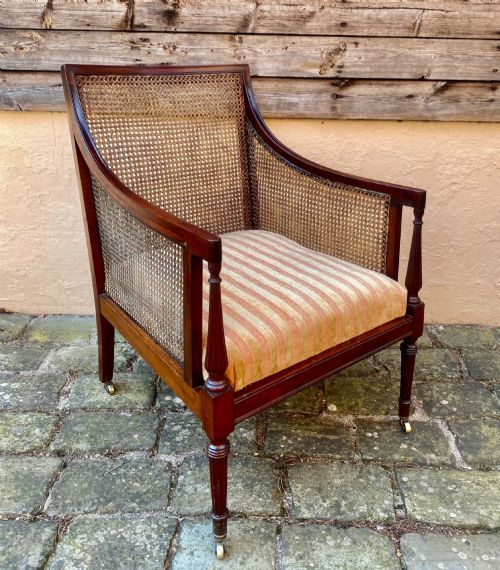
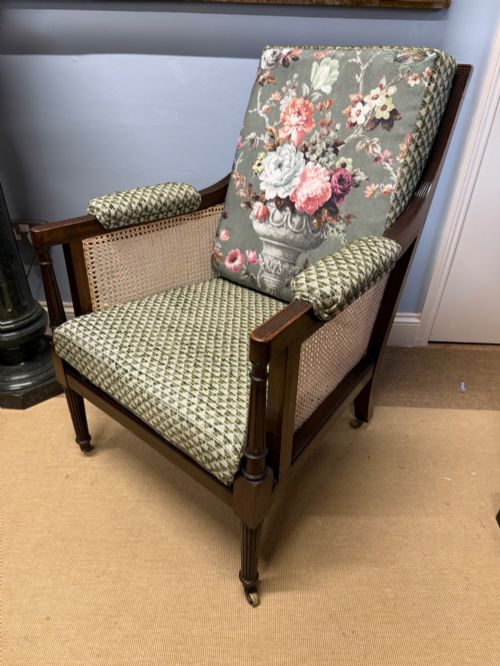
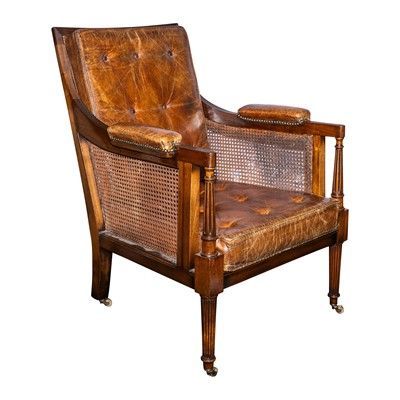
A caned mahogany library chair is a sturdy armchair designed for reading and study, most frequently encountered in Regency, Victorian, and Edwardian styles. These pieces combine rich mahogany frames with woven cane panels on the back and sides to provide flexible support.
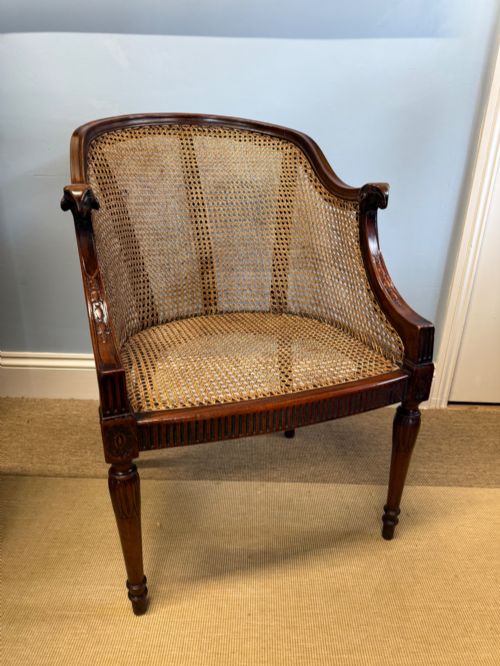
Buyers will find tub-shaped forms, generous proportions, and specialised variations like metamorphic library steps chairs or folding step combinations. The majority date from the nineteenth century, though revival pieces from the early twentieth century also appear regularly on the page.
How they were made
Makers constructed the primary frames using solid mahogany, often shaping the timber into curved arms and supports. Woven cane or rattan formed the seating and side panels, offering resilient support that yields slightly to the body.
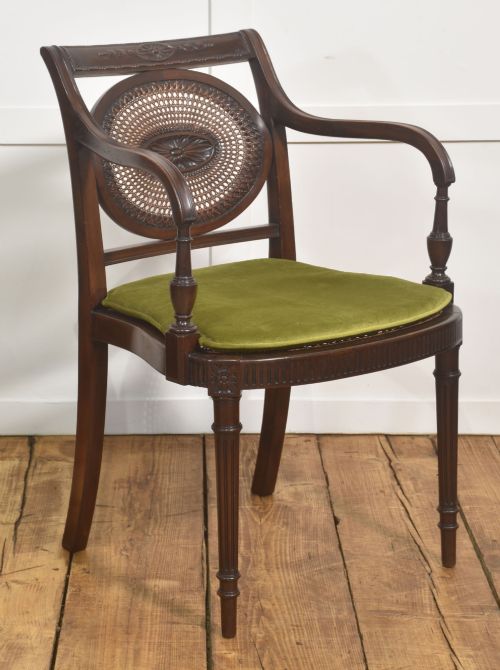
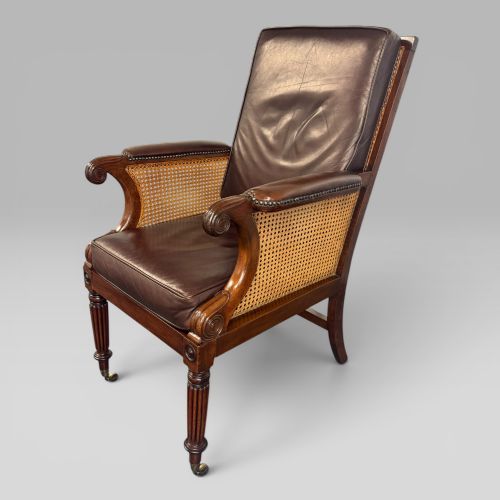
Many examples incorporate supplementary materials such as leather, brass castors, and upholstered cushions in fabric or velvet for added comfort. Cabinetmakers utilised traditional joinery to ensure the heavy timber frames remained stable under daily use.
Materials recorded across the archive include solid mahogany, rattan cane, leather, fabric, velvet, and brass.
What varies in quality
The fineness of the timber grain and the precision of the frame carving separate standard seating from exceptional pieces. Well-drawn proportions and generous curves indicate thoughtful design and skilled carpentry.
The integrity of the woven cane panels and the condition of supplementary leather or fabric elements heavily influence the overall standard of the chair. Pieces associated with notable workshops demonstrate superior execution in both the frame construction and the hand-weaving.
Gillows
The Caned Mahogany Library Chair Glossary
- Bergère
- An enclosed armchair with upholstered seat and woven cane back and sides. This French form became particularly popular in British libraries during the Regency period.
- Cane
- Strips of rattan plant peeled and woven into open patterns for chair panels. It provides a lightweight yet strong surface that allows air circulation.
- Metamorphic
- Furniture designed to transform into another functional object, such as an armchair that unfolds into library steps. These clever pieces served dual purposes in private studies.
- Tub chair
- An armchair with a continuous curved back and arms forming a rounded enclosure. This shape provides enclosed comfort for long hours of reading.
Caned Mahogany Library Chair: Frequently Asked Questions
What is a caned mahogany library chair?
A caned mahogany library chair is a sturdy reading armchair built from mahogany timber with woven cane panels on the back and sides. These seats provide structured support while remaining relatively lightweight.
They appear in various nineteenth-century and revival styles, occasionally incorporating leather upholstery and brass details.
How were these chairs used?
These chairs served primarily in private libraries and studies where owners spent long hours reading heavy volumes. The woven cane allowed air circulation while the deep seats offered sustained physical comfort.
Some specialist versions also doubled as library steps to help readers reach high shelves.
How do I care for the cane?
Caned panels require gentle cleaning with a damp cloth to remove dust from the woven strands. Avoid placing the chair near direct heat sources to prevent the natural rattan from drying out and snapping.
Applying a little moisture periodically helps maintain the flexibility of the cane.
How do I identify a Regency period chair?
Regency chairs typically display classical architectural lines, fine mahogany timber, and restrained ornamentation. They date from the early nineteenth century and often feature finely turned legs or curved bergere backs.
Proportions tend to be generous and well-balanced, reflecting the neoclassical design influences of the era.