




Regency Armchair Brass Castors
Regency armchair brass castors bring monumental timber forms and precise mobility together in a seating style designed for the nineteenth-century library and drawing room.
Regency Armchair Brass Castors
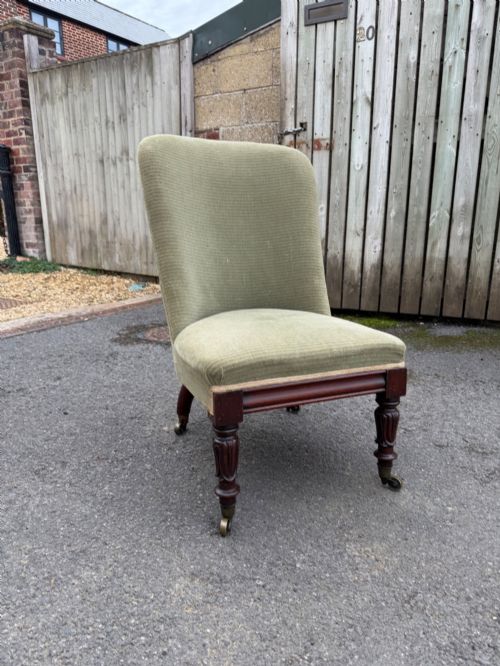
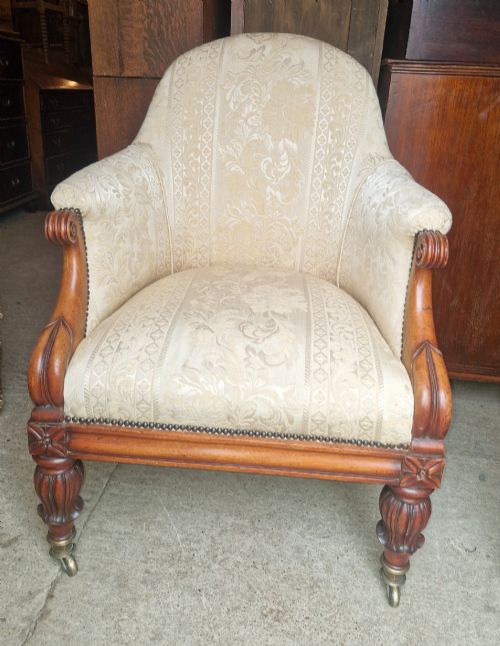
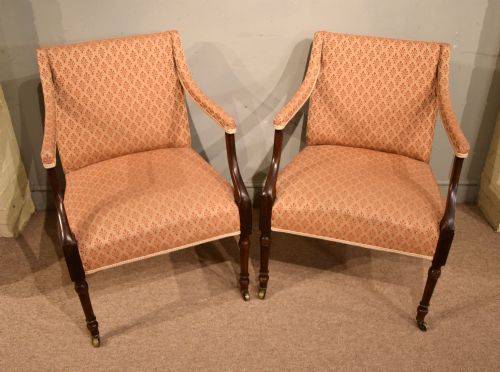
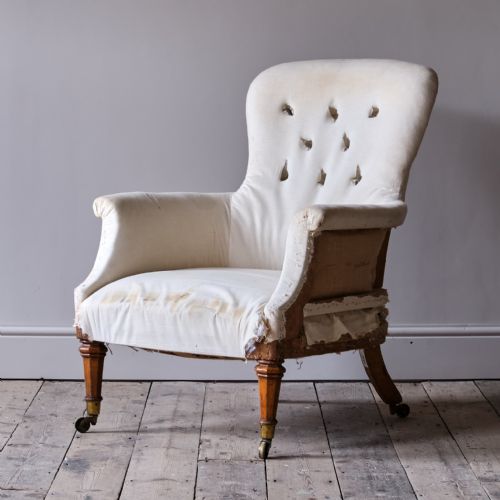
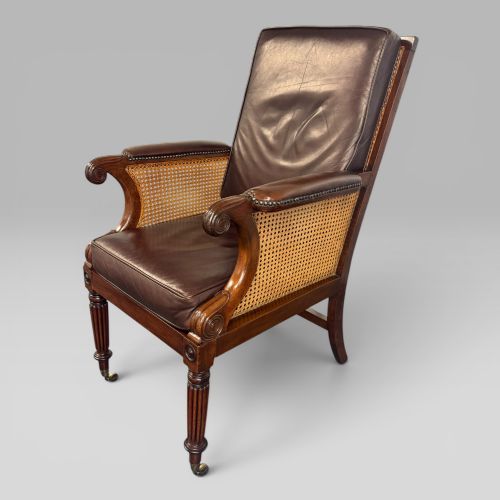
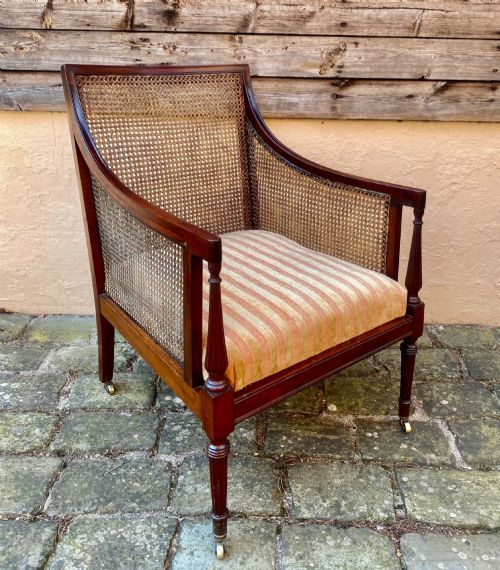
When searching for regency armchair brass castors, you are looking at substantial library chairs, bergères, and tub chairs produced across the nineteenth century, including Georgian, Regency, George IV, and William IV eras. The most common version met on this page is the mahogany library armchair, often featuring reeded frames, lyre fronts, or caned panels.
These pieces encompass various specialised forms, ranging from expansive rosewood library seats to compact slipper chairs and corner chairs. Makers utilised diverse materials such as leather, fabric, cane, and velvet for upholstery, while maintaining the characteristic low-slung mobility provided by metal wheels at the base.
How they were made
Cabinetmakers constructed these frames primarily in dense timbers like mahogany and rosewood, employing steam-bending for curved elements and precise joinery for structural integrity. Caned panels were meticulously woven into frames for lightweight breathability, while exposed woodwork received hand-rubbed finishes.
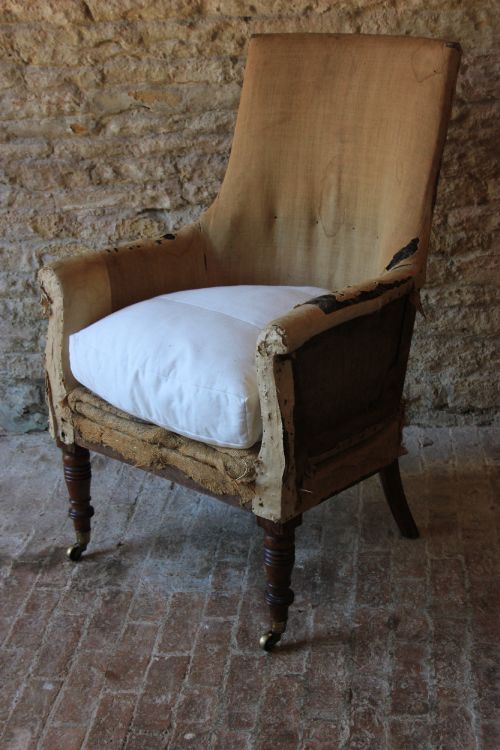
Metal components such as brass castors were secured to the base of the legs to allow smooth movement across heavy carpets. Upholstery techniques involved stuffing with traditional materials like horsehair beneath top layers of leather, velvet, calico, hessian, or fabric, secured with rows of decorative tacks.
Listings feature mahogany and rosewood frames paired with cane, leather, and velvet across nineteenth-century periods including George IV and William IV.
What varies in quality
The distinction between standard seating and exceptional library chairs rests upon the crispness of the timber carving and the architectural ambition of the frame. Pieces displaying sophisticated elements such as carved lyre fronts, reeded arm supports, or X-frame geometry demonstrate a higher level of workshop design.
Integrity of the timber and the retention of original brass hardware elevate certain examples above standard utilitarian seating. The harmony between the proportion of the mahogany frame and the sophistication of the turning indicates the skill invested by the maker.
Gillows·Miles & Edward's·Daws
The Regency Armchair Brass Castors Glossary
- Bergère
- An enclosed upholstered armchair with solid sides, often featuring cane work panels set into the wooden frame. This French-inspired form became a staple of English Regency libraries.
- Castor
- A small wheel mounted on a swivel attached to the foot of a chair leg. Brass versions allowed heavy timber armchairs to glide across nineteenth-century floor coverings.
- Reeded
- A decorative moulding consisting of parallel convex strips resembling inverted fluting. This surface treatment frequently appears on the legs and arm supports of Regency seating.
- Lyre front
- A structural or decorative wooden support shaped to resemble an ancient stringed instrument. It is a defining aesthetic motif found on the front rail or arm supports of library chairs.
- Tub chair
- A fully upholstered armchair with a continuous curved back and arms forming a circular enclosure. The design offers deep, enveloping seating comfort.
Regency Armchair Brass Castors: Frequently Asked Questions
What defines a Regency library chair?
These heavy timber seats were built for reading rooms, typically constructed from mahogany or rosewood with sturdy frames designed to support prolonged use.
They frequently incorporate specialised elements like caned panels, leather upholstery, and supportive armrests suited to domestic study spaces.
Why do these chairs have metal wheels?
The metal wheels fitted to the base of the legs provided practical mobility for heavy wooden armchairs placed on thick carpets.
This functional addition allowed readers to reposition their seats easily near firesides or window light without lifting the substantial timber frame.
How do you identify a bergère?
A bergère is distinguished by its enclosed sides and back, which frequently feature woven cane panels rather than solid wood or full upholstery.
These pieces often include loose seat cushions and share the same low profile and mobility found across nineteenth-century library seating.
Are these chairs comfortable for daily use?
These seating forms were originally engineered for extended periods of reading and study, offering deep proportions and supportive backrests.
Modern comfort depends on the quality of internal webbing and stuffing, which is often renewed during restoration while preserving the historic timber frame.