


Regency Library Seating
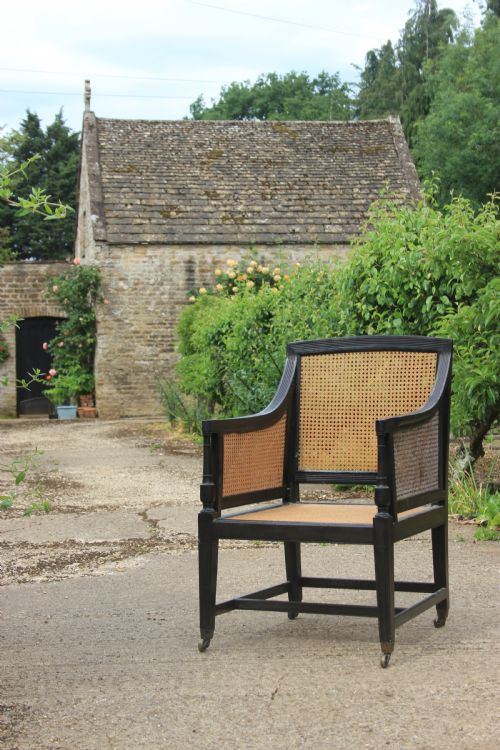
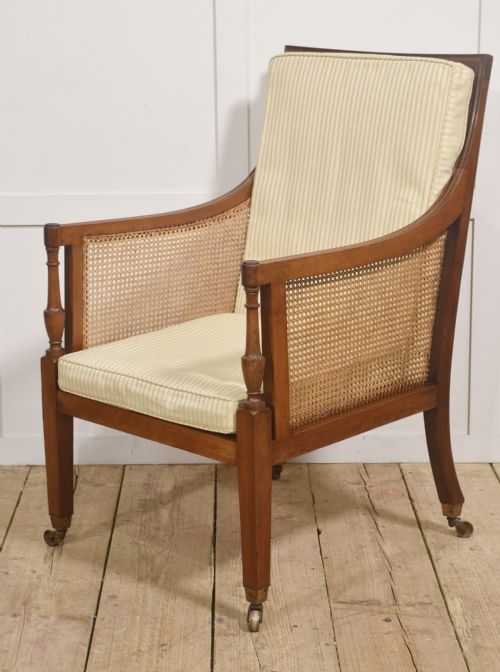
Regency library seating brings together mahogany armchairs, leather writing seats, and cane bergères designed for serious study and quiet reading.
Regency Library Seating
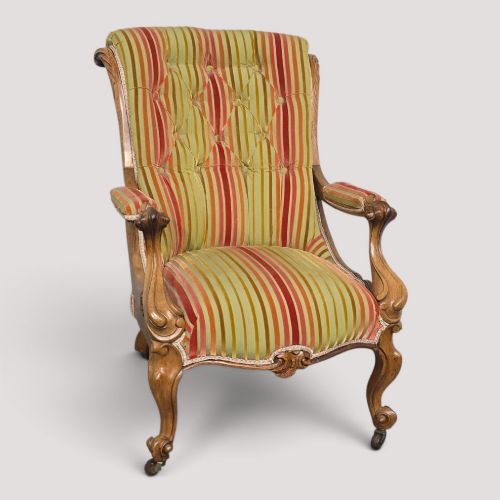
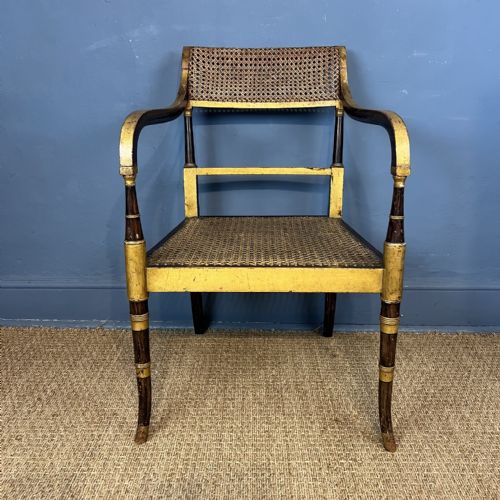
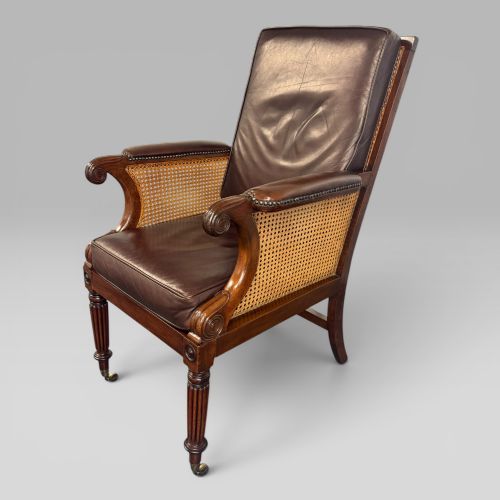
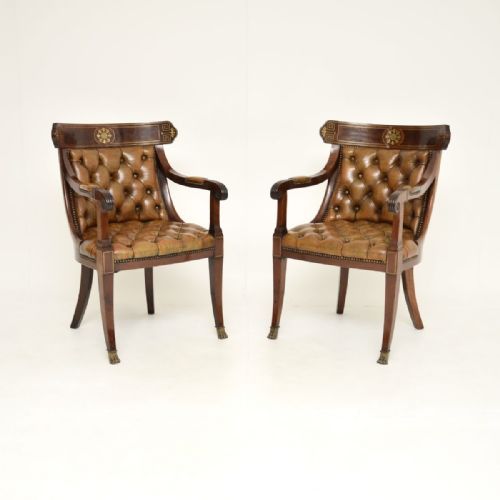
Regency library seating encompasses heavy mahogany armchairs, caned bergères, and desk chairs designed for study spaces during the early nineteenth century. Pieces range from straightforward mahogany forms to elaborate examples featuring brass inlay, parcel gilt highlights, and faux rosewood finishes.
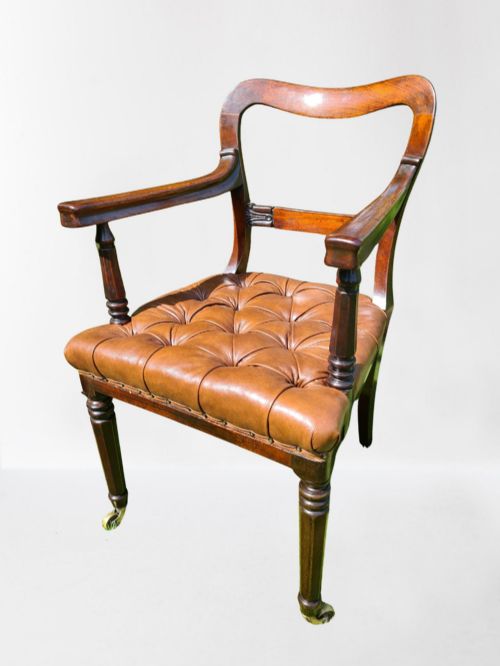
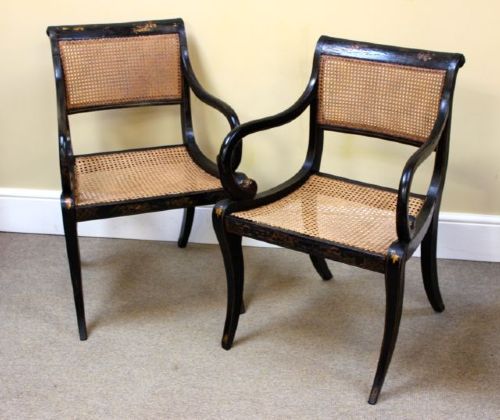
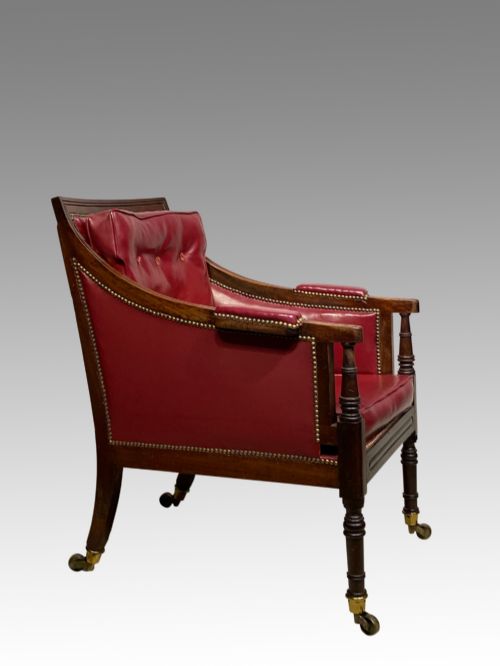
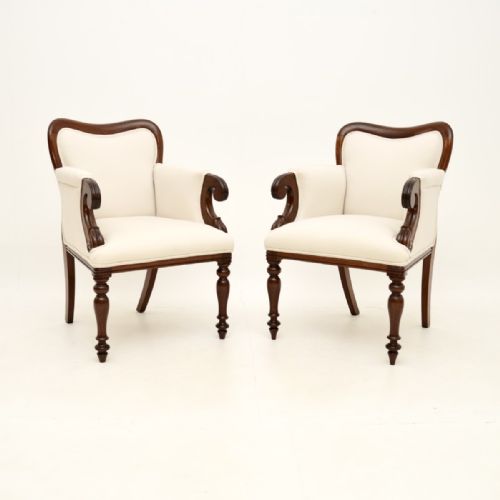
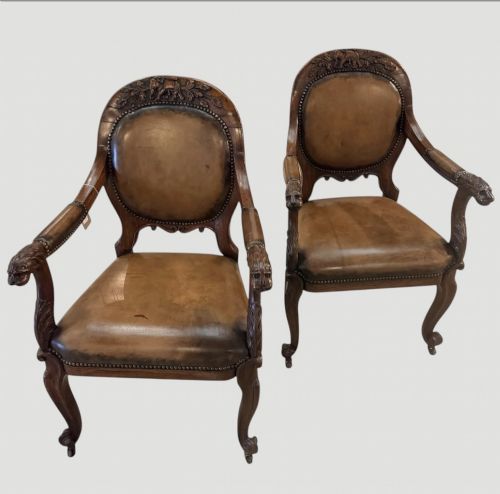
The version most commonly met on this page is the mahogany library armchair, often featuring cane panels or upholstered leather seats. Alongside these, buyers find pairs of armchairs, specialised desk chairs, and occasional stools originating from the Regency, Georgian, and William IV periods.
How they were made
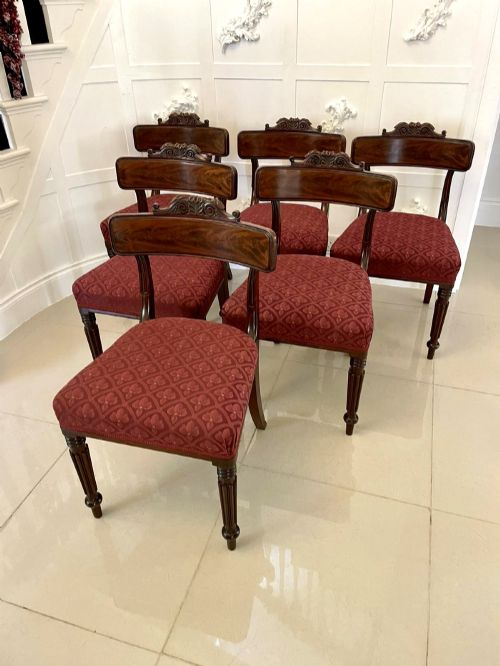
Craftsmen utilised dense timbers such as mahogany, rosewood, and ebony to construct sturdy frames capable of daily use. Turned or reeded legs support the heavy seating structures, while specialised forms incorporate folding mechanisms or reclining actions.
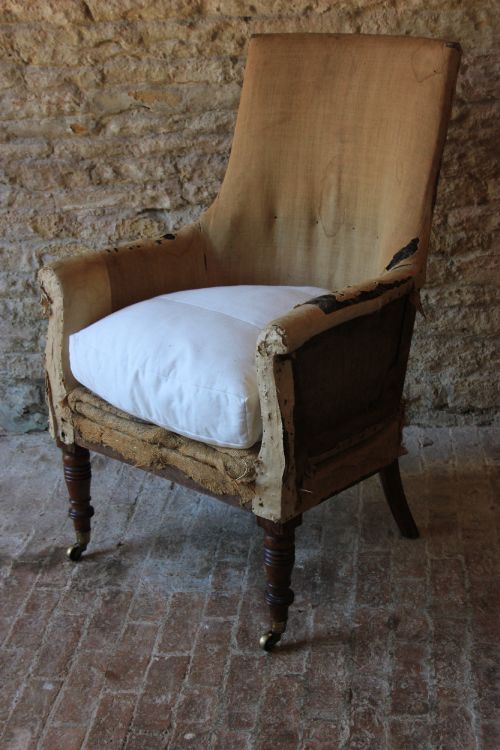
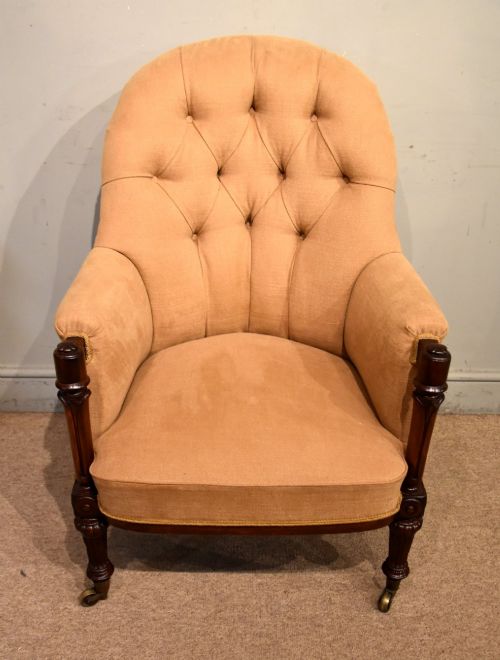
Surface decoration relies on applied brass inlay, delicate parcel gilding, and painted faux rosewood finishes to mimic exotic woods. Caning is woven tightly into frames for open sides, while seating surfaces receive leather, velvet, hessian, or fabric upholstery.
What varies in quality
The refinement of the timber and the crispness of carved details set superior examples apart from standard workshop production. Finer frames display deeply figured mahogany, precise brass inlay, and well-executed reeding rather than plain, unadorned surfaces.
Attribution to notable makers or documented workshops elevates a piece, as seen in items associated with Gillows, Minter, or George Bullock. Structural integrity and the survival of original caning or upholstery also determine the standing of individual chairs.
Gillows·Minter·George Bullock
The Regency Library Seating Glossary
- Bergère
- An enclosed upholstered armchair with solid sides, often filled with cane panels. These seats frequently feature loose squab cushions for comfort.
- Caned
- Woven rattan cane forming the back or sides of a chair. This technique provides a lighter appearance while maintaining structural support.
- Reeded
- Parallel convex moulding carved directly into the timber of legs or arm supports. The pattern resembles a bundle of tightly bound reeds.
- Parcel gilt
- A decorative technique where specific carved details or highlights are partially gilded with gold leaf over a painted or polished ground.
Regency Library Seating: Frequently Asked Questions
How do I identify a genuine Regency library chair?
Look for dense mahogany or rosewood timbers combined with characteristic design details such as reeded legs, brass inlay, or caned panels. Period examples typically date from the early nineteenth century and reflect the neoclassical style preferences of the era.
Construction methods also provide clues, as older frames utilise traditional joinery without modern metal fasteners. Comparing the proportions and wood patination with documented examples helps confirm the period.
How were these chairs used in a historic library?
These seats were positioned around large mahogany tables, beside bookcases, or near writing desks for prolonged periods of study and reading. Reclining models and reading chairs allowed scholars to adjust their posture while handling heavy volumes.
Stools and matching pairs of armchairs provided flexible seating arrangements for multiple readers in private libraries and grand drawing rooms.
Can I use a Regency desk chair for daily computer work?
Regency desk chairs provide sturdy wooden support, but their fixed heights and upright postures differ from modern ergonomic office seating. Many collectors use them at traditional writing desks rather than for prolonged computer use.
Adding a loose leather or fabric squab cushion can improve comfort, provided it respects the historical character of the antique frame.