
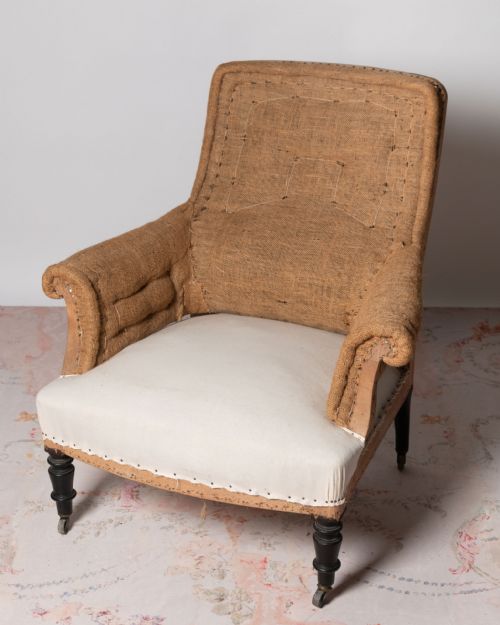


Deconstructed Armchair Frame
A deconstructed armchair frame lays bare the internal craft of period seating, offering a raw sculptural presence that brings texture to modern interiors.
Deconstructed Armchair Frame
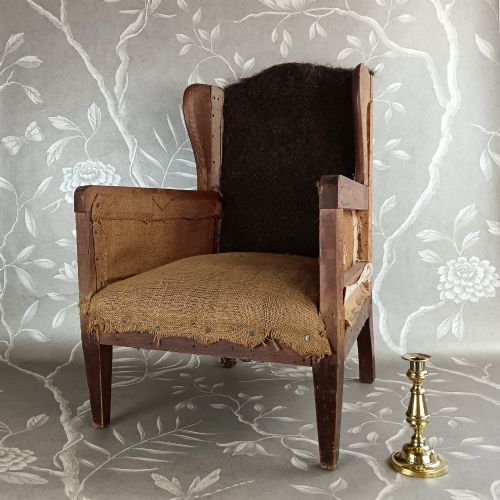
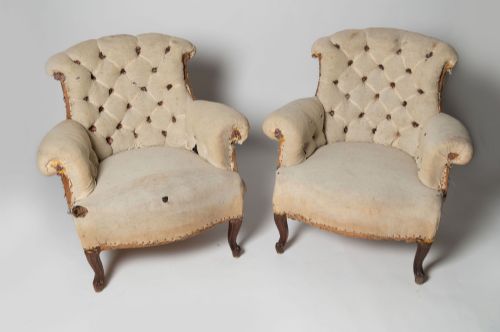
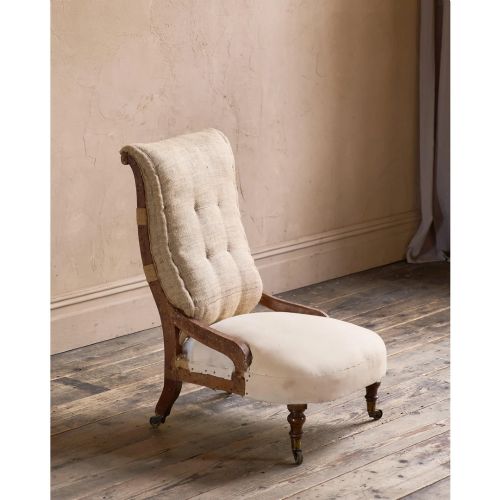
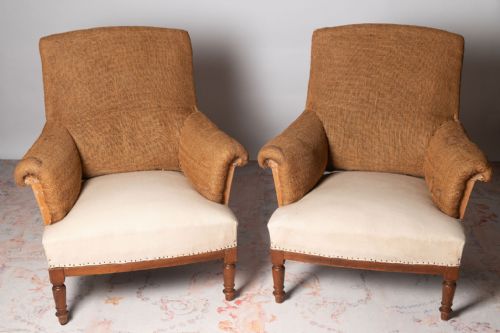
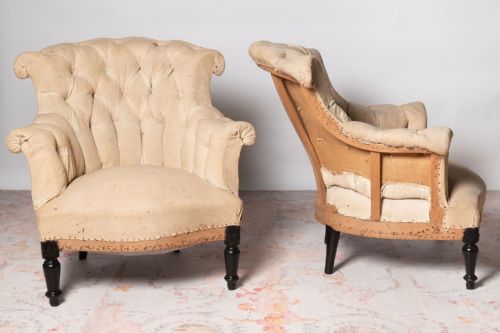
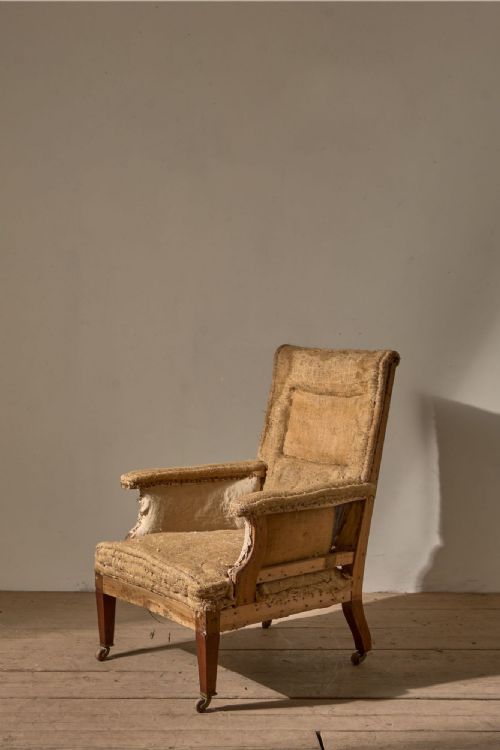
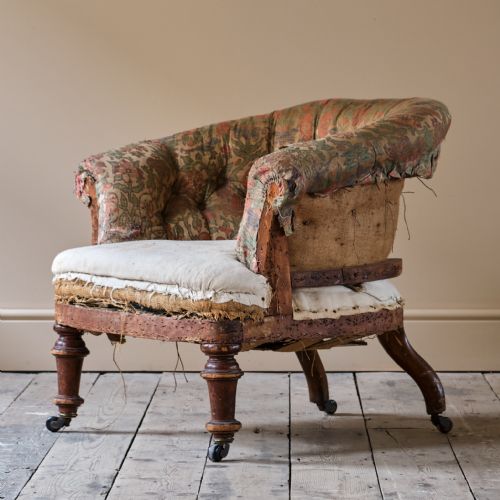
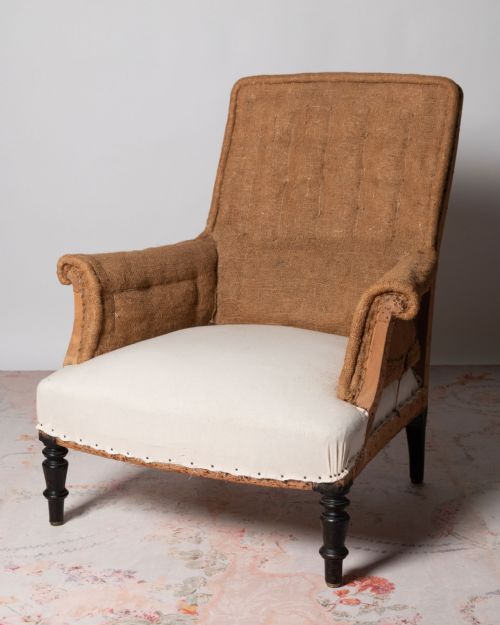
When you search for a deconstructed armchair frame, you are looking at structural seating stripped back to its underlying webbing, hessian, and exposed timber frame. The pieces seen here span the nineteenth century, nineteen hundred, and nineteen ten, taking forms such as wingbacks, tub backs, library chairs, and child's armchairs.
The version you are most likely to meet on this page is a French Napoleon III or Victorian English armchair with its final top upholstery removed. These frames reveal the honest inner workings of period seating, showing the hand-tacked calico, linen, and exposed timber structure rather than a finished textile exterior.
How they were made
Makers built these internal structures using solid timbers such as beech, mahogany, and oak to ensure the heavy loads of traditional sprung upholstery could be supported. Frame components were joined with traditional woodworking joints before being webbed and stuffed.
Layers of hessian, linen, and calico were pulled tight and secured by hand using tacks over the internal stuffing. Brass tacks often fastened the raw edges of the under-upholstery directly to the timber rails, a functional detail that remains visible on the bare frame.
Child's wingback frames prove that Victorians believed toddlers required proper draft exclusion just as much as their parents.
What varies in quality
Quality in these frames rests entirely on the elegance of the exposed timber silhouette and the integrity of the bare woodwork. A finer piece displays shapely carved arms, clean lines, and sturdy joints that hold their form without hidden repairs.
The visual appeal also depends on the honesty and condition of the remaining under-materials. Tightly stretched hessian and aged calico retain a better tactile character than frayed or poorly patched inner layers.
Howard and Sons
The Deconstructed Armchair Frame Glossary
- Hessian
- A coarse woven fabric typically made from jute fibres, used as a sturdy base layer for interior upholstery stuffing. It provides the neutral, textured backdrop characteristic of stripped frames.
- Calico
- A plain-woven cotton textile used historically to cover the internal stuffing before the application of decorative top fabrics. It creates a smooth, pale layer over the springs and webbing.
- Wingback
- An armchair style featuring protective side panels attached to the backrest, designed to shield the sitter from drafts. Nineteenth-century examples often display deep proportions and scroll arms.
- Tub back
- A seating form where the backrest curves continuously around into low arms, creating a rounded enclosure. These frames rely on clean joinery to maintain their barrel-like shape without upholstery.
Deconstructed Armchair Frame: Frequently Asked Questions
What is a deconstructed armchair frame?
A deconstructed armchair frame is a period seating structure stripped of its decorative outer fabric to reveal the internal hessian, webbing, and timber. These pieces expose the raw craftsmanship that typically remains hidden beneath upholstery.
They allow modern interiors to showcase historical woodwork and honest materials in a simplified state.
How do I style a bare armchair frame?
These frames work well in minimalist or rustic rooms where their exposed timber and natural linen or calico can be appreciated as sculptural objects. They bring texture and architectural form without introducing heavy patterns.
Place them in a corner or reading nook where the side profile and exposed frame construction remain fully visible.
Are these frames comfortable to sit in?
Most of these pieces display the bare internal webbing and stuffing, meaning they do not offer the plush comfort of a fully upholstered armchair. They serve primarily as decorative architectural statements or visual anchors in a room.
Some buyers choose to leave them raw for their aesthetic, while others use them as a sturdy base for future re-upholstery.
How do I date a nineteenth century armchair frame?
Dating relies on the timber species, the silhouette of the arms and legs, and structural details characteristic of Victorian, Edwardian, or Napoleon III manufacturing. Stylistic cues such as tub backs or winged sides point to specific design periods within the eighteen hundreds and early nineteen hundreds.
The absence of outer fabric actually makes it easier to inspect the original joinery and wood grain used by period cabinetmakers.